High-efficient impact crusher, stable output — Handles various materials, runs smoothly nonstop.
Uniform particle shape, 95% pass rate — Ideal for construction, roads, bridges, and aggregates.
Durable & energy-saving, 20%-30% less power — Wear-resistant, easy to maintain, lower costs.

An impact crusher uses a high-speed rotor and impact plates to break rock into smaller particles. In Indonesia, impact crushers can produce aggregates for quarry operations, road construction, concrete production, and other infrastructure projects. ANDAMINE offers two types of impact crusher series for different crushing requirements. The APF series is suitable for aggregate production and medium crushing, while the APF-H series features hydraulic adjustment and is designed to achieve a higher crushing ratio when processing medium- to low-hardness materials. The right model depends on the feed material, maximum feed size, required output grading, and target production capacity.
- Types & Models: APF Impact Crusher and APF-H Hydraulic Impact Crusher.
- Capacity: APF: 50–550 t/h; APF-H: 100–500 t/h.
- Feed Size: APF: up to 900 mm; APF-H: up to 1,300 mm.
- Finished Product Size: APF: 5–200 mm. APF-H output size depends on the model and configuration.
- Mobile Crushing Solution: 2-in-1 and 3-in-1 mobile impact crushing plants are available for integrated crushing and screening operations.
- Applications: Quarrying, aggregate production, mining, road construction, and construction waste recycling.
- Price: USD 27,000–72,300 for the impactor crusher unit. Mobile crushing plants, shipping, taxes, and installation may incur additional costs.
- Indonesia Support: Equipment selection, installation guidance, technical support, and spare-parts assistance, subject to project requirements and service availability.

What Are the Different Types of Impact Crushers in Indonesia?
Impact crushers for sale in Indonesia are available in different models to meet various feed size, production capacity, and aggregate requirements. ANDAMINE offers two impact crusher types: APF Impact Crusher and APF-H Hydraulic Impact Crusher. The APF series is designed for crushing and aggregate production, while the APF-H series offers coarse- and medium-crushing models to suit different feed sizes and production requirements.
- APF Series: A standard impact crusher for sale for medium crushing, aggregate production, and particle shaping.
- APF-H Series: A hydraulic impact crusher available in coarse- and medium-crushing configurations for different feed sizes and production requirements.
For Indonesian quarry operators and aggregate producers, the right impact crusher depends on the raw material, maximum feed size, required finished product size, and target production capacity. Compare the two series below to identify a suitable model for your project.
APF vs. APF-H Impact Crusher Comparison
| Comparison | APF Series | APF-H Series |
|---|---|---|
| Crusher Type | Standard Impactor Crusher | Hydraulic Impact Crusher |
| Capacity | 50–550 t/h, depending on model | 100–500 t/h, depending on model and configuration |
| Max. Feed Size | Up to 900 mm, depending on model | Up to 1,300 mm for coarse-crushing models and up to 700 mm for medium-crushing models, according to the supplied specifications |
| Finished Product Size | 5–200 mm, depending on model and configuration | Depends on the model, feed material, and crusher settings |
| Crushing Configuration | Impact crushing for material reduction and aggregate shaping | Coarse- and medium-crushing configurations for different feed requirements |
| Suitable Materials | Limestone, granite, and other compatible materials, subject to material properties | Materials suitable for impact crushing, depending on hardness, abrasiveness, and model specifications |
| Typical Applications | Quarrying, aggregate production, mining, and road construction | Quarrying, aggregate production, hydropower projects, and highway construction |
| Key Advantage | Three impact chambers support further crushing and particle shaping | Multiple coarse- and medium-crushing models with different feed openings and rotor dimensions |
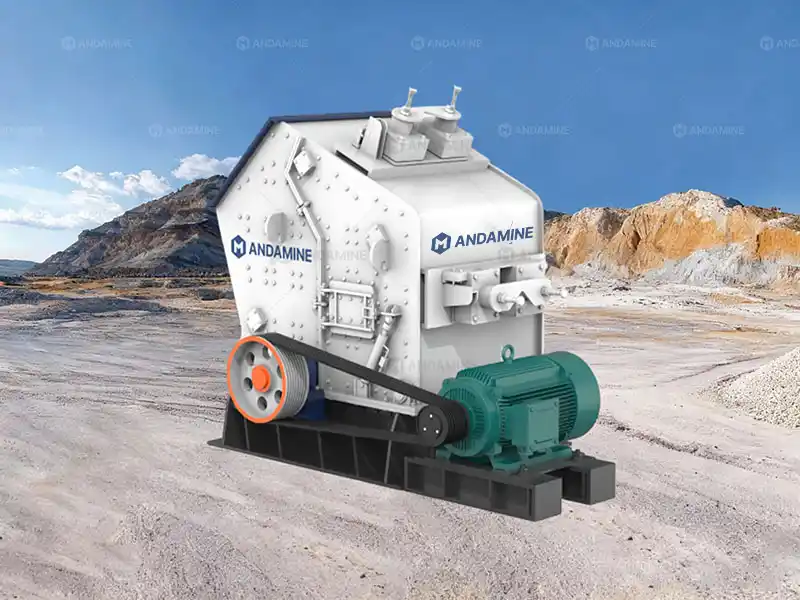
APF Series Standard Impact Crusher
The APF Series uses three impact chambers for further crushing and shaping, making it suitable for Indonesian quarries producing concrete and road aggregates.
Trade-offs
- Best for: Producing well-shaped aggregates for concrete and road construction.
- Watch out: Abrasive andesite may increase blow bar wear and replacement costs.
- Cost trade-off: Check whether extra screening and recirculation are needed to meet your target aggregate sizes.
Decision Guide
- Choose APF when: Your stone suits impact crushing and aggregate shape is a priority.
- Reconsider APF when: Highly abrasive andesite or frequent recirculation may increase operating costs.
APF-H Hydraulic Impact Crusher
The APF-H Series offers coarse- and medium-crushing options for different feed sizes and production needs in Indonesian quarries.
Trade-offs
- Best for: Projects needing a coarse- or medium-crushing configuration matched to the feed size.
- Watch out: Remote quarries should confirm hydraulic service and spare-parts availability before purchase.
- Cost trade-off: Compare equipment price, wear parts, hydraulic maintenance, and downtime. Hydraulic features do not guarantee lower operating costs.
Decision Guide
- Choose APF-H when: The model matches your feed size and its hydraulic functions meet your site needs.
- Consider APF when: Its three-chamber design meets your shaping requirements without additional hydraulic functions.

Mobile Impact Crushers for Aggregate Production in Indonesia
Indonesia’s quarrying, road construction, and urban development projects need a reliable supply of crushed aggregates. ANDAMINE offers tire-type and crawler-type mobile impact crushers for on-site aggregate production and suitable construction waste recycling. Whether you process limestone for road projects or recycle concrete waste, choose a configuration based on your material, target output, capacity, and site conditions. Explore our mobile crusher plant solutions for your project in Indonesia.

APY2-F 2-in-1 Mobile Impact Crusher
- Capacity: 60–350 t/h, depending on configuration
- Crushing Materials: Soft to medium materials such as concrete
- Configuration: Combines impact crushing and screening in one mobile plant
- Suitable Applications: Aggregate production and selected concrete waste recycling projects

APY3-F 3-in-1 Mobile Impact Crusher
- Capacity: 50–350 t/h, depending on model
- Maximum Feed Size: Up to 600 mm, depending on model
- Configuration: Integrates feeding, impact crushing, and screening in one plant
- Suitable Applications: Limestone aggregate production for road construction, quarry operations, and suitable concrete waste recycling projects

APYL2-F Tracked Mobile Impact Crusher
- Capacity: 100–400 t/h, depending on model
- Maximum Feed Size: Up to 600 mm, depending on model
- Key Feature: The crawler chassis supports movement around suitable working areas, which can be useful when crushing locations change within a project site
- Suitable Applications: Quarrying, road construction projects, and selected material recycling operations where on-site mobility is important
Impact Crusher Technical Specifications
Choosing the right impact crusher starts with matching equipment specifications to your material, required output, and production targets. Compare the models below to evaluate their capacity, maximum feed size, motor power, and other key parameters for your crushing project in Indonesia.
APF-H Hydraulic Impact Crusher Specifications
| Crushing Series | Model | Inlet Size (W × H) (mm) | Max. Feeding Size (mm) | Rotor Diameter (mm) | Rotor Width (mm) | Motor Power (kW) | Material Recycling Speed (r/min) | Coarse-Crushing Speed (r/min) | Medium-Crushing Speed (r/min) | Rotor Weight (kg) | Total Weight (kg) | Dimensions (L × W × H) (mm) |
|---|---|---|---|---|---|---|---|---|---|---|---|---|
| Coarse Crushing | APF-1210H | 1020 × 1080 | 800 | 1200 | 1000 | 110 / 132 / 160 | 490–580 | 555–620 | 620–695 | — | 12800 | 2698 × 2126 × 3030 |
| APF-1313H | 1320 × 1225 | 900 | 1300 | 1300 | 132 / 160 / 200 | 460–520 | 520–585 | 585–660 | 6340 | 17800 | 2972 × 2560 × 3300 | |
| APF-1415H | 1540 × 1320 | 1000 | 1400 | 1500 | 160 / 200 / 250 | 390–495 | 495–550 | 550–615 | 8165 | 21815 | 2985 × 2790 × 3375 | |
| APF-1620H | 2040 × 1634 | 1300 | 1600 | 2000 | 250 / 315 / 2 × 200 | 360–400 | 400–500 | — | 15980 | 40500 | 3480 × 3600 × 4200 | |
| Medium Crushing | APF-1007H | 750 × 890 | 500 | 1000 | 700 | 55 / 75 / 90 | 525–660 | 660–705 | 705–940 | — | 7240 | 2596 × 1804 × 1857 |
| APF-1110H | 1020 × 820 | 600 | 1100 | 1000 | 110 / 132 / 160 | 460–620 | 620–695 | 695–830 | 3065 | 9250 | 2626 × 2160 × 1945 | |
| APF-1213H | 1320 × 880 | 600 | 1200 | 1300 | 132 / 160 / 200 | 435–585 | 585–615 | 645–780 | 4850 | 12780 | 2809 × 2529 × 2091 | |
| APF-1315H | 1540 × 930 | 600 | 1300 | 1500 | 160 / 200 / 250 | 410–520 | 525–585 | 585–700 | 6370 | 16130 | 2875 × 2750 × 2221 | |
| APF-1520H | 2040 × 995 | 700 | 1500 | 2000 | 250 / 2 × 160 / 2 × 200 | 370–450 | 450–510 | 510–610 | 10400 | 27100 | 3391 × 3400 × 2513 |
APF Impactor Machine Specifications
| Model | Rotor Diameter × Length (mm) | Inlet Size (mm) | Max. Feeding Size (mm) | Capacity (t/h) | Power (kW) | Weight (t) | Dimensions (L × W × H) (mm) |
|---|---|---|---|---|---|---|---|
| APF1007 | Φ1000 × 700 | 400 × 730 | 250 | 30–50 | 55 | 9.5 | 2400 × 1550 × 2660 |
| APF1010 | Φ1000 × 1050 | 400 × 1080 | 300 | 40–80 | 75 | 12.2 | 2400 × 2250 × 2620 |
| APF1210 | Φ1250 × 1050 | 450 × 1060 | 300 | 70–120 | 110 | 15 | 2690 × 2338 × 2890 |
| APF1214 | Φ1250 × 1400 | 450 × 1430 | 300 | 90–180 | 132 | 18.6 | 2690 × 2688 × 2890 |
| APF1315 | Φ1320 × 1500 | 550 × 1530 | 400 | 150–250 | 250 | 19.5 | 3096 × 3273 × 2667 |
| APF1320 | Φ1320 × 2000 | 610 × 2030 | 500 | 160–350 | 2 × 200 | 28 | 3096 × 3560 × 3185 |
| APF1520 | Φ1500 × 2000 | 830 × 2040 | 700 | 300–500 | 2 × 250 | 43 | 3890 × 3564 × 3220 |
| Note: Production capacity depends on the material properties, feed size, feed grading, and operating conditions. Confirm the final model specifications with ANDAMINE before ordering. | |||||||
APY2-F Mobile Impact Crusher Specifications
| 2-in-1 Tire Type Mobile Impact Crusher Specification | ||
|---|---|---|
| Model | APY2-1213F-S3 | APY-1315F-S3 |
| Machine power(kw) | 223 | 285.5 |
| Processing capacity(tph) | 80-280 | 100-350 |
| Main Crusher | ||
| Model | APF-1213H | APF-1315H |
| Motor power(kw) | 160 | 250 |
| Maximum feed(mm) | 300 | 300 |
| Belt Conveyor | ||
| Screen conveyor | B1000 | B1200 |
| Discharge height (mm) | >3100 | >3100 |
| Vibrating screen | ||
| Model | APY-1860-S3 | APY-2160-S3 |
| Motor power(kw) | 2*7.5 | 2*11 |
| Speed(r/min) | 1000 | 1000 |
APY3-F Mobile Impact Crusher Plant Specifications
| 3 in 1 Tire Type Mobile Impact Crusher Specification | ||||
|---|---|---|---|---|
| Model | APY3-1110F-S3 | APY3-1210F-S3 | APY3-1213F-S3 | APY3-1315F-S3 |
| Machine power (kw) | 199.9 | 202.4 | 270.4 | 346.5 |
| Machine processing capacity (t/h) | 50-110 | 70-120 | 80-150 | 130-260 |
| Vibrating feeder | ||||
| Model | APG-0930Z | APG-0930Z | APG-9538Z | APG-1145Z |
| Feed trough width (mm) | 800 | 800 | 900 | 1100 |
| Length(mm) | 3000 | 3000 | 4000 | 4800 |
| Main Crusher | ||||
| Model | APF-1010H | APF-1210H | APF-1214H | APF-1315H |
| Motor power (kw) | 132 | 132 | 200 | 250 |
| Feeding depth (mm) | 500 | 600 | 600 | 700 |
| Feeding width (mm) | 400 | 400 | 400 | 400 |
| Maximum feed (mm) | 420 | 420 | 500 | 600 |
| Discharge port (mm) | >30 | >30 | >30 | >30 |
| Vibrating screen | ||||
| Model | APS-1548Y3 | APS-1548Y3 | APS-1860Y3 | APS-2160Y3 |
| Motor power (kw) | 2*5.5 | 2*5.5 | 2*7.5 | 2*11 |
| Belt Conveyor | ||||
| main conveyor | B800*11m | B800*11m | B1000*11m | B1200*12m |
| Power (kw) | 11 | 11 | 11 | 15 |
| Feeding conveyor B800 | B800*16m | B800*16m | B1000*16m | B1200*17m |
| Power (kw) | 15 | 15 | 15 | 15 |
| Screen conveyor B800 | B800*7.5m | B800*7.5m | B1000*7.5m | B1200*7.5m |
| Power (kw) | 5.5 | 5.5 | 7.5 | 11 |
| Silo volume (m³) | 3 | 3 | 4 | 5 |
| Conveyor discharge height (m) | >4.5 | >4.5 | >4.5 | >4.5 |
| Generator power (kw) | 300 | 300 | 400 | 500 |
APYL2-F Tracked Mobile Impact Crusher Specifications
| Crawler Type Mobile Impact Crusher Specification | |||
|---|---|---|---|
| Model | APYL2-1110F-S | APYL2-1213F-S | APYL2-1315F-S |
| Power(kw) | 217.2 | 265.8 | 347.2 |
| Capacity(t/h) | 80-150 | 110-220 | 150-300 |
| Feeding hopper | |||
| Volume(m³) | 3 | 4 | 5 |
| Vibrating feeder | |||
| Model | APG-0930Z | APG-9538Z | APG-1145Z |
| Width of material trough(mm) | 800 | 950 | 1100 |
| Length(mm) | 3000 | 3800 | 4500 |
| Power(kw) | 2*2.2 | 2*3.7 | 2*7.5 |
| Impact Crusher | |||
| Model | APF-1110H | APF-1213H | APF-1315H |
| Power(kw) | 132-160 | 200-250 | 280-315 |
| Max.Feeding Size(mm) | 450 | 500 | 600 |
| Return screen | |||
| Mesh Spec.(mm) | 1500*3600 | 1500*4200 | 1800*4200 |
| Power(kw) | 6.12 | 6.12 | 6.12 |
| Main belt conveyor | |||
| Belt Width(mm) | B1000 | B1000 | B1200 |
| Reducer Power(kw) | 7.5 | 7.5 | 11 |
| Belt Speed(m/s) | 1.6 | 1.6 | 1.6 |
| Side belt conveyor(Optional) | |||
| Belt Width(mm) | B650 | B650 | B650 |
| Reducer Power(kw) | 4 | 4 | 4 |
| Discharge Height(mm) | 2100 | 2100 | 2200 |
| Belt Speed(m/s) | 1.6 | 1.6 | 1.6 |
| Lower belt conveyor | |||
| Belt Width(mm) | B1000 | B1000 | B1200 |
| Reducer Power(kw) | 7.5 | 7.5 | 11 |
| Discharge Height(mm) | 3200 | 3200 | 3200 |
| Belt Speed(m/s) | 1.6 | 1.6 | 1.6 |
| Belt transfer conveyor | |||
| Belt Width(mm) | B650 | B650 | B650 |
| Reducer Power(kw) | 4 | 4 | 4 |
| Belt Speed(m/s) | 1.6 | 1.6 | 1.6 |
| Return belt conveyor | |||
| Belt Width(mm) | B500 | B500 | B500 |
| Reducer Power(kw) | 5.5 | 5.5 | 5.5 |
| Belt Speed(m/s) | 1.6 | 1.6 | 1.6 |
| Crawler Width(mm) | 500 | 500 | 500 |
| Magnetic Separator | |||
| Model | RCYD-10 | RCYD-10 | RCYD-12 |
| Power(Kw) | 3 | 3 | 4 |
| Hanging Height(mm) | 300 | 300 | 350 |
| magnetic field intensity(mT) | 70 | 70 | 70 |
| Weight(Kg) | 2120 | 2120 | 2250 |
| Dimension: L×D×H(mm) | 2660x1550x920 | 2660x1550x920 | 2880x1720x1010 |
How Much Does an Impact Crusher Cost in Indonesia?
What Is the Price of Impact Crushers in Indonesia? Impact crusher prices in Indonesia typically range from US$27,000–US$72,300 (approximately IDR 440 million–IDR 1.18 billion) for a crusher unit, depending on the model, capacity, configuration, and technical specifications. Mobile impact crushing plants may cost more depending on the equipment included in the complete setup.
The final price also depends on feed size, required output, shipping, taxes, and installation requirements. For an accurate quotation, share your material type, target capacity (t/h), required output size, and project location in Indonesia with our team. *Prices shown are estimated ex-factory cost. Final quotation depends on configuration, shipping, Indonesian import tax and site conditions.
Contact us to discuss a suitable impact crusher configuration and request a project-specific quotation.

Impact Crusher Projects in Indonesia and Worldwide
Choosing an impact crusher involves more than comparing specifications and prices. Real projects demonstrate how impact crushers are used for aggregate production, road construction, and construction waste recycling. Explore the following cases to learn about the materials processed, equipment configurations, and production requirements across different applications. Use these projecs to help evaluate a suitable crushing solution for your needs.

100 TPH Stationary Impact Crusher Project for Cobblestone Processing
- Location: Malaysia
- Capacity: 100 TPH
- Crushed Material: Cobblestone
- Equipment: Stationary impact crushing production line with vibrating screen
- Application: Aggregate production for road construction
100–120 TPH Impact Crusher Project for Limestone Aggregate Production
- Location: Zanzibar, Tanzania
- Capacity: 100–120 TPH
- Crushed Material: Limestone
- Configuration: Vibrating feeder + jaw crusher + impact crusher + vibrating screen
- Application: Aggregate supply for an in-house concrete batching plant


150 TPH Mobile Impact Crusher Project for Construction Waste Recycling
- Location: Bogotá, Colombia
- Capacity: 150 TPH
- Crushed Material: Construction and demolition waste
- Configuration: Vibrating feeder + impact crusher + vibrating screen
- Application: On-site material processing and recycled aggregate production
Why Investing in an Impact Crusher in Indonesia Is a Smart Choice?
With Indonesia’s rapid infrastructure development and urbanization, the demand for aggregates continues to rise. Whether for roads, bridges, ports, or residential projects, aggregates are an essential building material. Investing in a high-efficiency, durable impact crusher can ensure a steady supply, reduce costs, and increase profitability. Here’s an in-depth look at why investing in a compact impact crusher in Indonesia makes sense.

Infrastructure Growth – Exploding Aggregate Demand
- Government investment rising steadily: Infrastructure spending in 2025-2030 is expected to exceed $20 billion (Bappenas), driving aggregate demand.
- Road construction boosts volume: Around 2,500 km of new roads are built annually, requiring 1,000–1,500 tons of aggregates per km.
- Local production saves transport costs: Producing aggregates on-site reduces import or long-distance delivery costs, ensuring project timelines.
Rapid Urbanization – High Aggregate Demand for Housing & Commercial Projects
- Population growth fuels construction: Cities like Jakarta, Surabaya, and Bandung need over 3 million tons of aggregates annually.
- Urban renewal projects increase demand: Renovation and infrastructure upgrades require high-quality aggregates.
- On-site production prevents delays: Mobile impact crusher machines provide continuous supply, avoiding material shortages.
Cost Advantage – Fast ROI, High Investment Return
- Purchase cost savings 30%-50%: Self-produced aggregates can save $8–$15 per ton.
- Daily output 100–150 tons enables quick payback: Monthly savings of $15,000–$20,000, recouping investment in 2–3 years.
- Predictable long-term profits: In-house production reduces price fluctuation risks, increasing gross margin by 15%-20%.
Policies & Environmental Benefits – Green Construction Adds Value
- Waste recycling encouraged: On-site concrete waste processing reduces landfill and transport costs.
- Strict environmental standards: Dust, energy consumption, and noise limits require efficient aggregate crusher machine.
- Green construction boosts competitiveness: Mobile impact crushers reduce environmental impact, meeting local government standards.
Abundant Local Mining Resources: A Solid Foundation for Investment
- Large Limestone Reserves: Regions such as Sulawesi, Kalimantan, and Java have over 5 billion tons of limestone reserves, providing long-term supply security for aggregate production.
- Diverse Aggregate Sources: Sandstone, basalt, and recycled concrete are readily available for roads, bridges, and construction, maximizing reversible impact crusher utilization.
- Government Support: Local value-added processing is encouraged with tax incentives and regional policies that reduce investment risks for modern crushing equipment.
Versatile Impact Crusher Applications – Adaptable to Various Conditions
- Suitable for multiple projects: Roads, bridges, ports, residential, and urban renewal projects.
- Handles various materials: Limestone, granite, concrete waste, and more.
- Flexible mobility reduces idle time: Tire or crawler-type secondary impact crushers move quickly to adapt to complex terrains.
Market Competitiveness – Own Aggregate Production Increases Profit
- Independent aggregate supply: Reduces reliance on third-party suppliers and ensures stable material availability.
- High-quality aggregates build trust: Meets high-standard project requirements and improves client satisfaction.
- Boosts profit margin and market share: In-house production lowers costs, increases gross margin, and captures more market opportunities.
How Does an Impact Crusher Work?
An impact crusher works by using a high-speed rotating rotor to throw feed material against impact plates, breaking it into smaller pieces. As the material undergoes repeated impacts, it gradually reaches the required particle size. The crushing process depends on factors such as rotor speed, feed size, material hardness, and the gap between the rotor and impact plates. Watch the video and review the animation below to understand the impact crusher working principle.
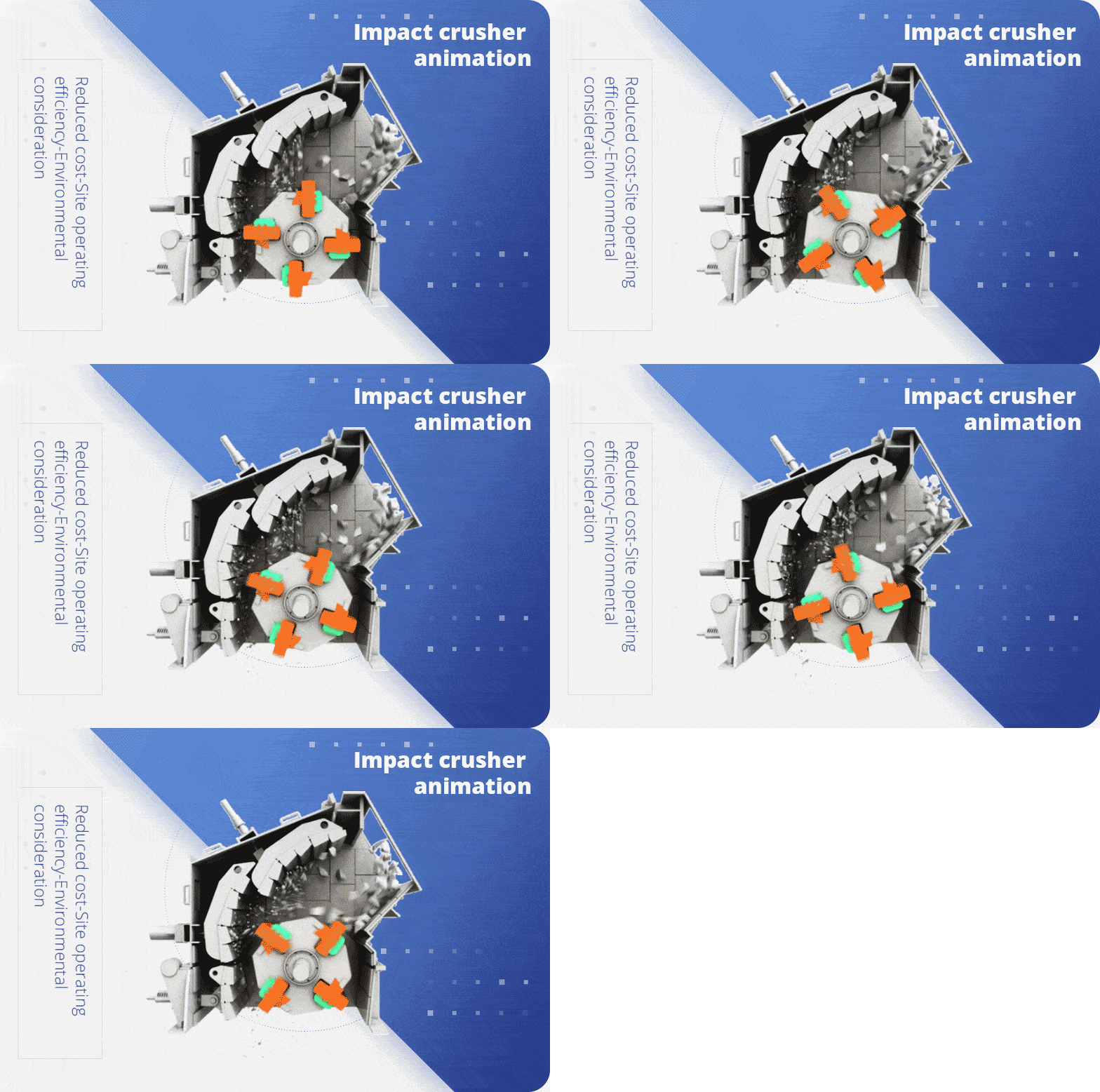
 1. Material Feeding
Rock or other suitable feed material enters the impact crusher through the feed opening and moves into the crushing chamber. The maximum feed size and material properties must match the crusher’s specifications.
 2. Rotor Acceleration
The motor drives the rotor at high speed. The blow bars or hammers mounted on the rotor strike the incoming material and accelerate it toward the impact plates.
 3. Primary Impact Crushing
When the accelerated material hits the impact plates, the collision breaks larger pieces into smaller fragments. The force of impact initiates the main size-reduction process.
 4. Repeated Impact and Reduction
The material may undergo additional impacts from the rotor and impact plates until it reaches a size that allows it to leave the crushing chamber. The final particle size depends on the crusher design, operating settings, and feed characteristics.
5. Discharge and Screening
Crushed material exits through the discharge opening. If the application requires specific aggregate sizes, a vibrating screen can separate the output into different size fractions. Oversized material may require further crushing, depending on the plant configuration.
Common Impact Crusher Problems and How to Fix Them
Impact crushers used in Indonesia’s quarries, aggregate plants, road construction projects, and construction waste recycling facilities may experience vibration, oversized discharge, unusual noise, or bearing overheating. Dust, wet feed material during the rainy season, abrasive rock, and inconsistent feed conditions can contribute to operating problems. The correct response depends on the symptoms and their underlying causes. Use the following troubleshooting guide to identify what to check and when maintenance is required.

1. Excessive Vibration
- Possible causes: Unevenly installed or worn blow bars, material buildup on the rotor, loose fasteners, rotor imbalance, or bearing damage.
- How to fix it: Stop the crusher machine and isolate the power supply before inspection. Check blow bar installation, rotor cleanliness, fasteners, and bearing condition. Replace worn parts and have the rotor balance checked according to the manufacturer’s maintenance instructions.
- Prevention tip: Inspect wear parts regularly and maintain consistent installation procedures when replacing blow bars.
2. Oversized Discharge Material
- Possible causes: Worn blow bars or impact plates, an excessive impact gap, unsuitable feed size, or changes in material hardness and feed conditions.
- How to fix it: Inspect the blow bars and impact plates for wear. Check the impact gap and operating settings against the manufacturer’s specifications. Confirm that the feed material meets the crusher’s size requirements and adjust the settings only as permitted by the impact crusher design.
- Prevention tip: Monitor product grading and wear-part condition, especially when processing abrasive materials such as river stone or volcanic rock.
3. Unusual Knocking or Rattling Noise
- Possible causes: Loose components, damaged blow bars, foreign objects in the crushing chamber, or contact between internal parts.
- How to fix it: Stop the impact stone crusher immediately if unusual knocking or rattling occurs. Isolate the power supply and follow the site’s lockout procedure before inspecting the crushing chamber. Check for foreign objects, loose fasteners, damaged wear parts, and signs of internal contact. Remove debris and replace or secure components as required.
- Prevention tip: Inspect incoming material and use suitable upstream screening or metal separation where required, particularly when processing construction and demolition waste.
4. Bearing Overheating
- Possible causes: Insufficient or excessive lubrication, contaminated grease, bearing wear, misalignment, or excessive operating loads. Dust and moisture can also contribute to contamination if sealing and maintenance are inadequate.
- How to fix it: Stop the machine if the bearing temperature exceeds the specified operating limit or continues to rise abnormally. Check the lubrication condition, seals, bearing alignment, and load conditions. Clean or replace lubricant and replace damaged components according to the manufacturer’s instructions.
- Prevention tip: In Indonesia’s dusty quarries and rainy-season operating conditions, inspect seals and lubrication points regularly and follow the recommended lubrication schedule.
Safety note: Before inspecting, cleaning, or adjusting a single rotor impact crusher, stop the equipment, isolate all relevant energy sources, and follow the manufacturer’s lockout and maintenance procedures. Never reach into the crushing chamber or adjust internal components while the machine is running.
How to Maintain an Impact Crusher on Indonesian Construction Sites?
Regular impact crusher maintenance helps contractors in Indonesia maintain stable production, reduce unplanned downtime, and extend equipment service life. At quarries, road construction sites, and aggregate production facilities, tropical heat, high humidity, dust, and seasonal rainfall can increase maintenance demands. Follow the inspection, wear-part replacement, and lubrication procedures below, and always confirm that technical limits match your specific crusher model.
1. Impact Crusher Regular Inspections
- Check vibration: Monitor the crusher for unusual vibration or noise during operation. If vibration increases suddenly, stop the machine and isolate the power supply before inspecting the rotor, blow bars, fasteners, and bearings.
- Monitor bearing temperature: Use 35°C as the stated normal operating reference and 70°C as the stated maximum limit for this maintenance guideline. If the temperature rises abnormally or reaches the specified limit, stop the crusher and investigate the cause. Confirm these values against the manufacturer’s manual because allowable temperatures vary by bearing design and operating conditions.
- Inspect blow bars: Check blow bars regularly for uneven wear, cracks, and damage. Abrasive feed materials, including some types of limestone and granite, can accelerate wear. Turn or replace blow bars according to the crusher design and manufacturer’s instructions.
- Check rotor balance: After replacing blow bars or other rotor components, inspect the rotor and perform the balancing procedure specified by the manufacturer. The stated imbalance limit for this guideline is 0.25 kg·m; verify that this tolerance applies to the specific crusher model before use.
2. Rotor and Frame Checks
- Inspect frame liners: Check the impact plates and chamber liners for excessive wear, cracks, or looseness. Replace worn components before they damage the crusher housing or affect crushing performance.
- Tighten bolts and fasteners: Inspect fasteners before startup and during scheduled maintenance, especially after transportation, installation, or major repairs. Tighten them to the manufacturer’s specified torque to reduce the risk of loosening caused by vibration.
- Check for material buildup: Inspect accessible areas for accumulated dust or feed material. Before cleaning, stop the crusher, isolate all relevant energy sources, and follow the approved maintenance procedure.
3. Hydraulic Housing Opening and Closing
- Opening procedure: For models equipped with a hydraulic opening system, stop the crusher, isolate the power supply, and release fasteners in the sequence specified in the manual. Use the designated hydraulic system and approved mechanical supports. Never rely on hydraulic pressure alone to hold the housing open.
- Inspection and maintenance: Inspect blow bars, impact plates, liners, and fasteners while the machine is safely secured. Replace worn or damaged parts according to the manufacturer’s instructions.
- Closing procedure: Remove tools and loose debris, clean the specified contact and sealing surfaces, and close the housing according to the approved procedure. Reinstall and tighten all fasteners, remove temporary supports only as instructed, and confirm that guards and safety devices are restored before restarting.
4. Lubrication and General Maintenance
- Lubricate designated points: Keep specified lubrication points properly lubricated to reduce friction and wear. In Indonesia’s humid and dusty operating environments, inspect seals and lubrication points regularly for contamination and water ingress.
- Select the correct grease: Use the grease grade specified by the manufacturer. The stated recommendation for this guideline is No. 2 lithium-based grease, provided it is approved for the bearing and operating conditions of the selected crusher.
- Follow the lubrication interval: The stated maintenance schedule calls for lubrication every 8 operating hours and grease replacement every 3 months. Confirm these intervals against the manufacturer’s instructions and adjust them where the approved maintenance schedule or operating conditions require it.
- Clean and refill bearings correctly: When grease replacement is required, follow the specified cleaning procedure and prevent dust or moisture from entering the bearing. The stated refill quantity is approximately 50% of the bearing housing volume; verify the correct quantity for the actual bearing arrangement before applying it, as over-lubrication can also cause overheating.
Impact Crusher Maintenance Checklist
For Indonesian quarrying, road construction, and aggregate production operations, record inspection results, operating hours, lubrication work, and wear-part replacements. A consistent maintenance log helps operators identify recurring problems and plan servicing around production requirements.
- Before startup: Check guards, fasteners, visible damage, lubrication conditions, and any unresolved faults from the previous shift.
- During operation: Monitor vibration, bearing temperature, unusual noise, and discharge quality. Stop the machine if a serious abnormal condition develops.
- During scheduled maintenance: Inspect blow bars, impact plates, frame liners, rotor condition, fasteners, seals, and lubrication points.
- During the rainy season: Pay particular attention to water ingress, grease contamination, and the condition of seals and protective covers at outdoor sites.
Safety note: Before inspection, cleaning, or repair, stop the crusher, isolate all relevant energy sources, and follow the manufacturer’s lockout procedures. Only qualified personnel should perform rotor balancing, bearing maintenance, and hydraulic housing operations.
Impact Crusher vs. Cone Crusher vs. Jaw Crusher: How to Choose
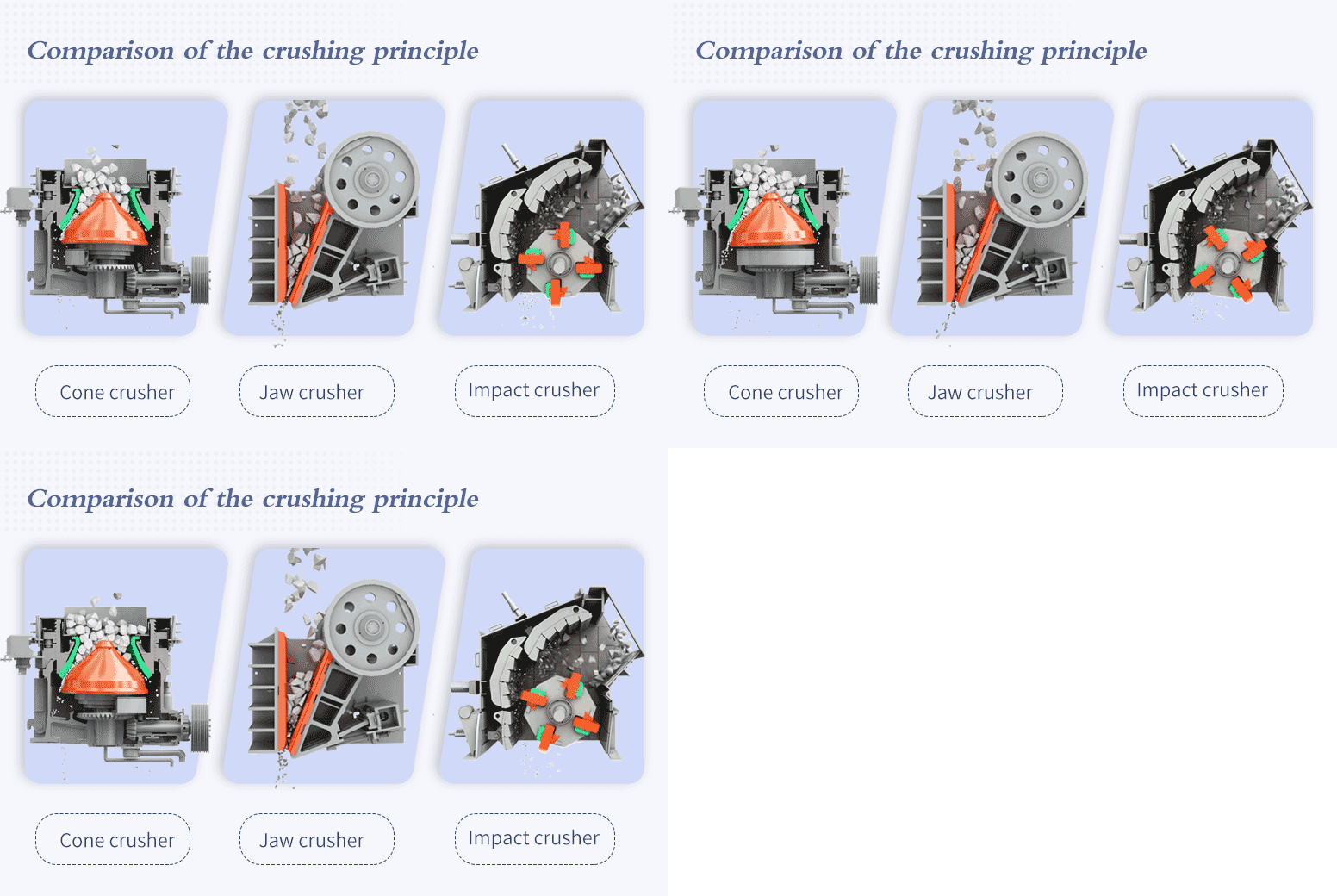
The best crusher for a project in Indonesia depends on the feed size, material hardness and abrasiveness, required output size, aggregate shape, and production capacity. A jaw crusher is commonly used for primary crushing of large rocks, an impact crusher is often selected for producing well-shaped aggregates from suitable materials, and a cone crusher is widely used for secondary or tertiary crushing of hard, abrasive rock. The comparison below explains their main differences and typical applications.

| Comparison | Jaw Crusher | Impact Crusher | Cone Crusher |
|---|---|---|---|
| Main Crushing Stage | Primary crushing | Secondary crushing; primary crushing for suitable feed materials and models | Secondary or tertiary crushing |
| Crushing Principle | Compresses material between a fixed jaw and a moving jaw | Breaks material through high-speed impact against impact plates | Compresses material between a gyrating mantle and a stationary concave |
| Suitable Materials | Granite, andesite, limestone, and other rock types within the machine’s specifications | Limestone, selected concrete waste, and other suitable materials with acceptable abrasiveness | Granite, andesite, and other hard, abrasive rocks within the machine’s specifications |
| Feed Size | Suitable for large feed rocks, depending on the feed opening and model | Depends on the rotor design, feed opening, and model specifications | Generally receives material from a primary crusher; allowable feed size varies by model |
| Typical Product Characteristics | Crushed material suitable for further processing in a multi-stage plant | Often produces well-shaped, cubical aggregates | Produces relatively consistent aggregate sizes when properly configured |
| Main Advantages | Handles large rocks and provides a practical solution for primary size reduction | Good particle shaping and effective crushing of suitable materials | Well suited to continuous crushing of hard, abrasive rock |
| Key Considerations | May require secondary crushing to achieve the final product size | Wear-part consumption can increase when processing highly abrasive materials | Requires suitable feed conditions and correct settings; investment and maintenance costs depend on the configuration |
| Typical Applications in Indonesia | Quarries, aggregate plants, and the primary crushing stage of road construction projects | Aggregate shaping, limestone processing, and suitable construction waste recycling projects | Hard-rock quarries and secondary or tertiary aggregate production using granite or andesite |
| Common Plant Configuration | Jaw crusher + secondary crusher + vibrating screen | Jaw crusher or suitable feeder + impact crusher + vibrating screen, depending on feed conditions | Jaw crusher + cone crusher + vibrating screen |
| Best Choice When | You need to reduce large rocks during the first crushing stage | Aggregate shape is important and the feed material is suitable for impact crushing | You need to process hard, abrasive rock in secondary or tertiary crushing |
Impact Crusher FAQs for Indonesian Contractors
Choosing and operating an impact crusher involves more than comparing capacity and price. Contractors in Indonesia also need to understand the crushing process, key components, wear-part replacement, and differences between impact and hammer crushers. The following FAQs explain these points to help quarry operators, aggregate producers, road contractors, and construction waste recyclers make informed equipment decisions.
What Is an Impact Crusher, and Where Is It Used in Indonesia?
An impact crusher uses a high-speed rotor fitted with blow bars or plate hammers to break material against impact plates. It can produce well-shaped, cubical aggregates when the material and operating settings are suitable.
In Indonesia, impact crushers are used for limestone processing, aggregate production, road construction, and selected construction waste recycling projects. Material hardness, abrasiveness, moisture, and feed size all affect crusher selection.
An impact crusher can serve as a primary impact crusher or secondary crusher, depending on the model and application. Many aggregate plants use a jaw crusher for primary crushing, followed by an impact crusher to reduce material size or improve particle shape.
What Are the Main Components of an Impact Crusher, and What Do They Do?
The main components of a typical single-rotor impact crusher work together to feed, crush, and discharge material. Their exact design varies by model, but the principal impact crusher components commonly include:
- Rotor: Rotates at high speed and carries the blow bars or plate hammers that deliver impact energy to the feed material.
- Blow Bars or Plate Hammers: Strike and accelerate the material during crushing. These parts wear over time and require regular inspection.
- Impact Plates: Provide surfaces against which the material impacts, allowing further breakage and size reduction.
- Crushing Chamber: Houses the rotor and impact plates, providing the space where repeated impacts reduce material size.
- Liners: Protect designated internal surfaces of the crusher from abrasion and impact damage.
- Feed Opening: Allows raw material to enter the crushing chamber. The maximum feed size must remain within the model’s specifications.
- Discharge Opening: Allows crushed material to leave the chamber. Its design and adjustment affect the crushing process and achievable product size.
- Adjustment Mechanism: On applicable models, adjusts the position or gap of the impact plates to help control the crushing process and product size.
- Drive Motor: Supplies power to rotate the impact crusher rotor through the machine’s drive system.
Understanding these impact crusher parts helps operators identify wear, plan maintenance, and select appropriate replacement parts. Always consult the specific crusher manual because component names and adjustment mechanisms vary between models.
What Are the Main Wear Parts of an Impact Crusher?
The main wear parts of a typical impact crusher include blow bars or plate hammers, impact plates, and internal liners. Their service life depends on material abrasiveness, feed size, operating settings, throughput, and maintenance practices.
- Blow Bars or Plate Hammers: These parts directly strike the feed material and are exposed to repeated impact and abrasion. Inspect them for uneven wear, cracks, and damage. Turn or replace them only when permitted by the manufacturer’s instructions.
- Impact Plates: These components receive repeated impacts from the moving material. Excessive wear can affect the crushing process and final product size, so inspect them at the recommended intervals.
- Internal Liners: Liners protect the crusher housing and other designated internal surfaces. Replace worn or damaged liners before they compromise the protected components.
- Other Model-Specific Wear Parts: Some crusher designs include additional wear components, such as protective plates or grate and screen elements. Check the parts diagram for the selected model rather than assuming every reversible impact crusher uses the same components.
For Indonesian quarries processing abrasive rock, regular wear inspections and timely replacement can help maintain consistent production. When planning impact crusher spare parts, consider the feed material, expected operating hours, and the manufacturer’s recommended replacement criteria.
What Are the Differences and Similarities Between an Impact Crusher and a Hammer Crusher?
Both impact crushers and hammer crushers use impact force to break materials, but they differ in rotor design, crushing chamber structure, and material suitability.
Similarities
- Both use rotating components to crush materials through impact.
- Both require regular maintenance of wear parts, bearings, and drive systems.
Key Differences
- Working Principle: Impact crushers use blow bars and impact plates, while hammer crushers rely mainly on rotating hammers.
- Material Suitability: Impact crushers are commonly used for limestone and suitable aggregates. Hammer crushers often suit softer to moderately hard materials, depending on the design.
- Product Output: Impact crushers can produce well-shaped aggregates, while hammer crushers can produce finer material depending on the grate and chamber design.
- Wear and Cost: Wear-part consumption depends on material abrasiveness, machine design, and operating conditions.
Which should you choose? For aggregate production in Indonesia, consider a double rotor impact crusher when particle shape matters and the material is suitable. Choose a hammer crusher when its design matches your material and target product size. Always compare capacity, feed size, and wear-part costs.
Find the Right Impact Crusher for Your Project in Indonesia
Looking for an impact crusher for cubical aggregate production, limestone crushing or construction waste recycling in Indonesia? ANDAMINE customizes impact crusher setups to fit your capacity, feed size and site conditions. Send us your project details for a targeted quotation and suitable impact crusher machine recommendation.


