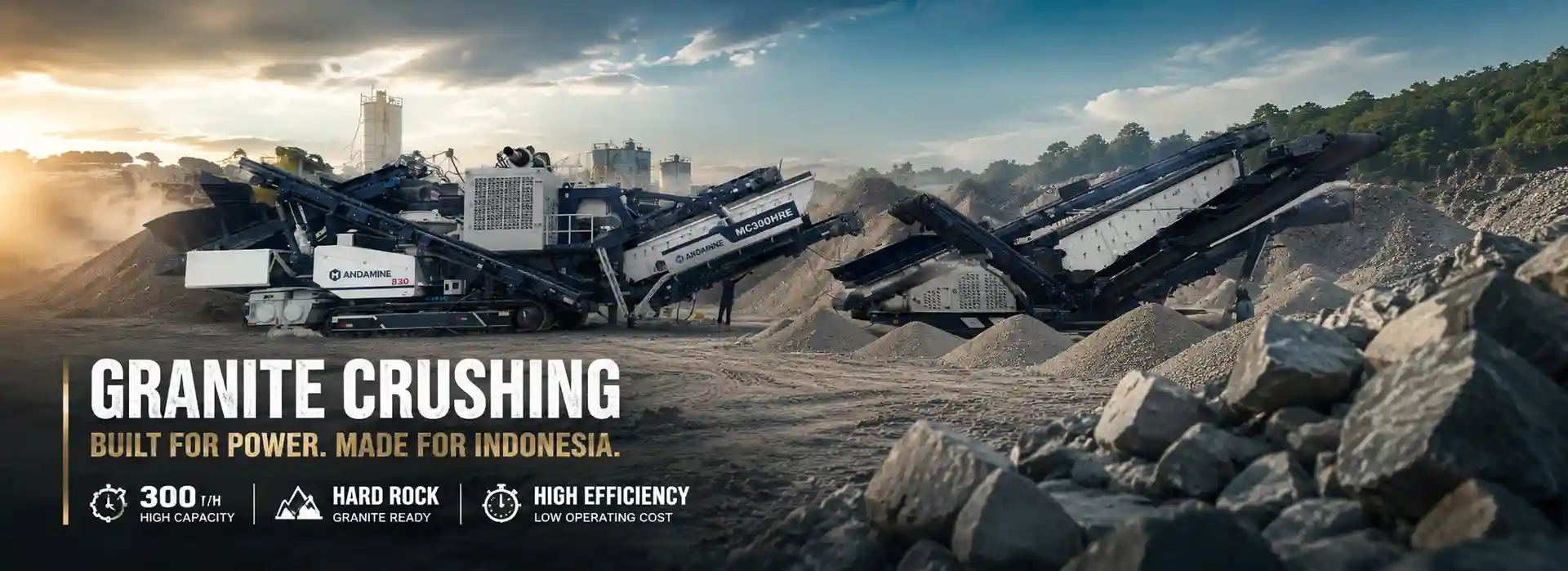
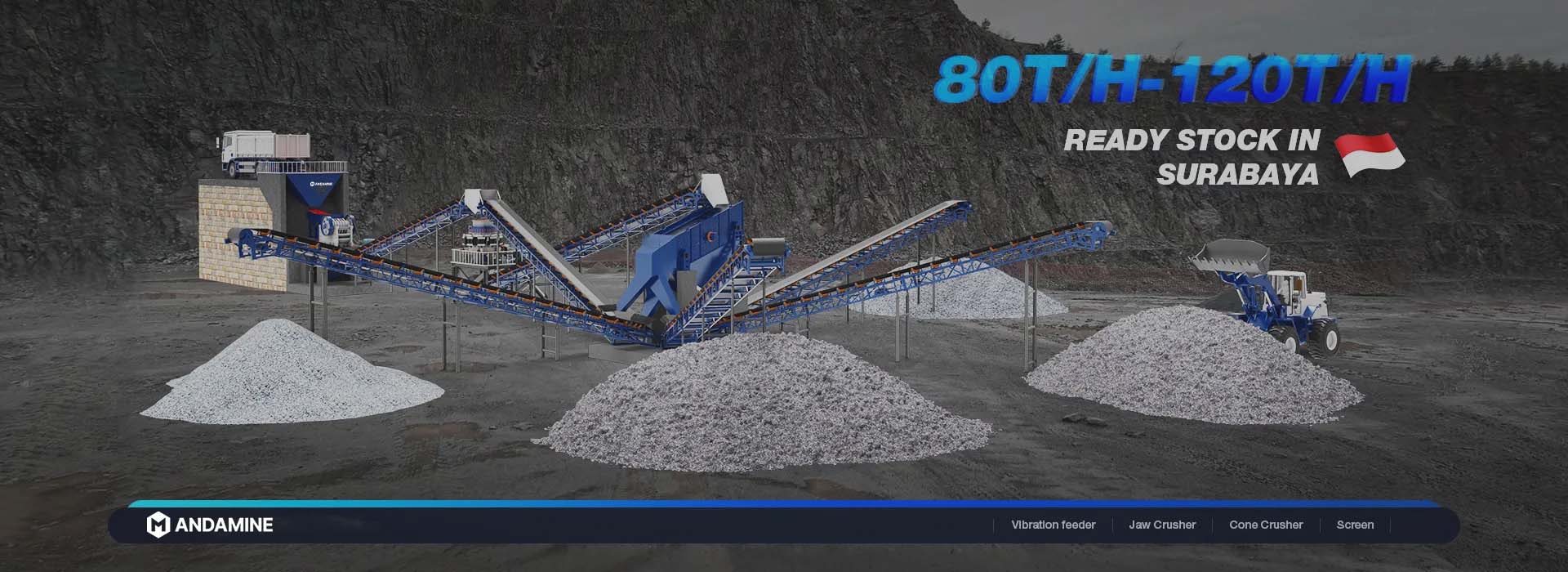
A granite crushing plant turns hard, high-quartz granite into usable aggregates and manufactured sand for Indonesian quarries. Local sites often face fast-worn parts, rainy-season jams, and diverse island working conditions, while needing to meet SNI standards and pass KLHK environmental assessments. As an AIMIX mining brand, Andamine delivers a complete granite crushing solution—featuring stationary, wheel-mounted, and track-mounted systems for Java, Sumatra, Kalimantan, and beyond—to guarantee steady output, high-grade quality, and full regulatory compliance.
 Heavy-Duty Setup & Wear Resistance
 Standard Aggregates & Eco-Friendly
 IoT Control & Localized Support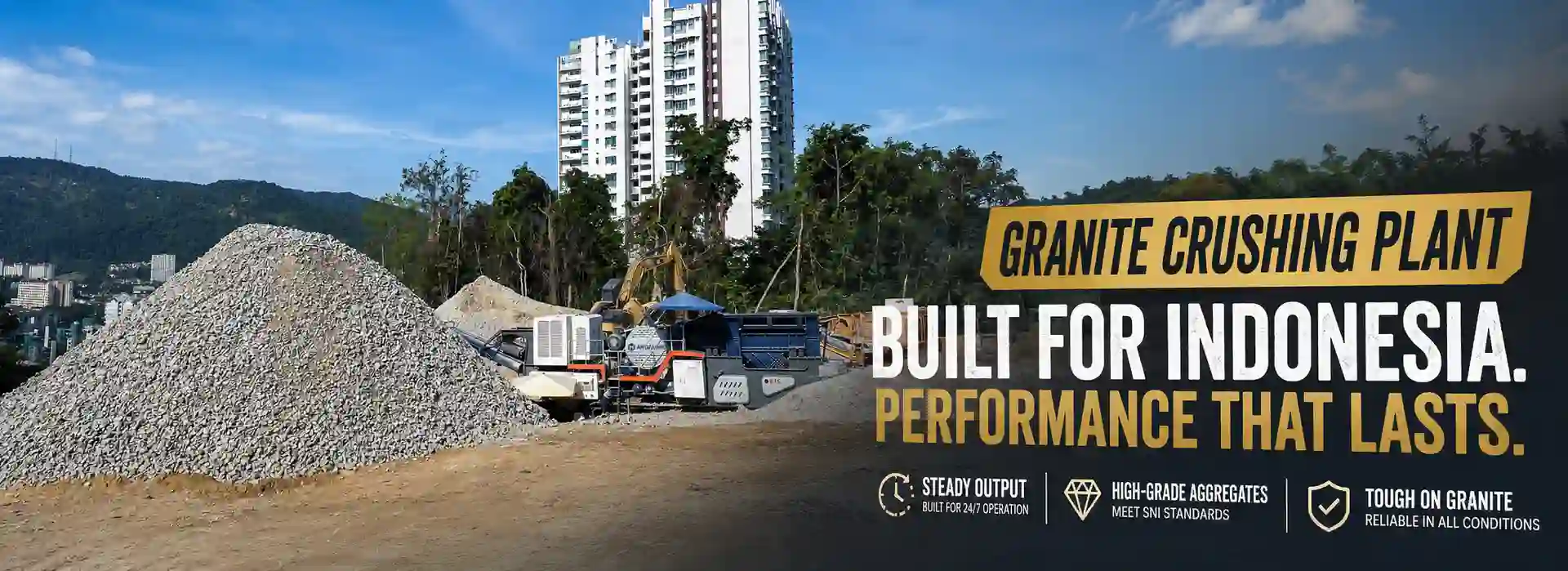
What Are the Typical Crushing Challenges in Indonesian Granite Quarries?
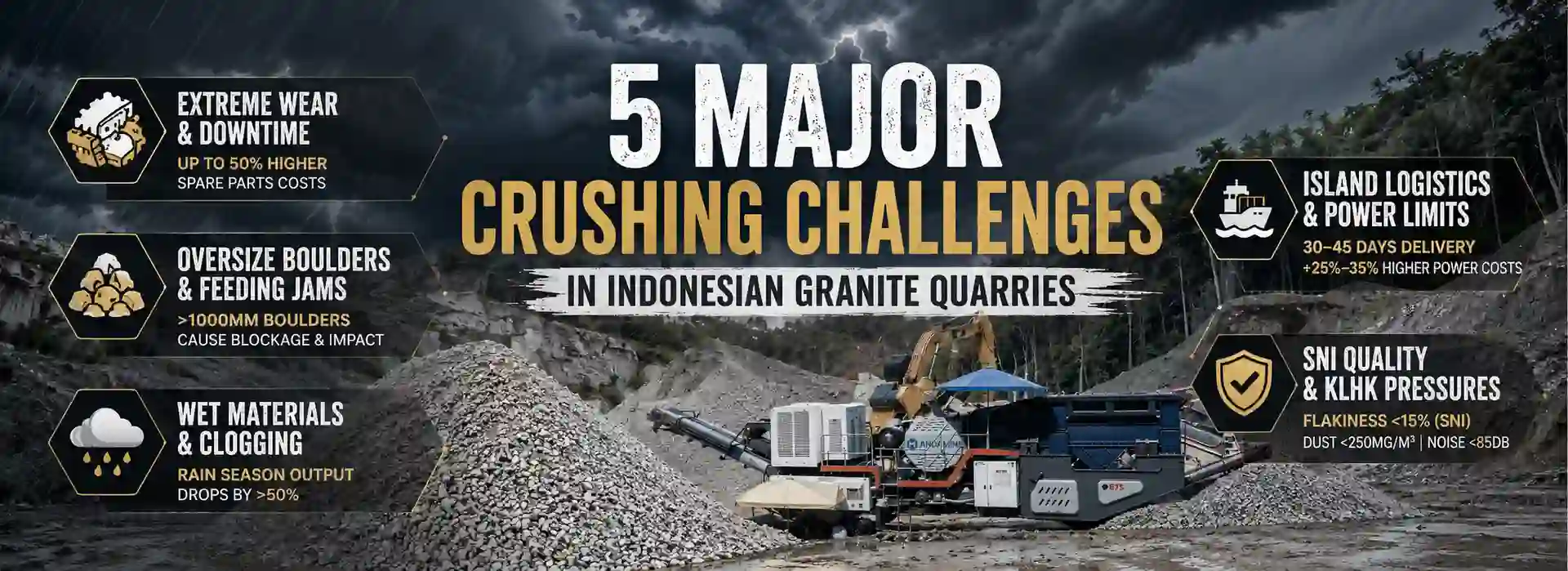
Investing in a granite crushing plant for sale in Indonesia cannot rely on standard, off-the-shelf mineral processing designs. Due to the unique tropical island climate, the physical characteristics of high-hardness granite, and strict compliance with SNI standards and KLHK environmental regulations, quarry operators typically face 5 major systematic challenges:
Extreme Wear & Frequent Downtime from High-Quartz Granite
- Rock Characteristics: Indonesian granite features a Mohs hardness of 6 to 7 with free silica content up to 70%, resulting in extreme abrasiveness.
- Component Loss: Standard manganese steel jaw plates last only 150 to 250 hours, and cone granit crusher mantles wear out severely within 300 to 500 hours.
- Financial Impact: Frequent replacements increase spare parts costs by 30% to 50%, while unplanned maintenance cuts daily production by 15% to 25%.
High Oversize Boulders & Feeding Jams Impacting Production
- Raw Stone Gradation: Local blasting and hard rock cleavage frequently yield oversized boulders exceeding 800mm to 1000mm.
- Inlet Blockage: Oversized raw stones regularly cause “bridging” or jamming at standard jaw crusher feeding inlets.
- Structural Fatigue: Heavy impacts from hard boulders subject crushing chambers to high-frequency cyclic loads, raising frame cracking risks.
Severe Clogging & Output Loss from Wet Rainy-Season Materials
- Extreme Climate Impact: Annual rainfall of 2,000 to 4,000 mm keeps surface moisture above 10% to 15%, causing fine powder to cake inside chambers.
- Screening Drop: Wet and sticky materials increase feeder and chute blockage rates by over 60%, dropping vibrating screen passing rates by 40%.
- Operation Time Loss: Effective rainy-season production time drops to less than 50% of dry-season performance.
Island Logistics, Power Limits & Salt-Fog Corrosion
- Logistics Bottlenecks: Remote quarries feature poor roads, requiring 30 to 45 days for inter-island transport and assembly of stationary units.
- Power Constraints: Mountainous sites lack stable grid power, forcing complete reliance on diesel generators that raise operating costs by 25% to 35%.
- Corrosion Threats: High coastal humidity and salt fog cause severe rust and short circuits in standard electrical components within 6 to 12 months.
Strict SNI Quality Thresholds & KLHK Environmental Pressures
- Quality Red Lines: Traditional processes yield aggregates with a flakiness index of 25% to 35%, failing the SNI requirement of below 15%.
- Market Exclusion: Sub-standard aggregate quality bars products from supplying major government and commercial infrastructure projects.
- Environmental Risks: Open production lines often exceed 250 mg/m³ dust and 85 dB noise, risking heavy KLHK fines or forced shutdowns.
What Are the Mature Process Routes for Granite Crushing?
Investing in granite mining in Indonesia means that blindly copying soft-rock crushing designs will lead to high equipment failure rates and substandard products. Faced with high hardness, high quartz content, and strict SNI aggregate gradation standards, Andamine recommends the following long-term proven process routes and equipment combinations based on hard-rock properties and Indonesian market demands:
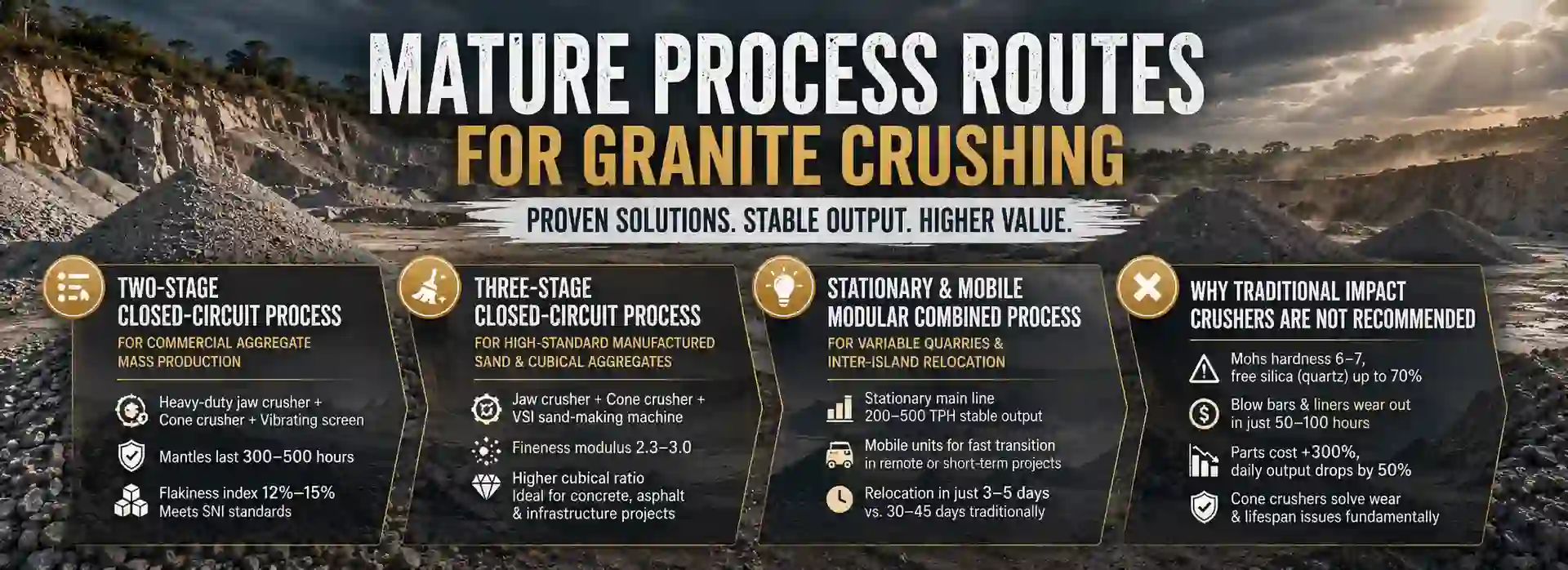
 Two-Stage Closed-Circuit Process (For Commercial Aggregate Mass Production)
- Process Configuration & Equipment: Built with a “Heavy-duty jaw crusher (primary) + Multi-cylinder/Single-cylinder hydraulic cone crusher (secondary/fine) + Vibrating screen” to form a classic two-stage closed-circuit line.
- Hard Rock Adaptation & Wear Control: The cone crusher uses the “interparticle comminution” principle to efficiently handle Mohs hardness 6-7 rocks. Mantles last 300 to 500 hours, significantly lowering part replacement frequency.
- Product Quality & Economic Return: The flakiness index is stably controlled within 12% to 15%, fully meeting standard SNI aggregate requirements with a short investment payback period.
 Three-Stage Closed-Circuit Process (For High-Standard Manufactured Sand & Cubical Aggregates)
- Process Configuration & Equipment: Building upon the two-stage setup by adding a Vertical Shaft Impact (VSI) sand-making machine, forming a “Jaw crusher + Cone crusher + VSI crusher” three-stage system.
- Shaping & Gradation Optimization: Utilizing “stone-on-stone” and “stone-on-iron” combined shaping, the produced sand features continuous gradation with a fineness modulus steady at 2.3 to 3.0.
- High-End Application & Premium Value: Significantly boosts the cubical particle ratio of finished aggregates, fully satisfying strict requirements for Indonesian commercial concrete, asphalt roads, and national infrastructure projects.
 Stationary & Mobile Modular Combined Process (For Variable Quarries & Inter-Island Relocation)
- Process Configuration & Equipment: Addressing Indonesia’s complex terrain, multiple islands, and poor local infrastructure by combining a “stationary heavy-duty main line with wheel/track-mounted mobile crushing stations.”
- Capacity Assurance & Mobile Operation: The stationary side secures massive stable daily output (e.g., 200-500 TPH), while the mobile units offer flexible fast transitions for remote mountainous or short-term projects.
- Logistics Cost & Relocation Cycle: Cuts heavy equipment transfer cycles from the traditional 30-45 days down to just 3-5 days, effectively reducing inter-island logistics and early-stage civil work costs.
 Why Are Traditional Impact Crushers Not Recommended for Granite Crushing?
- Rapid Wear Causing Cost Outages: Indonesian granite features a Mohs hardness of 6 to 7 with free silica (quartz) up to 70%. Impact crushers rely on impact-shear, causing blow bars and impact liners to wear out in just 50 to 100 hours.
- Frequent Part Changes Hitting Output: Using impact crushers for second-stage hard rock causes spare parts costs to skyrocket by over 300% and cuts daily production in half due to massive unplanned downtime.
- Process Alternative Solution: Therefore, for Indonesian hard rock conditions, secondary and fine crushing must adopt hydraulic cone crushers driven by interparticle comminution to fundamentally resolve wear and lifespan issues.
Efficient ANDAMINE Crushing Solutions for Indonesian Granite Quarries
To successfully tackle the unique challenges of Indonesian granite extraction—ranging from extreme rock hardness and high abrasiveness to strict environmental and island logistics constraints—standard equipment configurations simply will not suffice. Tailored specifically for diverse regional working conditions across Java, Sumatra, and Kalimantan, Andamine provides comprehensive, high-efficiency crushing plant solutions engineered to deliver stable output, superior aggregate shapes, and full regulatory compliance.
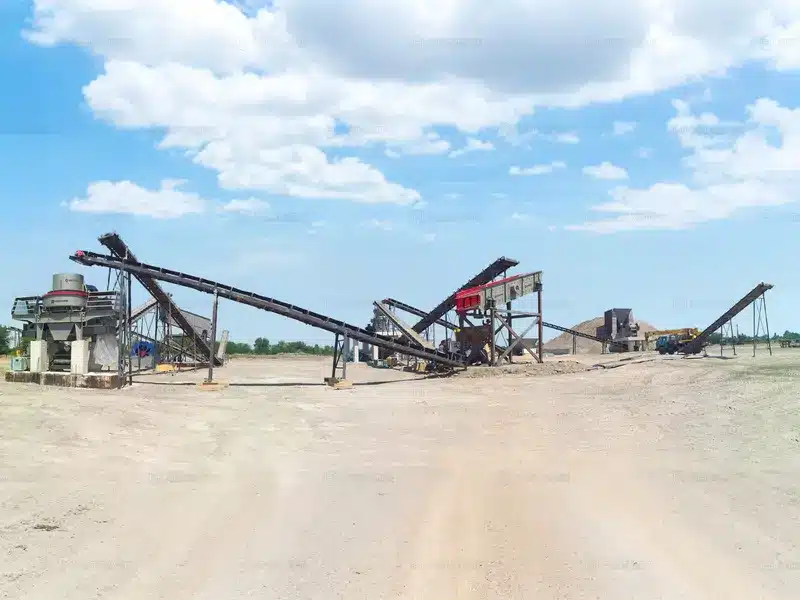
Large-Scale Fixed Granite Production Base in Java
Tailored for high-capacity commercial quarrying in Jakarta and surrounding Java economic corridors, this stationary granite crushing machine processes tough local granite to supply concrete batching and infrastructure projects.
- System Configuration: APJ granite jaw crusher + APC cone crusher + APV VSI sand-making machine forming a three-stage closed-circuit line.
- Crushing Workflow: Primary jaw crushing, secondary/fine cone crushing, and terminal VSI shaping completing a full closed-loop.
- Capacity Range: 300 – 500 T/H capacity delivering thousands of tons of stable daily production output.
- Max Feed & Products: Max feed ≤800mm; yields multi-grade 0-5mm, 5-10mm, 10-20mm, and 20-40mm granite aggregates.
- Environmental Design: Equipped with pulse dust collection and noise reduction enclosures meeting strict local environmental assessments.
- Product Quality: Low flakiness and high-standard gradation meeting requirements for Jakarta commercial concrete batching plants.
Decentralized Municipal Granite Projects | Wheel-Mounted Mobile Relocation Solution
Designed for decentralized road construction and municipal repairs across Indonesian island city clusters, this wheeled mobile crusher plant eliminates civil works for fast cross-site relocations.
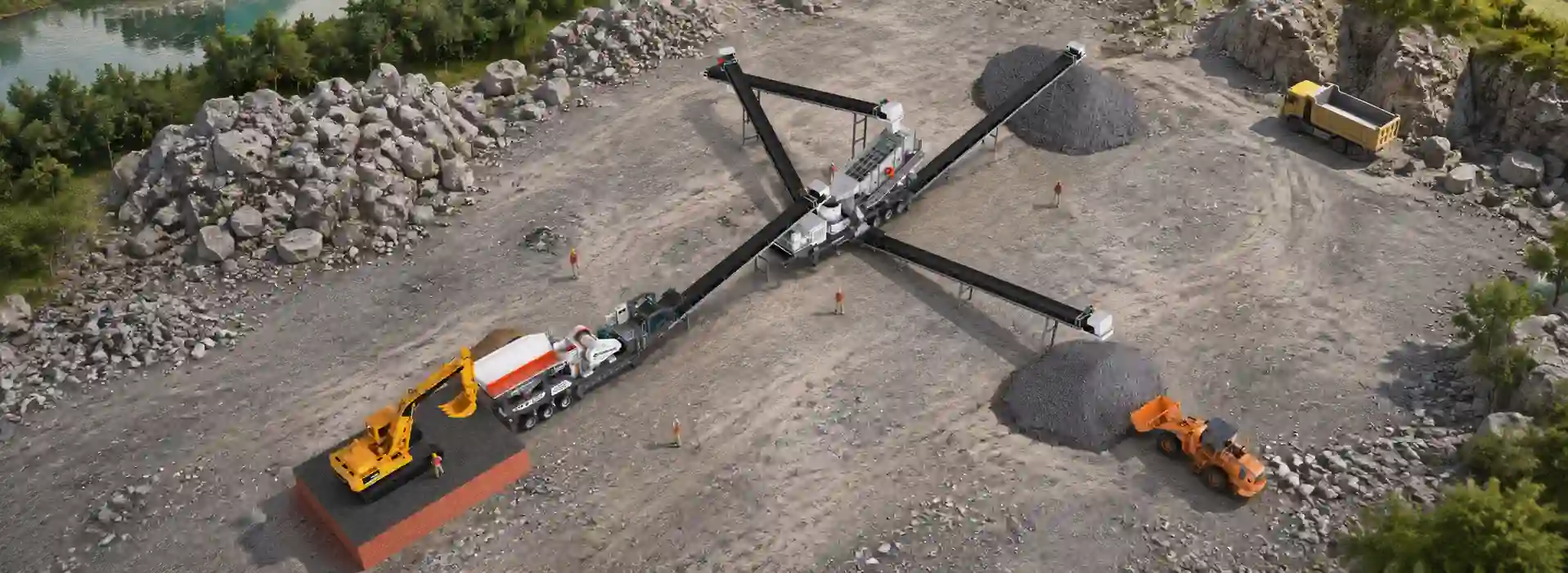

APY2-J Wheel Mobile Jaw Crusher Granite Specifications
- Processing Capacity: 50 – 400 T/H
- Max Feed Size: ≤720 mm
- Output Particle Size: 10-20mm, 20-40mm, 40-60mm
- Applicable Materials: Local Indonesian high-hardness raw granite
- Core Highlights: Equipped with an intelligent PLC control system and onboard hydraulic legs. The crushing chamber is optimized for the compressive characteristics of granite, enabling one-button rapid positioning and efficient primary crushing while significantly cutting cross-site logistics costs.

APY2-C Wheel Mobile Cone Crusher Specifications
- Processing Capacity: 100 – 310 T/H
- Max Feed Size: ≤300 mm
- Output Particle Size: 0-5mm, 5-10mm, 10-20mm
- Applicable Materials: Local Indonesian medium-hard and hard granite
- Core Highlights: Utilizes a high-energy cone crushing host and interparticle comminution principle, featuring hydraulic clearing and overload protection, providing continuous and stable high-quality road aggregates during secondary and fine granite crushing stages.
Small & Medium Fast-Commissioning Sites| Wheel-Mounted Integrated Crushing & Screening Solution
Built as a plug-and-play, asset-light solution for local Indonesian investors, this single-vehicle wheeled plant integrates all crushing and screening stages to slash early setup costs.
APY4-S Wheel-Mounted Four-in-One Crushing & Screening Station Specifications
- Processing Capacity: 30 – 200 T/H
- Max Feed Size: ≤500 mm
- Output Particle Size: 5-10mm, 10-20mm, 20-40mm
- Applicable Materials: Natural granite blocks and weathered granite
- Core Configuration: Vibrating feeder + jaw crusher + cone crusher + vibrating screen (Four-in-one highly integrated on a single chassis)
- Core Highlights: Small footprint, fast return on investment; the vibrating feeder supports remote variable frequency adjustment, allowing flexible tuning of feeding tempo based on granite moisture and hardness changes, perfectly adapting to tropical rainforest climates.
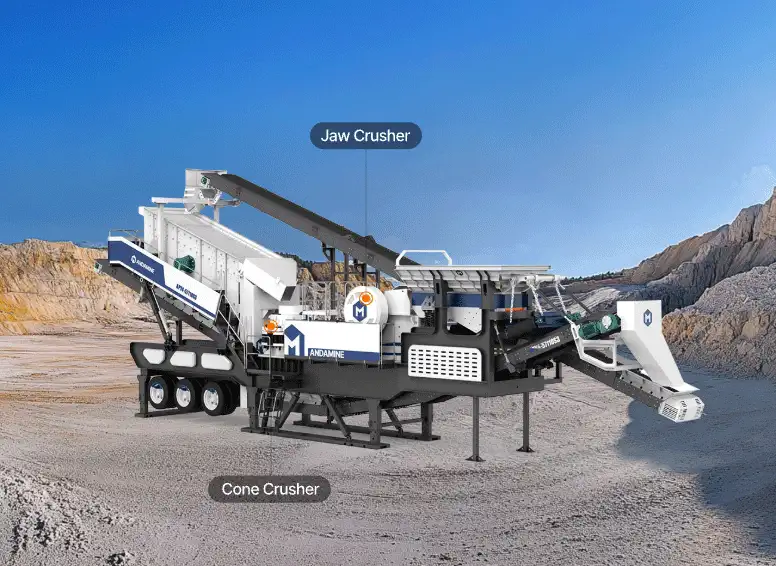
Sumatra & Kalimantan Remote Quarries | Track-Mounted All-Terrain Solution
Engineered to conquer off-grid remote mining, muddy rainy seasons, and unpaved terrain around Sumatra’s plantations and Kalimantan’s rugged hinterlands using hydraulic tracks.
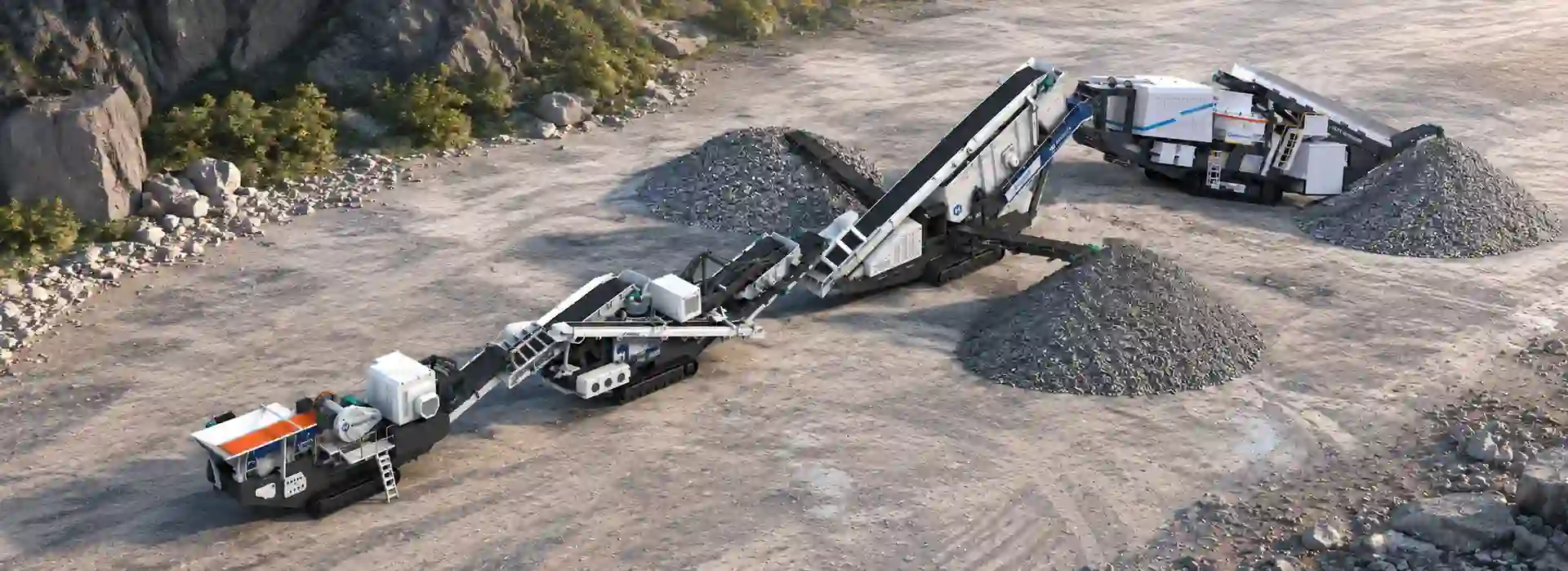


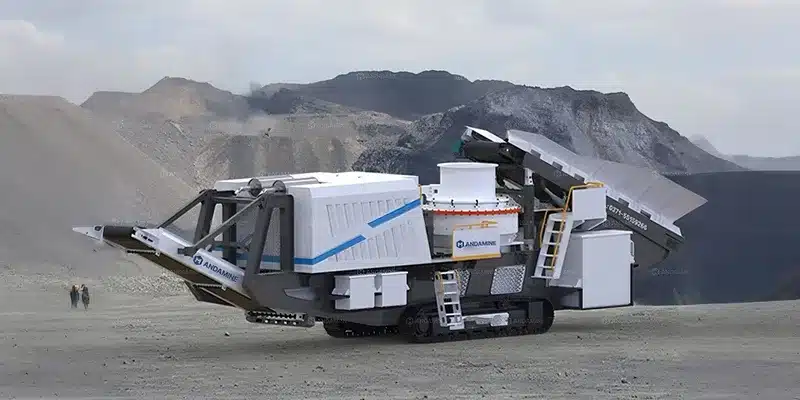
APYL2-J Track-Mounted Mobile Jaw Crusher Specifications
- Processing Capacity: 80 – 415 T/H
- Max Feed Size: ≤700 mm
- Output Particle Size: 20-30mm, 30-40mm (customizable)
- Applicable Materials: Tropical heavy-duty granite mining
- Core Highlights: Designed for tropical heavy-duty granite mining with wear-resistant, anti-impact protection plates; full-track hydraulic drive chassis eliminates the need for ground hardening, enabling deployment to blast faces with wireless remote-controlled safe relocation.
APYL2-C Track-Mounted Mobile Cone Crusher Specifications
- Processing Capacity: 100 – 310 T/H
- Max Feed Size: ≤180 mm
- Output Particle Size: 5-10mm, 10-20mm, 20-30mm, 30-40mm (customizable)
- Applicable Materials: Fine secondary and tertiary crushing of high-hardness granite
- Core Highlights: Deeply adapted to tropical hard-rock granite quarries, utilizing smart interparticle comminution to effectively lower flakiness index and output premium granite aggregates meeting high-grade building and bridge construction standards.
APYL-V Track-Mounted VSI Sand-Making & Shaping Equipment
- Processing Capacity: 70 – 450 T/H
- Max Feed Size: ≤80 mm
- Output Particle Size: 0-4.75 mm (adjustable)
- Applicable Materials: Granite manufactured sand production and stone shaping
- Core Highlights: Addresses the urgent demand for high-quality granite manufactured sand in remote infrastructure sites in Indonesia, achieving “sand-making on the go” to directly deliver high-end cubical granite manufactured sand with plump particle shapes and excellent gradation.
What Auxiliary Equipment Is Needed for Granite Crushing Lines?
Maximizing output and coping with Indonesia’s harsh abrasives requires matching primary machinery with rugged supporting modules. Integrating localized feeding, screening, iron removal, and environmental controls ensures optimal performance and regulatory compliance across Java, Sumatra, and Kalimantan.
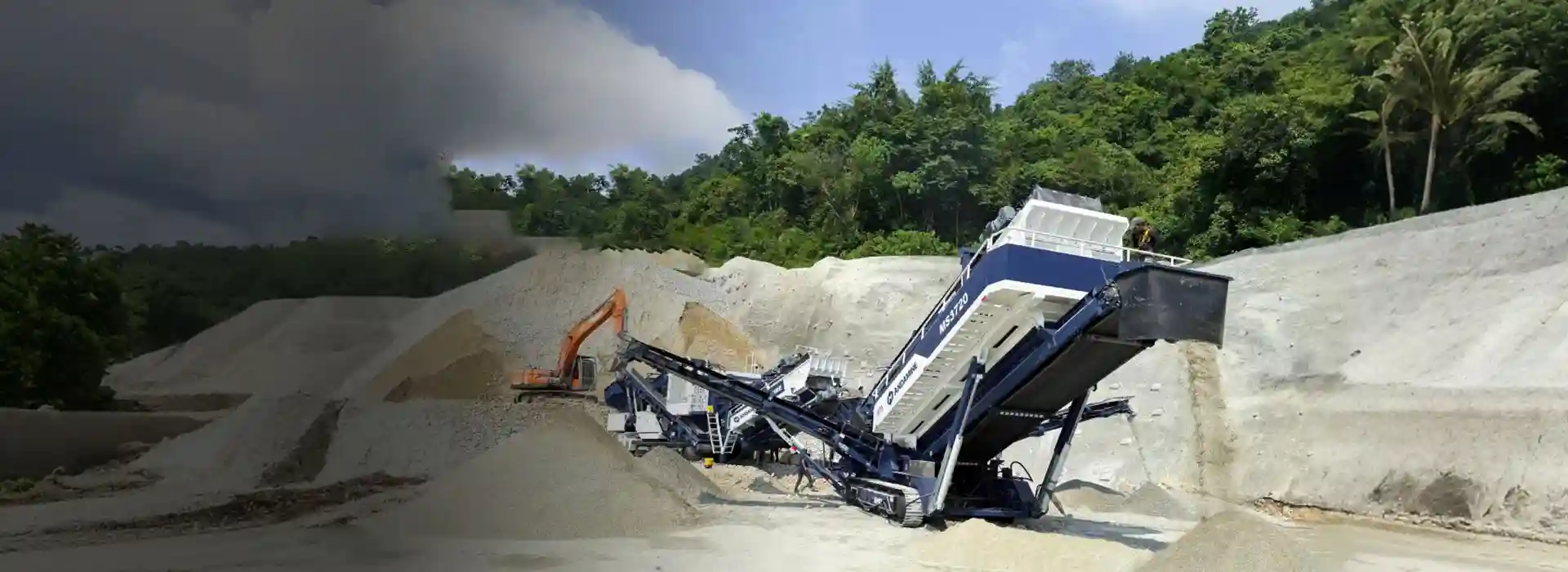
Feeding and Vibrating Screen Auxiliary Equipment Beyond Main Crushers
Overview: High-wear-resistant, impact-resistant auxiliary systems designed to handle abrasive Indonesian granite and guarantee continuous heavy-duty yield.
Core Equipment Selection:
- Heavy-Duty Vibrating Feeder: Installed upstream of primary crushing with grizzly bars to pre-screen soil and fines, protecting primary jaw crushers across rough local quarries.
- Multi-Deck Circular Vibrating Screen: Used for precise sizing of materials after secondary and fine crushing, outputting standard specifications required by Indonesian infrastructure standards (0-5mm, 5-10mm, 10-20mm).
Selection Considerations: Given the extreme hardness of local granite, feeder liners and screen meshes utilize high-manganese steel or wear-resistant polyurethane to withstand heavy tropical workloads.
Selection Conditions for Iron Removers, Pre-Screening, and Spray Dust Suppression
Overview: Specialized protective and eco-friendly installations built to safeguard machinery against tramp iron and meet strict Indonesian environmental codes.
Detailed Selection Conditions:
- Self-Discharging Electromagnetic Iron Remover: Suspended over transfer belts to extract tramp iron and drill bits common in recycled or blasted rock, preventing damage to secondary cone crushers and VSI units.
- Pre-Screening Module: Essential for processing weathered surface granite or high-moisture clay-heavy stone during Indonesia’s intense tropical rainy seasons, preventing choke-ups in crushing chambers.
- Multi-Point Spray Dust Suppression System: Tailored for strict environmental zones around Jakarta and urban Java, utilizing high-pressure atomizing water sprays at transfer points to suppress dust.
Scenarios Requiring the Addition of Manufactured Sand Washing Modules
Overview: Targeted configuration of wheel- or spiral-type sand washing machines aligned with water availability and strict Indonesian construction standards.
Core Installation Scenarios:
- High-End Commercial Concrete & Mortar Supply: Deployed for C50 high-grade concrete and highway projects across Java requiring strict stone powder control (mud content < 3.0%).
- Water-Abundant Large Fixed Plants: Ideal for large stationary sites on Java with reliable water access and local permits allowing wet processing operations.
- Scenarios Where Washing is Unnecessary: For remote off-grid sites in Sumatra or Kalimantan with scarce water resources, or simple brick-making projects, a “dry sand-making + cyclone dust collection” setup is recommended instead.
How Does ANDAMINE Adapt Granite Crushing Equipment for Indonesia?
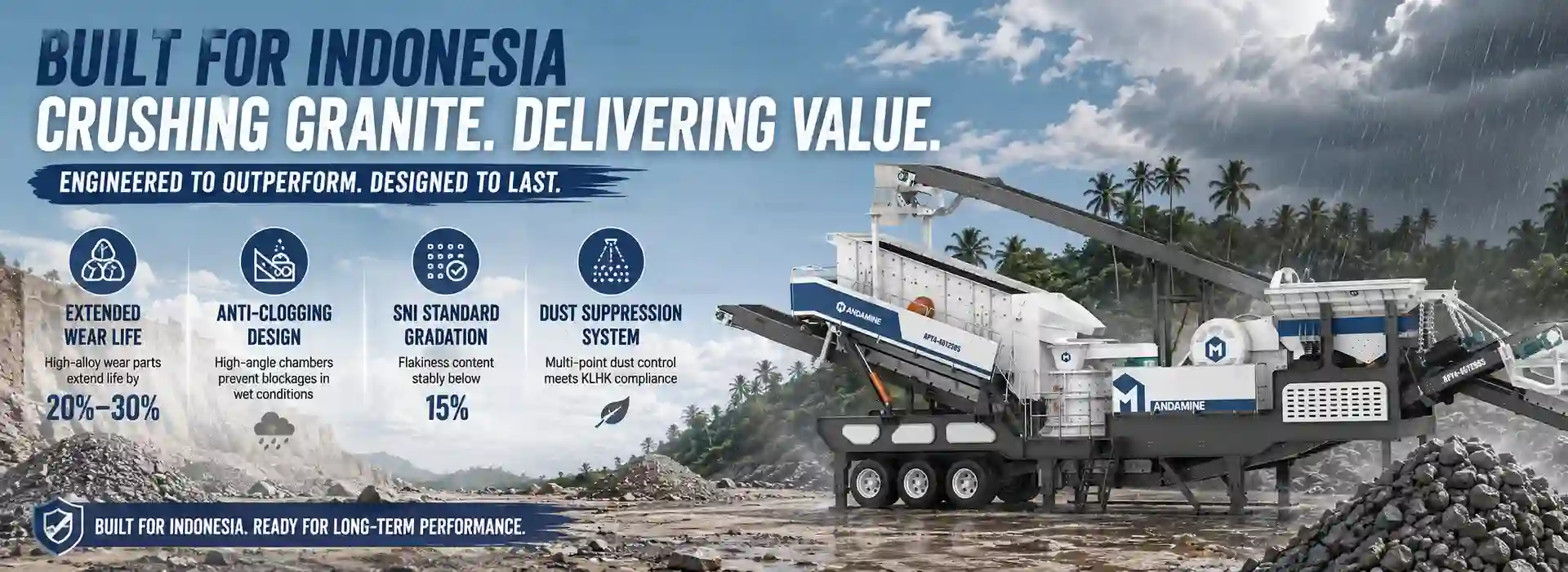
Facing Indonesia’s unique challenges—such as high-quartz hard rock, tropical rainy climates, and strict environmental regulations—standard universal equipment often struggles with rapid wear, wet-season clogging, or failing compliance standards. By engineering solutions from the ground up to address these specific regional demands, ANDAMINE ensures long-term, stable operational performance right upon site deployment:
See Andamine Granite Crushing Plants in Action Around the World
From Southeast Asia to Latin America and Africa, Andamine granite crusher machines deliver reliable, high-volume output across diverse geographical and operational conditions. Whether addressing high-moisture tropical mining sites or remote, rugged terrain, our plants ensure consistent aggregate quality and exceptional uptime—explore our project portfolio below to see these performance figures in action.
4-in-1 Mobile Granite Crushing Plant for Zimbabwe
- Time: January, 2026
- Capacity: 120TPH
- Raw Materials: Granite
- Output Size: 0-5mm, 5-20mm, 20-40mm
- Configuration: APY4-57J110C-S3 (APG-0930Z Vibrating Feeder, APJ-5075E Jaw Crusher, APC-110C Cone Crusher, APS-1848Y3 Vibrating Screen, etc.)
- Application: Crushed Granite for Concrete Production & Brick Making
Client Feedback: “The 4-in-1 mobile crushing plant was successfully commissioned in Zimbabwe. It runs stably, meeting commercial concrete and brick standards, helping us successfully launch a new business and enter the local building materials market with confidence.”
Get Customized Solutions
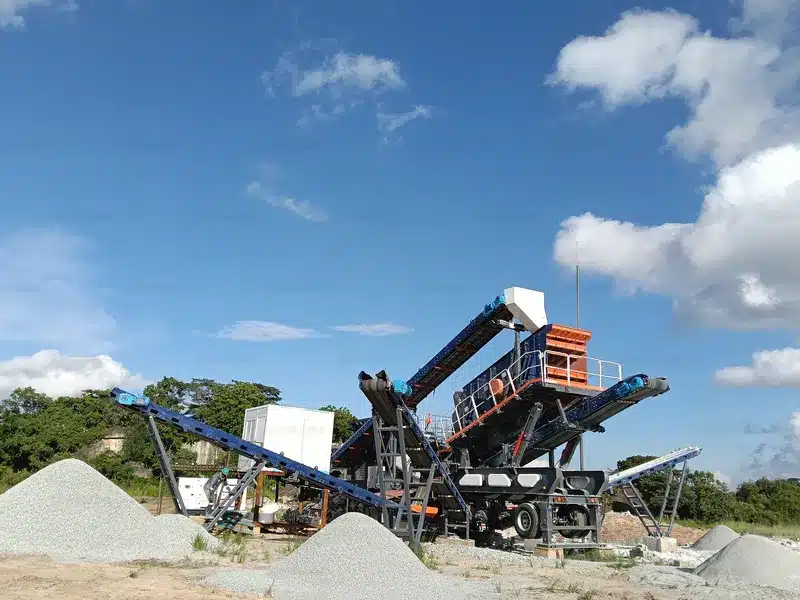
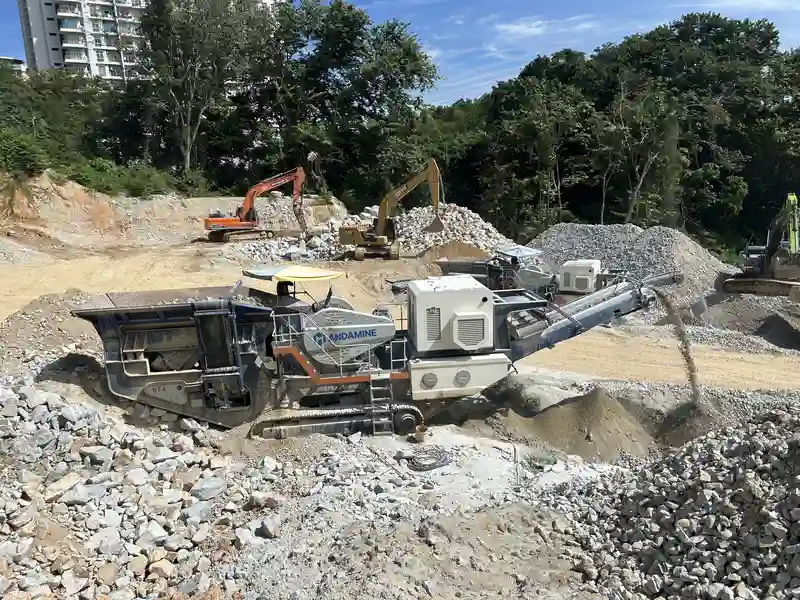
Crawler Mobile Jaw Crusher Plant Exported to Malaysia
- Time: January, 2024
- Capacity: 200TPH
- Raw Materials: Granite
- Output Size: 80-100mm
- Configuration: 2 sets of Mobile Jaw Granite Crusher(Belt Conveyor, Jaw Crusher, Vibrating Screen, PLC Control Box, etc.)
- Application: Crushed Granite for Local Road Paving
Client Feedback: “The mobile granite jaw crusher plant was beyond expectations—smart control and stable output made crushing granite effortless. It cut our downtime and kept the road project right on schedule.”
Get Customized Solutions
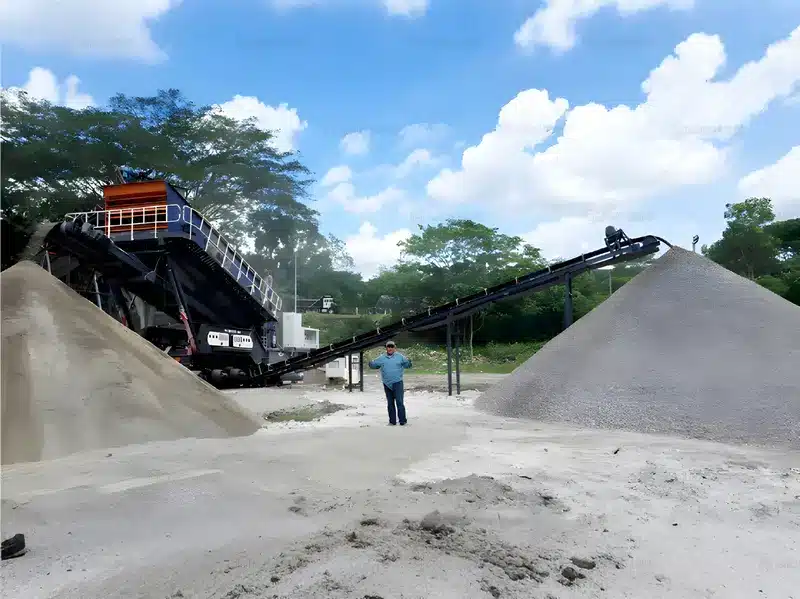
Mobile Granite Cone Crusher Plant to Honduras
- Time: Octobor, 2024
- Capacity: 150TPH
- Raw Materials: Granite
- Output Size: 5-10-20mm
- Configuration: Mobile Cone Crusher(Belt Conveyor, Cone Crusher, Vibrating Screen, PLC Control Box, etc.) + Vibrating Feeder
- Application: Crushed Granite for Urban Road Building
Client Feedback: “Finding reliable equipment was a challenge until we partnered with this team. Their customized mobile cone crusher solution gave us stable quality and easy operation, plus the after-sales support was exactly what we needed.”
Get Customized Solutions
Infrastructure & Compliance Requirements for Granite Crusher Plants
Once equipment selection is finalized, ensuring smooth, legally compliant deployment is vital to project success. From environmental approvals to civil works, power setup, and cross-island logistics, every phase requires tight planning. Below are the four core preparation stages for launching a granite project in Indonesia:
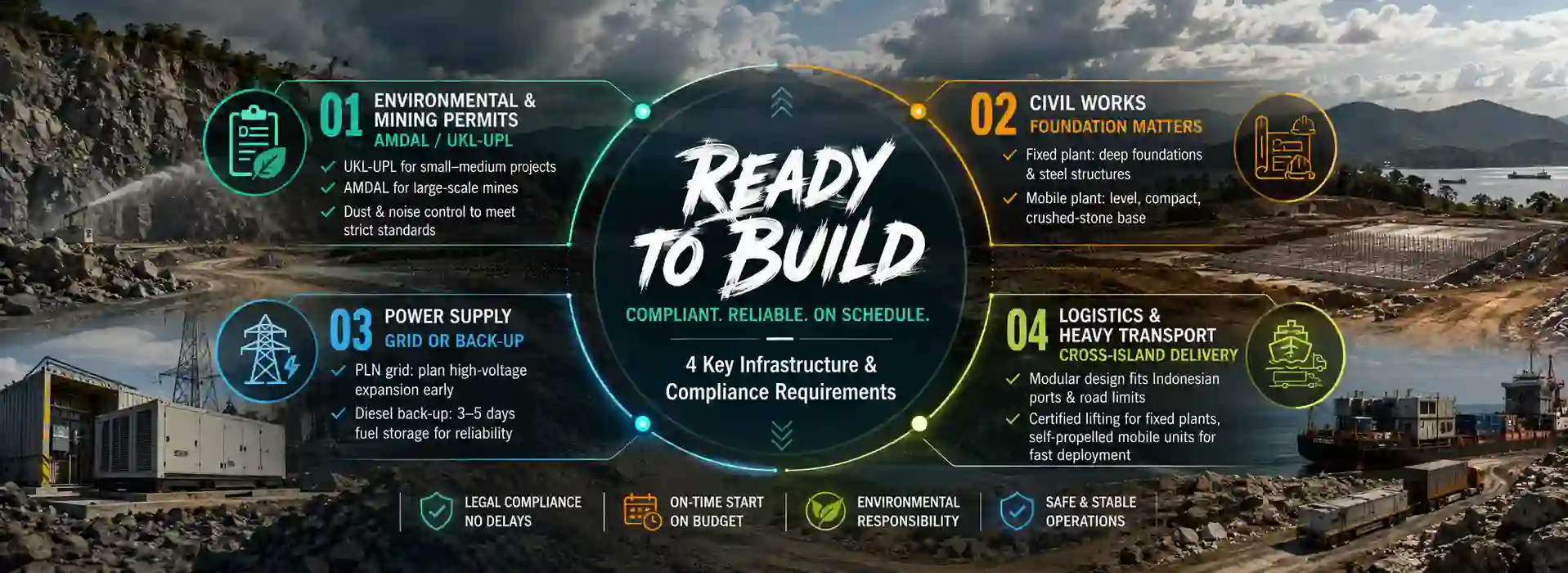
Environmental & Mining Permits (AMDAL / UKL-UPL)
- Permit Types: Small-to-medium projects use UKL-UPL (simplified review), while large mines require AMDAL (full assessment). We provide certified noise and dust data to speed up your approval.
- Strict Standards: The Ministry of Environment requires strict dust and noise controls. Plant designs must include high-pressure mist sprays and noise barriers to pass inspections easily.
Civil Works: Fixed Foundations vs. Mobile Hardening
- Fixed Plant Civil: Soft rainy-season soils mean 200 T/H stationary lines need deep concrete foundations and steel framing to handle heavy vibrations, plus water-recycling settling basins.
- Mobile Plant Civil: Tracked mobile units skip deep excavation entirely. You only need to level, compact, and lay a crushed-stone base to start operating quickly.
Power Supply: PLN Grid vs. Diesel Generators
- Grid Power: Stationary lines need stable industrial electricity. Apply for PLN high-voltage transformer expansion months in advance and plan safe electrical room zones.
- Diesel Back-up: Remote mountain sites need diesel generators. Install double-walled storage tanks holding 3–5 days of fuel to prevent shutdowns during rainy-season transport delays.
Logistics & Heavy Transport
- Island Transport: Local ports and rural roads have weight limits. Core heavy components use modular designs to fit standard Indonesian barges and flatbed trucks safely.
- Site Installation: Fixed plants require certified heavy lifting crews for assembly, while tracked mobile units drive themselves off RORO ships and maneuver independently on-site.
How Fast Can You Recover Your Investment in a Granite Crushing Plant?
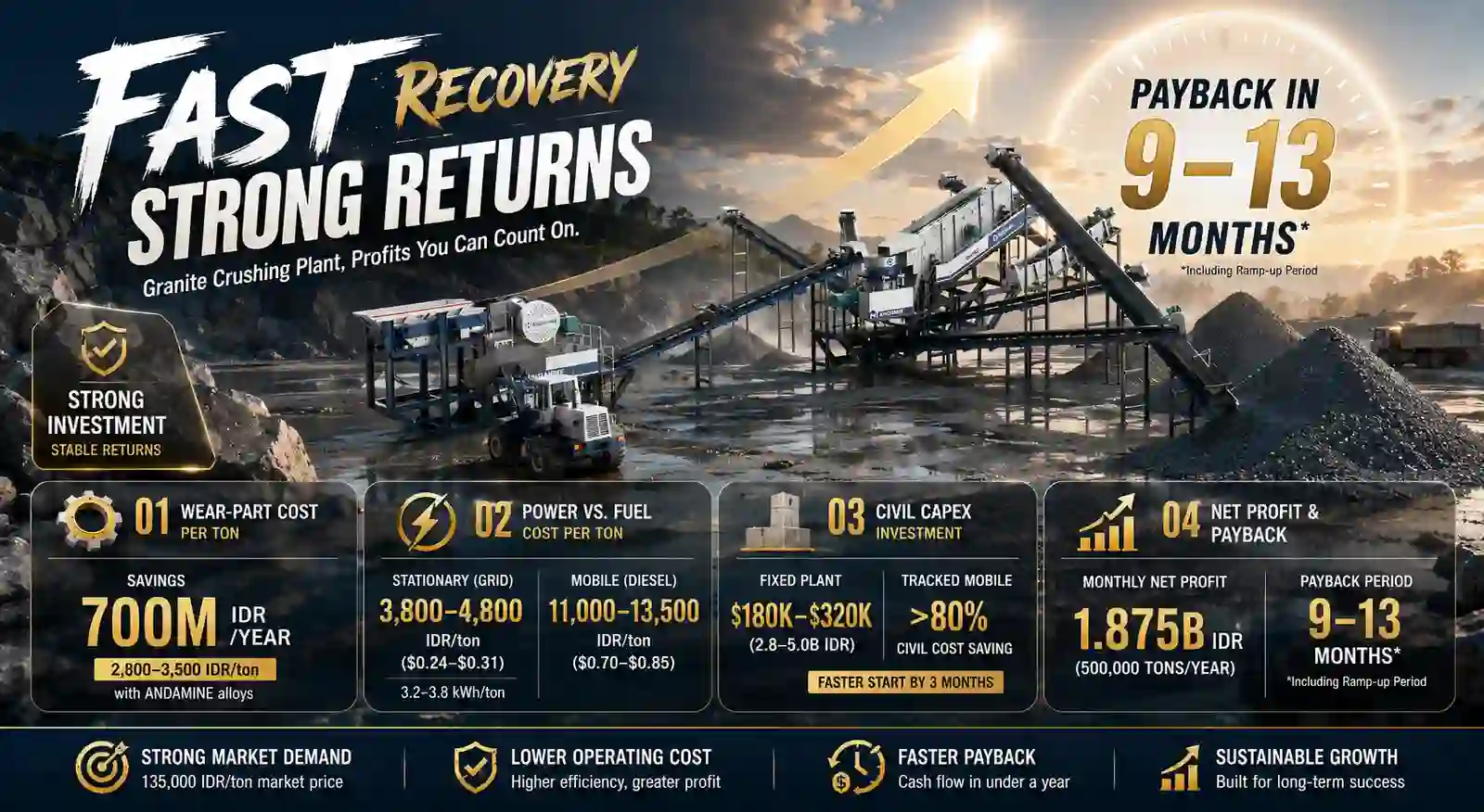
Evaluating granite plant investments in Indonesia requires precise calculations for power consumption, wear parts, civil works, and payback timelines. Below is a detailed calculation model for a typical 500,000-ton annual granite project (200 T/H capacity, 10 operating hours/day, 250 days/year):
1. Wear-Part Cost Calculation Per Ton
- Core Formula:
Wear Part Cost per Ton = Total Cost of Single Part Replacement ÷ Rated Lifespan Tonnage
This formula helps you evaluate how long your alloy components will last based on total processed tonnage before requiring a full replacement cycle.
- Local Granite Parameter: Indonesian granite features high quartz content (>65%), causing standard high-manganese steel parts to wear out within 120–150 operational hours.
- Alloy Enhancement Data: ANDAMINE chromium-molybdenum composite alloys extend part lifespan, reducing per-ton wear expenses from standard 4,000–5,000 IDR/down to 2,800–3,500 IDR/ton ($0.18–$0.22/ton).
- Annual Savings Calculation:
500,000 Tons × (4,500 – 3,100 IDR) = 700,000,000 IDR Annual Savings
By multiplying your yearly output volume by the per-ton reduction in wear expenses, you immediately see the substantial direct savings generated by upgraded alloys.
2. Power vs. Fuel Consumption Calculation Per Ton
- Stationary Line Formula:
Electricity Cost per Ton = (Total kW × Load Factor × Industrial Tariff IDR/kWh) ÷ Hourly T/H
Use this expression to scale grid-powered electricity overhead accurately against your plant’s hourly processing capacity.
- Stationary Calculation:
(310 kW × 0.80 Load Factor × 1,200 IDR/kWh) ÷ 200 T/H = 1,488 IDR equivalent
Final Power Cost: 3,800–4,800 IDR/ton ($0.24–$0.31/ton) at 3.2–3.8 kWh/ton consumption.Grid operation provides stable, highly predictable energy costs that remain economical for long-term stationary site production.
- Mobile Line Formula:
Fuel Cost per Ton = (Hourly Fuel Consumption Liters × Diesel Price IDR/Liter) ÷ Hourly T/H
Essential for calculating diesel generator expenses when operating off-grid in remote Indonesian quarries.
- Mobile Calculation:
(50 L/h × 14,000 IDR/L) ÷ 200 T/H = 3,500 IDR equivalent
Final Fuel Cost: 11,000–13,500 IDR/ton ($0.70–$0.85/ton).Although per-ton fuel expenses run higher than grid electricity, it bypasses massive grid extension costs and lengthy approval delays entirely.
3. Civil Foundation Capex Calculation
- Fixed Plant Civil Formula:
Fixed Civil Investment = Total Equipment Value × (25% to 35%)
Helps project managers budget accurately for heavy reinforced concrete structures and permanent site preparation.
- Fixed Plant Calculation:
Mid-sized pabrik penghancur granit value of $600,000 USD results in $180,000 – $320,000 USD (2.8 – 5.0 billion IDR) for reinforced concrete foundations and sedimentation basins.
Heavy structural engineering requirements mean initial civil works form a significant portion of total setup expenditure.
- Tracked Mobile Savings: Bypasses concrete foundation pouring entirely, reducing site preparation expenses by
>80%and accelerating production launch by3 months.
4. Overall Project ROI & Payback Period Calculation
- Net Profit Formula:
Monthly Net Profit = [Annual Output × (Market Selling Price – Comprehensive Cost per Ton)] ÷ 12
Determines your monthly cash flow generation by contrasting market aggregate pricing against total operational expenses.
- Profit Margin Calculation:
500,000 Tons × (135,000 IDR Market Price – 90,000 IDR Total Cost) ÷ 12 = 1,875,000,000 IDR Net Profit per Month
Demonstrates strong commercial returns given local Indonesian granite aggregate market demand and pricing stability.
- Static Payback Formula:
Static Payback (Months) = Total Initial Investment (Equipment + Civil) ÷ Monthly Net Profit
The ultimate metric for investors to calculate the exact timeframe needed to clear all upfront capital commitments.
- Payback Calculation:
8,500,000,000 IDR Total Setup Cost ÷ 1,875,000,000 IDR Monthly Profit = 4.5 to 6.8 Months operational recovery (typically 9–13 months factoring lower ramp-up capacity).
Even after accounting for initial production ramp-up phases and seasonal adjustments, investors successfully recover capital in under a year.
What Local After-Sales and Spare Parts Support Can You Get?
Reliable spare parts supply, fast troubleshooting, and expert local service are essential for keeping your Indonesian granite machinery running profitably. ANDAMINE provides a robust local support network tailored to your operational needs:
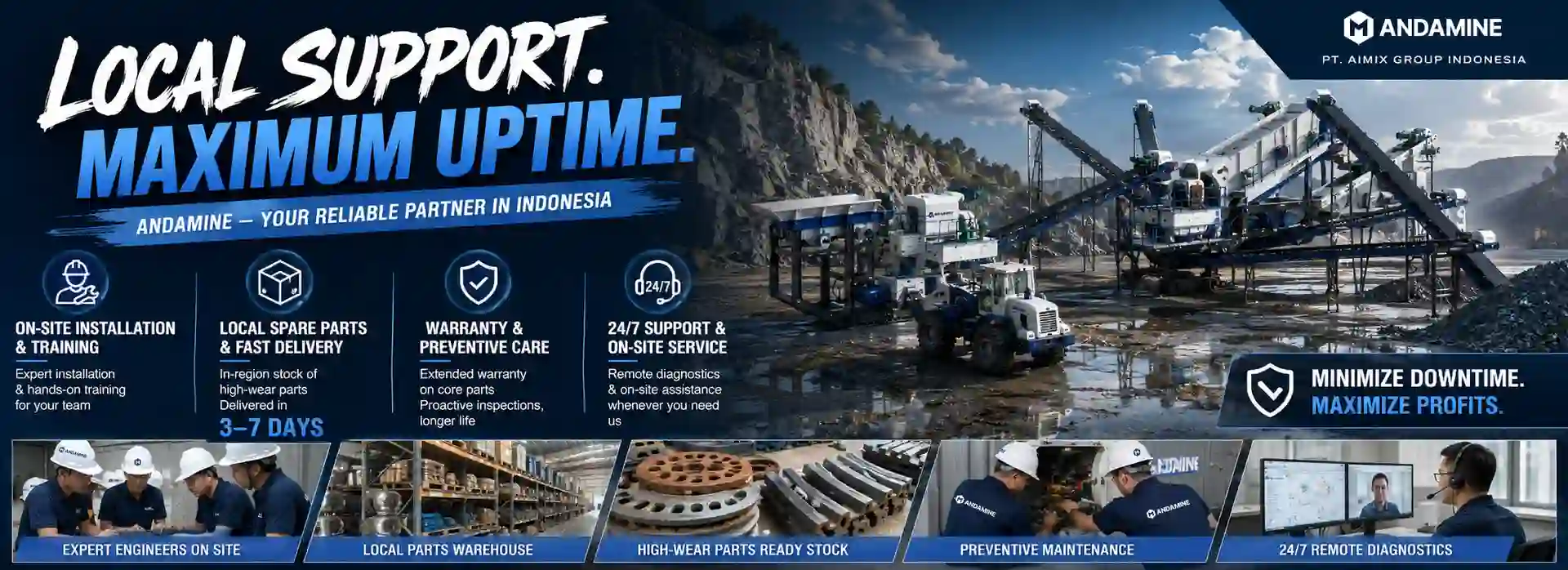
On-Site Installation & Operator Training
- Expert Supervision: Experienced engineers deploy directly to your Indonesian site to oversee equipment installation and system commissioning.
- Hands-On Training: Local operators receive practical training on daily startup routines, routine inspections, and basic troubleshooting for fast competency.
Local Spare Parts Stock & Fast Delivery
- In-Region Warehousing: Strategic local hubs stock high-wear items tailored to abrasive Indonesian quartz granite, including jaw plates and mantles.
- Rapid Transit: This eliminates long overseas shipping delays so emergency replacement parts reach your island quarry within just a few business days.
Warranty Coverage & Preventive Maintenance
- Extended Core Warranty: High-standard warranty protection covers critical structural components like main frames and eccentric shafts under heavy loads.
- Proactive Inspections: Regular service visits identify minor issues early, preventing costly breakdowns and maximizing total equipment lifespan.
On-Site Assistance & 24/7 Remote Diagnostics
- Remote Online Guidance: Multilingual experts provide instant digital support via video diagnosis to help local staff quickly pinpoint and resolve issues.
- On-Demand On-Site Service: For complex faults requiring hands-on intervention, our local engineering team deploys directly to your quarry to fix problems.
How to Maintain and Manage Granite Crushing Plants Efficiently?
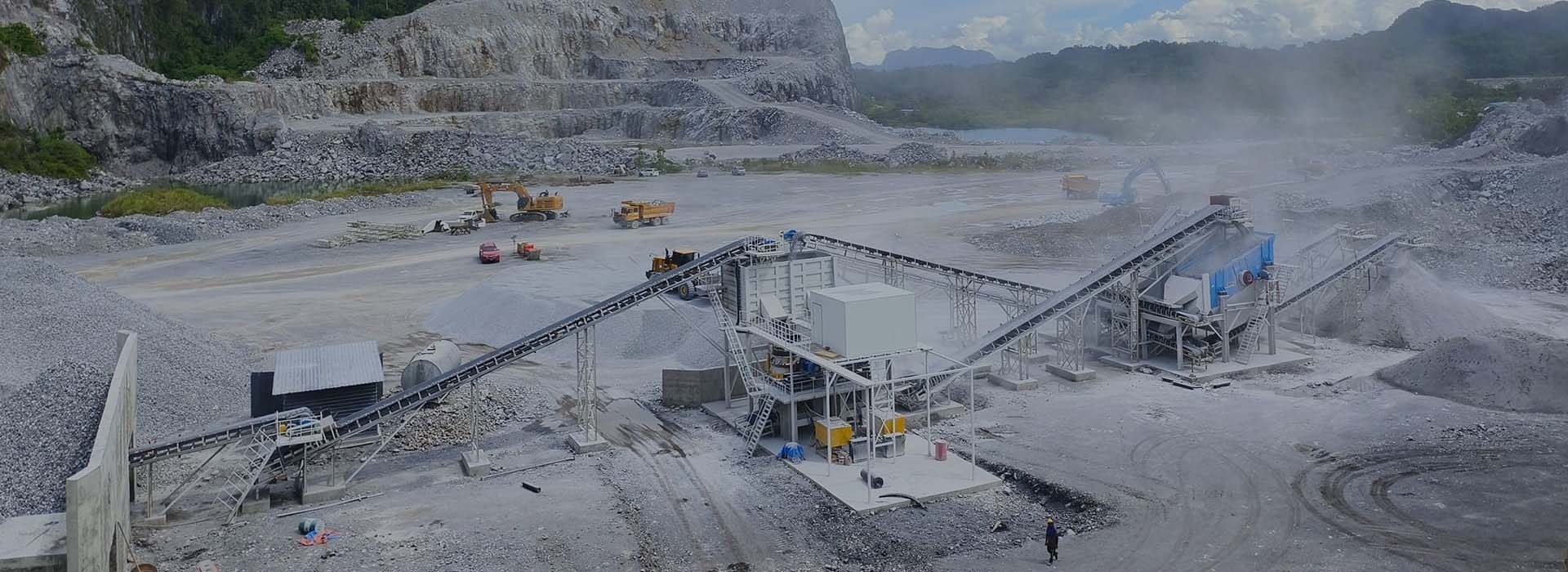
Operating in Indonesia’s abrasive, high-hardness granite conditions under tropical island climates requires disciplined upkeep to prevent unexpected downtime. Below are six field-proven essentials for maximizing plant reliability and equipment lifespan:
Strict Control of Maximum Feed Size and Uniform Distribution
- Prevent Oversized Feeding: Ensure raw material input stays strictly within 85% of the rock crusher‘s rated feed opening to prevent severe impacts and choking.
- Balanced Material Distribution: Use distribution hoppers to feed material evenly across the chamber, preventing eccentric wear and premature liner failure.
- Regular Feed Monitoring: Assign on-site operators to inspect incoming raw stone sizes before they enter the primary hopper to maintain steady circuit flow.
Precise Monitoring of Wear-Part Replacement Thresholds
- Weekly Inspection Logs: Due to the high quartz content of granite, maintain strict weekly measurement logs for jaw plates, mantles, and concaves.
- Mandatory Timely Replacement: Replace liners immediately when worn down to 20mm–30mm to avoid cracking the backing or core components.
- Pre-Stock Critical Spares: Keep an active inventory of high-wear elements on-site so worn components can be swapped out during scheduled maintenance.
Moisture Control & Anti-Humidity Measures for Electrical Cabinets
- High Ingress Protection: Ensure electrical enclosures meet at least IP54 standards and check door seal integrity to withstand humid rainy seasons.
- Smart Dehumidification: Install automatic temperature-humidity controllers inside cabinets to trigger heaters when humidity exceeds 75%.
- Routine Seal Checks: Inspect rubber door gaskets and ventilation filters monthly to prevent moisture and fine granite dust from entering PLC panels.
Managing Screen Blindness and Material Blockages
- Dealing with Sticky Red Clay: Rainy-season quarrying often brings sticky clay that blinds vibratory feeders and screen meshes, hampering throughput.
- Scheduled Shift Inspections: Establish routine checks every shift to clear blockages and maintain optimal screening efficiency for continuous discharge.
- Adjust Throw Parameters: Fine-tune vibration amplitude and frequency dynamically when processing wet, cohesive seasonal feed materials.
Dual Monitoring of Main Bearing Temperature and Rise Rate
- IoT Real-Time Tracking: Use IoT systems to monitor bearing temperature curves continuously, keeping standard oil temperatures between 60°C and 70°C.
- Strict Safety Red Lines: Trigger automatic alerts at 78°C and immediate shutdown protocols at 85°C or during abnormal temperature spikes.
- Cooling System Checks: Clean external heat exchangers and verify oil cooling water flow weekly to prevent tropical ambient heat from causing overloads.
Fine-Tuning Heavy-Duty Automatic Grease Lubrication Stations
- Maintaining Rated Pressure: Ensure automatic grease lubrication systems maintain a stable injection pressure of 18–25MPa to absorb heavy impact loads.
- Routine Grease and Line Checks: Inspect grease cleanliness and line continuity regularly to guarantee proper quantitative distribution and prevent seizures.
- Verify Cycle Timers: Program injection frequency adjustments based on ambient humidity and load intensity to ensure adequate film thickness on contact surfaces.
How to Quickly Match the Right Granite Crushing Solution for Your Project?
Blindly applying generic configurations when investing in a granite crushing project in Indonesia easily leads to substandard capacity or out-of-control investments. To help you efficiently and precisely lock in the most suitable production line configuration, this fast-matching framework systematically evaluates multiple dimensions including raw material conditions, layout, budget, power, local service, and smart upgrades:
Analyzing Raw Rock Properties and Calculating Required Capacity
- Testing quartz content, Mohs hardness, and block size beforehand dictates whether a heavy-duty jaw crusher or gyratory unit is necessary.
- Mapping precise hourly targets like 150t/h or 300t/h alongside specific gradation curves ensures downstream crushers are sized correctly.
- Running preliminary stone fragmentation trials prevents under-specifying motor power when handling dense, abrasive Indonesian quartz matrices.
Choosing Production Layouts and Mobile Flexibility
- Choosing between tracked mobile chassis and fixed installations depends on whether your quarry requires rapid relocations or permanent foundations.
- Balancing closed-loop workflows across feeders, primary crushers, and vibrating screens eliminates chokepoints and maintains smooth throughput.
- Assessing rough site terrain constraints early helps engineers design compact plant footprints that fit within restricted mountain valleys.
Balancing Initial CAPEX and Long-Term OPEX in Indonesia
- Aligning equipment tiers with capital limits civil engineering excesses without sacrificing the structural strength needed for hard rock.
- Factoring in Indonesian electricity tariffs or diesel expenses alongside wear-part replacement rates safeguards profit margins against high costs.
- Forecasting a 3-to-5-year financial timeline covering replacement jaw plates, mantles, and maintenance labor ensures economic viability.
Meeting Environmental Compliance and Power Requirements
- Pre-integrating enclosed dust chambers, water spray manifolds, and baghouse filters ensures operations clear strict Indonesian environmental audits.
- Pairing unstable grid sites with heavy-duty diesel generator sets or dual-circuit backups protects your pemecah granit from sudden voltage drops.
- Designing closed-loop water settling basins solves regional water scarcity issues while complying with strict wastewater discharge rules.
Securing Reliable Delivery and After-Sales Support
- Partnering with suppliers who maintain regional spare parts warehouses in Southeast Asia cuts out months of expensive maritime shipping delays.
- Securing professional overseas engineers for on-site plant erection and operator training guarantees your crew runs the system safely from day one.
- Establishing clear service agreements ensures technical experts can be dispatched quickly to your quarry whenever complex mechanical fixes arise.
Leveraging Custom Solutions and Smart Upgrades
- Submitting exact quarry parameters directly to the ANDAMINE technical team results in a tailor-made configuration for your goals.
- Generating comprehensive ROI reports factoring in local Indonesian logistics costs helps present a bulletproof financial case to stakeholders.
- Connecting IoT remote monitoring sensors to your control room enables real-time data tracking, turning your plant into a smart operation.
What You See Is What You Get: Granite Crushing Projects on YouTube
Want to know how our crusher plants perform on real global sites? Watch our granite crushers YouTube videos to see actual crushing plants, running conditions, and final aggregates. Visual proof builds trust—and shows exactly what you can expect. Ready to build your own stone crusher plant? Contact us for a custom plan.
FAQs on Investing in and Operating Granite Crushing Plants in Indonesia
What Is the Total Estimated Budget for Investing in a 150t/h Granite Crushing Plant in Indonesia?
Granite is extremely hard and abrasive. For a 150t/h fixed production line—including a heavy-duty jaw crusher, cone crusher, and vibrating screen—machine procurement typically costs $150,000 to $250,000. However, actual deployment involves more than the base price. You must budget for ocean freight, customs clearance, Indonesia’s 11% PPN VAT, rainy-season civil construction, and high-power generators for remote sites. Factoring in all local expenses, total investment usually reaches 1.6 to 1.9 times the machine base price, roughly $250,000 to $450,000.
What Is the Maximum Feed Size Raw Granite Can Be Before Entering the Crusher to Prevent Jamming?
Granite features high compressive strength. Raw blasting blocks should not exceed 85% of the primary jaw crusher’s effective feed opening. On a standard 150t/h line with a $750 \times 1060\text{ mm}$ jaw crusher, maximum raw blocks must stay under 60cm to 64cm. Excessive feed sizes cause chamber slipping, frequent choking, and doubled impact wear on jaw plates and eccentric shafts.
Can the Chassis and Tracks of a Mobile Granite Crushing Plant Handle Rugged, Mountainous Indonesian Terrain?
Track-mounted mobile stations eliminate tedious concrete civil work. Yet, operating in rainy, clay-heavy Indonesian mountains demands a chassis built with exceptional torsional engineering. Standard features must include wide track shoes, high-strength manganese steel crawler links, and high-torque travel motors. These prevent track derailment, shoe breakage, and frame twisting during heavy climbing and slick mud operations.
Which Type of Sand Maker Yields the Highest Sand Output and Least Stone Powder for Indonesian Granite Projects?
To meet strict Indonesian manufactured sand standards, vertical shaft impact crushers (VSI) using a “rock-on-iron” setup deliver the highest single-pass sand output with low flaky-particle content. Conversely, a “rock-on-rock” setup provides rounded grain gradation and finer powder control. Practical setups pair an impact granite rock crusher with a fine-screening closed loop to guarantee high sand output while minimizing worthless dust from over-crushing.
How Do Local Authorities Inspect Granite Crushing Plants in Indonesia Regarding Severe Dust and Environmental Compliance?
Indonesian mining departments strictly enforce dust and wastewater regulations. Conventional multi-point water spray nozzles rarely pass on-site environmental audits. Compliant designs require fully enclosed color-steel workshops over jaw feed zones, cone drop points, and screens. These must pair with high-volume baghouse dust collectors and pulse-jet cleaning systems to capture fugitive dust and achieve compliant emissions.
Are There Local Technical Personnel in Indonesia to Assist with Full Routine Plant Inspections After Commissioning?
Skilled heavy machinery technicians are scarce locally in Indonesia. During initial commissioning, plants often suffer hidden defects and minor faults that escalate into major overhauls due to a lack of professional inspections. Quality suppliers must dispatch resident technical engineers to Indonesia. They guide local crews through daily inspections, weekly lubrication, and monthly overhaul regimens to protect equipment uptime.
If a Sand Washing Machine Is Added to an Indonesian Granite Crushing Plant, How Are Local Water Resources and Mud Sedimentation Handled?
Many Indonesian quarries face dry-season water shortages, and authorities strictly ban direct mud discharge. Sand washing operations must integrate high-efficiency mud-water separators, chamber filter presses, and multi-stage settling ponds. This achieves over 85% closed-loop water recycling, while dewatering and dry-stacking fine sand and mud to meet environmental mandates.
Can Standard Domestic Parts Replace Broken Components on a Granite Crushing Machinery Purchased for Use in Indonesia?
Key primary crushing components—such as SKF/FAG-grade precision bearings, hydraulic seals, and V-belts—must use international or first-tier standard metric sizes. This ensures that if a sudden breakdown occurs, exact replacement parts can be sourced locally in Jakarta, Surabaya, or regional Southeast Asian markets, minimizing costly downtime.
How Many Months Before the Jaw Plates and Mantles on an Indonesian Granite Crushing Plant Typically Need Replacement?
Granite contains high silica levels and extreme abrasiveness. Wear part lifespan depends directly on raw rock hardness, clay content, and feed uniformity. Depending on whether high-manganese steel or embedded carbide composites are used, standard replacement cycles under heavy-duty operations range from 3 to 6 months. Project managers must establish dynamic safety stock inventories based on monthly throughput.
Given Indonesia’s High Ambient Temperatures, Will the Hydraulic System of a Granite Crushing Plant Frequently Trigger High-Oil-Temperature Alarms?
Indonesia features a tropical climate with year-round high temperatures, and plants often operate under full load. If hydraulic oil tank capacities are too small or radiator airflow is low, oil viscosity drops, system pressure destabilizes, and high-temperature alarms trigger repeatedly. Quality machinery must include heavy-duty forced-air cooling systems and thermostatic controls tailored for tropical operations before shipping.
How Should the Steel-Structure Feed Platform for a Granite Crushing Plant Be Designed for Stability in Steep, Mountainous Indonesian Quarries?
When building plants in steep Indonesian mountainous regions, single high-support platforms must be avoided. Multi-tiered stepped steel platforms are essential to distribute heavy loads safely. They must anchor deeply with shear-resistant anchor bolts and micro-piles to prevent rainy-season landslides or wet soil shifts from distorting or destabilizing feeder gantries.
Once an Indonesian Granite Crushing Plant Is Operational, How Difficult Is It to Temporarily Switch the Final Aggregate Product Specifications?
Rapidly switching final aggregate specs depends on preliminary process design redundancy. If a site needs to shift from standard 20-40mm construction aggregates to manufactured sand, operators simply adjust the cone crusher discharge opening via hydraulics and change screen meshes on the multi-deck vibrating screen. This eliminates the need for major overhauls of core crushing structures.
What Protections Exist for Crusher Main Motors When Power Supplies in Some Indonesian Mining Areas Are Unstable and Prone to Trips?
Remote mines and islands in Indonesia frequently experience grid voltage drops. If a loaded heavy-duty crusher loses power instantly, material packs and solidifies inside the crushing chamber. Electrical systems must feature intelligent soft-start cabinets or VFDs. These need built-in overload, phase-loss, transient undervoltage protection, and reverse-clearing functions to prevent motor burnout.
How Are Bulk, Oversized Steel Structures and Crusher Mainframes Transported to Inland Quarries After Arrival at an Indonesian Seaport?
Indonesia spans many islands, and inland roads often feature strict weight limits and narrow bridges. Oversized jaw crusher mainframes and heavy vibrating screens must be modularized, disassembled, and packed prior to shipping. Upon arrival at the discharge port, specialized heavy-haul permits must be secured in advance to hire experienced local multi-axle flatbed fleets.
How Do Open-Air Granite Crushing Plant Control Rooms Protect Against Moisture and Lightning During Indonesia’s Long Rainy Season?
Tropical rainy seasons bring frequent thunderstorms and extreme humidity. Without proper seals, PLC control rooms and VFD enclosures suffer short circuits or lightning strikes. Control rooms require specialized container housing fitted with double-layer insulation moisture barriers, industrial dehumidifiers, and independently erected external lightning rods and grounding grids.
How Many Months Does It Take from Contract Signing to Producing Qualified Aggregate When Investing in an Indonesian Granite Crushing Plant?
The timeline depends heavily on securing Indonesian land use permits (IUP), environmental approvals (AMDAL/UKL-UPL), and local customs clearance speeds. Under ideal conditions where compliance runs ahead of schedule and civil construction coordinates with ocean freight, the full process from contract signing to commissioning and aggregate output spans 5 to 8 months.
Ready to Start Your Granite Crushing Project in Indonesia?
Tell us your capacity, raw material, and finished size needs—we’ll help you customize a granite crusher plant that fits your site and budget. With local engineers, spare parts in stock, and real project experience across Indonesia, we’re here to support you every step of the way. Contact us now to get a tailored granite crushing solution and granite crusher price.


