Frustrated by delays and inconsistent concrete quality on projects across Java, Sumatra, or remote islands in Indonesia? Such problems can quickly raise costs and stall progress. A concrete batching plant precisely mixes cement, aggregates, and water to deliver consistent, high-quality concrete. It supports highways, bridges, ports, and urban construction projects throughout Indonesia. We provides batching plants tailored to local conditions and project scales, helping you maintain quality and keep projects on schedule.
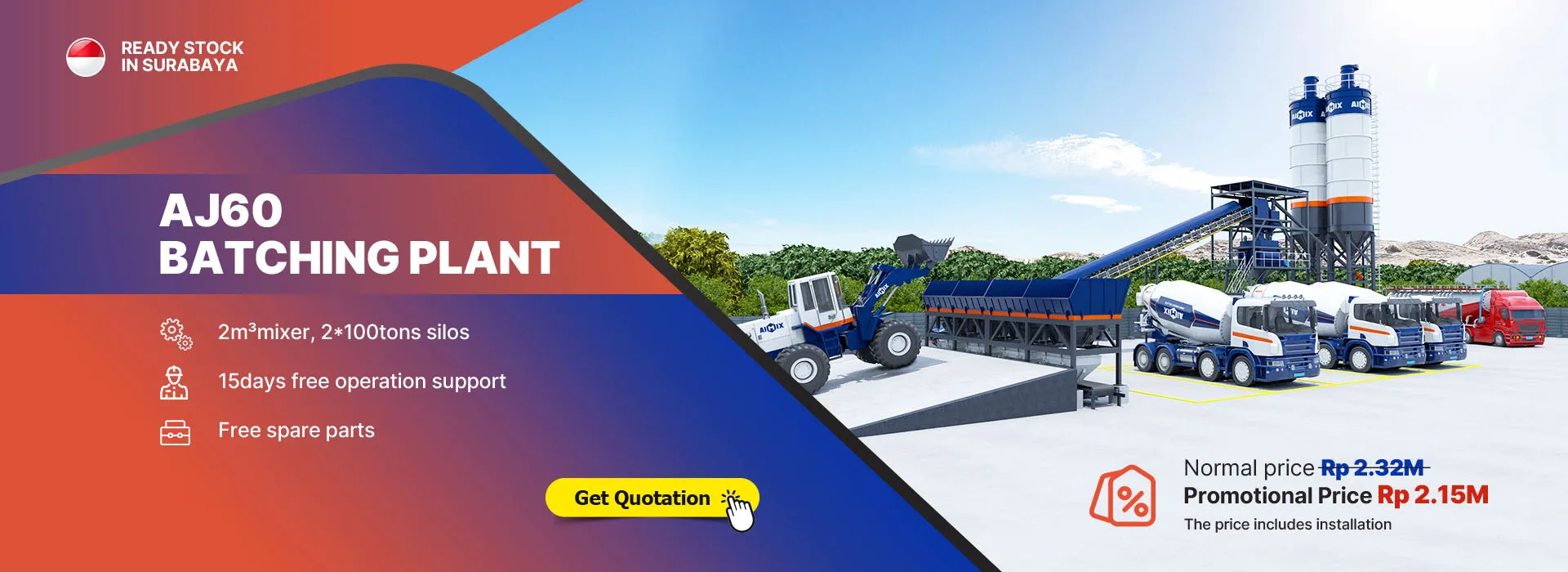
 Price Range: $10,000 to $400,000
 Mobile/Stationary/Compact Type
 Local Service Team Indonesia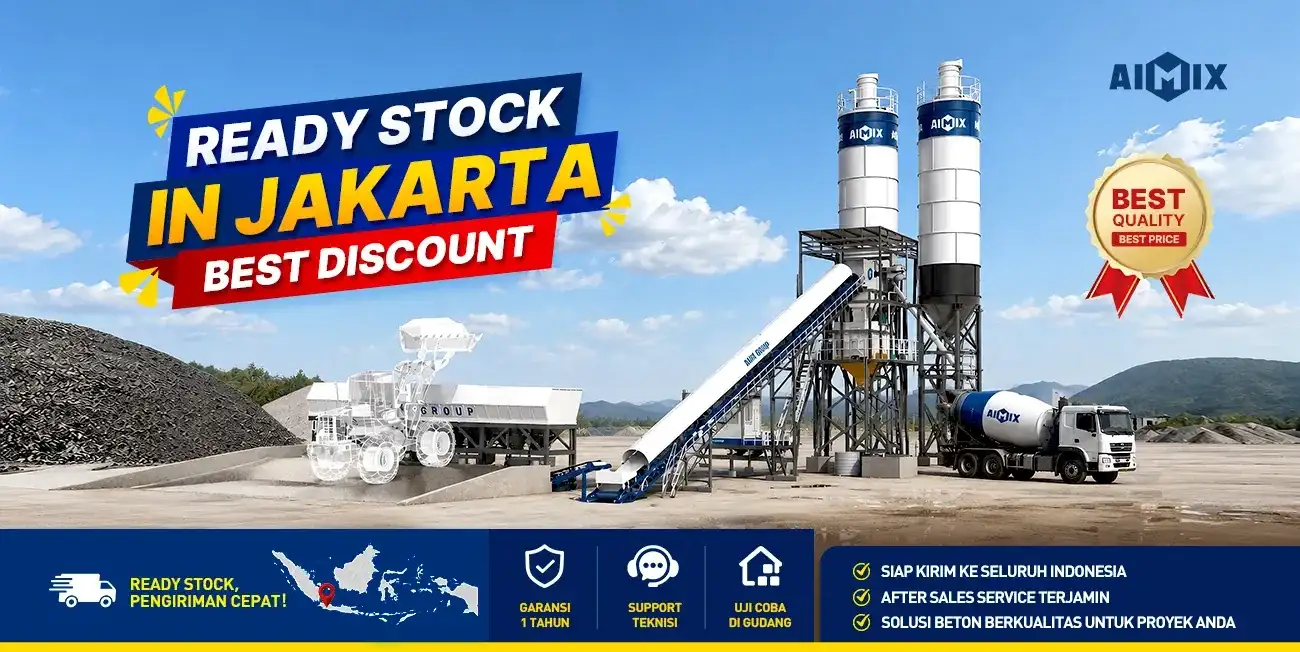
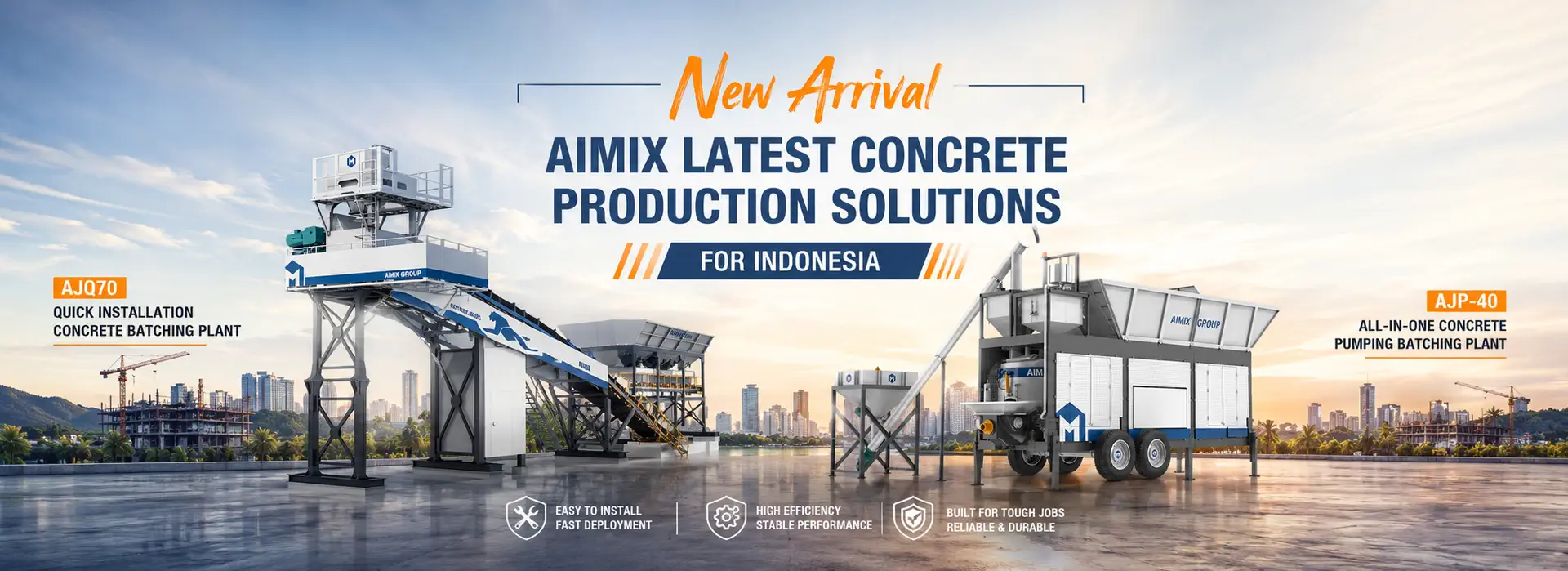
New Arrival: AIMIX Latest Concrete Production Solutions for Indonesia
Indonesia’s construction landscape is becoming more diverse, with projects expanding from urban housing and industrial areas to remote regional infrastructure. To support contractors facing different project conditions and working environments, AIMIX launches two new concrete solutions — AJQ70 Quick Installation Concrete Batching Plant and AJP-40 All-in-One Concrete Pumping Batching Plant, providing smarter equipment choices for faster project deployment and more efficient on-site concrete production.
AJQ Series Quick-Assembly Concrete Batching Plant – Built for Fast, Flexible & Cost-Effective Concrete Production
With Indonesia’s infrastructure and property development expanding across Java, Sumatra, Kalimantan, and Sulawesi, regional projects need flexible and cost-efficient concrete supply. AIMIX developed the AJQ Series Quick-Assembly Concrete Batching Plant for small and medium projects, including perumahan, industrial estates, and local roads. With 24-hour installation, foundation-free deployment, intelligent control, and efficient production, AJQ Series helps shorten preparation time, reduce costs, and improve project efficiency.
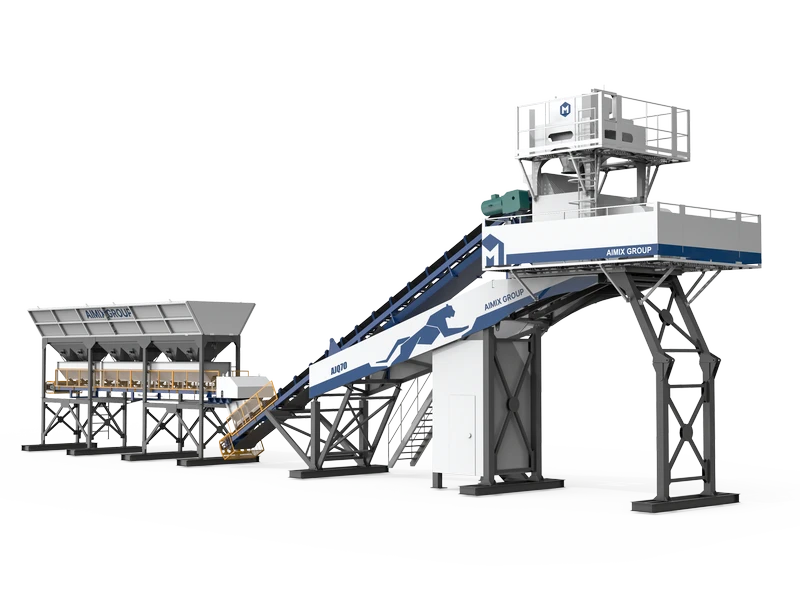
AJQ Series Core Technical Configuration
- Model: AJQ-50, AJQ-70, AJQ-100, AJQ-150
- Production Capacity: 50 m³/h, 70 m³/h, 100 m³/h, 150 m³/h
- Main Mixer: JS1000, JS1500, JS2000, JS3000 Twin-Shaft Concrete Mixer
- Aggregate Batching: Three-bin independent weighing system
- Feeding Method: High-efficiency Belt Conveyor
- Aggregate Storage: 15 m³
- Cement Storage: 100-ton split-type cement silo
- Weighing System: Precise weighing of cement, water, and admixtures
- Control System: AI Intelligent Control System
- Operator Cabin: Integrated control room
Ideal Applications in Indonesia
Why AJQ Series Stands Out for Indonesia’s Growing Construction Market?
⚡ Accelerate Project Launch with 24-Hour Installation
- 24-Hour Installation: Complete assembly and commissioning within 24 hours, helping Indonesian contractors start concrete production faster.
- 50% Lower Setup Cost: Foundation-free design reduces construction preparation work and lowers installation expenses.
- Faster Project Relocation: Modular structure enables easier transportation and quick movement between regional projects.
🚚 Boost Construction Efficiency with Smarter Production
- 20% Higher Efficiency: Optimized production process ensures stable concrete supply for housing, roads, and infrastructure projects.
- 30% Faster Material Feeding: High-speed conveying system improves aggregate handling efficiency and reduces production waiting time.
- 10s Faster Mixing Cycle: Efficient twin-shaft mixer shortens each batch cycle and increases daily concrete output.
🤖 Ensure Consistent Concrete Quality with Intelligent Control
- ±1% Weighing Accuracy: Intelligent weighing system ensures consistent concrete quality for different construction applications.
- Reduced Material Waste: Automatic compensation technology improves measurement accuracy and minimizes raw material loss.
- Simplified Smart Operation: AI control system helps local operators manage production more easily with less training.
💰 Expand Project Opportunities with Flexible Deployment
- 30% Less Space Requirement: Compact layout fits limited construction areas in towns and developing regions.
- Multi-Project Capability: Flexible design supports various applications from perumahan to industrial and municipal projects.
- Better Investment Return: One AJQ70 compact concrete plant can serve multiple projects and create long-term business value.
AJP-40 Concrete Pumping Batch Plant: A New All-in-One Concrete Production Solution for Small and Medium Projects
For many Indonesian contractors working on perumahan, rural infrastructure, bridges, and remote projects, managing multiple concrete machines can increase costs and operational complexity. AIMIX introduces the AJP-40 Concrete Pumping Batching Plant, an all-in-one system integrating batching, mixing, and pumping functions into one compact unit. With reliable capacity, dual power options, intelligent control, and flexible mobility, AJP-40 enables easier operation, lower investment, and efficient on-site concrete production.
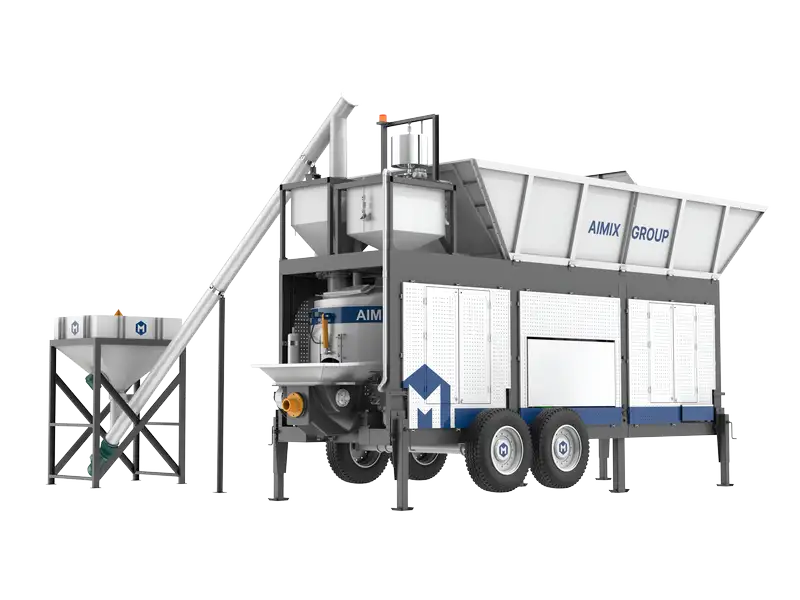
AJP40 Core Technical Configuration
- Theoretical Capacity: 40 m³/h
- Mixing Capacity: 1 m³ per Batch
- Mixing System: Planetary Mixing System
- Integrated Functions: Batching + Mixing + Pumping
- Transportation: one 40HQ Container
- Power Supply: Diesel Generator + External Electricity
- Relocation Time: Approx. 1 Hour
- Operation Requirement: 1–2 Operators
How AJP-40 Helps Contractors Build Faster with Lower Costs?
⚡ Simplify Construction with All-in-One Concrete Production
- Save Investment: Combine batching, mixing, and pumping functions in one machine, reducing the need for multiple equipment purchases.
- Reduce Site Requirements: Compact integrated design saves construction space and simplifies equipment arrangement on small project sites.
- Cut Labor Costs: Complete concrete production and pumping operations with only 1–2 operators, reducing daily manpower requirements.
🚚 Accelerate Projects with Faster Deployment Flexibility
- Start Work Faster: Complete equipment relocation within around 1 hour, reducing waiting time between different projects.
- Improve Construction Efficiency: Finish pipeline setup within around 1 hour and start concrete delivery quickly on site.
- Work in More Locations: Dual power supply with generator and electricity options adapts to remote and changing jobsite conditions.
🤖 Improve Concrete Quality with Intelligent Production Control
- Maintain Stable Output: Provide 40 m³/h concrete production capacity for small and medium construction projects.
- Improve Concrete Consistency: High-precision batching and planetary mixing ensure uniform concrete quality for each batch.
- Simplify Daily Operation: Intelligent control system reduces operator training requirements with guidance and reminders.
💰 Reduce Project Costs with Higher Equipment Utilization
- Support More Applications: Serve perumahan, roads, bridges, and remote infrastructure projects with one compact machine.
- Reduce Operating Expenses: Lower transportation, maintenance, and equipment management costs throughout the project cycle.
- Increase Equipment Utilization: Flexible deployment allows one machine to create value across multiple construction sites.
Where AJP-40 Creates Value for Indonesian Construction Projects?
| Application Scenarios | Target Customers | Common Challenges | How AJP-40 Helps |
|---|---|---|---|
| Perumahan & Small Building Projects | Small and medium construction contractors | Limited site space, high equipment investment, and difficulty managing multiple machines | Integrates batching, mixing, and pumping in one unit, reducing equipment needs and simplifying on-site concrete production |
| Village Roads, Bridges & Local Infrastructure Projects | Regional infrastructure contractors and local project builders | Remote locations, difficult concrete transportation, and unstable power supply | Compact design with dual power options enables flexible operation in areas with limited infrastructure |
| Industrial Buildings & Small Factory Construction | Industrial estate contractors and building developers | Need stable concrete supply while controlling project costs and construction time | Provides 20–25 m³/h concrete production with consistent quality for continuous project progress |
| Remote Construction & Water Infrastructure Projects | Contractors for irrigation, drainage, and rural development projects | Limited access roads, frequent site changes, and high transportation costs | Integrated mobile design allows faster relocation and reduces dependence on external concrete supply |
What Are the Different Types of Batching Plants in Indonesia?
What are the types of concrete batching plant? There are 5 types of new concrete plant equipment based on mobility, installation requirements, and kapasitas produksi batching plant. AIMIX mainly provides stationary, mobile, compact and drum type in Indonesia for customers to choose. Let’s see the jenis batching plant and batching plant equipment list in detail. Here is also the gambar batching plant for your reference. Get to know the spesifikasi batching plant.
| Items | AJQ Quick-Assembly Type | AJP-40 All-in-One Type | AJSY Compact Mobile Type | AJ Stationary Type | AJY Mobile Type | AJZY Drum Type |
|---|---|---|---|---|---|---|
| Concrete production capacity | 50–150 m³/h | 40 m³/h | 35–50 m³/h | 25–240 m³/h | 25–120 m³/h | 15–60 m³/h |
| Production level | High | Medium | High | High | High | Medium |
| Foundation requirements | Foundation-free | Foundation-free | Foundation-free | Concrete foundation | Simple concrete foundation | Foundation-free |
| Installation period | 24 hour | 0.5 day | 0.5 day | 7–10 days | 3–7 days | 1–2 days |
| Required land area | Low–Medium | Low | Low | High | High | Low |
| Mobility / relocation | Medium–High | High | High | Low | High | Medium |
| Control system | Fully automatic | Automatic | Manual / Fully automatic | Fully automatic | Fully automatic | Semi-automatic control panel |
| Integrated concrete pumping | No | Yes | No | No | No | No |
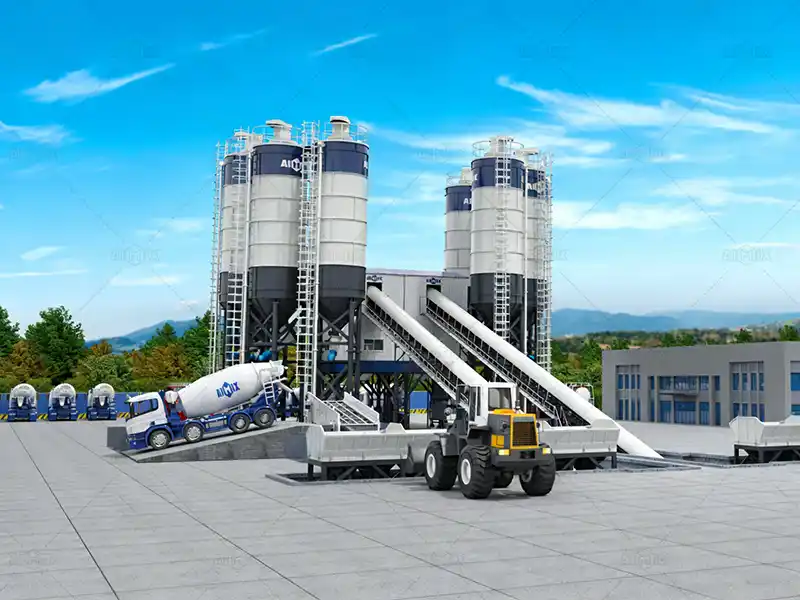
Stationary Belt Type Batching Plant Indonesia
Hot Models: AJ60AJ90AJ120AJ180
Capacity: 60-300m³/h
Mixer: Twin shaft mixer, Vertical-shaft mixer
Aggregate Feeder: Belt Conveyor
Aggregate Bins: Customizable up to 300 m³ capacity
Applications: Ideal for large-scale, continuous concrete production projects.
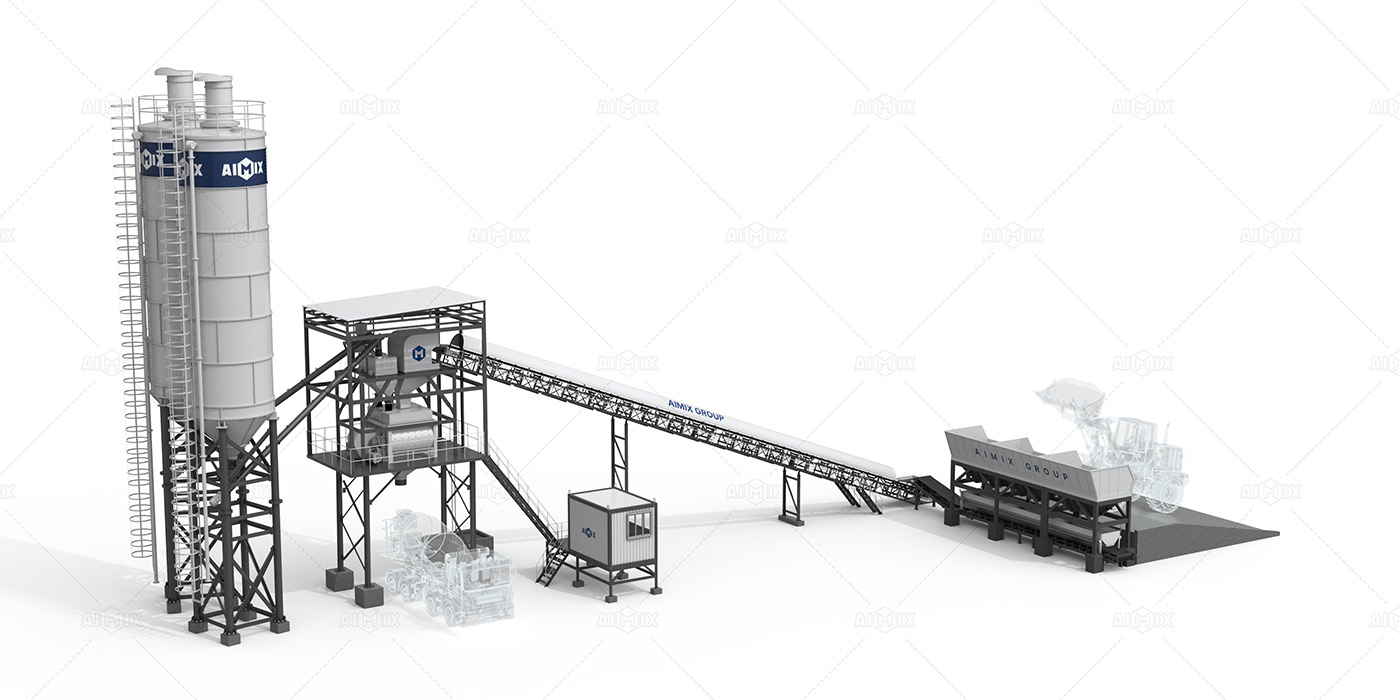
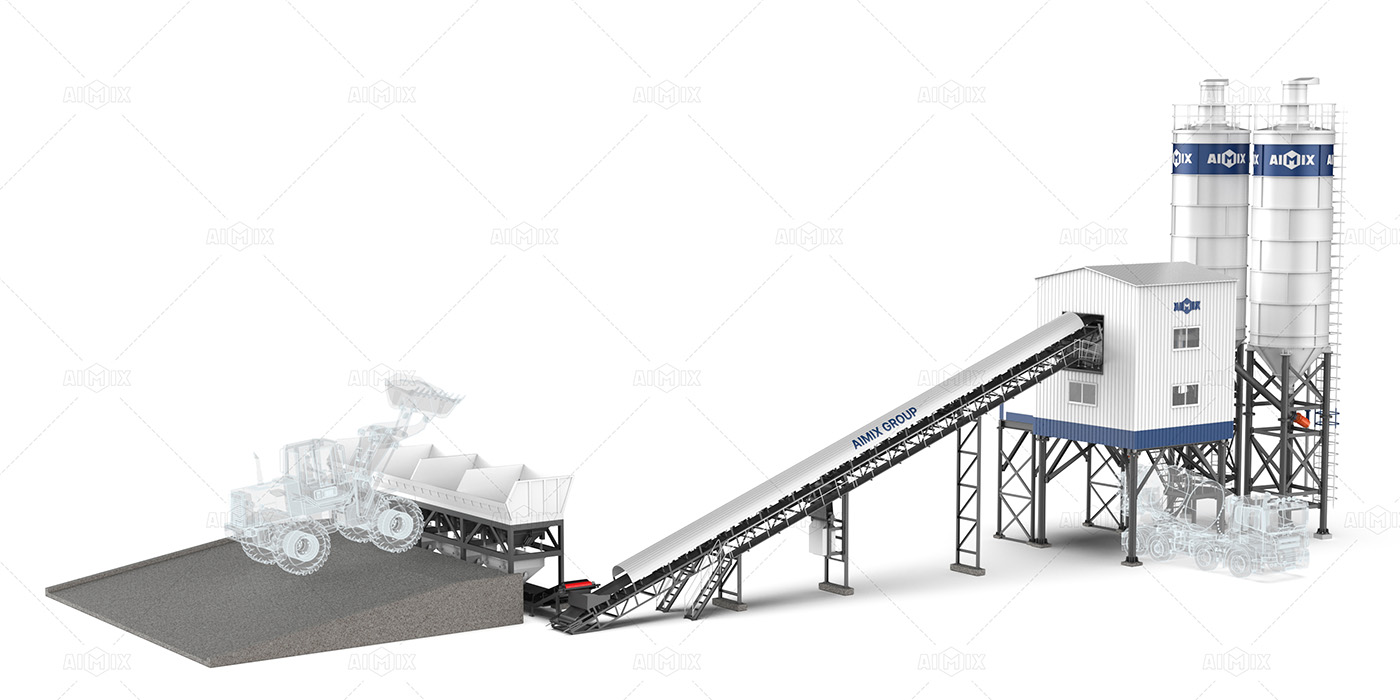
AJ-60 Stationary Arti Batching Plant
- Theoretical Productivity: 60m³/h
- Mixer Model: JS1000
- Mixer Power: 2×18.5KW
- Mixing Cycle Period: 60s
- Max. Discharging Height: 4.1m
- Max. Aggregate Size: Φ60mm
- Aggregate Bin Capacity: 4×7m³
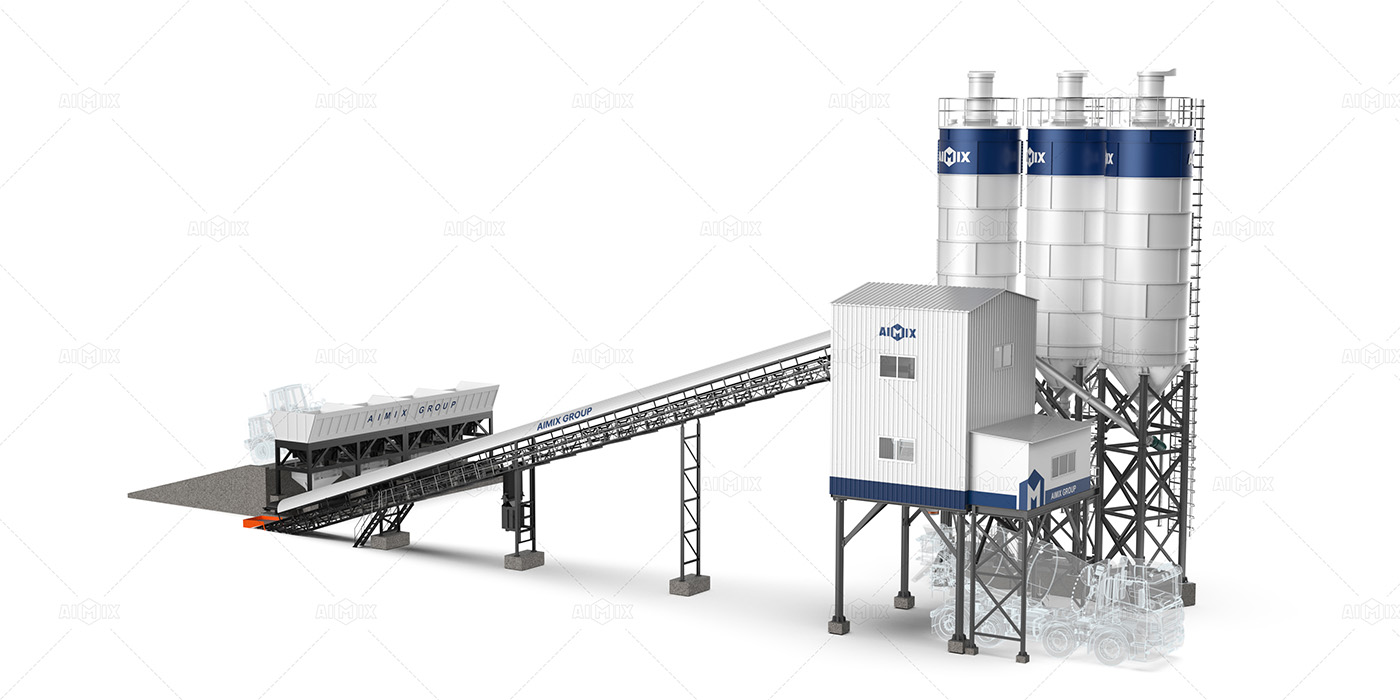
AJ-90 Stationary Pabrik Pembuatan Beton
- Theoretical Productivity: 90m³/h
- Mixer Model: JS1500
- Mixer Power: 2×30KW
- Mixing Cycle Period: 60s
- Max. Discharging Height: 4.1m
- Max. Aggregate Size: Φ80mm
- Aggregate Bin Capacity: 4×15m³
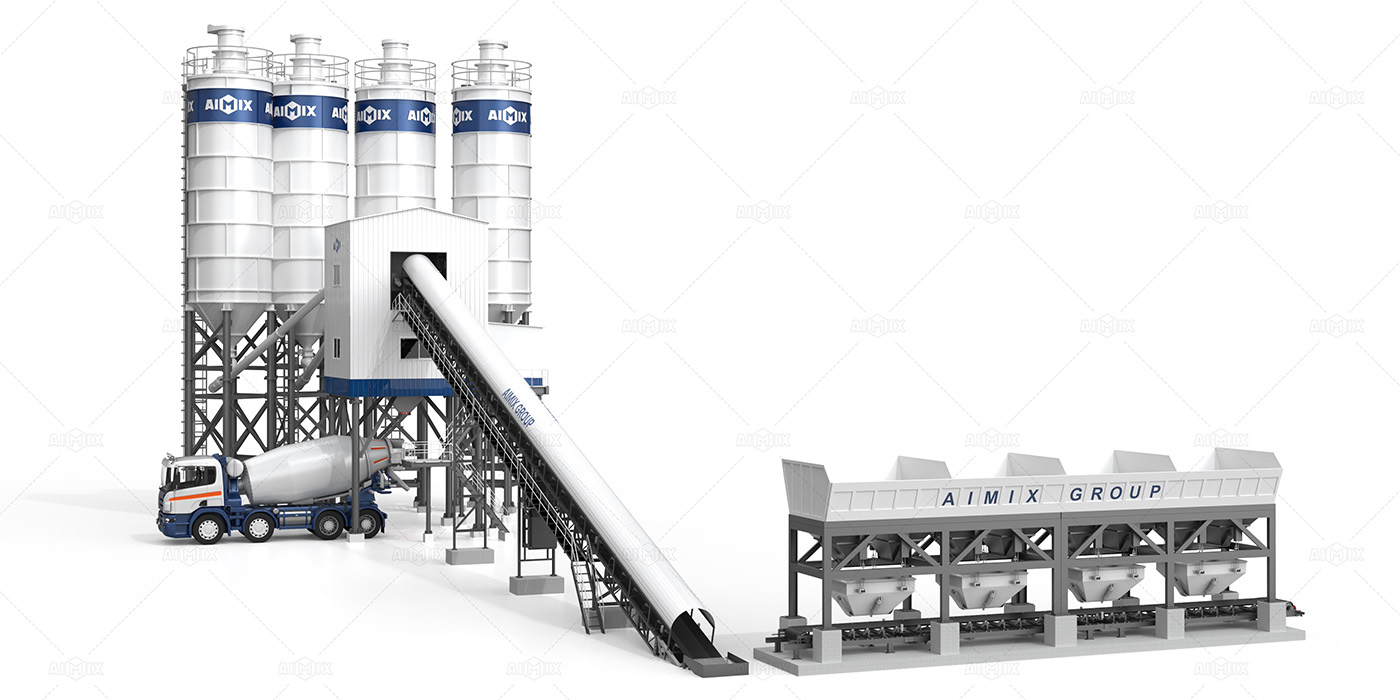
AJ-120 Stationary Concrete Plant Machine
- Theoretical Productivity: 120m³/h
- Mixer: MAO3000/2000(SICOMA)
- Mixer Power: 2×37KW
- Mixing Cycle Period: 65s
- Max. Discharging Height: 4.3m
- Max. Aggregate Size: Φ80mm
- Aggregate Bin Capacity: 4×15m³
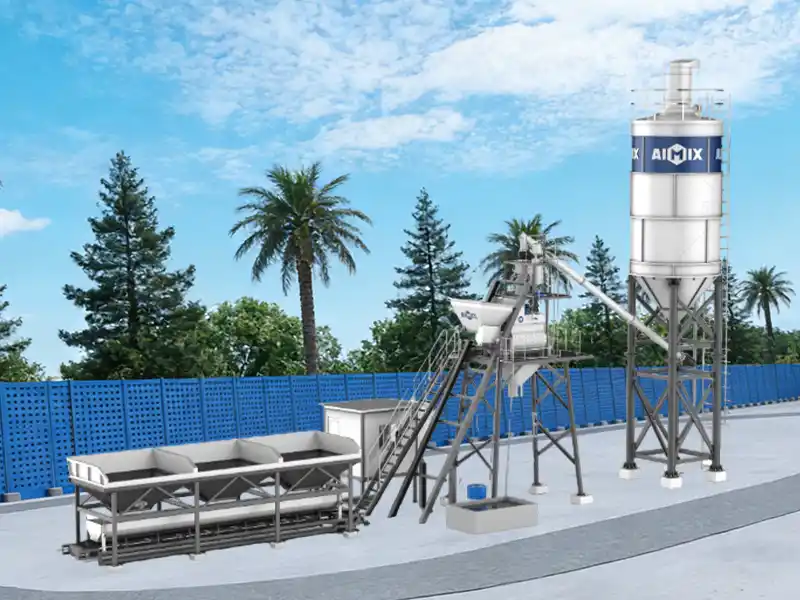
AJ-180 Stationary Cement Batching Plant
- Theoretical Productivity: 180m³/h
- Mixer: MAO4500/3000(SICOMA)
- Mixer Power: 2×55KW
- Mixing Cycle Period: 65s
- Max. Discharging Height: 4.3m
- Max. Aggregate Size: Φ80mm
- Aggregate Bin Capacity: 4×20m³
Stationary Skip Hoist Type Cement Mixing Plant For Sale
Hot Models: AJ25AJ35AJ50AJ75
Capacity: 25-75m³/h
Mixer: Twin shaft mixer, Vertical-shaft mixer
Transport Method: Uses a skip hoist to lift raw materials with compact structure, saving space.
Suitable Applications: Ideal for sites with limited space and medium-sized projects.
Investment Cost: Lower initial cost, suitable for projects with tighter budgets.
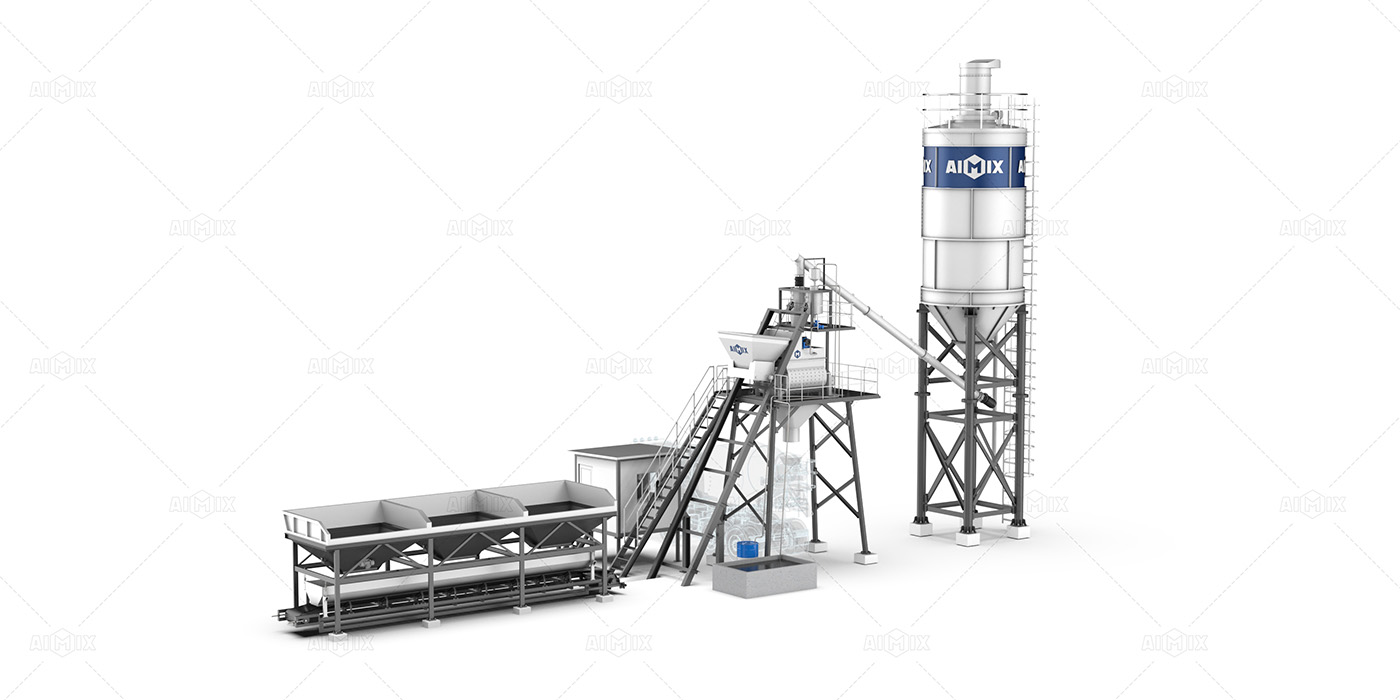
AJ-25 Stationary Aggregate Batching Plant
- Theoretical Productivity: 25m³/h
- Mixer Model: JS500
- Mixer Power: 18.5KW
- Max.Aggregate Size: Φ60mm
- Aggregate Bin Capacity: 3×3m³
- Cycle Period: 72s
- Max. Discharging Height: 3.8m
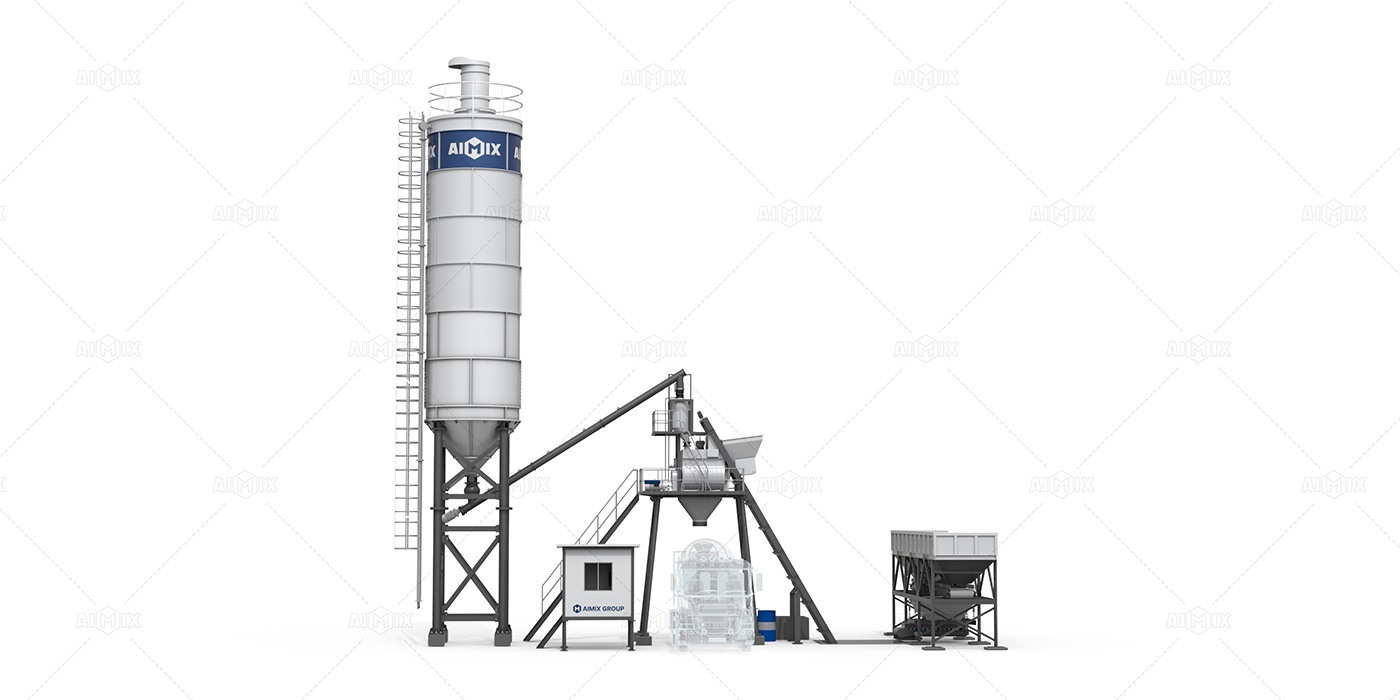
AJ-35 Stationary Concrete Mixer Plant
- Theoretical Productivity: 35m³/h
- Mixer Model: JS750
- Rated Input Volume: 1200L
- Max.Aggregate Size: Φ60mm
- Aggregate Bin Capacity: 3×5m³
- Powder Storage Silo: 2×50T
- Max. Discharging Height: 4.1m
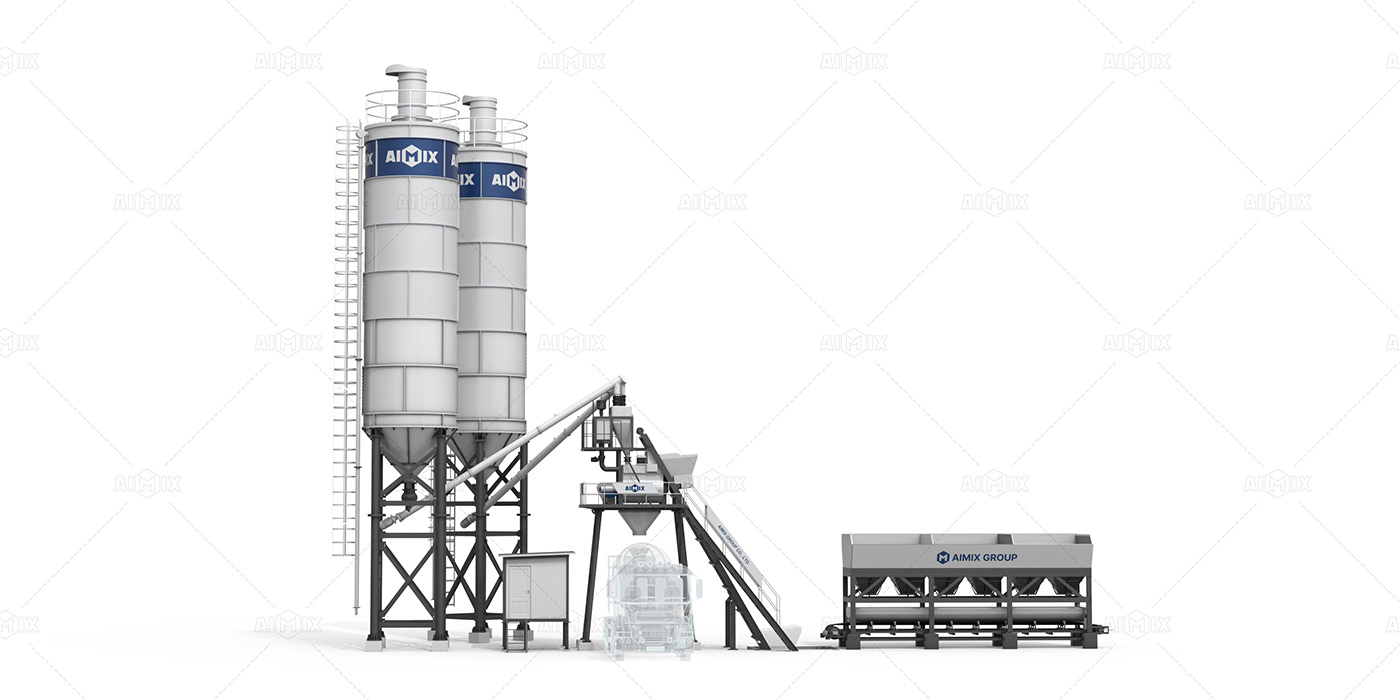
AJ-50 Stationary Concrete Manufacturing Plants
- Theoretical Productivity: 50m³/h
- Mixer Model: JS1000
- Mixer Power: 2×18.5KW
- Max.Aggregate Size: Φ60mm
- Aggregate Bin Capacity: 3×8m³
- Cycle Period: 72s
- Max. Discharging Height: 4.1m
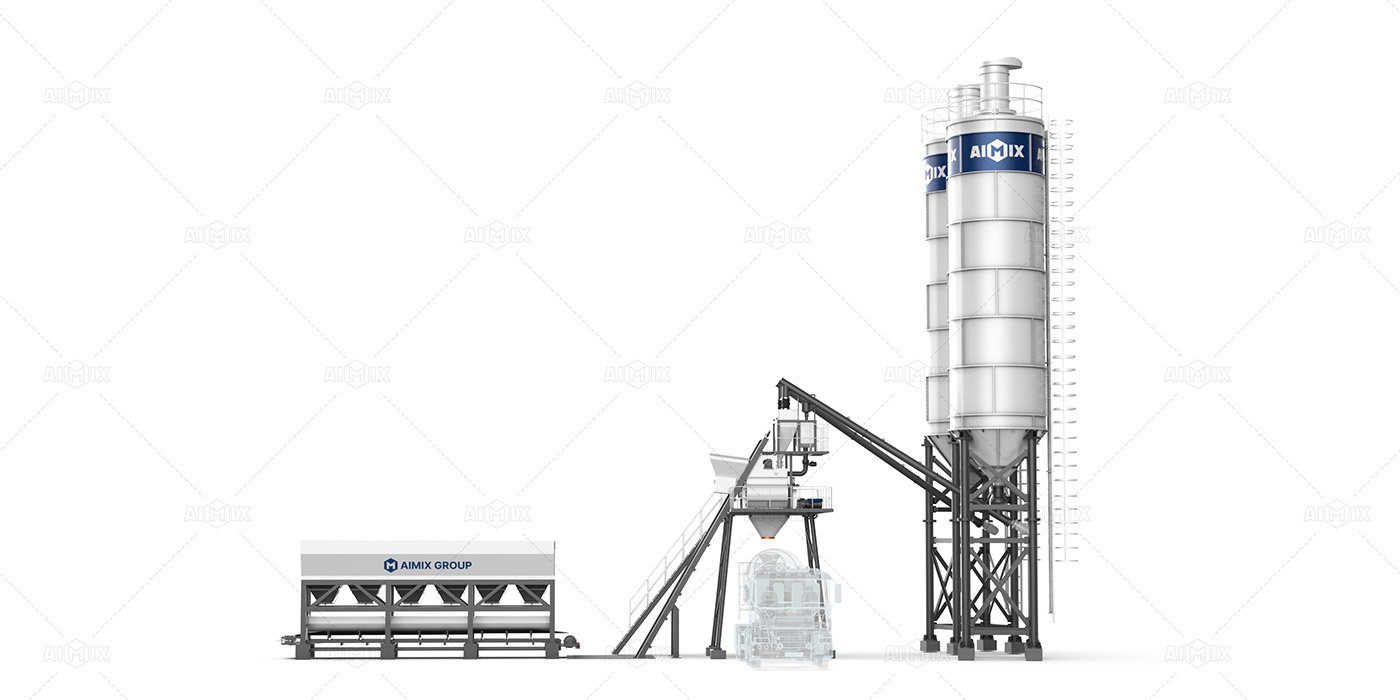
AJ-75 Stationary Mixing Plant Concrete
- Theoretical Productivity: 75m³/h
- Mixer Model: JS1500
- Mixer Power: 2×30KW
- Max.Aggregate Size: Φ80mm
- Aggregate Bin Capacity: 3×12m³
- Cycle Period: 72s
- Max. Discharging Height: 4.1m
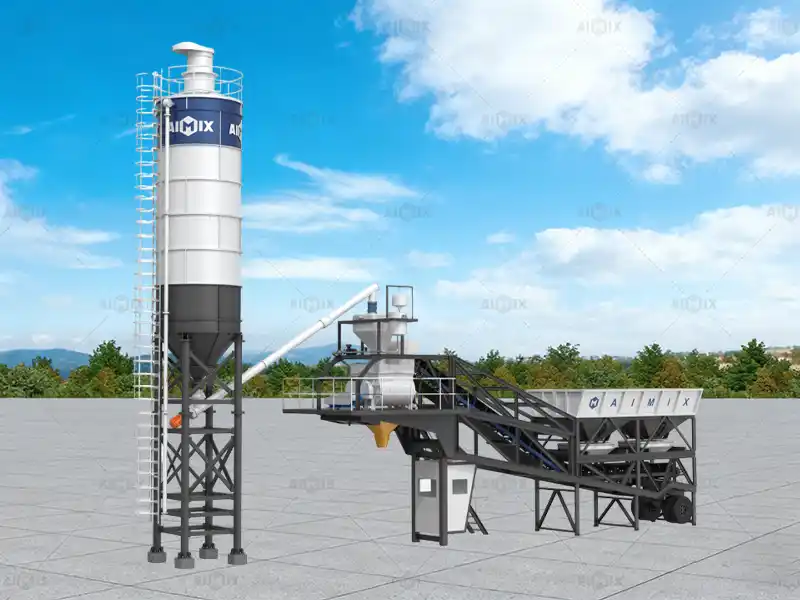
AJY Series Mobile Batching Plant for Sale
Hot Models: AJY60AJY90AJY120
Capacity: 25-120m³/h
Mixer: Twin shaft mixer, Planetary
Aggregate Feeder: Belt Conveyor
Fast Setup: Efficient installation process minimizes downtime.
Moderate Mobility: Ideal for medium-sized projects with some flexibility in location.
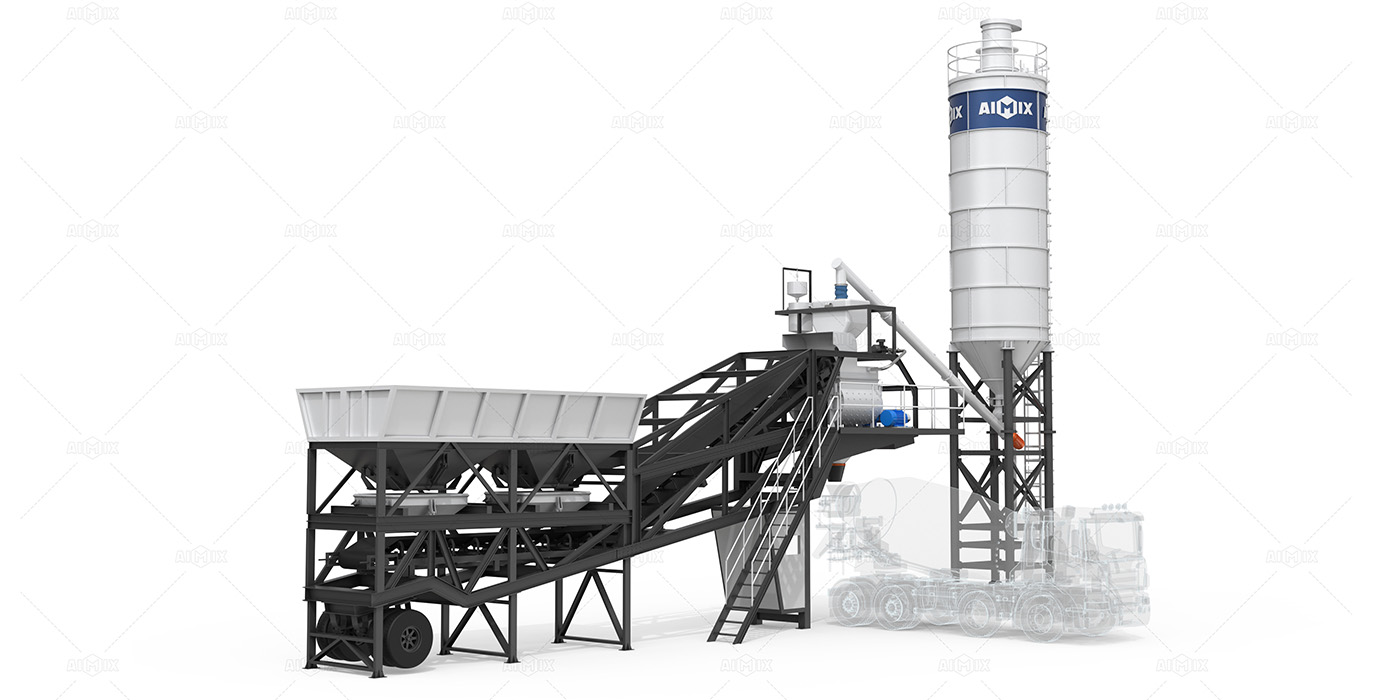
AJY35 Mobile Batching Plant Beton
- Theoretical Productivity: 35m³/h
- Mixer Model: JS750
- Rated Input Volume: 1200L
- Max. Aggregate Size: Φ60mm
- Standard Aggregate Material Quantity: 2×5m³
- Traction Type: Semi-trailer
- Max. Discharging Height: 3.8m
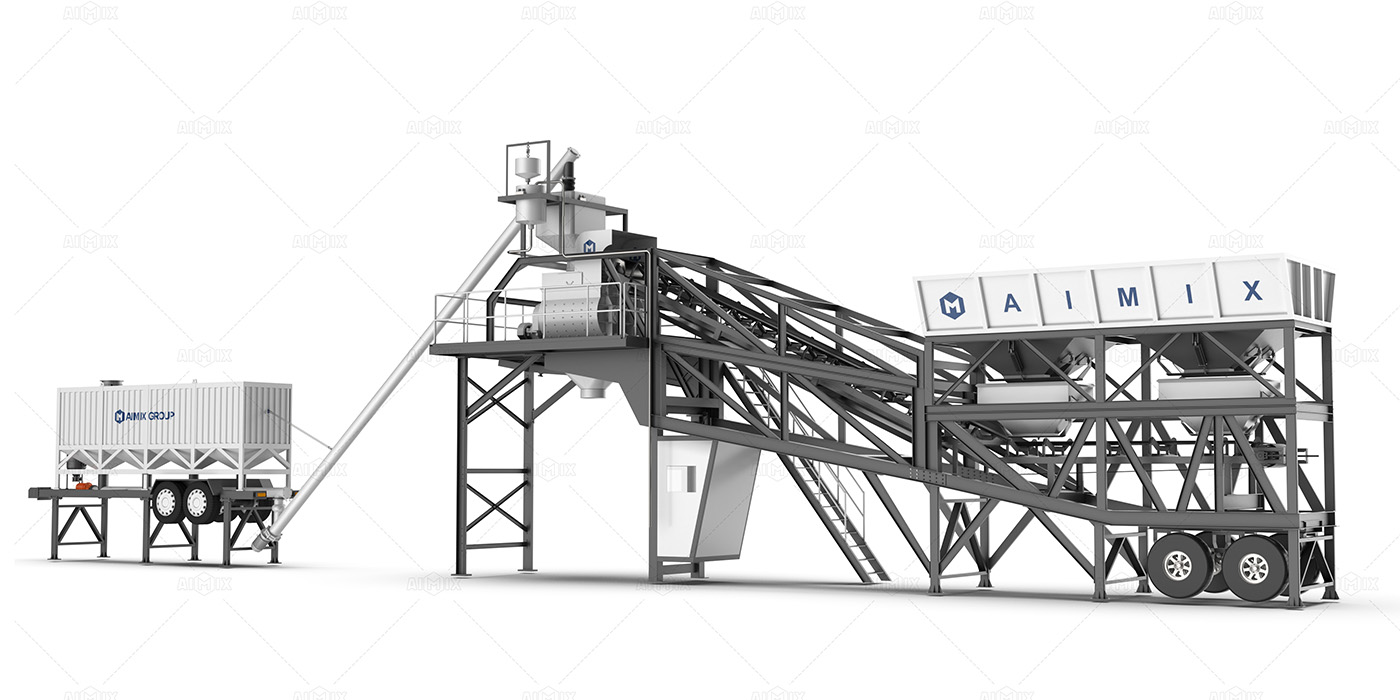
AJY50 mobile batching plant
- Theoretical Productivity: 50m³/h
- Mixer Model: JS1000
- Traction Type: Semi-trailer
- Mixing Cycle Period: 60s
- Max. Discharging Height: 3.8m
- Max. Aggregate Size: Φ60mm
- Aggregate Material Quantity: 2×8m³
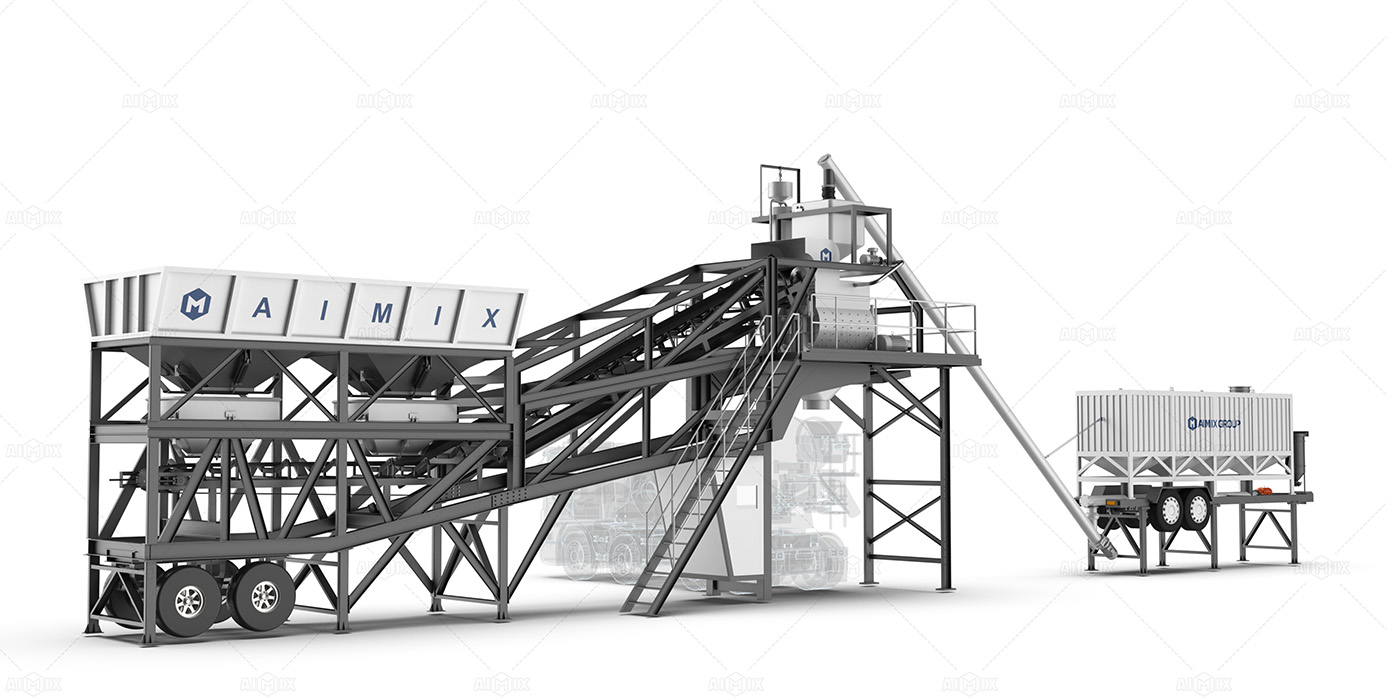
AJY60 mobile batching plant
- Theoretical Productivity: 60m³/h
- Mixer Model: JS1000
- Traction Type: Semi-trailer
- Mixing Cycle Period: 60s
- Max. Discharging Height: 3.8m
- Max. Aggregate Size: Φ60mm
- Aggregate Material Quantity: 2×10m³
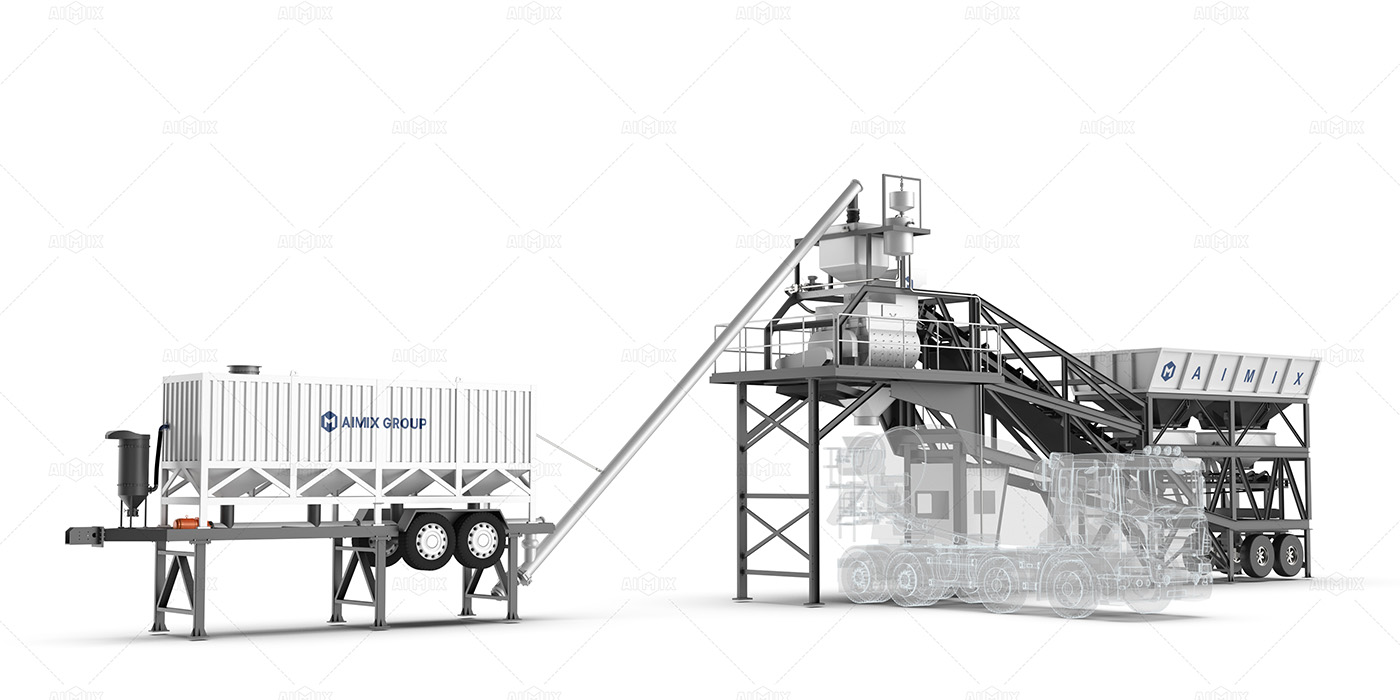
AJY90 mobile concrete mixture plant
- Theoretical Productivity: 90m³/h
- Mixer Model: JS1500
- Traction Type: Semi-trailer
- Mixing Cycle Period: 60s
- Max. Discharging Height: 3.8m
- Max. Aggregate Size: Φ60mm
- Aggregate Material Quantity: 2×12m³
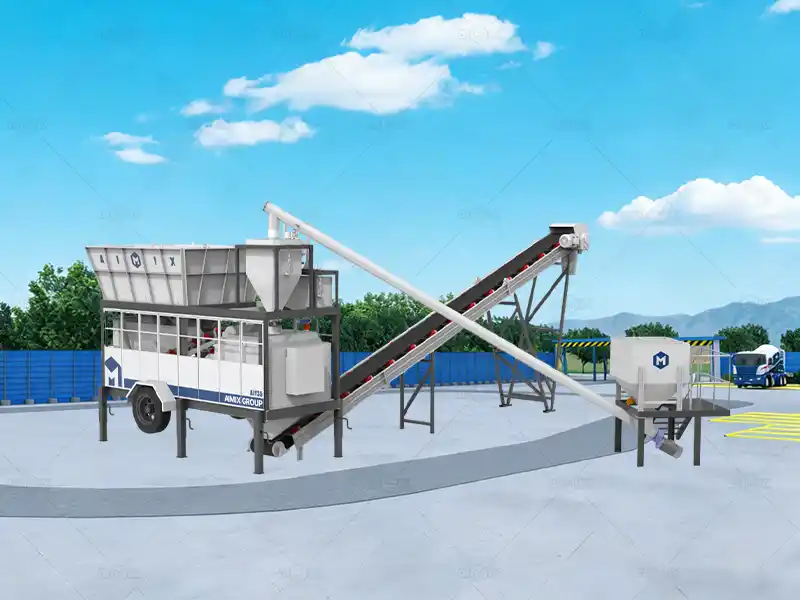
AJSY Mini Mobile Batching Plant
Boom Length: AJSY20AJSY40
Capacity: 25-50m³/h
Mixer: Twin shaft mixer
Installation Period: 0.5 days
Aggregate Feeder: 2×3.5 m³
Highly Mobile: Perfect for small projects and frequent relocations.
Compact and Convenient: Easy to move and set up in tight spaces.
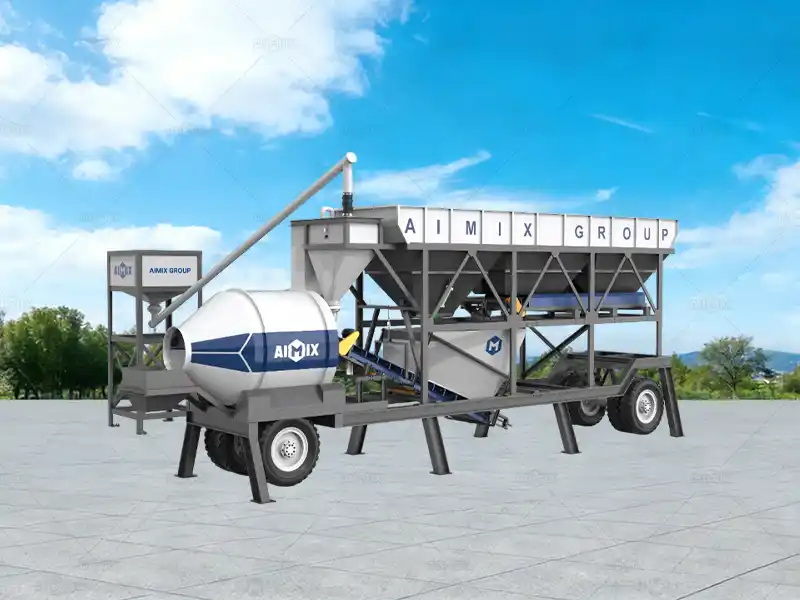
AJZY Drum-Type Batching Plant
Boom Length: AJZY40AJZY60
Capacity: 15-60m³/h
Hot Models: AJZY40, AJZY60
Mixer: JZM750-JZM1500
Mixing Period: 90-120 s
Compact Design: Simple structure suitable for small to medium projects.
Easy Setup: No foundation needed, which reduces installation time.
Once you know the different batching plant types in Indonesia, the next thing that matters is price. Costs change with plant type, capacity, and configuration. In the next section, we walk you through our concrete batching plant price list to help you choose a solution that fits both your project and budget.
How Much Does a Concrete Batching Plant Cost in Indonesia?
When planning to buy a concrete batching plant terdekat in Indonesia, price is often the first concern. Costs vary based on plant type, capacity, and configuration, especially for stationary, mobile, or containerized batching plants. We offer flexible options to match different project sizes and budgets, from small local jobs to large infrastructure works. Below is a clear concrete batching plant price overview to help you compare models and choose the right batching plant for your project.
| Type | Models | Batching Plant Price |
|---|---|---|
| Stationary Concrete Batching Plant | AJ25-AJ240 | $10,000-$400,000 |
| Containerized Stationary Batching Plant | AJ60-AJ180 | $50,000-$300,000 |
| Foundation-free Batching Plant | AJM25-AJM75 | $30,000-$100,000 |
| Mobile Concrete Batch Plant | AJY25-AJY60 | $30,000-$120,000 |
| Mobile Batching Plant With Pan Mixer | AJYL-25 | $30,000-$50,000 |
| New Type Mobile Batching Plant | AJS25 | $30,000-$50,000 |
Understanding the price helps you plan your budget, but seeing how a batching plant performs in real projects builds real confidence. Across Indonesia, contractors choose us not only for cost efficiency, but also for proven results on site. In the next section, explore real batching plant projects and see how our concrete solutions are used across the country.
Expanding Reach: Concrete Batching Plant Success Across Indonesia
Our concrete processing plants are delivering reliable and efficient solutions across Indonesia. They have been successfully installed in over 50 cities across 23 provinces, supporting highways, bridges, urban developments, and remote infrastructure projects. We are proud to provide tailored solutions that meet diverse local needs and site conditions. Explore the following gambar batching plant artinya to see real projects and learn how our batching plants perform in Indonesia.
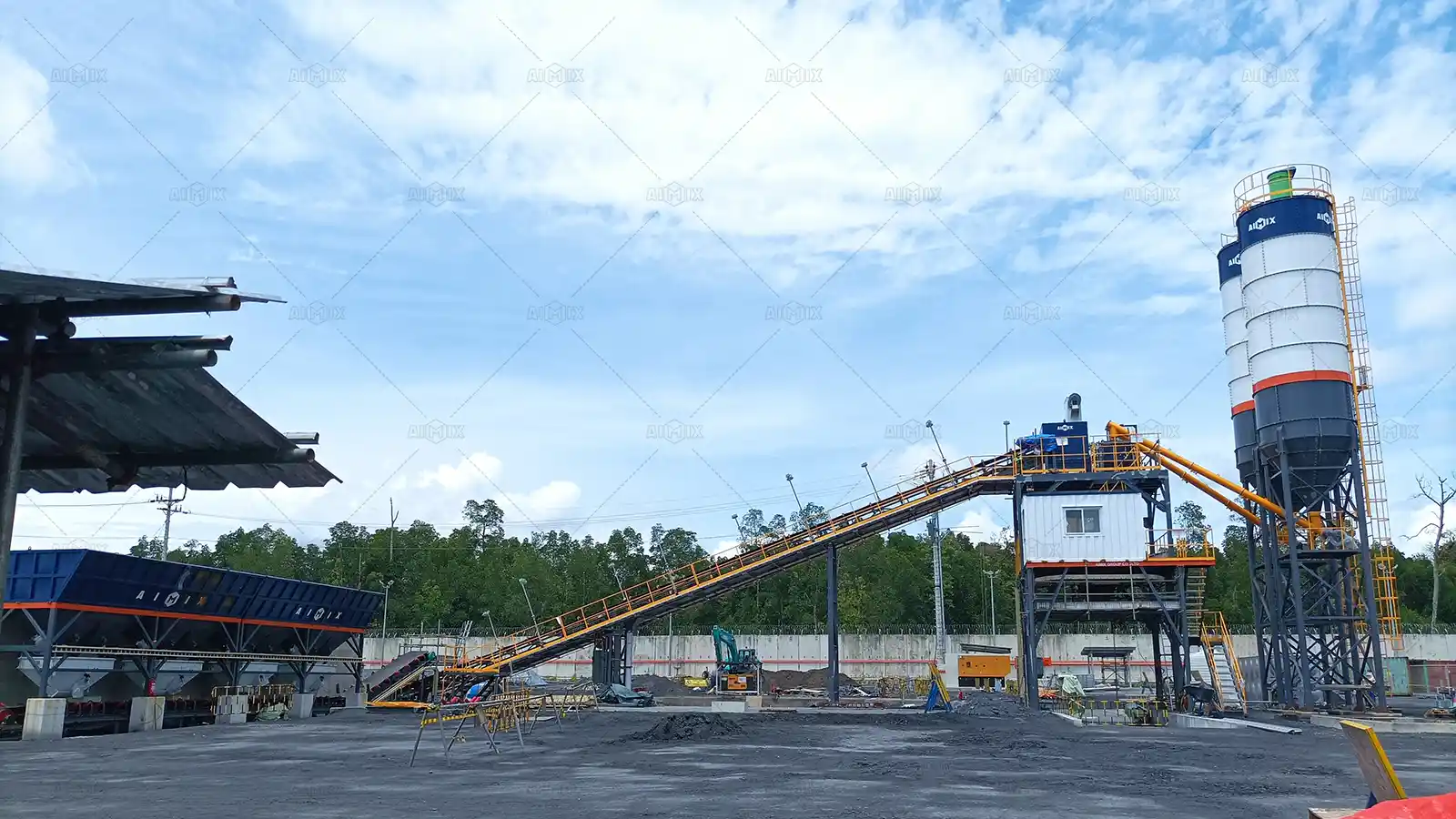
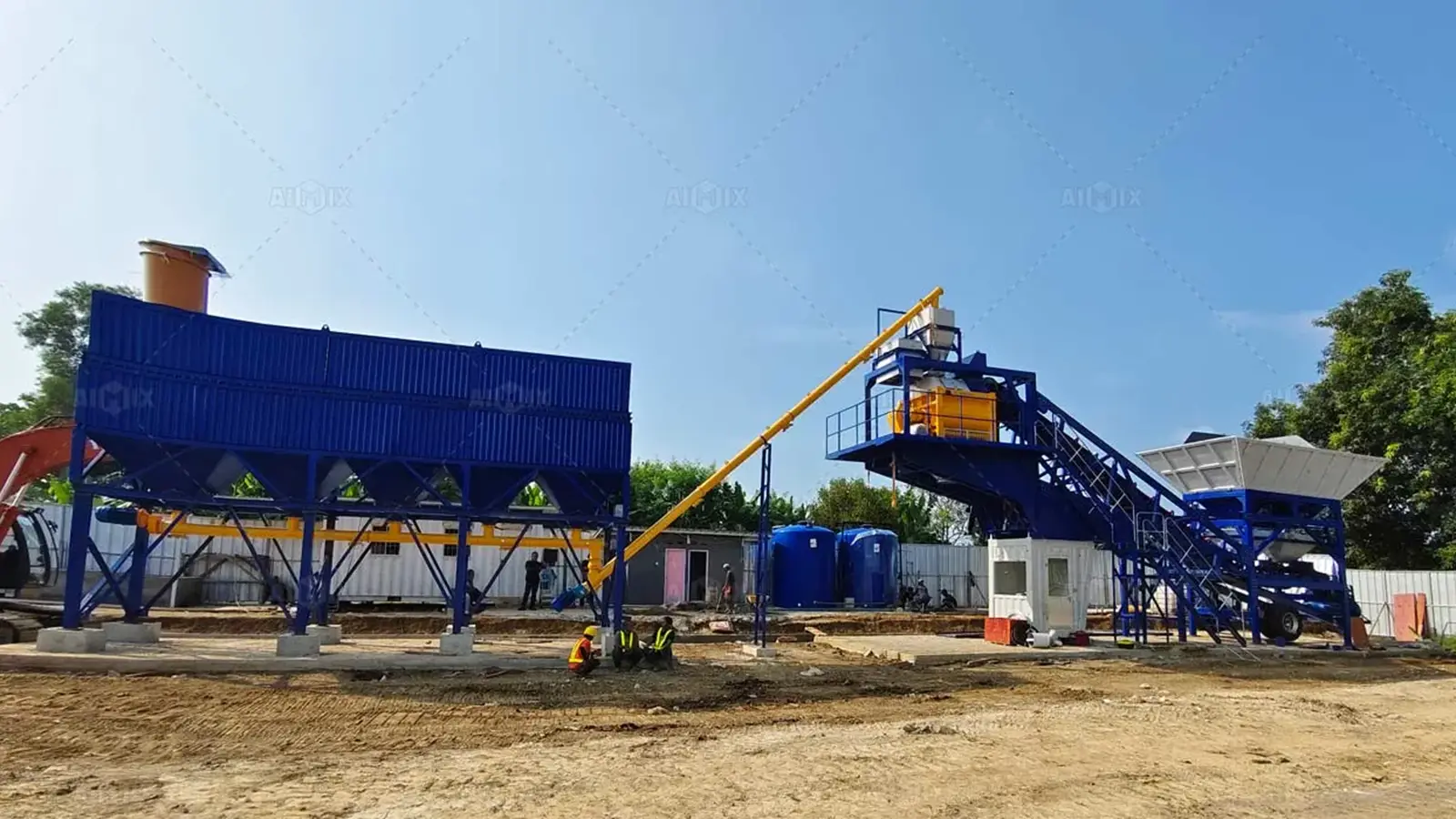
AJ-90 Stationary Concrete Plant for Power Plant Building in Papua
- Mixing Capacity: 90m³/h(twin shaft mixer)
- Mixer Discharging Volume: 1500L
- Application: PT Freeport Indonesia Power Plant Project
- Customer Feedback: “On-site concrete production was essential for this project. The AJ-90 batch plant ran steadily and delivered consistent concrete, which helped us stay on schedule and reduce transport issues.”
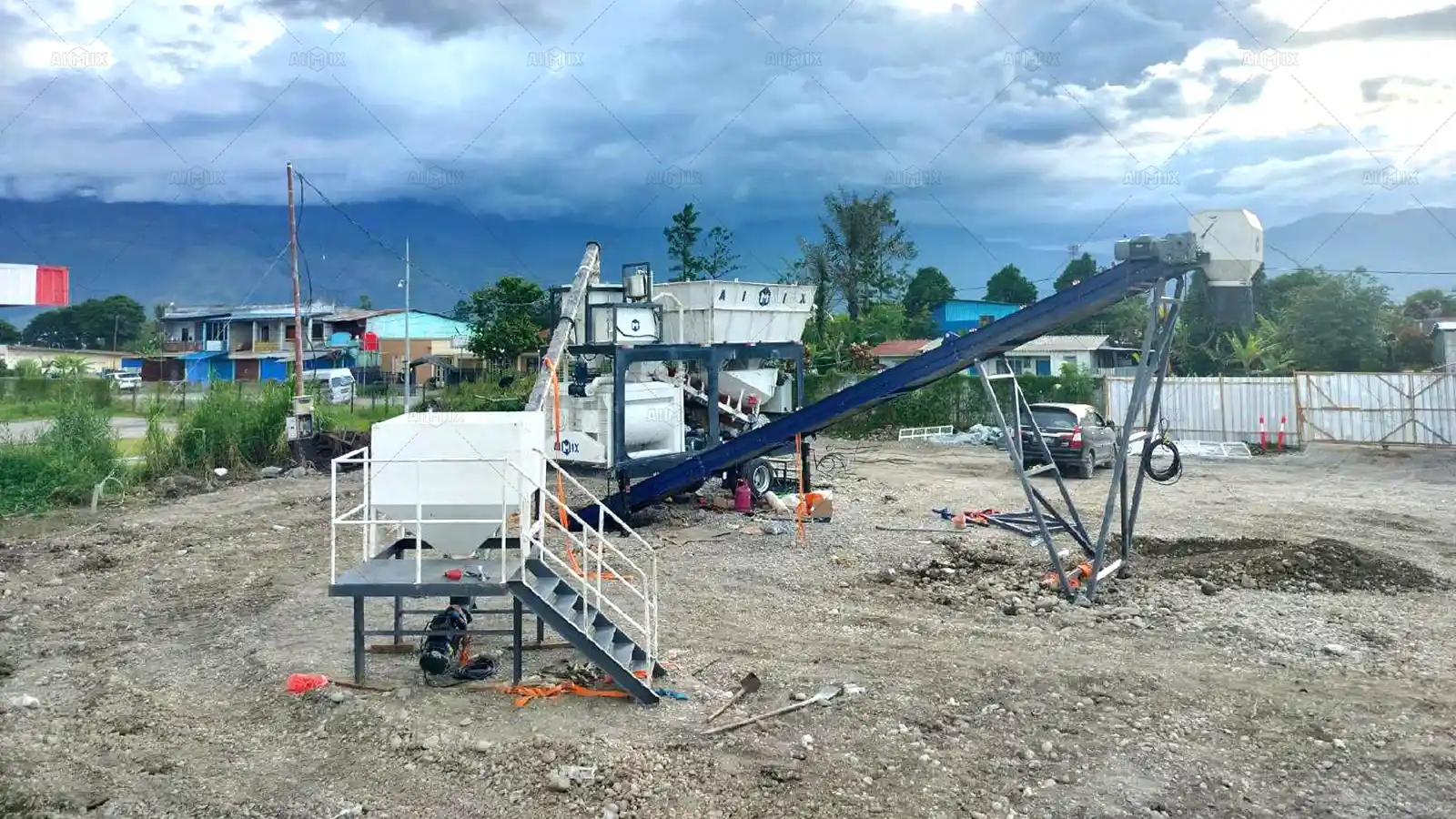
AJY-60 Mobile Batch Plant for On-Site Concrete Production in Besica
- Mixing Capacity: 60m³/h(twin shaft mixer)
- Mixer Discharging Volume: 1000L
- Application: Local House Construction
- Customer Feedback: “Mr. Sam, Mr. Vincent, and their team did an excellent job commissioning our batching plant terdekat. They worked all day to ensure everything ran perfectly. We’re grateful for their support.”
AJSY-40 Mobile Compact Batching Plant for House Building in Jayapura
- Mixing Capacity: 40m³/h(twin shaft mixer)
- Mixer Discharging Volume: 1000L
- Application: Rural House Construction
- Customer Feedback: “The wireless remote control of this plant made operation simple, and one operator could manage the whole plant. Its compact design fit perfectly on our small site, which was ideal for rural housing projects in Jayapura.”
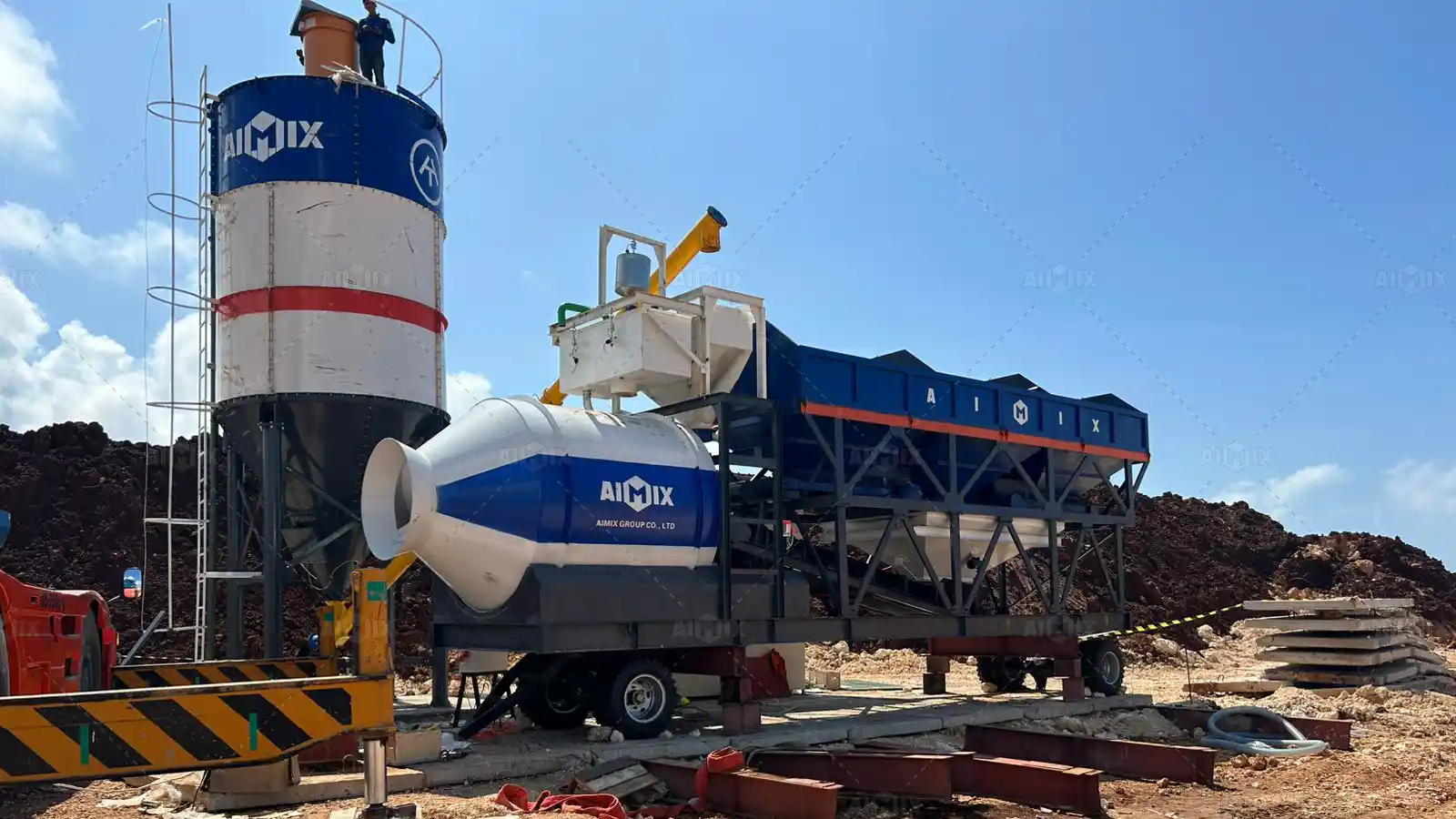
AJZY-50 Portable Compact Batching Plant for Warehouse Construction in Bali
- Mixing Capacity: 50m³/h(drum mixer)
- Mixer Discharging Volume: 1500L
- Application: Warehouse Construction
- Customer Feedback: “This was our first warehouse project, and we had little experience with concrete equipment. AIMIX provided a drum-type on-site batching plant and clear guidance. Concrete production now runs smoothly on site.”
These successful projects across Indonesia show how AIMIX batching plants perform in real local conditions. But their reliability is not limited to one market. In the next section, explore more photos of AIMIX concrete batching plants working in Indonesia and other countries, and see how they deliver consistent results worldwide.
Our Concrete Batching Plant Working Indonesia and Other Countries
AIMIX automatic concrete batching plants are becoming increasingly popular worldwide. We export to countries like Indonesia, the Philippines, Uzbekistan, Sri Lanka, Thailand, Tajikistan, Malaysia, and East Timor. Our mixer batching plants are well-regarded for their reliability and efficiency. Customers trust our high-quality compact batching plant and value our commitment to delivering effective solutions and excellent support. Below are pictures from various construction sites where our plant batching in use.
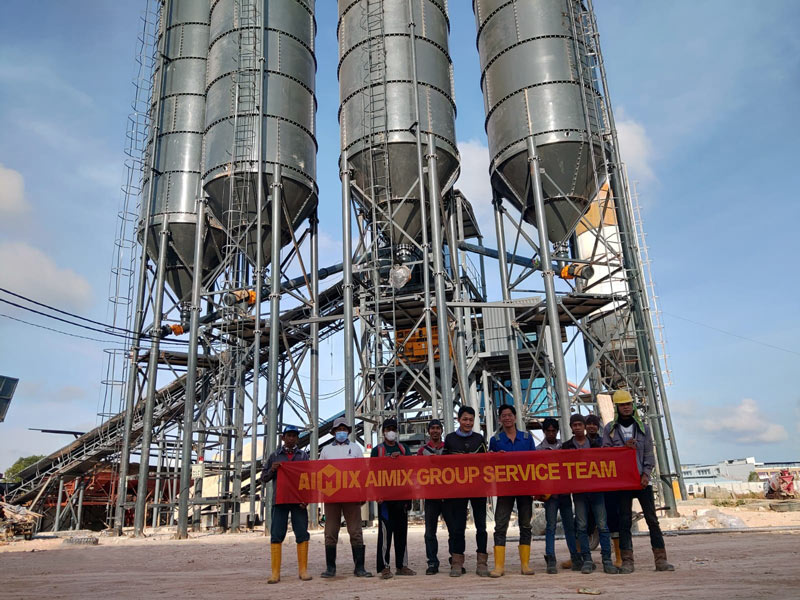
AJ120 Batching Plant In Terdekat Indonesia
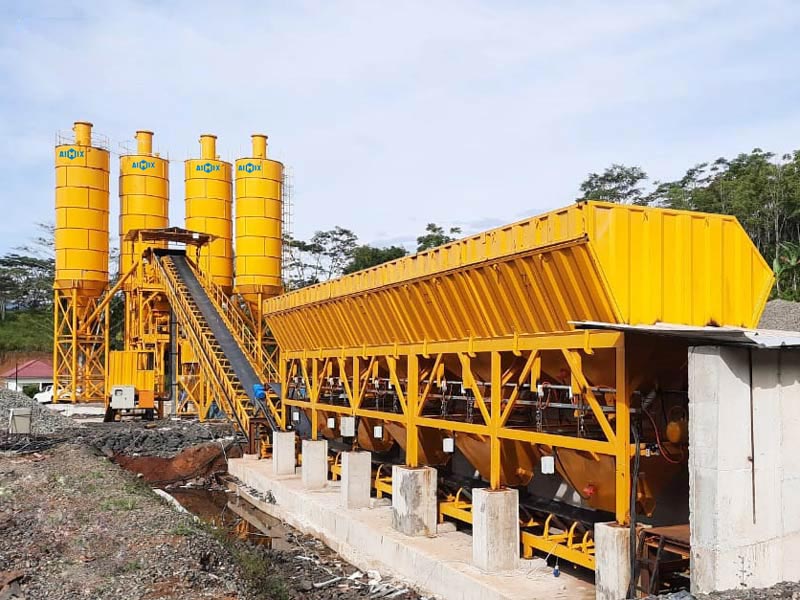
AJ90 Batching Plant In Sumatra Indonesia
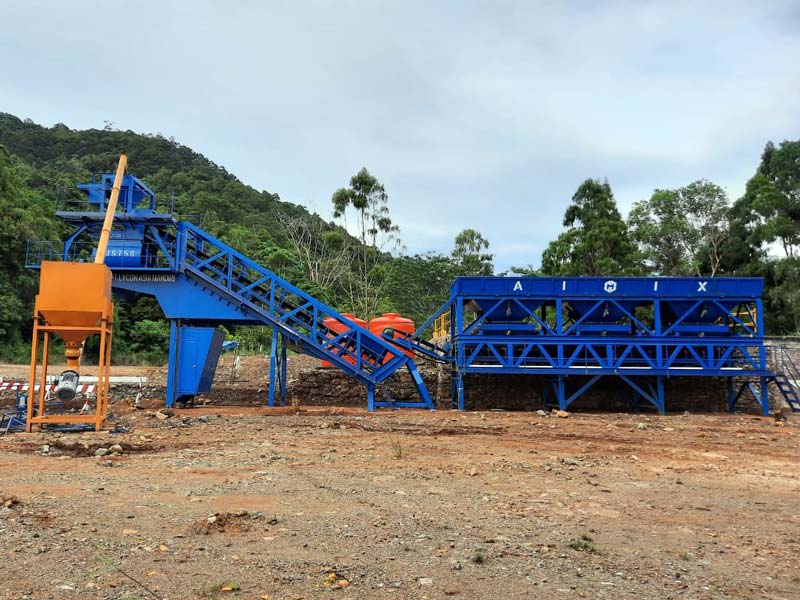
AJY35 Batching Plant In East Java Indonesia
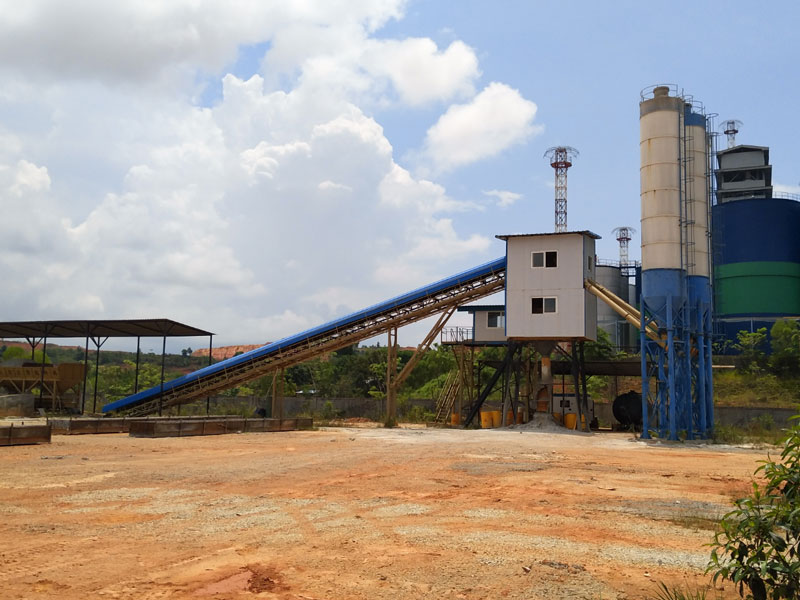
AJ90 Concrete Batching Plant in Batam Indonesia
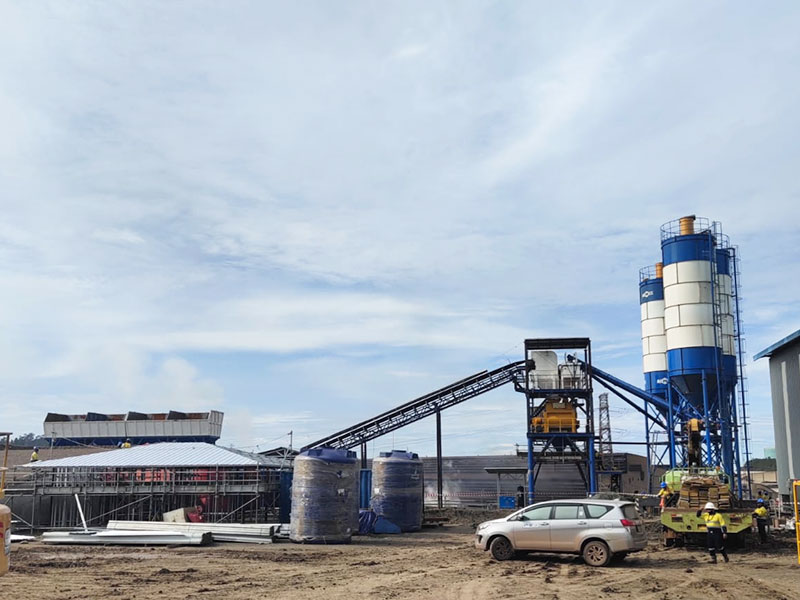
AJ120 batching plant in Banten Indonesia
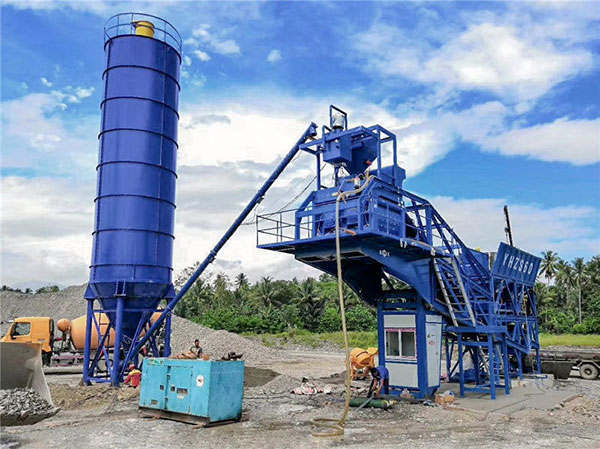
AJY60 mobile batching plant in the Philippines
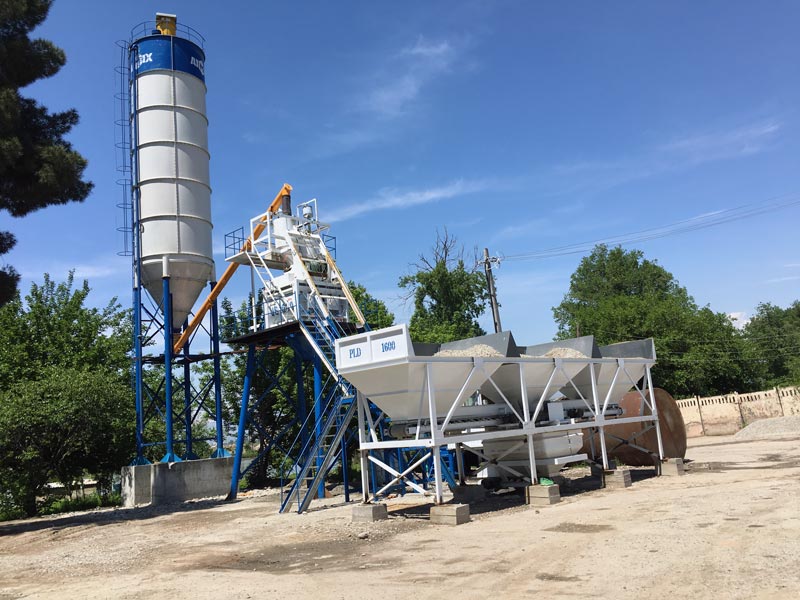
AJ50 batching plant in Tajikistan
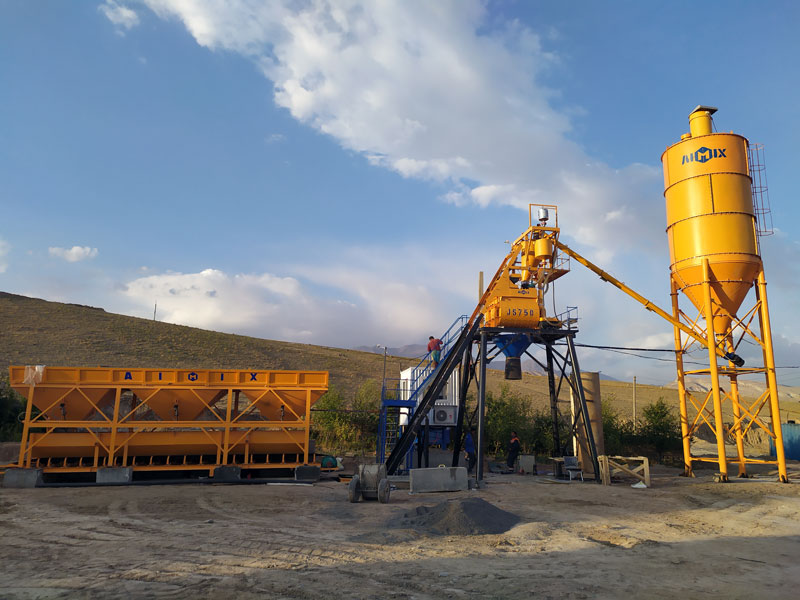
AJ35 batching plant in Uzbekistan
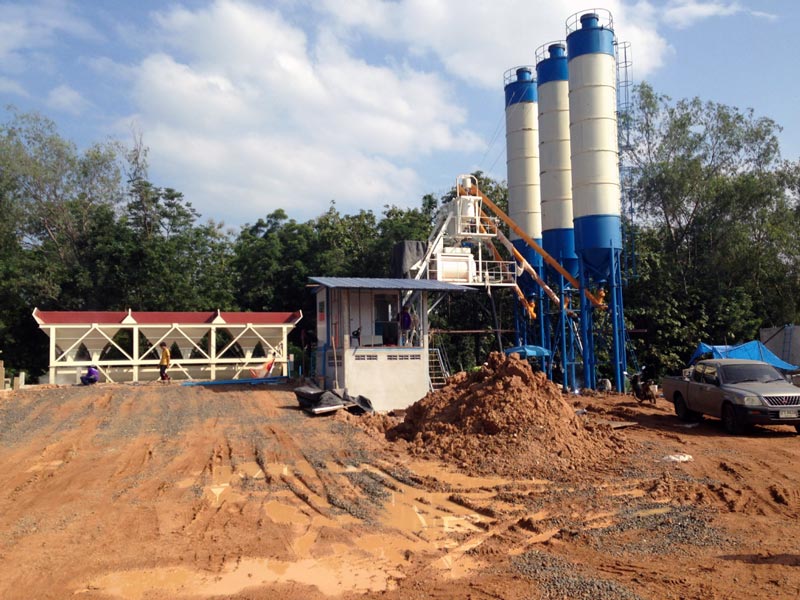
AJ50 batching plant in Thailand
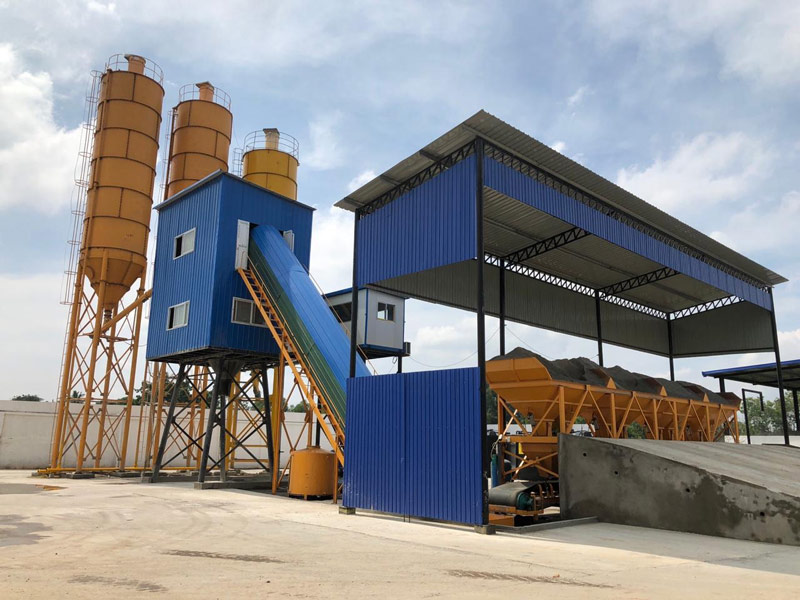
AJ35 mini batching plant in Sri Lanka
Seeing AIMIX batching plants working on real sites in Indonesia and other countries builds confidence. The next step is choosing the right concrete plant for your own project. In the following section, we explain how to select the best batching plant based on your construction needs, site conditions, and budget.
How to Choose the Right Concrete Plant for Your Construction Needs?
Choosing the right concrete plant is essential for the success of your construction project. You need a plant batch that fits your specific needs, whether it’s for roads, bridges, water conservancy, or urban infrastructure. Here’s how you can make the right choice.
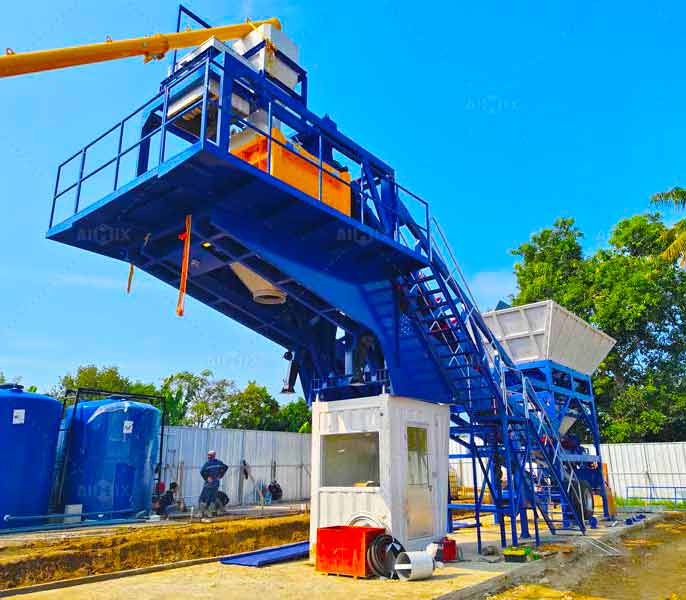
Understand Your Project Requirements
Evaluate Output Needs
Consider Space and Flexibility
Look at the Type of Construction
By focusing on the specific needs of your project, AIMIX helps you choose the best twin shaft mixer batching plant, ensuring efficient and smooth construction.
What Are the Advantages of Concrete Batching Plant?
A stationary concrete batching plant offers several key advantages for construction projects. Here’s why investing in one dry or wet mix batching plant can benefit your projects:
-
Stable Concrete Quality: Precise material mixing ensures consistent strength and uniformity across batches.
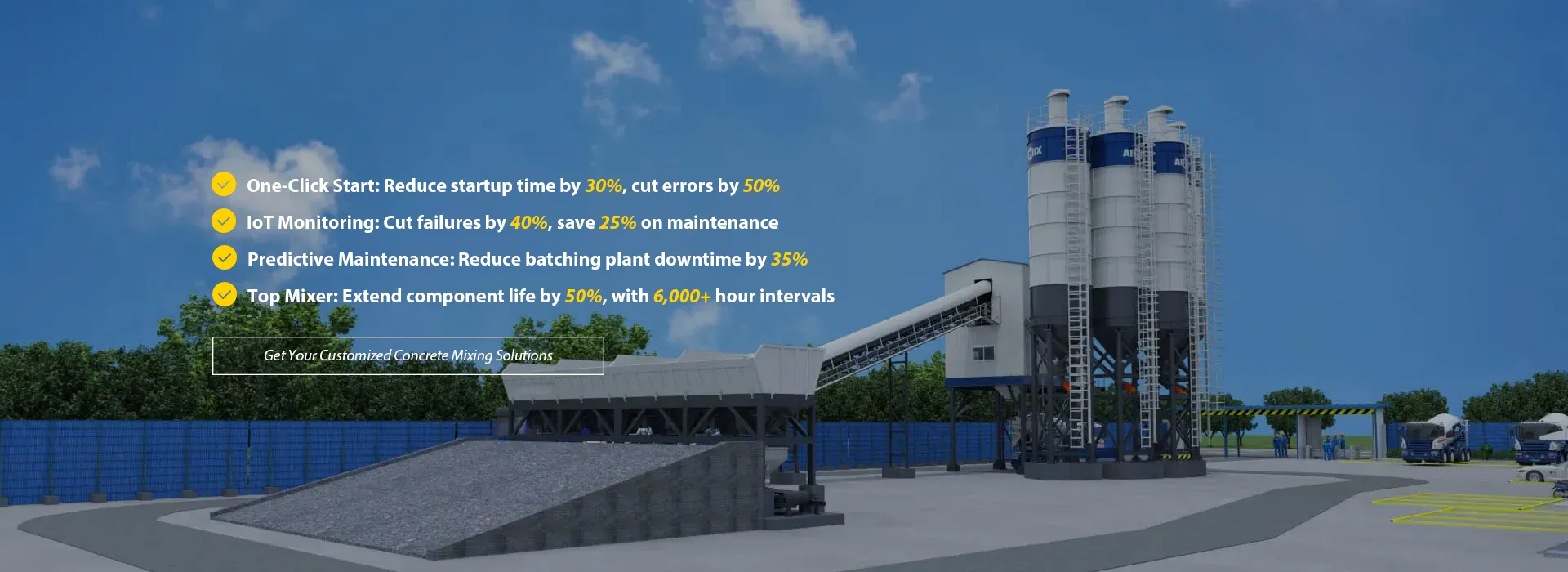
Smart Control System: One-click start with dual operation modes (touchscreen & button) cuts setup time by 30% and reduces errors by 50%.
Remote Monitoring & Maintenance: IOT system tracks motor status, vibration, and temperature in real time. Get automatic alerts and smart maintenance plans—lowering downtime and saving 25% in service costs.
Accurate Feeding System: Real-time adjustment and auto-calibration reduce raw material waste by 10% and improve production stability.
High Productivity: Fast output with mixer options for different needs—planetary for precision, twin-shaft for bulk production.
Flexible for Any Site: Designed for infrastructure, mining, or commercial concrete use. Boosts equipment utilization by 35%.
Cost and Time Efficient: On-site production means no delays, better control, and fewer third-party costs.
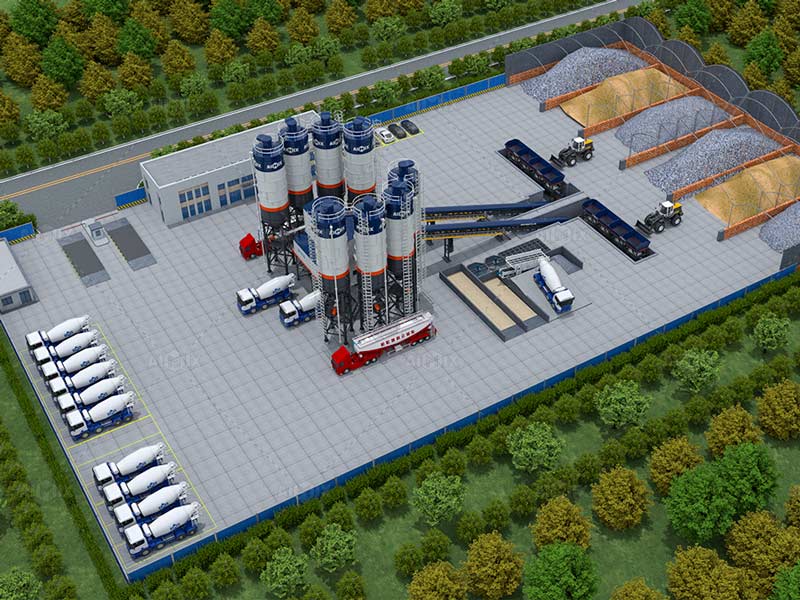
By using a mixer batching plant di Indonesia, you improve efficiency, quality, and cost-effectiveness, ensuring better results for your project. See more gambar detail batching plant.
How to Get A Suitable AIMIX Concrete Batching Plant from AIMIX?
Choosing the right concrete batching plant from the perspective of project requirements is crucial for success. Here’s a clear guide to help you select the most suitable plant based on your engineering project needs:
Determine Project Size and Type
Large Projects: For high-rise buildings or large infrastructure projects needing high capacity and continuous operation, choose a AJ Series stationary belt type concrete batching plant.
Medium to Small Projects: For smaller buildings or road construction with limited space, opt for a AJ Series stationary skip hoist type concrete batching plant.
Production Capacity Needs
High Capacity Demand: If your project requires large volumes of concrete, select a high-capacity concrete plant like the stationary belt type.
Medium to Low Capacity Demand: For projects with lower production needs, a stationary skip hoist type or AJY Series mobile type batching plant will suffice.
Site Conditions
Fixed Site: For long-term, fixed-location projects, choose a stationary batching plant for large-scale production.
Frequent Relocations: For projects requiring frequent site changes, such as road construction or temporary projects, choose a mobile batching plant or AJSY Series mobile mini batching plant for easy relocation and installation.
Project Budget
High Budget Projects: Invest in high-performance, fully automated concrete plants for sale to enhance efficiency and quality.
Low Budget Projects: Opt for cost-effective models like skip hoist or mobile mini batching plants to meet needs while controlling costs.
Construction Timeline
Long-Term Projects: For bridges, tunnels, and other long-term projects, choose a stationary batching plant for stable, continuous production.
Short-Term Projects: For temporary facilities, use mobile or AJM Series foundation-free batching plants for quick setup and easy dismantling.
Construction Environment
Complex Environments: In mountainous or remote areas, choose mobile or foundation-free batch plants for flexibility and easy installation.
Urban Environments: Select eco-friendly, low-noise batching plants to minimize environmental impact.
Selecting the right concrete batching plant for sale from the perspective of project requirements involves considering project size, production capacity, site conditions, budget, construction timeline, and environment. By thoroughly evaluating these factors, you can choose the most suitable dry or wet mix batching plant dijual to ensure your project’s smooth and efficient completion.
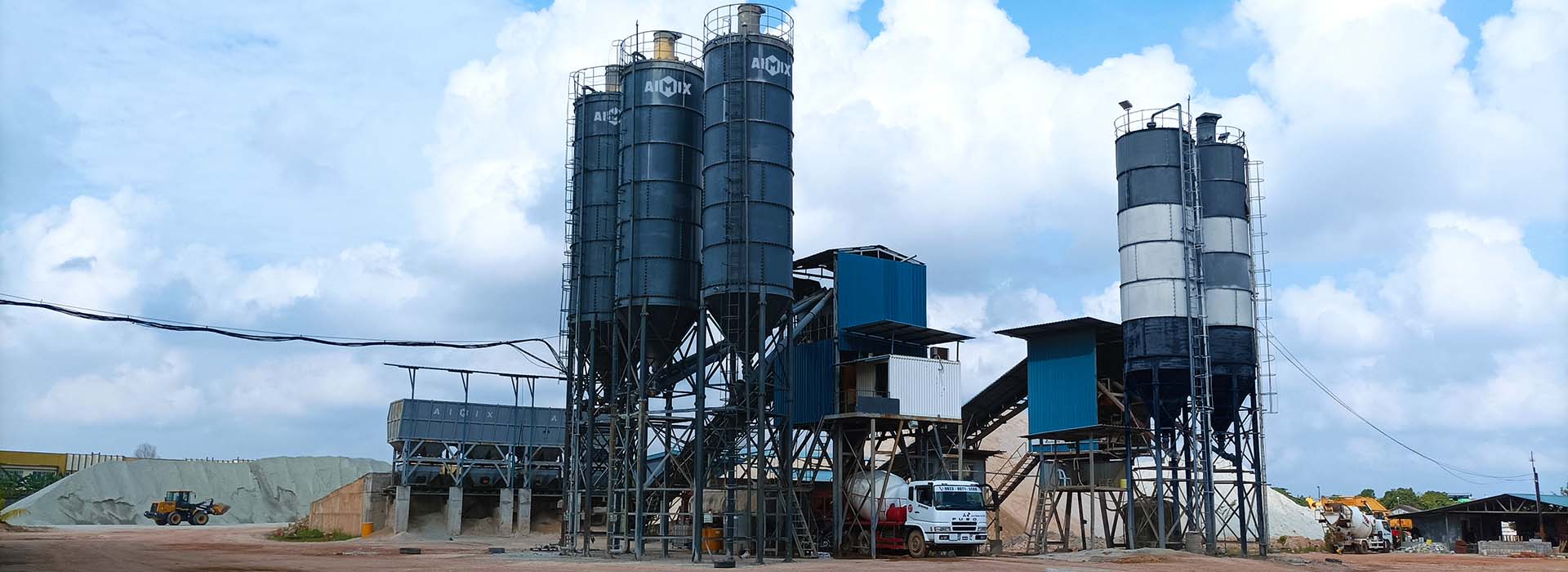
What Is the Difference Between A Stationary and A Mobile Concrete Plant?
A stationary concrete plant and a mobile concrete plant serve similar purposes in producing concrete, but they differ significantly in terms of their design, functionality, and application.

Mobility and Installation
Stationary Concrete Plant: A stationary concrete plant stays in one location and requires a stable foundation. The setup involves significant time to install various components such as mixers, conveyors, and silos.
Mobile Concrete Plant: A mobile concrete plant is designed for easy transportation between sites. It is often mounted on a trailer or chassis, allowing for quick and straightforward setup and take-down, making it suitable for projects that need frequent relocation.

Capacity and Production Volume
Stationary Concrete Plant: These plants typically have higher production capacities and can produce large volumes of concrete efficiently. They are suited for large-scale construction projects where a continuous supply of concrete is needed over a long period.
Mobile Concrete Plant: Mobile plants usually have lower production capacities compared to stationary ones. They are better suited for smaller projects or projects that require concrete in different locations.

Flexibility and Application
Stationary Concrete Plant: The dry mix batching plant is generally used for long-term projects such as infrastructure development, large commercial complexes, and industrial facilities where the plant remains operational in one location for an extended period.
Mobile Concrete Plant: Mobile plants are ideal for short-term projects or projects with multiple sites, such as road construction, remote construction projects, or situations where the plant needs to be moved closer to the work site to reduce transportation time and costs.

Cost and Investment
Stationary Concrete Plant: The initial investment for a stationary plant can be higher due to the need for extensive groundwork, foundations, and permanent structures. However, they can be more economical in the long run for high-volume production.
Mobile Concrete Plant: While the initial cost might be lower, mobile batching plants can be more expensive per unit of concrete produced due to their smaller capacity and the costs associated with frequent relocation and setup.

Maintenance and Operation
Stationary Concrete Plant: Maintenance and operation can be more straightforward as the concrete mixing plant for sale remains in one place, allowing for the establishment of regular maintenance routines and easy access to utilities.
Mobile Concrete Plant: Maintenance can be more challenging due to the frequent movement and the need to set up and dismantle the plant repeatedly. However, their design often incorporates features that facilitate easier setup and maintenance.

Equipment Configuration
Stationary Concrete Plant: The concrete plant for sale has more space for additional equipment like large storage silos and multiple mixers, which can boost production efficiency. They often support advanced automation and precise control systems.
Mobile Concrete Plant: Mobile concrete mixer plant for sale compact and have limited space for extra equipment. They usually have simpler conveyor systems and smaller storage silos, making them easier to transport and set up quickly.
Understanding the difference between stationary and mobile concrete plants helps you choose the right type. But to make a smarter decision, it also helps to know what’s inside the plant. In the next section, we break down the key components of a concrete batching plant and explain how each part supports stable and efficient production.
What Are the Components of A Concrete Batching Plant?
What are the concrete plant components? Taking the AJ series stationary concrete batching plant as an example, the plant mainly consists of the following bagian bagian batching plant, each optimized for stable, smart, and high-efficiency concrete production.
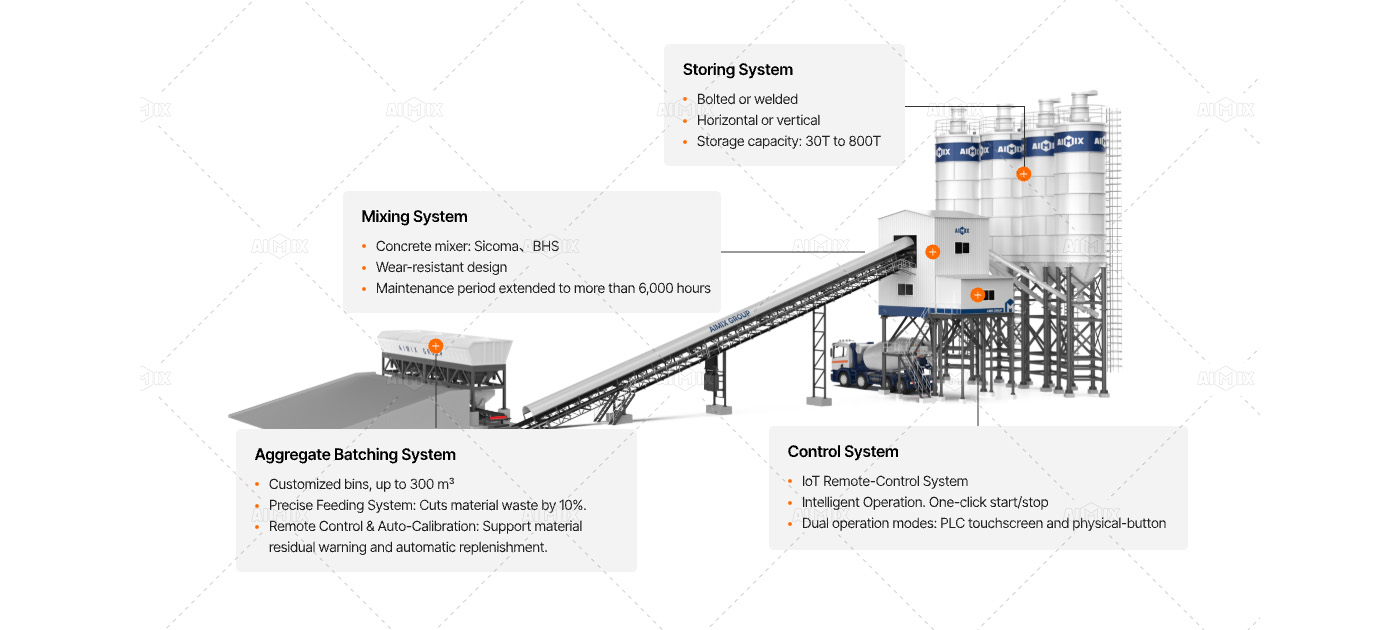
Aggregate Batching System
It ensures accurate proportioning of sand, gravel, and other aggregates. With automatic calibration and remote adjustment, material waste is reduced by 10%, and feeding stability improves by 20%.
Belt Conveyor
Transfers batched aggregates swiftly to the mixer. The optimized layout reduces spillage and supports continuous, clean operation.
Weighing System
Precisely measures aggregates, cement, and water. Connected to the intelligent control panel, it maintains consistent concrete quality and supports predictive adjustments based on material wear data.
Control Room
The central brain of the plant. Equipped with an integrated control system, it supports both PLC touchscreen and manual button operation—reducing setup time by 30% and minimizing operator error by 50%.
Concrete Mixer
Blends all materials into a uniform mix. Available in twin-shaft (for large batches) and planetary types (for high-precision needs), allowing flexible adaptation to mining, infrastructure, and commercial concrete scenarios.
Screw Conveyor
Delivers cement and fly ash from the silo to the weighing hopper with high accuracy, supporting automatic compensation and smooth material flow.
Cement Silo
Safely stores cement, protected from moisture. The system supports IOT-based inventory monitoring, with material level alerts and predictive refill reminders.
These komponen batching plant work together to complete the work of concrete production and delivery. Knowing the main components of a concrete batching plant explains how the system is built. The next step is understanding how these parts work together in real operation. In the following section, we walk you through how a batching plant works, from material feeding to concrete discharge.
How Does A Batching Plant Work?
A concrete batching plant operates in a systematic process to produce concrete efficiently and consistently. For a more visual explanation, you can watch the video for detailed insights into how the process works. Of course, here’s a step-by-step explanation of cara kerja batching plant beton in the following:
Feeding Aggregates
- Raw materials like stone and sand are loaded into the aggregate batching machine. With remote calibration and smart sensors, feeding speed and ratio are auto-adjusted, improving continuity by 20% and reducing waste by 10%.
Transporting Aggregates
- Once batched, aggregates are conveyed to the mixer via a belt conveyor or skip hopper. The system minimizes spillage and supports smooth, automated delivery.
Adding Cement
- The screw conveyor transfers cement from the silo to the weighing hopper. Material flow is controlled precisely, and inventory levels are monitored through an IOT dashboard with refill alerts.
Measuring Water
- Water is pumped and weighed accurately, ensuring mix consistency. The real-time control panel shows live parameters like water flow and volume.
Additives
- Liquid or powder additives are measured separately and added as needed. The system supports automated dosage and traceable records for mix optimization.
Mixing Process
- The mixer blends all ingredients for a set time. You can choose twin-shaft mixers (for high-capacity, large batches) or planetary mixers (for precision and uniformity), depending on your production needs.
Discharging Concrete
- Once mixed, the concrete is discharged into a transit mixer truck or directly pumped. One-click start and dual operation modes reduce preparation time by over 30% and minimize operator errors by 50%.
Once you know how a batching plant operates, the next challenge is getting it ready on site. From land preparation to local requirements in Indonesia, proper setup makes a big difference. In the next section, we show how to set up a batching plant in Indonesia smoothly and efficiently.
How To Set Up A Batching Plant di Indonesia
In this guide, we will walk you through the step-by-step process of setting up a batching plant terdekat, focusing on key components such as the concrete batching machine, concrete mixer, cement silos, and screw conveyors.
1. Prepare the Site
Before installation, it’s crucial to select a suitable location. Ensure the site is level and has adequate space for all equipment and materials. Proper planning of the layout can reduce transportation time and improve efficiency during operations.
2. Install the Batching Machine
The concrete batching machine is the first component to install. Place it on a stable foundation, ensuring that it is securely anchored. This silo batching plant is responsible for accurate aggregate measurement, so it’s important to install it correctly.
3. Set Up the Concrete Mixer
Next, install the concrete mixer. It should be positioned near the batching machine for easy material flow. Ensure all connections between the mixer and the other components are secure and aligned. Follow the manufacturer’s instructions for proper assembly.
4. Assemble the Cement Silos
Cement silos (batching plant silos) store the cement needed for concrete production. Install the silo batching plant on a stable base, ensuring they are firmly fixed in place. Connect the silos to the batching system using screw conveyors, which will transfer cement to the mixer.
5. Install the Screw Conveyors
Screw conveyors move the cement from the silos to the mixer. Install these conveyors securely and ensure they are properly aligned to avoid blockages. Make sure to test the conveyors to ensure they are functioning correctly.
6. Electrical/Control System Setup
Connect all equipment to the control system. The concrete batching plant control system allows operators to manage and monitor the batching process. Ensure all wiring is correctly installed and protected from environmental factors.
With the batching plant properly installed, daily operation becomes the key to productivity. Smooth operation helps control concrete quality, reduce waste, and keep schedules on track. In the next section, we explain how to operate a concrete batching plant efficiently and safely.
How to Operate A Concrete Batching Plant?
What are the operations of batching plant? Some customers may be interested in how to operate the concrete batching plant. You can watch our on site batching plant video on Youtube to learn detailed concrete batch plant operations. The following is a step-by-step beginner’s guide for new users. You will have a good knowledge of how to operate a concrete batching plant after watching it. You can see more AIMIX batching plant video on Youtube here.
After mastering daily operation, many contractors begin to look beyond production itself. Turning a batching plant from a tool into a business is often the next step. Starting a batch plant business involves planning, investment, and market understanding—topics we explore right after this.
How Do You Start A Batch Plant Business?
How do I start a concrete plant business? Starting a concrete plant business requires careful planning and execution. Here’s a step-by-step guide to help you get started effectively:
- Research the Market: Analyze the demand for concrete in your area. Identify potential clients and study your competitors. This will help you understand market needs and set competitive prices.
- Create a Business Plan: Develop a detailed plan outlining your goals, target market, services, and financial projections. This plan will guide your operations and help secure funding.
- Choose a Location: Find a site with easy access to transport routes and raw material suppliers. Ensure the location meets zoning and environmental regulations.
- Obtain Permits and Licenses: Get the necessary permits and licenses from local authorities. This includes environmental, building, and business permits.
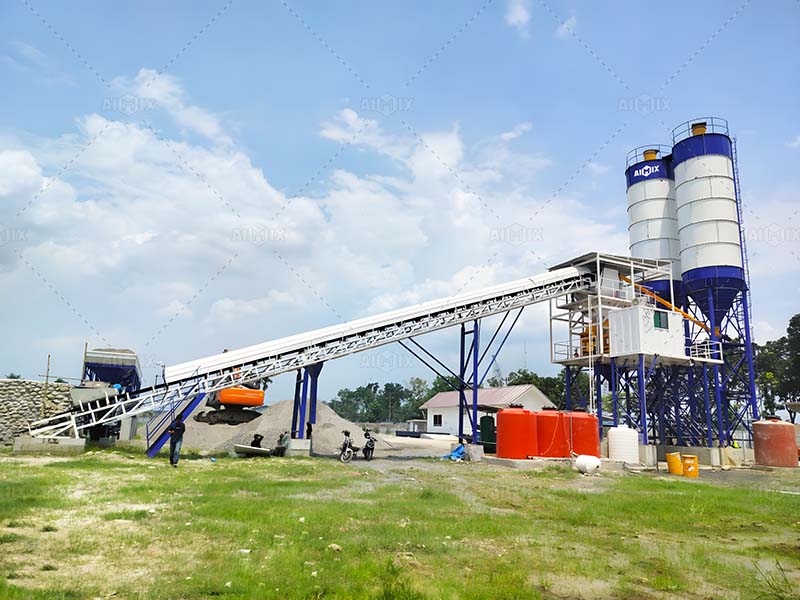
- Invest in Beton Plant: Purchase or lease normal or compact concrete batching plants that fits your needs and budget. Look for reliable mesin batching plant that meets industry standards.
- Set Up Supply Chains: Establish relationships with suppliers for raw materials like cement and aggregates. Ensure a steady supply to avoid production delays.
- Hire and Train Staff: Recruit skilled operators and technicians. Provide training on concrete mixing station equipment operation, safety, and quality control.
- Implement Quality Control: Set up procedures to monitor and ensure the quality of your concrete. Regularly test and inspect the concrete to meet industry standards.
- Market Your Business: Promote your services through a professional website, social media, and local ads. Highlight your strengths and past projects to attract clients.
- Manage Finances: Keep track of expenses, revenues, and profits. Use an accounting system to manage cash flow and regularly review financial performance.
Starting a batching plant business is not only about equipment and capital. Local experience, technical support, and reliable service play a major role in long-term success. That’s why many investors choose a supplier with strong local presence and support in Indonesia.
AIMIX Professional Local Services in Indonesia
AIMIX is a well-established batching plant supplier and manufacturer dedicated to serving the Indonesian market. With years of experience, we, as a professional perusahaan batching plant, are famous for our central batching plant China. We also provide not only high-quality batching plants but also comprehensive services to ensure your projects run smoothly. Our services include:
Customized Site Planning
We help design an efficient and suitable layout for your batch plant concrete to ensure maximum productivity.
Installation and commissioning
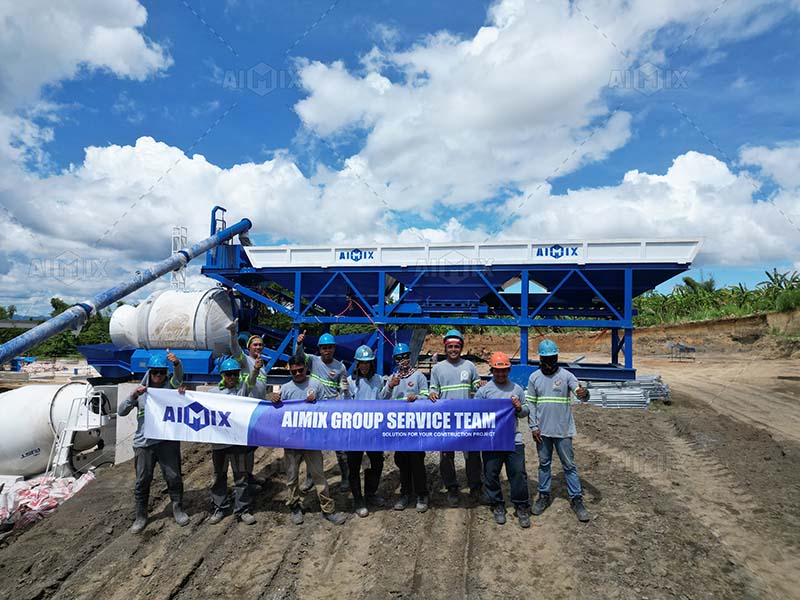
Our team provides on-site installation services and makes sure your concrete batch plant is fully operational.
Technical Training
We offer training sessions to equip your team with the knowledge to operate the concrete batch mix plant efficiently.
Lifetime Technical Support
Our experts from pabrik batching plant are always available to provide technical guidance whenever needed.
Local Branch and Warehouse
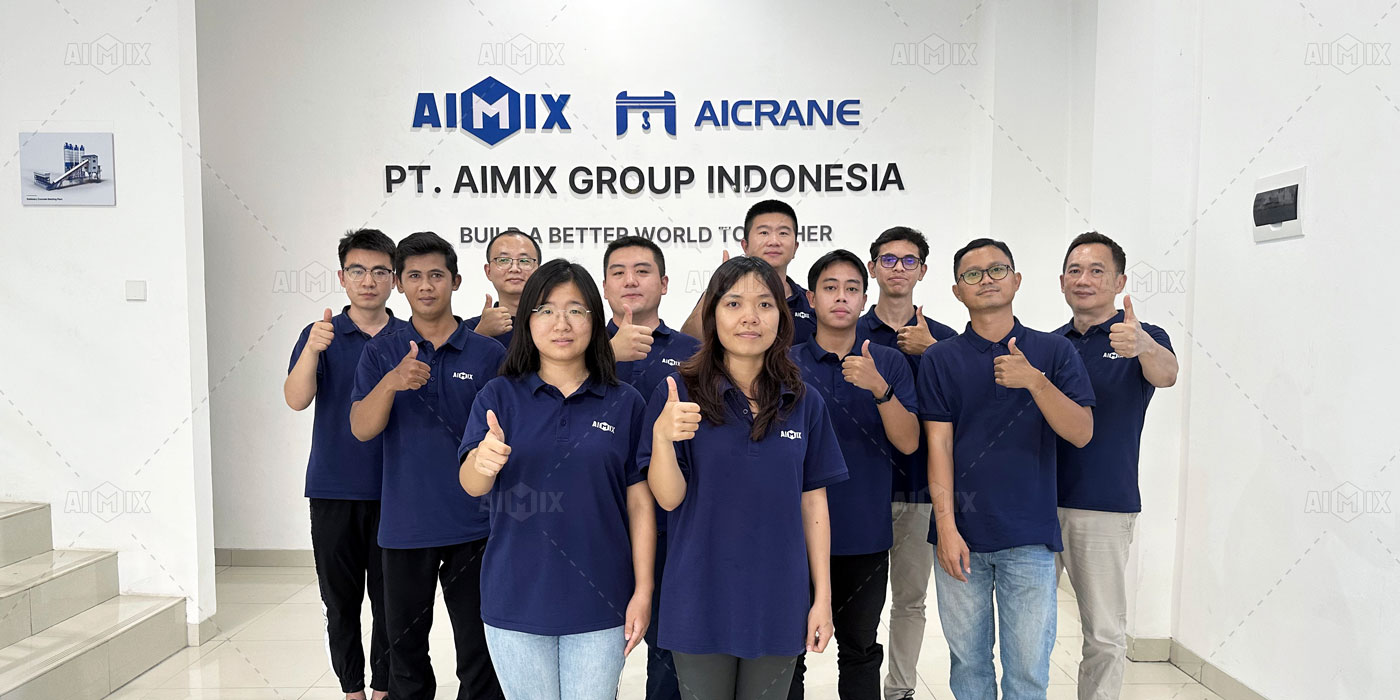
With a branch office and warehouse in Indonesia, we ensure faster delivery of parts and quicker response times.
Customer-first Service
From the initial consultation to after-sales support, we prioritize customer satisfaction with personalized services.
In summary, AIMIX stands as your trusted partner for beton batching plant solutions in Indonesia. From installation to technical support, AIMIX is committed to helping you achieve success with efficient, high-quality concrete production. Choose AIMIX for dependable dry mix batching plant and unparalleled customer care tailored to your project needs.
Concrete Batching Plant FAQs
Q: What Is the Production Capacity of a Concrete Batching Plant?
Q: What Is A Batching Plant Used For
- Apa itu batching plant? What is a batch plant in concrete? What is a dry batch concrete plant? Some people may ask what’s concrete batching plant.
- A concrete batching and mixing plant is used to produce concrete – an important construction material widely used in many construction projects.
- By mixing cement, sand, aggregates, and water together according to a specific proportion, a beton batching plant can produce high quality concrete.
- A concrete mixing plant is an efficient equipment for producing concrete in a large amount.
Q: Are Concrete Batch Plants Profitable?
Q: How Long Does It Take to Mix Concrete for Batching Plant?
Q: How Much Does It Cost to Start A Concrete Batch Plant?
- Plant Size and Capacity: Larger batch plants with higher capacities are more expensive.
- Type of Batch Plant: Ready-mix, mobile, or stationary batch plants vary in cost.
- Concrete Batch Plant Equipment: Costs for mixers, silos, and controls.
- Location: Site preparation, permits, and infrastructure expenses.
- Operational Costs: Staffing, raw materials, and maintenance.
A detailed business plan and cost analysis will help you determine the exact investment needed.
Q: How is the Quality of Concrete Batching Plants Ensured by AIMIX?
- High-Quality Materials: We use durable, high-grade materials in the construction of our central mixing plant.
- Advanced Technology: Our concrete mixing plants feature the latest technology for accurate and efficient mixing.
- Rigorous Testing: Each concrete mix plant undergoes thorough testing and quality checks before delivery.
- Certification: AIMIX concrete batching and mixing plants meet industry standards and have the necessary certifications.
- Ongoing Support: We provide comprehensive after-sales support and maintenance services.
These practices help ensure that AIMIX automatic batching plants deliver consistent and reliable performance.
Q: What Grades of Concrete Can A Concrete Plant Produce?
- Standard Grades: Common grades like M20, M25, and M30 are used for general construction purposes.
- High-Strength Grades: Higher grades such as M40, M50, and above are used for specialized applications requiring stronger concrete.
- Customized Mixes: Concrete mix plants can also produce custom-grade concrete based on specific project requirements.
The exact grades depend on the plant batch’s equipment and mix design capabilities.
Q: How to Maintain Your Concrete Batching Plant Equipment?
- Regular Inspections: Check concrete plants daily for wear and tear. Look for issues with mixers, conveyors, and control systems.
- Clean Equipment: Clean the batching plant beton and mixers after each use to prevent buildup and ensure smooth operation.
- Lubricate Parts: Lubricate moving parts as recommended by the manufacturer to reduce friction and prevent damage.
- Check Calibration: Regularly calibrate scales and sensors to ensure accurate measurements and mix ratios.
- Replace Worn Parts: Replace any worn or damaged components promptly to avoid breakdowns and maintain efficiency.
- Follow Manufacturer Guidelines: Adhere to the maintenance schedule and recommendations provided by the concrete mixing batch plant manufacturer.
Proper maintenance keeps your beton batching plant running smoothly and extends its lifespan.
Ready to Build with Confidence in Indonesia?
If you are planning to invest in a concrete batching plant in Indonesia, choosing the right solution makes all the difference. AIMIX provides reliable batching plants with competitive pricing, tailored to local project needs and site conditions. Leave your message today to receive a clear quotation and professional guidance from our local team in Indonesia. We are here to help you produce concrete efficiently, control costs, and move your project forward with confidence.


