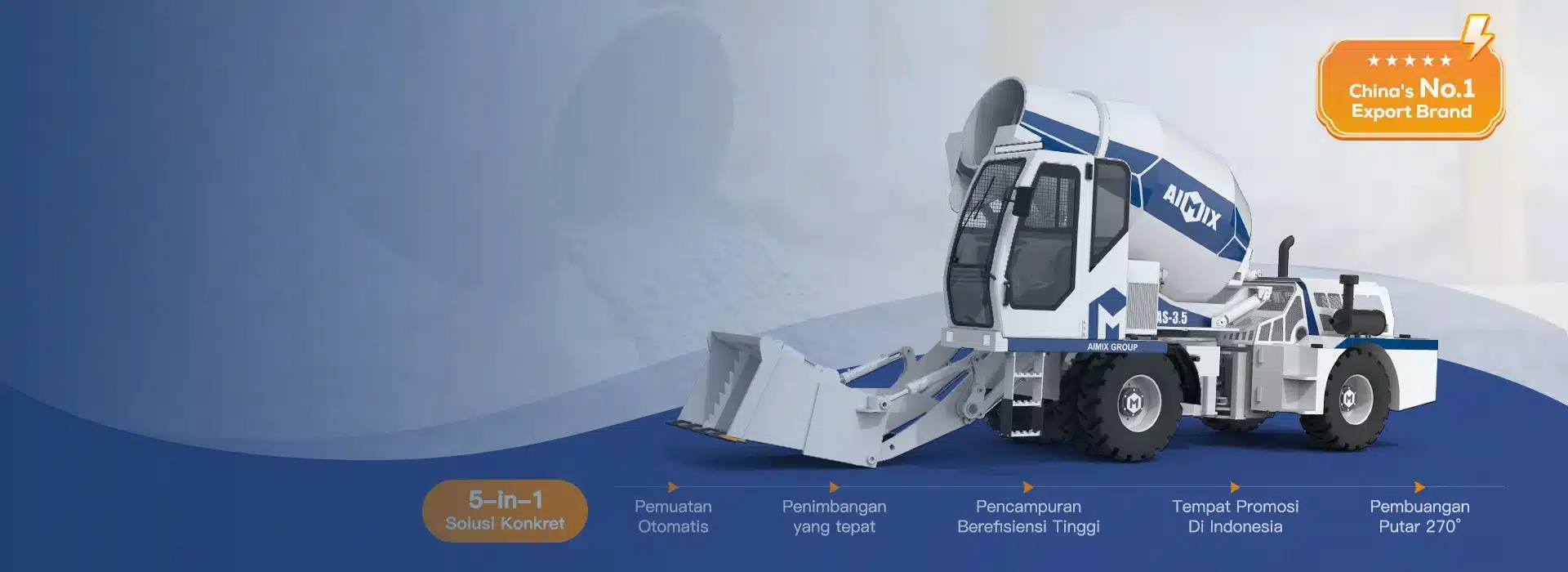
A self loading concrete mixer is an all-in-one machine that automatically loads aggregates, cement, and water, then weighs, mixes, transports, and discharges fresh concrete directly on site. With the functions of a wheel loader, batching system, concrete mixer, and transit mixer in one mobile unit, it offers a faster, more flexible, and more cost-effective way to produce concrete—especially in Indonesia, where site conditions and ready-mix supply vary widely. This guide will show you more about what is a self loading concrete mixer.
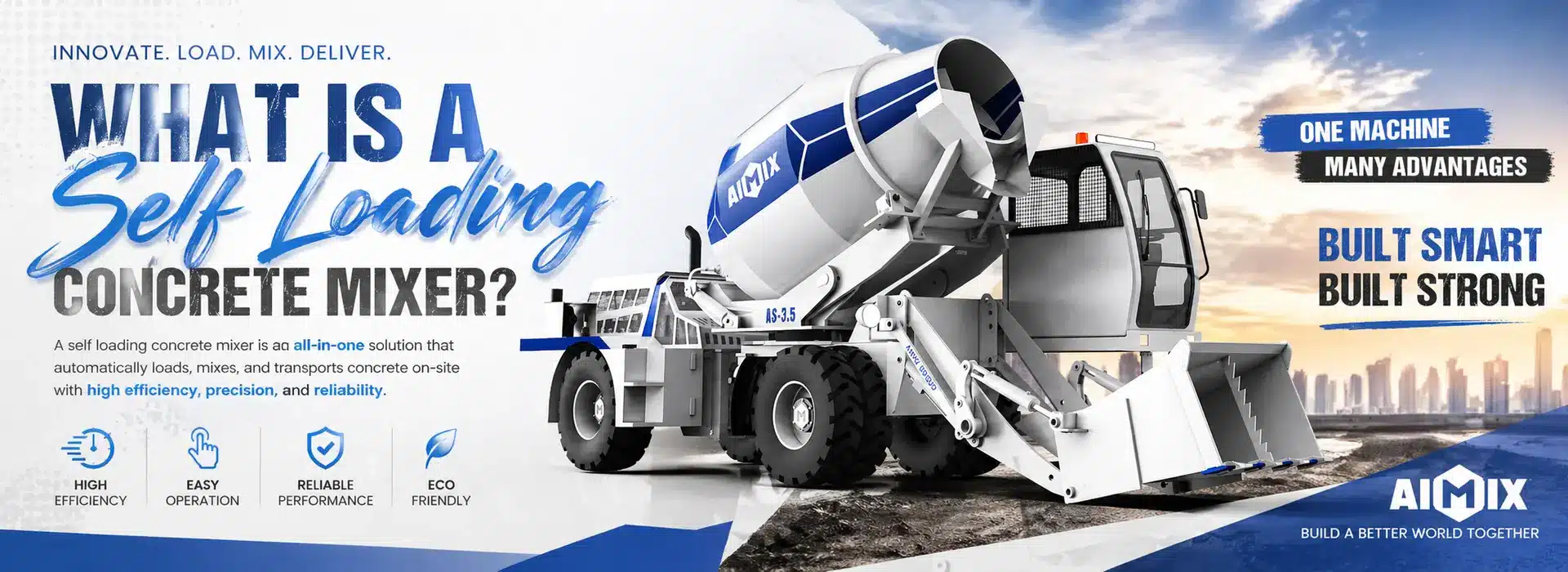
What Are the Main Functions of a Self Loading Concrete Mixer?
To better understand what a self loading concrete mixer is, it is important to look at the key functions it integrates into a single machine for on-site concrete production. These integrated functions allow the machine to handle the entire concrete production process more efficiently and flexibly on site.
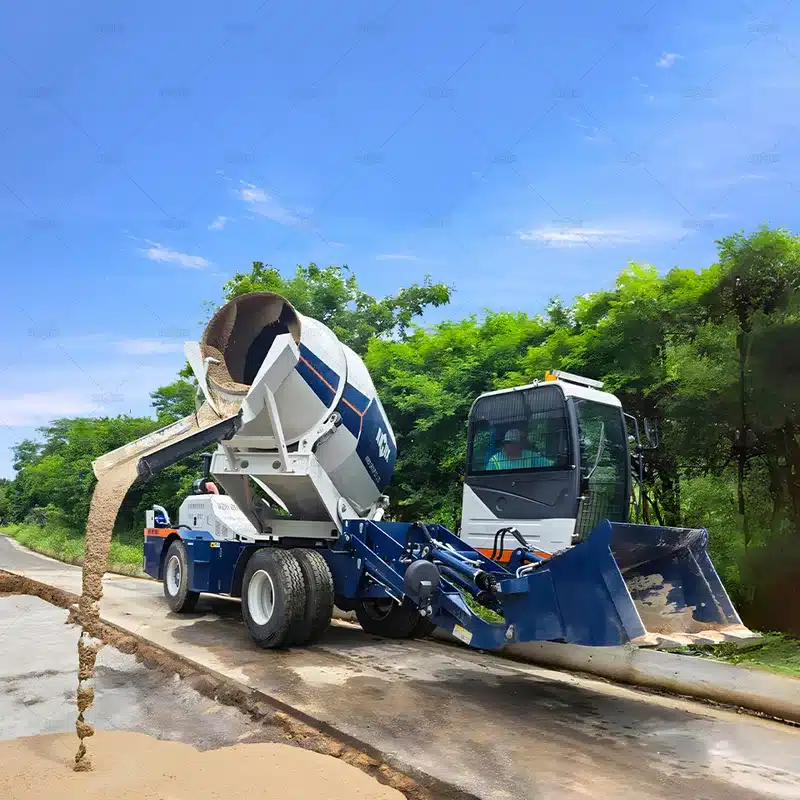
Faster Self-Loading of Raw Materials
±2% Accurate Automatic Weighing
12–15 Minute On-Site Concrete Mixing
Flexible Transportation at 25–30 km/h
270° Precise Concrete Discharge
Overall, by combining these five functions, a self loading concrete mixer significantly improves construction efficiency. For projects in Indonesia—especially in remote areas, small contractors, and multi-site operations—it helps reduce labor dependence, shorten construction cycles, and control overall project costs more effectively.
How Does a Self Loading Concrete Mixer Work?
To better understand what a self loading concrete mixer is, it helps to look at how it operates in a simple step-by-step process. Unlike traditional systems that require multiple machines, it completes the entire concrete production cycle on-site with greater accuracy and easier operation.
Efficient Material Loading
The machine uses a hydraulic bucket to collect and load aggregates such as sand and gravel into the drum. Cement and water are added at the same time, reducing manual work and improving efficiency.
Accurate Material Weighing
All materials are measured through an intelligent weighing system. The accuracy is around ±2%, helping ensure consistent mix ratios while remaining easy for operators to learn and use.
On-Site Concrete Mixing
The rotating drum mixes all materials evenly to produce fresh concrete directly on-site. A built-in recipe system also allows flexible adjustment for different mix proportions.
Flexible On-Site Transportation
After mixing, the machine moves the concrete directly within the job site. It combines mixing and transportation in one unit, reducing the need for additional equipment.
Precise and Controlled Discharge
The drum rotates to discharge concrete precisely where it is needed. With a user-friendly control system, the process becomes more accurate and efficient while reducing material waste.
Understanding how a self loading concrete mixer works already shows how it integrates loading, mixing, transporting, and discharging into one continuous process. But to truly see its value on real construction sites, it is important to compare it with traditional concrete equipment and understand what makes it different.
What Makes Self Mixer Different From Traditional Concrete Equipment?
To understand the real value of a self loading concrete mixer, it is useful to compare it with how concrete is typically produced on-site. In Indonesia, the choice of concrete equipment is often limited by road conditions, project location, and access to ready-mix supply.
Comparison with Traditional Concrete Equipment
| Feature | Self Loading Concrete Mixer | Traditional Drum Mixer | Transit Mixer + Batching Plant | Small Mobile Batching Plant |
|---|---|---|---|---|
| Mobility | High (can move directly on-site) | Low | Medium (depends on road & distance) | Low |
| Labor Requirement | 1–2 operators | 3–5 workers | Multiple roles required | 3–6 workers |
| Equipment Needed | One machine only | Separate loader + mixer | Plant + trucks | Plant + loader + support |
| Setup & Coordination | Very simple | Simple | Complex | Moderate |
| Work Efficiency | Stable and continuous | Low and manual | High but dependent on logistics | Medium |
| Cost Structure | Balanced | Low equipment, high labor | High transport + fuel cost | Medium |
| Remote Area Suitability | Strong | Limited | Very limited | Limited |
What This Means on Real Job Sites in Indonesia
On many job sites in Indonesia, concrete is still mixed manually or depends on delivery from batching plants located far away. This creates several common problems:
A self loading concrete mixer solves these problems in a more direct way. It allows contractors to produce concrete on-site, using one machine and fewer workers, without waiting for external supply.
A More Practical Way to Work
Instead of organizing multiple machines or relying on long-distance transport, contractors can mix and use concrete whenever needed. This is especially useful for:
Road and small bridge projects in rural areas.
Plantation and mining infrastructure.
Scattered construction sites with limited access.
Small to medium projects that need flexibility.
In these situations, the advantage is not just “efficiency”—it is control. Contractors can control time, cost, and quality more directly.
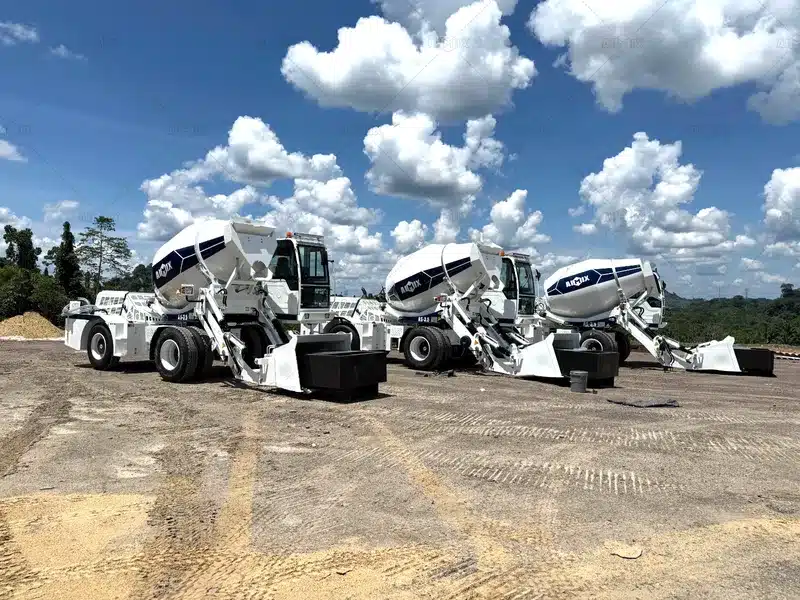
This comparison shows clear differences between self loading and traditional concrete equipment. But what makes it truly important in real construction work in Indonesia? Let’s look at why it fits so well with local project conditions.
Why Is a Self Loading Concrete Mixer Ideal for Indonesia?
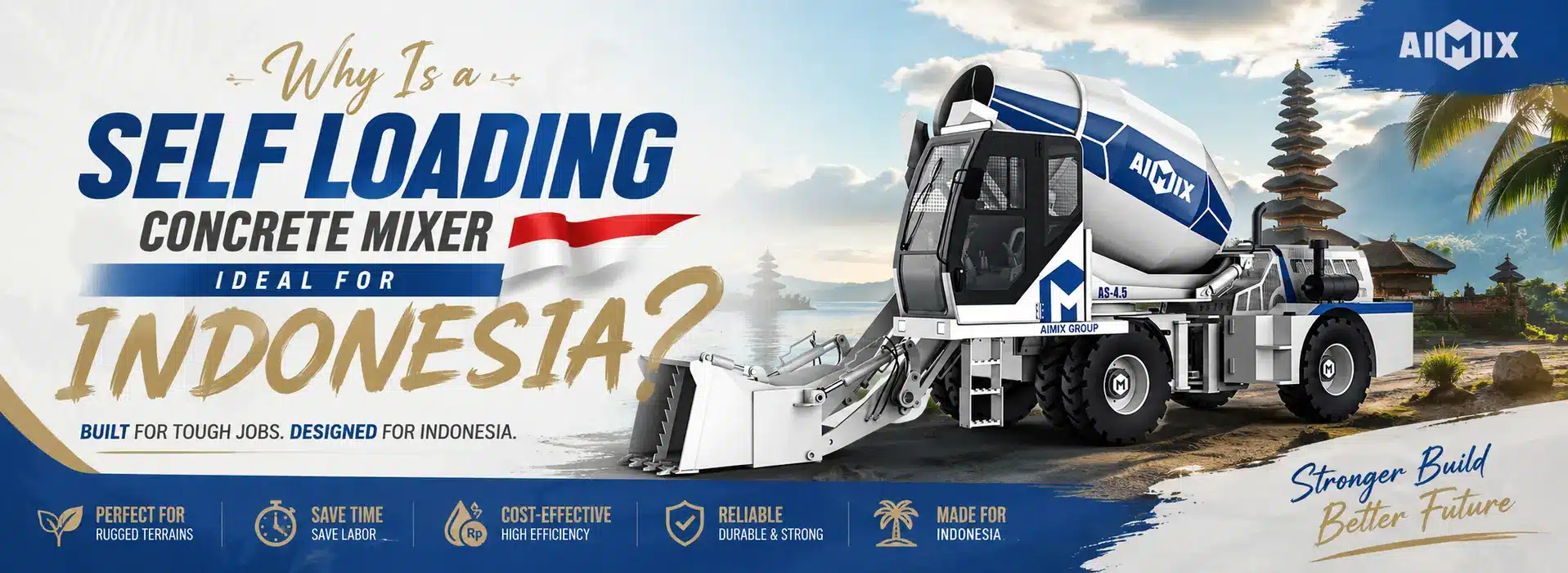
Indonesia’s construction market has unique conditions that make traditional concrete supply less efficient in many regions. With more than 17,000 islands, uneven infrastructure development, and rapidly growing regional projects, many construction sites still face challenges related to concrete transportation, labor, and equipment mobility. Under these conditions, a self loading concrete mixer provides a more practical on-site concrete solution.
Many Projects Are Far from Ready-Mix Plants
For remote projects, long-distance concrete transport can create several problems:
- Delivery time may increase by 1–3 hours per batch.
- Transportation cost can account for 15–30% of total concrete cost.
- Long transport under tropical temperatures increases the risk of slump loss and quality instability.
A self loading concrete mixer reduces these issues by allowing concrete to be produced directly on-site, closer to the actual working area.
Better Adaptation to Indonesia’s Road Conditions
- Narrow village roads.
- Plantation roads.
- Mining access roads.
- Temporary unpaved roads.
Large transit mixers and batching systems may face access limitations in these environments.
Most self loading concrete mixers use 4-wheel drive systems and can travel at speeds of around 25–30 km/h, making them more suitable for uneven terrain and scattered project locations.
This is especially important for:
- Palm oil plantation projects in Kalimantan and Sumatra.
- Mining and infrastructure projects in Sulawesi.
- Rural housing and road projects in Papua.
- Village infrastructure upgrades in rural Java.
Lower Labor Requirement and Operating Pressure
- Loader operators.
- Mixer operators.
- Material handling workers.
- Transport coordination staff.
Small and medium job sites may require 3–6 workers just for concrete production and transportation.
A self loading concrete mixer combines loading, weighing, mixing, transporting, and discharging into one machine. In many projects, only 1–2 operators are needed, helping reduce labor demand by up to 50% while simplifying daily site management.
This advantage is becoming more important as labor costs continue to rise in many Indonesian construction regions.
More Flexible for Small and Medium Projects
- Village road projects.
- Small bridges and drainage systems.
- Residential housing.
- Plantation facilities.
- Small commercial buildings.
These projects usually do not require a large stationary batching plant but still need stable concrete production.
Compared with traditional concrete systems, a self loading concrete mixer offers:
- Faster deployment between sites.
- Lower initial equipment investment.
- Reduced transportation dependency.
- More flexible daily operation.
For projects with changing locations or limited space, this flexibility can significantly improve overall project efficiency.
More Suitable for Multi-Island Construction
Compared with traditional batching systems, a self loading concrete mixer is easier to transport and faster to put into operation. This helps reduce downtime and improves equipment utilization across multiple projects.
That’s why self loading concrete mixers fit so well with Indonesia’s real construction challenges in terms of distance, access, and cost control. But where are they actually used in practice, and what kinds of projects rely on them most? Let’s look at their common applications across Indonesia.
Common Applications of Self Loading Concrete Mixers in Indonesia
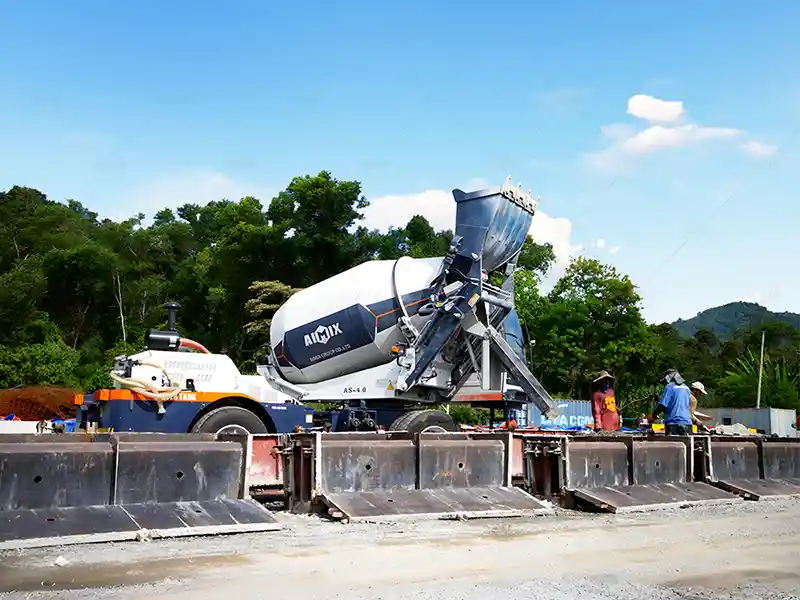
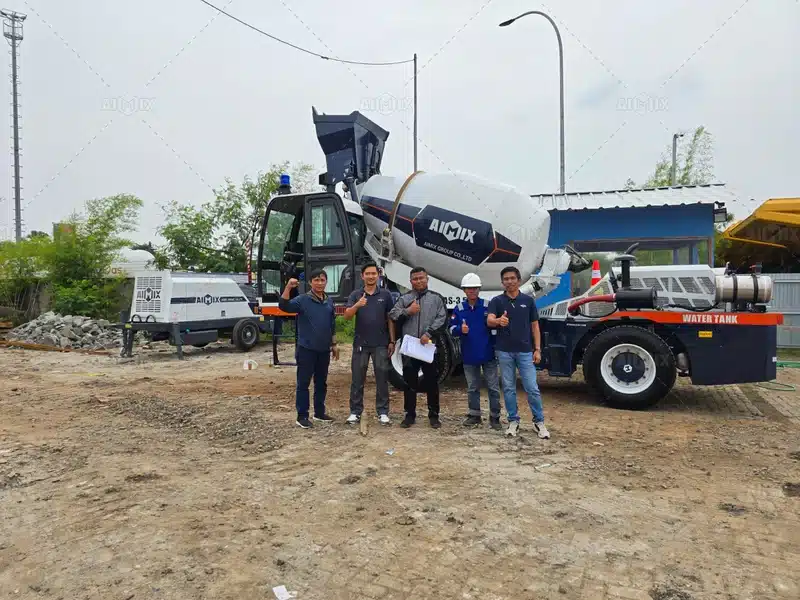
In Indonesia, self loading concrete mixers are widely used in projects that require flexible concrete production, fast site movement, and reduced dependence on ready-mix supply. Their ability to work directly on-site makes them especially suitable for rural areas, island projects, plantations, and small to medium construction works.
Residential Housing Construction
Used for foundations, slabs, and small buildings, improving efficiency by around 30–50% compared with manual mixing.
Village Road and Rural Infrastructure
Applied in village roads and drainage works, especially where batching plants are 30–80 km away from sites.
Bridge and Culvert Projects
Suitable for small bridges and culverts that require flexible concrete supply in limited and scattered working areas.
Plantation Infrastructure
Common in palm oil areas of Kalimantan and Sumatra for roads, drainage, and facilities, working well on muddy plantation roads.
Irrigation and Agricultural Projects
Used for irrigation canals and agricultural concrete works that involve multiple pouring points and long construction distances.
Mining Camp Construction
Suitable for mining camps, internal roads, and temporary facilities in remote areas where ready-mix supply is limited or unavailable.
Small Commercial Buildings
Used for shops, warehouses, workshops, and small office projects that require flexible concrete production and lower equipment investment.
Small-Scale Precast Production
Also used for producing concrete blocks, curbstones, drainage channels, and other small precast components with stable concrete quality.
A Practical Solution for Indonesia
Widely adopted across Indonesia because it combines mobility, flexibility, and efficient on-site concrete production in one machine.
These applications make it clear that self loading concrete mixers are used in many real construction projects across Indonesia. But beyond theses applications, the more important question is—who actually needs this kind of equipment in their daily work?
Who Should Choose a Self Loading Concrete Mixer?
This equipment is not chosen based on project type alone, but based on how construction is managed and how concrete is supplied on-site. In Indonesia, it is mainly selected by users who need more control over cost, mobility, and production independence.
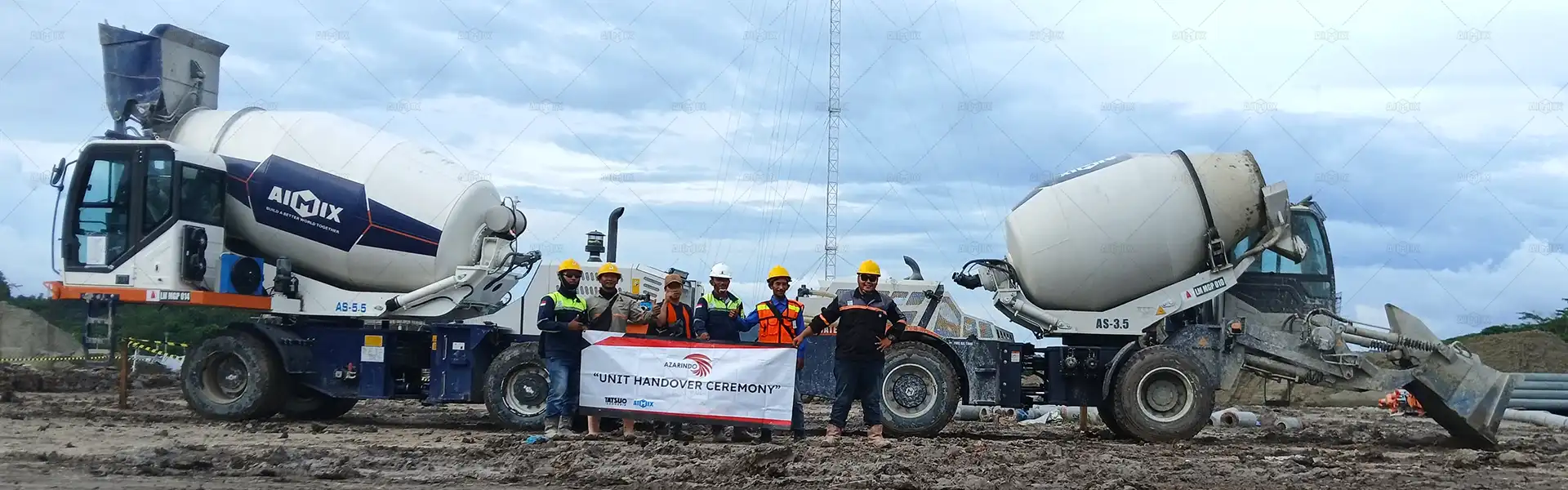
Contractors Managing Multiple Small Projects
They often move between different job sites and need equipment that is easy to transport and quick to start without complex setup or additional systems.
Users Without Stable Ready-Mix Access
In many regions where batch plants are far away or delivery is inconsistent, on-site concrete production becomes a practical necessity rather than an option.
Projects With Strict Labor Control Requirements
When reducing workforce size and simplifying site coordination is a priority, users prefer one machine that can replace multiple pieces of equipment.
Cost-Focused Project Operators
For users who closely manage fuel, transport, and labor costs, producing concrete on-site helps reduce overall project expenditure and improve cost predictability.
Rental Companies Serving Multiple Sectors
Rental providers choose this machine because it fits a wide range of projects, increasing utilization across construction, infrastructure, and industrial applications.
Infrastructure And Industrial Project Developers
EPC contractors working on roads, bridges, or industrial facilities often adopt this equipment for remote or fast-track projects where continuous concrete supply is critical.
That explains which users need a self loading concrete mixer in real projects. But to understand why it performs so well on site, we should take a closer look at its typical technical configuration.
Typical Technical Configuration Of A Self Loading Concrete Mixer
To better understand the practical capability of a self loading concrete mixer, it is useful to look at its typical technical configuration used in Indonesia. These configurations of types of self loading mixers are designed to balance mobility, efficiency, and ease of operation, especially for projects in rural, plantation, and small to medium construction environments.
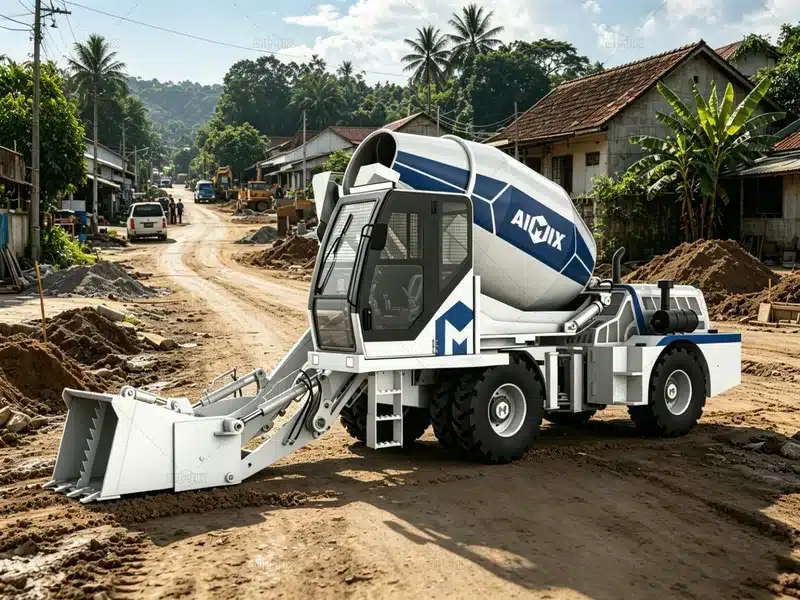
AIMIX Self Loading Mixer Series
Models: AS-1.2AS-1.8AS-2.6AS-3.5AS-4.5AS-5.5AS-6.5
- Mixing Capacity: 1.2–6.5 m³ per batch
- Concrete output: 4.8-26 m³/h
- Engine Type: Diesel/Electric engine
- Drive System: 4×4/2 wheel drive
- Mixing Drum: 270° rotation
- Operating Crew: 1–2 operators
- Max Travel Speed: 30–42 km/h
- Weighing Method: Automatic hydraulic weighing system
Now that you understand the typical configuration of a self loading concrete mixer, you already have a clear picture of its capability on site. But there may still be some practical questions worth answering before you decide—let’s go through the most common ones.
Self Loading Concrete Mixer FAQs
What Is The Capacity Of A Self Loading Concrete Mixer?
How Many Workers Are Required To Operate the Carmixer?
Can A Self Loading Concrete Mixer Replace A Batching Plant?
Is a Self Loader Mixer Suitable For Remote Areas In Indonesia?
How Accurate Is The Weighing System of Self Loading Concrete Mixers?
Ready To Learn More About Self Loading Concrete Mixers?
Looking for a concrete solution that can load, mix, transport, and discharge on-site with high flexibility and mobility? If you are planning a project, exploring the right model can help you choose more efficiently. You can explore available models, compare capacities, check pricing in Indonesia, and get recommendations based on your project needs. If you need support, our team is ready to help you make the right choice.


