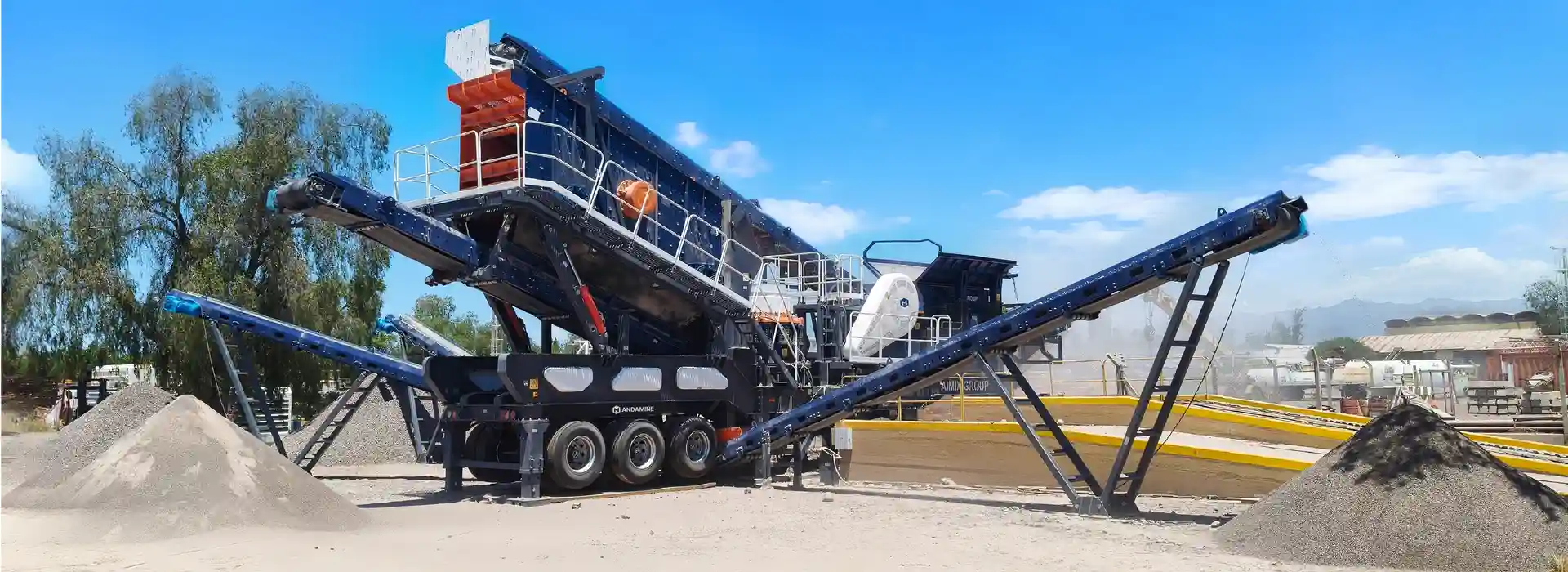
An aggregate crushing plant is a complete system that crushes and screens raw stone into controlled-size aggregates for road construction, concrete, asphalt, railway, and other infrastructure projects. In Indonesia, the right aggregate processing plant configuration depends mainly on the raw material, required capacity, feed size, final aggregate sizes, site conditions, and whether the aggregate processing plant is stationary or mobile.
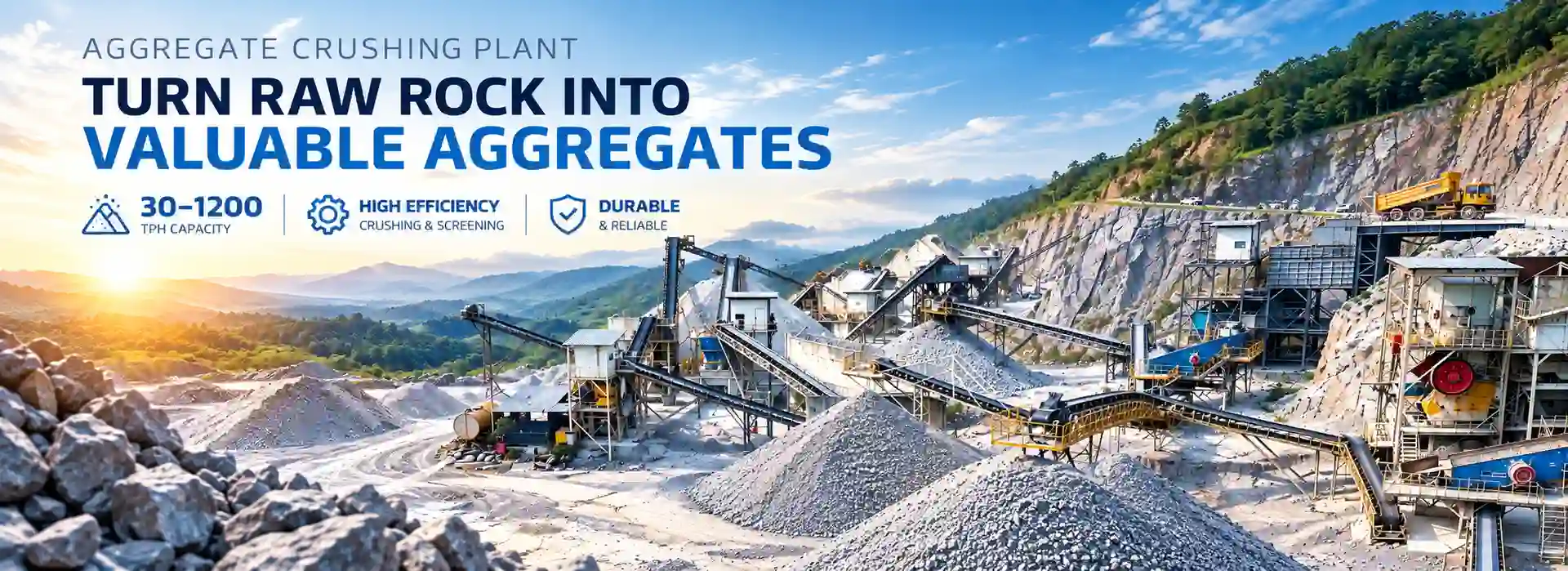
ANDAMINE provides aggregate crushing plant solutions for Indonesian quarry, infrastructure, construction, and industrial projects. Depending on the application, an aggregate plant can combine feeders, jaw crushers, cone or impact crushers, vibrating screens, conveyors, and other equipment to produce the aggregate sizes required by the project.
| Item | Details |
|---|---|
| Capacity | 30–1,200+ TPH* |
| Raw Materials | Andesite, limestone, granite, basalt, river stone |
| Main Process | Feeding → Crushing → Screening → Conveying |
| Main Equipment | Jaw crusher, cone/impact crusher, vibrating screen, conveyors |
| Plant Types | Stationary, mobile and portable |
| Aggregate Sizes | 0–5 mm, 5–10 mm, 10–20 mm, 20–40 mm and project-specific sizes |
| Applications | Road base, concrete, asphalt, railway ballast, manufactured sand |
| Indonesia Project | 200 TPH limestone aggregate production plant in Tuban, East Java |
*Actual capacity depends on the material, feed size, aggregate crushing machine configuration and required product grading.
What Aggregate Crushing Plant Solutions Are Available in Indonesia?
Aggregate crushing plant solutions in Indonesia can be configured as mobile, tracked, or stationary aggregate crusher plants according to the required capacity, feed size, aggregate sizes, and project conditions. ANDAMINE provides different aggregate machinery configurations for Indonesian aggregate production, from compact mobile crushing to multi-stage crushing and screening systems for larger quarry operations.
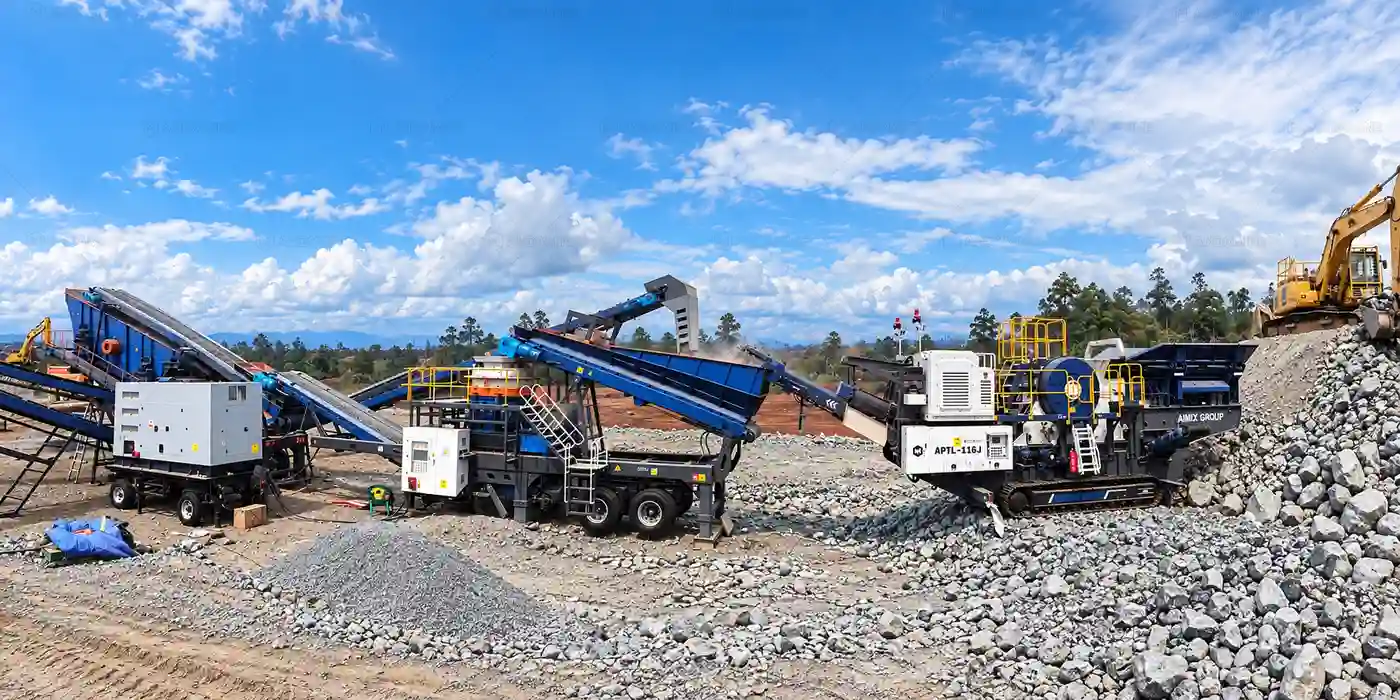
 APYL2-116J + APY-300M + APY3160Y4 — Multi-Stage Mobile Aggregate Crushing Plant for Large-Scale Quarry Aggregate Production
 Capacity:115–400TPH
 Max. Feeding Size:≤700 mm
 Output Size:5–10 mm, 10–20 mm, 20–30 mm, 30–40 mm, customized
 Application:Quarry Aggregate Production
Solution Overview:
For larger Indonesian quarry operations, the APYL2-116J + APY-300M + APY3160Y4 configuration combines a jaw crusher, cone crusher, and vibrating screen into a multi-stage production line. The setup can be configured around materials such as limestone, andesite, basalt, or other suitable quarry rock to achieve the required aggregate grading.
- Configuration: APYL2-116J track jaw crusher + APC-300M track cone crusher + APY3160Y4 tire type vibrating screen
- Plant Type: Multi-stage aggregate crushing and screening plant
- Processing: Primary Jaw Crushing → Secondary Cone Crushing → Vibrating Screening → Aggregate Classification
- Product Feature: Heavy-duty jaw-and-cone crushing with multi-stage screening for controlled aggregate grading and continuous production
- Suitable For: Indonesian quarry aggregate production, road base, concrete aggregate, asphalt aggregate, and infrastructure material supply
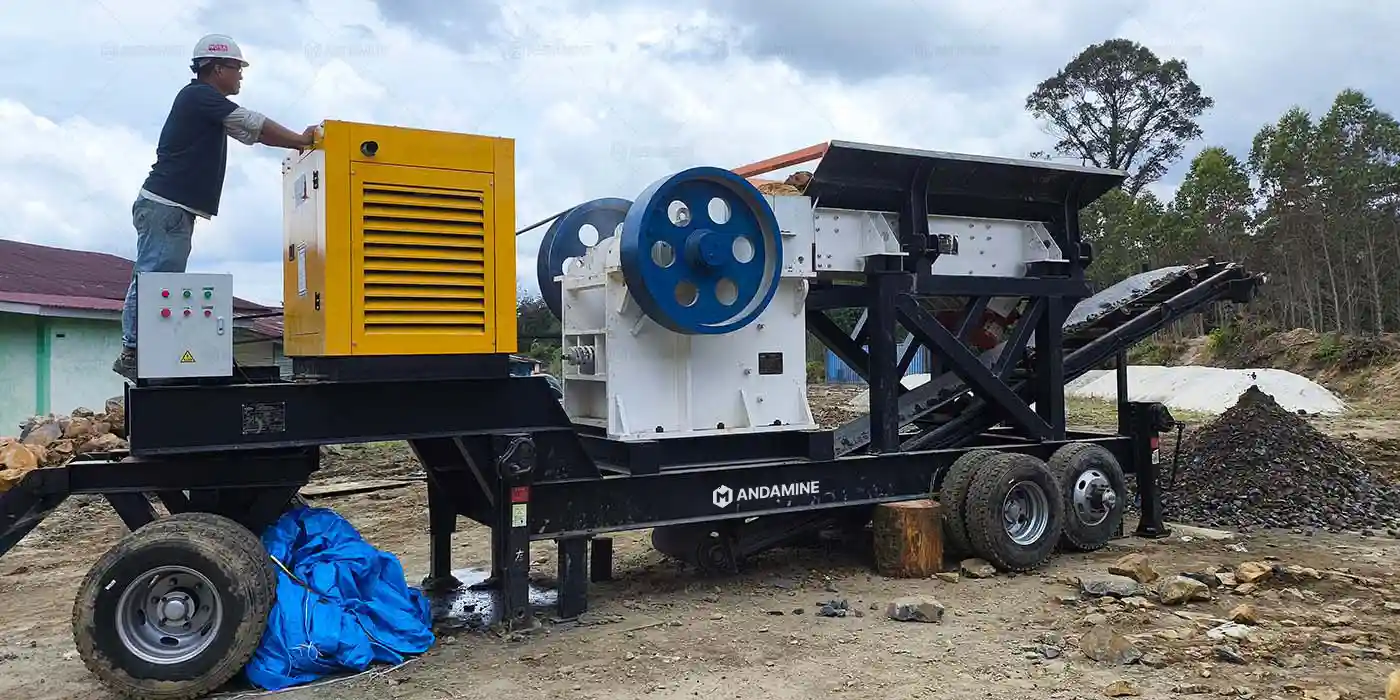
APYE4060 Portable Jaw Crusher – Compact Aggregate Crushing Solution for Road & Small Quarry Projects
Capacity:16–60TPH
Max. Feeding Size:≤ 340mm
Output Size:40–100 mm
Application:Road Base Aggregates
Solution Overview:
For smaller Indonesian quarry and road projects, the APYE4060E mobile jaw crusher provides a compact solution for processing suitable local materials such as limestone, andesite, basalt, and river stone into coarse aggregate close to the working site.
- Configuration: APYE4060 mobile jaw crusher
- Plant Type: Portable jaw crushing plant
- Processing: Feeding → Jaw Crushing → Conveying
- Product Feature: Compact mobile design for processing local stone directly at or near the project site
- Suitable For: Small quarries, village and road projects, and on-site road base production in Indonesia
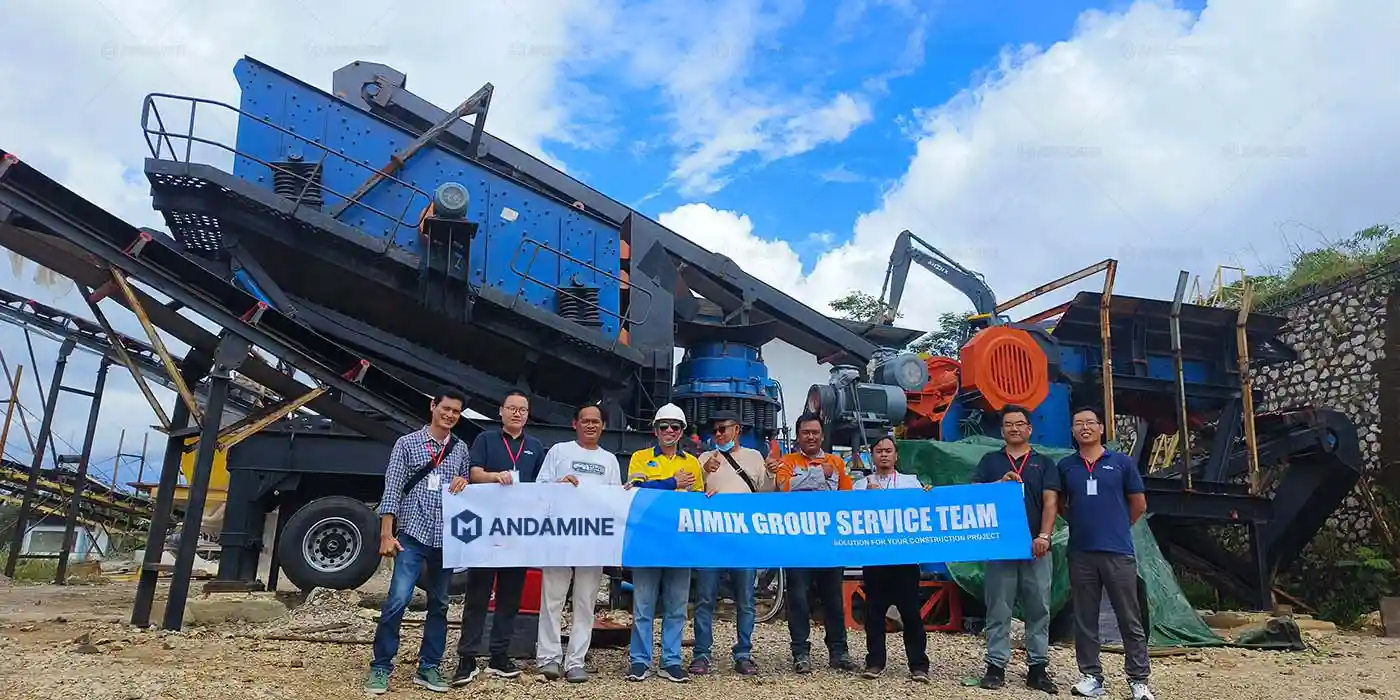
APY4-57J110C-S3 4-in-1 Mobile Jaw and Cone Crusher Plant for Andesite & Basalt Aggregate Production
Capacity:55–150TPH
Max. Feeding Size:≤ 400mm
Output Size:0–5mm, 5–10mm, 10–20mm, 20–40mm
Application:Aggregate Production
Solution Overview:
The APY4-57J110C-S3 is a 4-in-1 mobile aggregate crusher equipment combining a jaw crusher for primary crushing, cone crusher for secondary crushing, and aggregate screener for final classification. It is well suited to hard rock aggregate production such as andesite and basalt, including road and infrastructure applications.
- Configuration: APG-0930Z feeder + APJ-5075E jaw crusher + APC-110C cone crusher + APS-1848Y3 vibrating screen + aggregate conveyors
- Plant Type: 4-in-1 mobile crushing plant
- Processing: Feeding → Primary Jaw Crushing → Secondary Cone Crushing → Vibrating Screening → Aggregate Classification
- Product Feature: Integrated jaw-and-cone crushing with multi-stage screening for producing several graded aggregates from hard local rock
- Suitable For: Andesite and basalt quarrying, road construction, and infrastructure aggregate supply in Indonesia
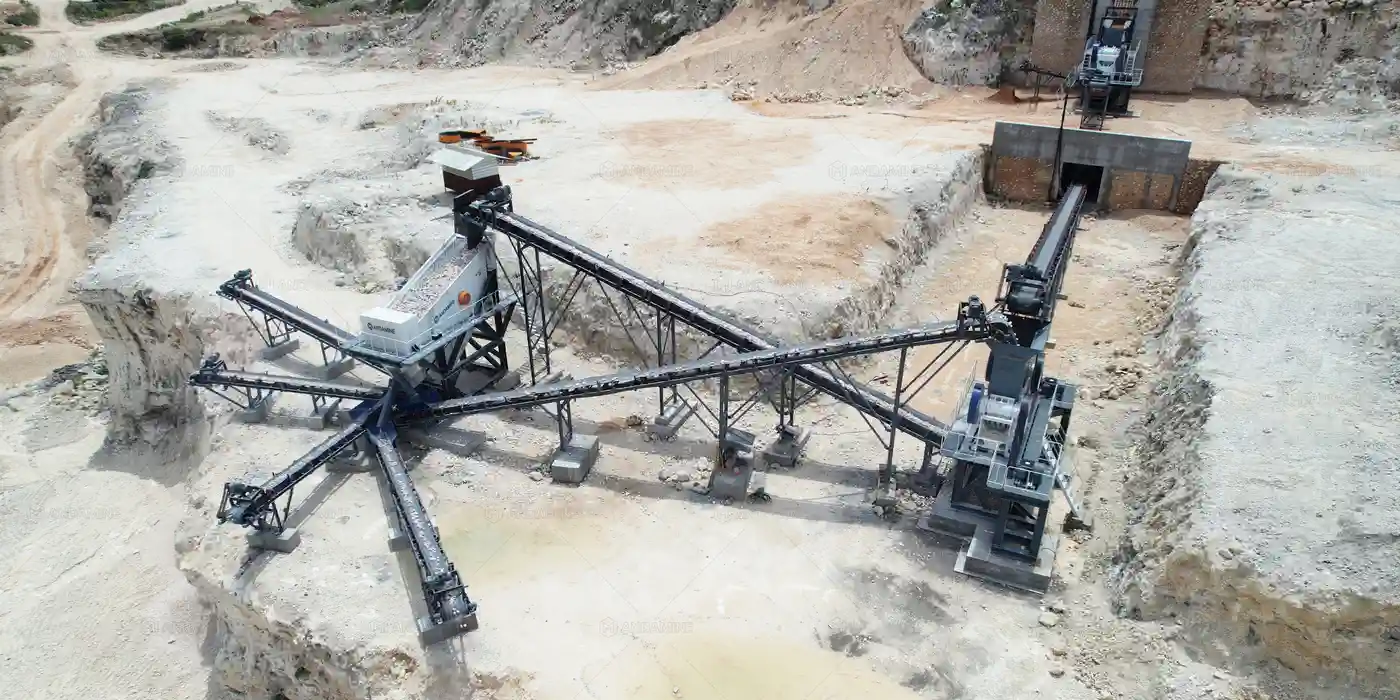
200 TPH Two-Stage Jaw Crushing Plant for Indonesian Limestone Aggregate Production
Capacity:200TPH
Max. Feeding Size:≤ 500mm
Output Size:0–5mm and 5–20mm
Application:Paper Industry
Solution Overview:
This 200 TPH stationary aggregate plant in Tuban, East Java is designed for continuous limestone aggregate production, using two aggregate jaw crushers for staged crushing and a vibrating screen for final classification. It produces fine aggregates for industrial use while maintaining a stable fixed-site production process.
- Configuration: APG-600X130 feeder + GZD-250X120 vibrating feeder + APJ-6090E jaw crusher + APJ-1012E jaw crusher + APS-2160Y4 vibrating screen + aggregate conveyor belts
- Plant Type: Stationary aggregate crushing plant
- Processing: Feeding → Primary Jaw Crushing → Secondary Jaw Crushing → Vibrating Screening → Aggregate Classification
- Product Feature: Two-stage jaw crushing with precise screening for stable production of fine limestone aggregates
- Suitable For: Indonesian limestone quarries, industrial aggregate production, and long-term fixed-site supply
Match Your Aggregate Production Needs with the Right Solution
| Project Requirement | Recommended Solution | Capacity & Key Fit |
|---|---|---|
| Low-to-medium production demand with a compact plant footprint | APYE4060E | 16–60 TPH mobile jaw crushing for smaller aggregate production and space-constrained sites |
| Multiple aggregate products with flexible on-site production | APY4-57J110C-S3 | 55–150 TPH 4-in-1 mobile configuration integrating jaw crushing, cone crushing, and screening |
| Hard-rock processing with changing quarry or working locations | APYL2-116J + APC-300M | 115–415 TPH jaw crushing + 115–400 TPH mobile cone crushing; complete plant capacity configured to project requirements |
| Stable long-term production at a fixed limestone quarry | 200 TPH Stationary Crushing Plant | 200 TPH fixed crushing and screening line configured for continuous limestone aggregate production |
Whether you are processing andesite, basalt, limestone, granite, or other aggregates, the aggregate plant configuration should match your actual production needs. If you need an aggregate crushing plant in Indonesia, ANDAMINE can provide a customized crushing and screening solution based on your material, capacity, site conditions, and required aggregate sizes.
What Materials and Aggregate Sizes Can an Aggregate Plant Produce?
An aggregate processing equipment in Indonesia can process common quarry materials such as andesite, basalt, limestone, granite, and river pebbles into finished aggregate sizes including 0–5 mm, 5–10 mm, 10–20 mm, 20–30 mm, and 30–40 mm. The final size combination depends on the material properties, feed size, crushing stages, and aggregate screening equipment configuration required for the project.
| Raw Material Image | Material | Material Characteristics | Typical Output Sizes | Typical Applications in Indonesia | Crushing Plant Considerations |
|---|---|---|---|---|---|
|
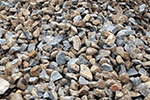
Andesite |
Mohs hardness: ~6–7 Density: ~2.5–2.8 t/m³ Compressive strength: ~100–250 MPa Hard, dense volcanic rock commonly used as construction aggregate. |
0–5 mm 5–10 mm 10–20 mm 20–40 mm |
Road base, concrete aggregate, asphalt aggregate, railway ballast | Hard rock generally requires robust primary crushing. Cone crushing and multi-deck screening can be added when several finished sizes are required. |
|
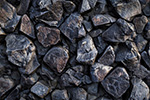
Basalt |
Mohs hardness: ~6–7 Density: ~2.4–2.9 t/m³ Compressive strength: often >200 MPa Dense, hard, and relatively abrasive volcanic rock. |
5–10 mm 10–20 mm 20–40 mm |
Asphalt aggregate, road construction, infrastructure projects | Multi-stage crushing and screening can be configured to control particle size and produce several aggregate grades. |
|
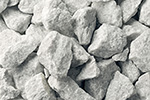
Limestone |
Mohs hardness: ~3–4 Density: ~2.3–2.7 t/m³ Compressive strength: ~30–100 MPa Generally softer than hard volcanic rock, although properties vary by deposit. |
0–5 mm 5–20 mm 20–40 mm |
Concrete aggregate, road sub-base, industrial aggregate | Crushing and screening can be configured for both fine and coarse products. Softer limestone may require a different crushing configuration from harder volcanic rock. |
|
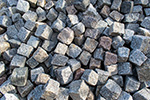
Granite |
Mohs hardness: ~6–7 Density: ~2.6–2.8 t/m³ Compressive strength: ~150–300 MPa Hard, dense, and abrasive igneous rock. |
5–10 mm 10–20 mm 20–40 mm |
Asphalt aggregate, high-grade construction aggregate, infrastructure | Staged crushing and screening are commonly used when controlled particle shape and multiple aggregate grades are required. |

|
River Pebbles |
Density: ~2.4–2.7 t/m³ Hardness: varies with parent rock Strength: varies with geological origin Naturally rounded and water-worn material with relatively low surface roughness. |
5–10 mm 10–20 mm 20–40 mm Other sizes as configured |
Concrete aggregate, road materials, manufactured sand | Feed size and parent-rock hardness determine the primary crushing requirement, while screening controls the final aggregate gradation. |
Final aggregate sizes are not fixed by the raw material itself. A crushing plant can be configured with different crushers, screening decks, and process stages to produce the gradation required for a specific Indonesian road, concrete, asphalt, or aggregate-supply project.
What Site Conditions Affect Aggregate Crushing Plant Selection?
In Indonesia, aggregate crushing plant selection depends on how the quarry or project site affects equipment transportation, plant configuration, layout, material handling, installation, and future operation. Site conditions should therefore be assessed together before determining the complete crushing and screening setup.
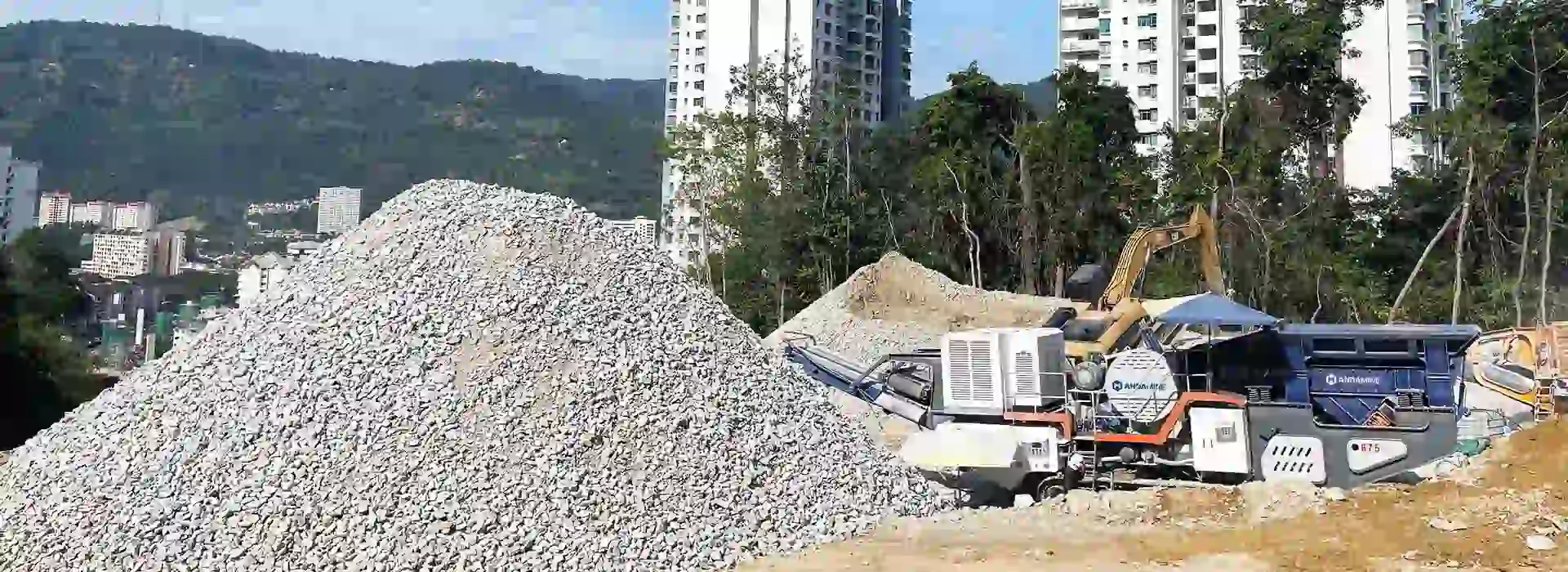
Quick Fact: Site Conditions Affect Plant Configuration
| Site Factor | What It Affects | Planning Consideration |
|---|---|---|
| Quarry Access | Equipment transportation and positioning | Check road width, steep sections, sharp turns, port access, and unloading areas. |
| Terrain | Plant configuration and material transfer | Account for slopes, uneven ground, and elevation changes when arranging the crushing line. |
| Available Space | Plant layout and stockpiling | Allow space for feeding, crushing, screening, conveyors, aggregate stockpiles, and maintenance. |
| Quarry Distance | Raw-material handling | Consider the distance between the working face and the primary crushing stage. |
| Site Infrastructure | Installation and operation | Check power supply, ground preparation, drainage, access, and maintenance areas. |
| Future Site Changes | Long-term plant flexibility | Consider quarry development, changing working areas, and different production stages. |
Access Determines Aggregate Equipment Transportation
- Quarry roads: Narrow roads, steep sections, sharp turns, and limited access can restrict the size and arrangement of equipment transported to the working area.
- Island delivery: For Indonesian projects, equipment may need to pass through a port before reaching the quarry, so the complete delivery route should be considered in advance.
- Final positioning: The unloading area and access to the working face should be checked to ensure the selected equipment can reach its intended operating position.
Terrain Determines Aggregate Processing Plant Configuration
- Uneven ground: Slopes and irregular quarry surfaces can affect how the feeder, crushers, screens, and conveyors are positioned.
- Elevation changes: Differences in ground level may require adjustments to material transfer points and the overall crushing flow.
- Quarry conditions: The plant configuration should be adapted to the actual terrain rather than applying the same arrangement to every quarry.
Space Determines Aggregate Crushing Plant Layout
- Available footprint: The site must accommodate feeding, crushing, screening, conveyors, aggregate stockpiles, and maintenance access.
- Material flow: Limited space can affect the distance and arrangement between the crushing stages and screening area.
- Stockpiling: Sufficient room for separated aggregate products should be considered when determining the complete plant layout.
Quarry Distance Determines Material Handling
- Working-face distance: The distance between extraction areas and the primary crushing stage affects how raw material is moved to the plant.
- Changing quarry faces: As extraction progresses, the distance and route between the working face and crushing area may change.
- Material flow: Plant positioning should consider both the current quarry face and the expected development of the extraction area.
Infrastructure Determines Installation Requirements
- Power supply: Available electricity must support the feeder, crushers, vibrating screens, conveyors, and control system of the complete aggregate machine.
- Ground preparation: Foundation, drainage, access, and supporting structures need to match the selected plant arrangement and installation method.
- Maintenance access: Space for inspection, servicing, and component replacement should be included in the site plan from the beginning.
Site Changes Determine Long-Term Flexibility
- Quarry development: The working area can change as extraction moves through the deposit, potentially changing material flow and plant positioning.
- Project stages: Road and infrastructure projects may have different aggregate production requirements as construction progresses.
- Future use: The expected operating period and changes to the site should be considered when deciding how much permanent infrastructure and plant configuration the project requires.
For an aggregate crusher machine in Indonesia, site conditions are part of the plant selection process. Access, terrain, space, quarry distance, infrastructure, and future site changes should be evaluated together to determine a practical stone crushing and screening configuration for the project.
Watch Our Aggregate Crushing Plant Videos in Action
See our aggregate crushing plant equipment operating in real project environments, including limestone crushing in Indonesia and granite processing in Southeast Asia. These videos show actual equipment operation and crushing performance under project conditions. Watch More Aggregate Crushing Plant Project Videos on YouTube.
Why Partner with ANDAMINE for Your Aggregate Crushing Plant?
ANDAMINE provides local project support in Indonesia from initial consultation and installation to operator training, spare parts, and after-sales service. With local agents, warehouses, and technical teams, customers can get support closer to their project sites.
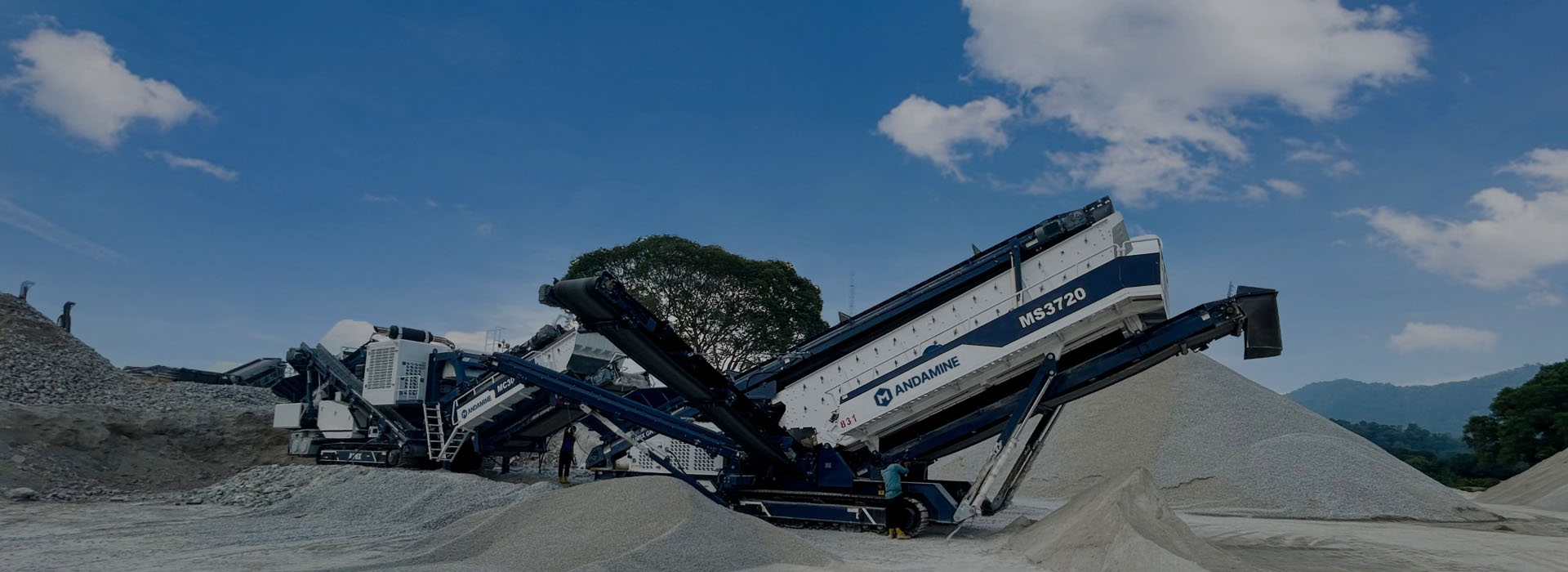
 Local Support Across Indonesia
- 3 local agents and 6 warehouses across key Indonesian locations
- Local support connects technical service with nearby project sites
- Indonesia-based teams assist with installation and plant operation
 Installation & Commissioning Support
- On-site guidance supports equipment installation and commissioning
- Technical assistance is provided during initial plant operation
- Equipment operation is checked before regular production begins
 Operator Training & Technical Support
- Operator training is available in Indonesian and English
- 24-hour response supports operation and basic troubleshooting needs
- 15 days of free operation support follows plant commissioning
 Spare Parts & After-Sales Support
- Local spare parts support helps reduce replacement waiting time
- Remote technical assistance is available for operating issues
- On-site service can be arranged when technical support is required
Aggregate Crushing Plant in Indonesia FAQs
How Do I Choose an Aggregate Manufacturing Plant for My Project?
What Is The Difference Between Mobile And Stationary Aggregate Crushing Plants?
How Many Crushing Stages Are Needed For Aggregate Production?
What Crusher Is Commonly Used For Aggregate Production?
How Do You Reduce Fines In Aggregate Crushing?
What Should I Consider Before Buying An Aggregate Crushing Plant In Indonesia?
Talk to ANDAMINE About Your Aggregate Crushing Plant Project
Need an aggregate crushing plant for sale for your project in Indonesia? ANDAMINE can customize the aggregate crushing plant configuration to support your aggregate production needs, from individual equipment to a complete crushing and screening solution. Contact us to Discuss Your Project!


