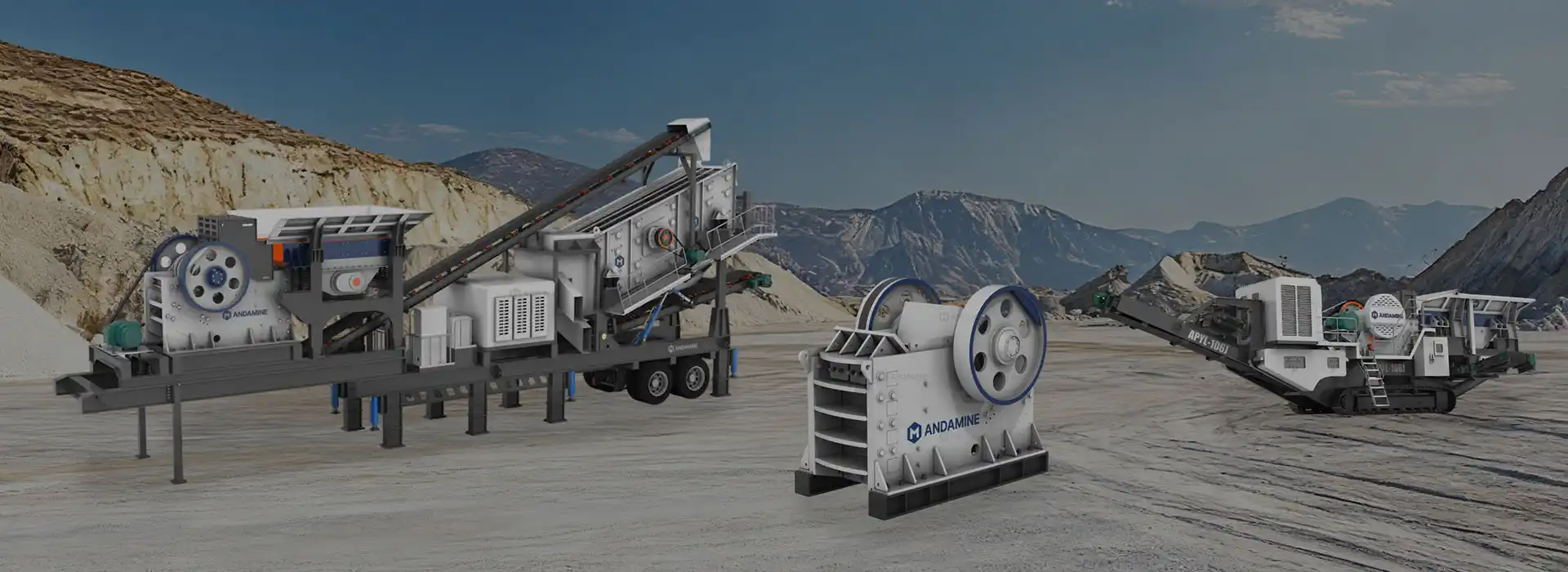
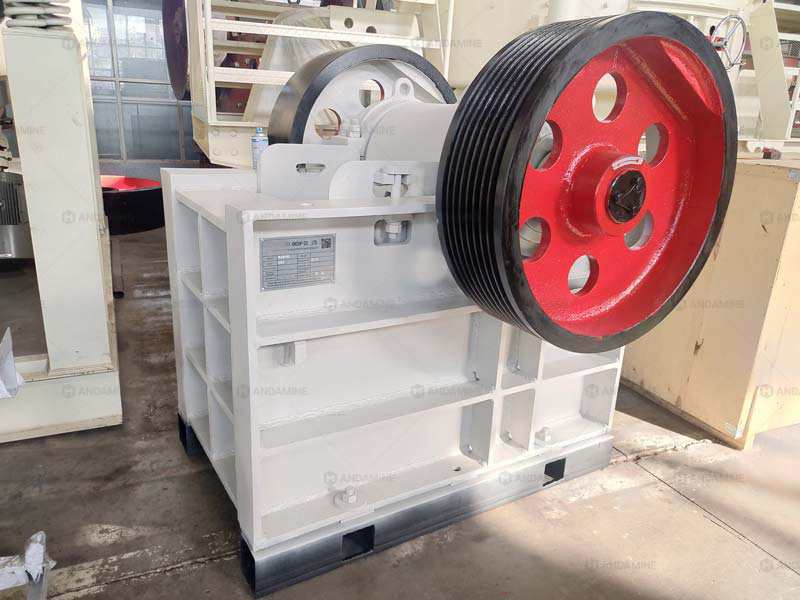
A jaw crusher is a heavy-duty machine that crushes large rocks and ores into smaller pieces through compression between a fixed jaw plate and a moving jaw plate. In Indonesia, jaw crushers are commonly used to process andesite, granite, basalt, limestone, and river stone for quarrying, mining, road construction, and aggregate production. ANDAMINE offers 3 types of jaw crushers for primary crushing, large-scale rock processing, and applications requiring smaller feed sizes and finer output, helping Indonesian quarry operators, mining businesses, and contractors choose suitable equipment for their production needs.
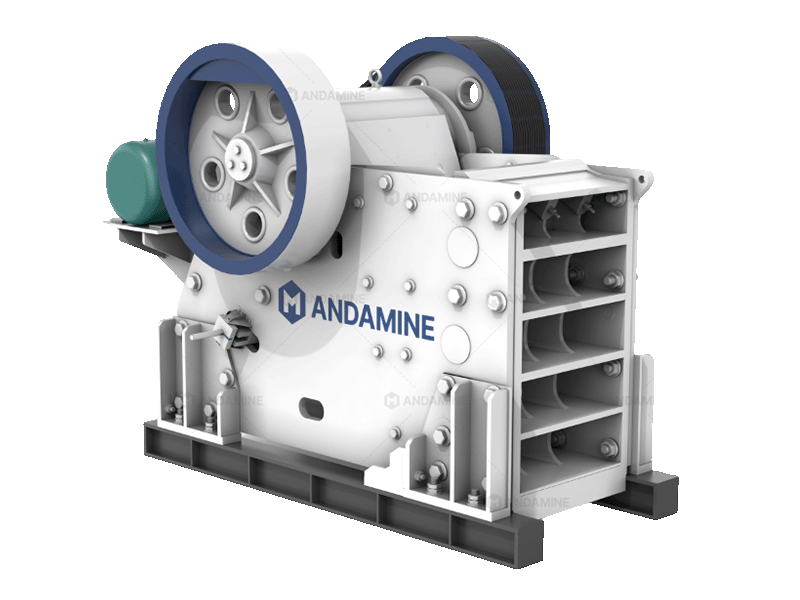
- Capacity: 20-800t/h, depending on model.
- Types: APJ-E Standard, APJ-V European-Type, and APJ-X Fine Jaw Crusher.
- Price Range: US$6,000–US$235,800.
- Maximum Feeding Size: 130–1,000 mm (APJ-E); 420–1,000 mm (APJ-V); 120–250 mm (APJ-X).
- Discharge Size: 18–275 mm, depending on model.
- Applicable Materials: Andesite, river stone, limestone, granite, basalt, marble, iron ore, and coal.
- Working Principle: Crushes rocks through compression between fixed and movable jaw plates.
- Applications: Quarrying, aggregate production, mining, and road construction.
What Are the Differences Between APJ-E, APJ-V, and APJ-X Jaw Crushers?
Choosing between APJ-E, APJ-V, and APJ-X jaw crushers depends on your feed material, crushing stage, and target aggregate size. For Indonesian quarry and road construction projects, the key differences lie in their design, discharge adjustment, and role in the crushing line. The comparison below highlights their advantages and limitations to help you identify the right model for your production needs.
| Comparison Factor | APJ-E Standard Jaw Crusher | APJ-V European-Type Jaw Crusher | APJ-X Small Jaw Crusher |
|---|---|---|---|
| Primary Role | Primary crushing of raw rock. | Primary crushing of raw rock, particularly where hydraulic discharge adjustment is beneficial. | Further crushing of pre-crushed rock. |
| Key Design Difference | Standard jaw crusher configuration. | Hydraulic wedge discharge adjustment for easier setting changes. | Designed for further size reduction of pre-crushed material. |
| Main Advantage | Suitable for conventional quarry operations and primary crushing. | Simplifies discharge-setting adjustments through a hydraulic wedge system. | Supports additional size reduction in multi-stage crushing lines. |
| Main Limitation | May require secondary crushing to produce smaller aggregates. | Hydraulic components require appropriate inspection and maintenance. | Requires feed material within the selected model’s limits and cannot directly replace a large-feed primary crusher. |
| Role in Aggregate Production | Reduces raw rock before secondary crushing and screening. | Performs primary crushing before downstream aggregate processing. | Reduces pre-crushed material before the next processing stage. |
| Additional Equipment Needs | A secondary crusher may be needed to meet smaller aggregate specifications. | Downstream crushing may be needed to achieve the target aggregate sizes. | Requires upstream crushing to prepare suitably sized feed material. |
| Maintenance Considerations | Monitor jaw plate wear, lubrication, and discharge settings. | Monitor jaw plate wear, lubrication, and hydraulic adjustment components. | Monitor jaw plate wear and ensure consistent, correctly sized feed. |
| Best-Fit Project in Indonesia | Andesite or limestone quarries requiring conventional primary crushing. | Hard-rock quarries processing abrasive materials where hydraulic adjustment is beneficial. | Aggregate production lines requiring further reduction of pre-crushed rock. |
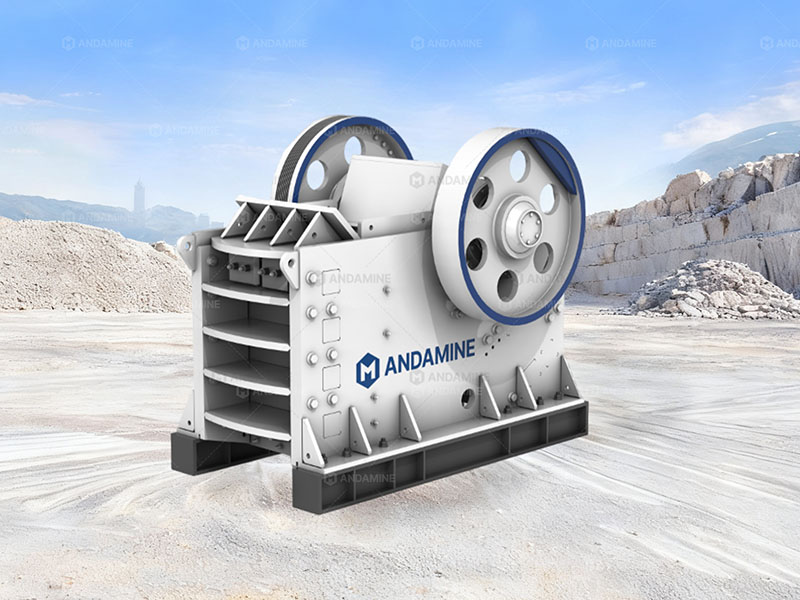
APJ-E Standard Jaw Crusher – For Quarry and Aggregate Production
The APJ-E Standard Jaw Crusher is designed for primary crushing in Indonesian quarries and aggregate plants. It processes suitable rocks such as andesite, basalt, granite, and limestone before secondary crushing and screening. With multiple models available, it helps quarry operators match feed size and crushing capacity to their aggregate production targets.
Product Specifications
- Capacity: 5–800 t/h, depending on model.
- Maximum Feeding Size: 210–1,000 mm, depending on model.
- Discharge Size: 20–300 mm, depending on model.
- Motor Power: 15–220 kW, depending on model.
Key Features of the APJ-E Series
- Suitable for crushing andesite, basalt, and limestone in Indonesian quarries.
- Multiple models help match your quarry’s output target and budget.
- Ideal for primary crushing before secondary crushing and screening.
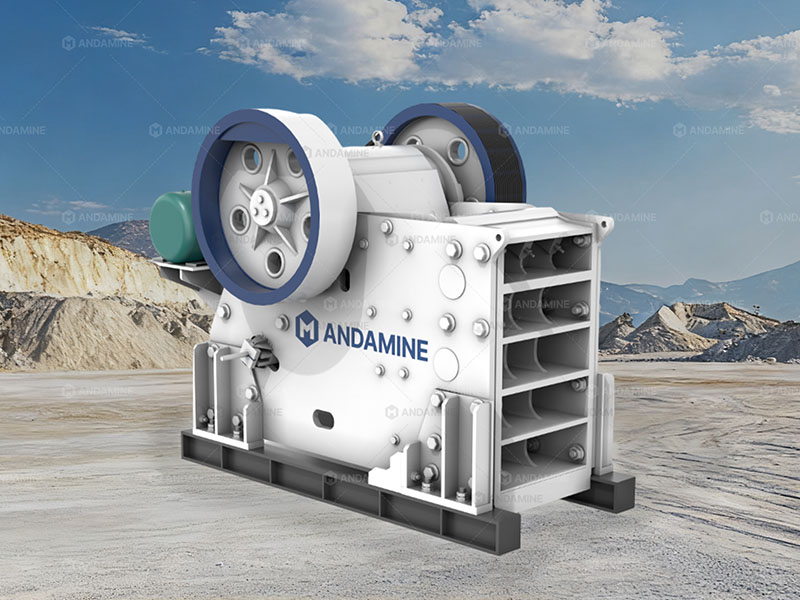
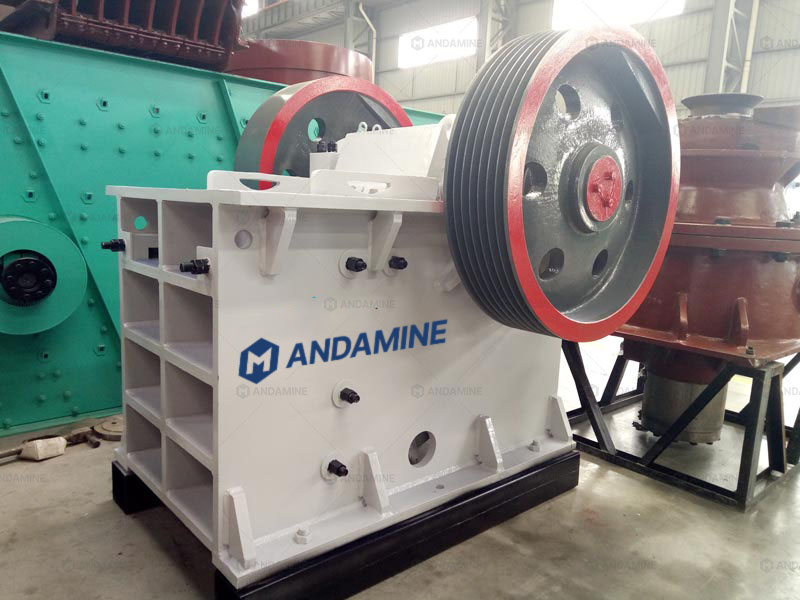
APJ-V European-Type Jaw Crusher – For Large-Scale Crushing
The APJ-V European-Type stone jaw crusher for sale is designed for demanding crushing operations that require a large feed opening and high processing capacity. It is an option for Indonesian quarries and mining projects handling large quantities of suitable hard rock. Check each model’s maximum feed size and rated capacity to determine whether it can meet your production target and downstream processing requirements.
Product Specifications
- Capacity: 65–800 t/h, depending on model.
- Maximum Feeding Size: 420–1,000 mm, depending on model.
- Discharge Size: 40–275 mm, depending on model.
- Motor Power: 75–250 kW, depending on model.
Key Features of the APJ-V Series
- Designed for large-scale quarries handling high volumes of rock.
- High-capacity options help meet demanding aggregate supply targets.
- Suitable for projects requiring a large feed opening for oversized rocks.
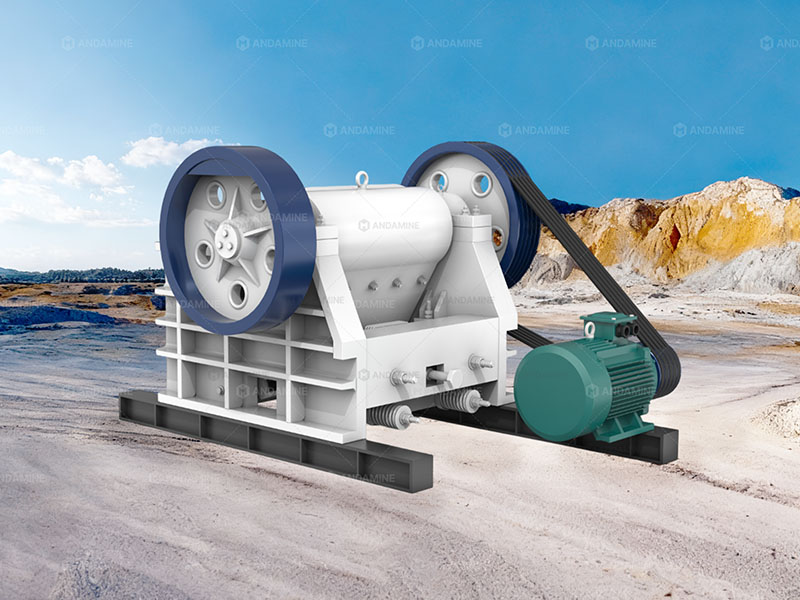
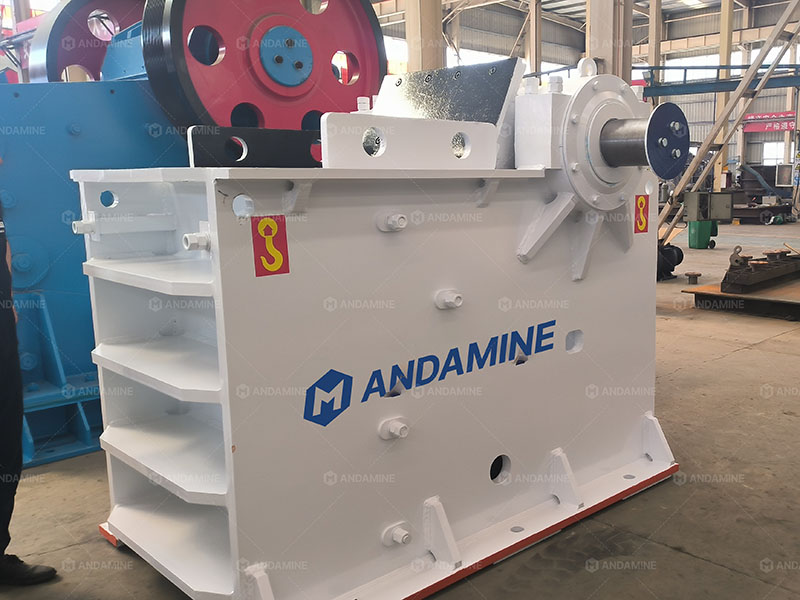
APJ-X Fine Jaw Crusher Machine – For Smaller Feed and Finer Discharge
The APJ-X Fine Jaw Crusher is designed for applications requiring smaller feed sizes and finer discharge settings than many large primary jaw crusher machines. It can be considered for Indonesian aggregate production and construction projects that need a smaller crushing stage. Compare the model’s feed size, capacity, and discharge range with your target aggregate specifications before selecting a machine.
Product Specifications
- Capacity: 8–95 t/h, depending on model.
- Maximum Feeding Size: 120–250 mm, depending on model.
- Discharge Size: 18–90 mm, depending on model.
- Motor Power: 15–75 kW, depending on model.
Key Features of the APJ-X Series
- Suitable for pre-crushed rocks that need further size reduction.
- Finer discharge options help meet specific downstream processing needs.
- A practical choice for smaller crushing lines with moderate output demands.
Which Jaw Crusher Specifications Are Right for Your Project?
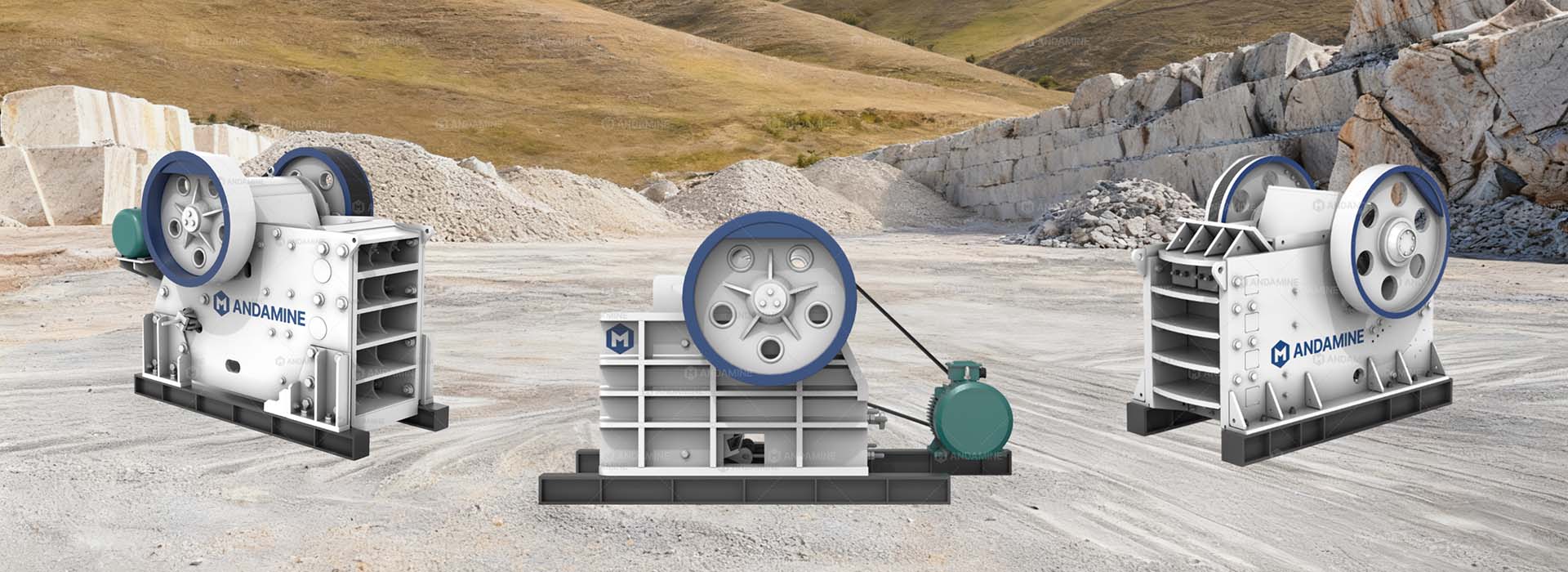
Choosing the right mesin jaw crusher specifications directly affects your project cost, output quality, and operational stability. In Indonesia, material hardness, feed size, and project scale vary widely — from small local quarries to large infrastructure works. Compare the spesifikasi jaw crushers of our APJ-E, APJ-V, and APJ-X series below to find a model that matches your material, production target, and site requirements.
APJ-E Series Specification
| Model | Inlet Size (mm) | Max Feeding Size (mm) | Outlet Size (mm) | Capacity (t/h) | Power (kW) | Overall Size (L×W×H, mm) | Weight (t) |
|---|---|---|---|---|---|---|---|
| APJ-2540E | 250×400 | 210 | 20-80 | 5-20 | 15 | 1450×1315×1296 | 2.8 |
| APJ-4060E | 400×600 | 340 | 40-100 | 16-60 | 30 | 1565×1732×1588 | 6.7 |
| APJ-5075E | 500×750 | 425 | 50-100 | 40-110 | 55 | 1890×1916×1870 | 11.7 |
| APJ-6090E | 600×900 | 500 | 65-180 | 80-180 | 55-75 | 2305×1840×2298 | 16 |
| APJ-7510E | 750×1060 | 630 | 80-180 | 110-320 | 90-110 | 2450×2472×2840 | 28 |
| APJ-8010E | 800×1060 | 680 | 100-200 | 140-340 | 90-110 | 2610×2556×2800 | 30 |
| APJ-8710E | 870×1060 | 720 | 170-270 | 180-360 | 90-110 | 3335×3182×3025 | 31.5 |
| APJ-9012E | 900×1200 | 750 | 95-225 | 220-450 | 110-132 | 3435×3182×3025 | 49 |
| APJ-1012E | 1000×1200 | 850 | 125-280 | 280-550 | 110-132 | 3435×3182×3025 | 52 |
| APJ-1215E | 1200×1500 | 1000 | 150-300 | 400-800 | 160-220 | 4200×3732×3843 | 101 |
APJ-V Series Specification
| Model | Inlet Size (mm) | Max Feeding Size (mm) | Outlet Size (mm) | Capacity (t/h) | Power (kW) | Overall Size (L×W×H, mm) | Weight (t) |
|---|---|---|---|---|---|---|---|
| APJ-80V | 510×800 | 420 | 40-175 | 65-220 | 75 | 2500×1750×1950 | 7.5 |
| APJ-96V | 580×980 | 460 | 60-175 | 120-325 | 90 | 2880×1755×1460 | 11.4 |
| APJ-100V | 760×1000 | 640 | 70-200 | 150-350 | 90 | 3100×1980×2490 | 20 |
| APJ-106V | 700×1060 | 600 | 70-200 | 150-400 | 110 | 3450×1900×2490 | 13.5 |
| APJ-110V | 850×1100 | 720 | 70-200 | 190-450 | 160 | 3750×2280×2880 | 25 |
| APJ-125V | 950×1250 | 800 | 100-250 | 290-500 | 160 | 4870×2850×3570 | 36.7 |
| APJ-140V | 1070×1400 | 900 | 125-250 | 350-550 | 200 | 5100×3050×3790 | 45.3 |
| APJ-160V | 1200×1600 | 1000 | 150-275 | 500-800 | 250 | 5500×3250×3990 | 68.6 |
APJ-X Series Specification
| Model | Feed Opening (mm) | Max Feeding Size (mm) | Output Size (mm) | Capacity (t/h) | Power (kW) | Overall Dimension (mm) | Weight (t) |
|---|---|---|---|---|---|---|---|
| APJ-1575X | 150×750 | 120 | 18-48 | 8-25 | 15 | 1380×1658×1025 | 3.5 |
| APJ-2575X | 250×750 | 210 | 25-60 | 13-35 | 30 | 1545×1667×1330 | 5 |
| APJ-2510X | 250×1000 | 210 | 25-60 | 16-52 | 30-37 | 1530×1992×1380 | 6.5 |
| APJ-2512X | 250×1200 | 210 | 25-60 | 20-61 | 37-45 | 1900×2192×1430 | 8.8 |
| APJ-3013X | 300×1300 | 250 | 20-90 | 25-95 | 55-75 | 1750×2320×1724 | 12.6 |
Note: Technical parameters are subject to change without prior notice.
What Mobile Jaw Crusher Options Are Available?
Looking for a mobile jaw crusher in Indonesia? Whether you operate an andesite quarry in Java, supply road base aggregates in Sumatra, or manage a remote project in Kalimantan, ANDAMINE offers mobile crusher plant solutions for different site conditions and production needs. From compact crushers for small-scale operations to integrated multi-stage crushing plants, compare each configuration, capacity and mobility to find the right solution for your stone crushing and aggregate production project.
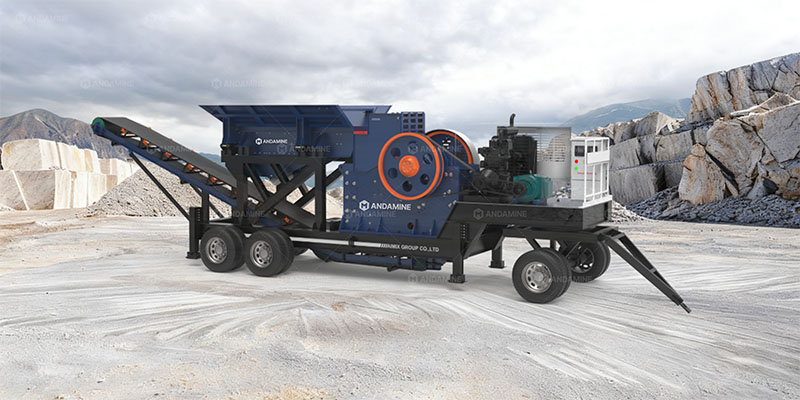
Small Mobile Jaw Crusher
- Model: APYE Series
- Jaw Crusher Capacity: Approx. 5–60 TPH
- Typical Configuration: Vibrating feeder + jaw crusher + belt conveyor + wheel-mounted chassis + diesel power system.
- Key features: Compact design for small quarries and local road projects | Diesel power for remote sites with limited grid access | Wheel-mounted mobility for easy relocation between accessible sites | Lower initial investment than a large fixed plant.
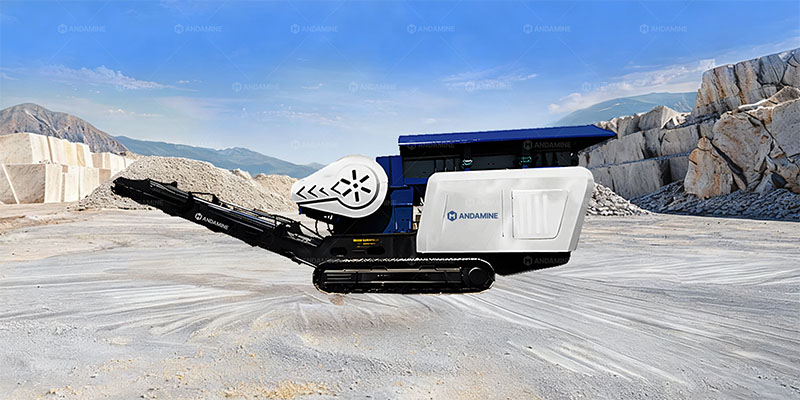
Small Crawler Jaw Crusher
- Model: APYE-L Series
- Capacity: Approx. 20–50 TPH
- Typical Configuration: Vibrating feeder + jaw crusher + belt conveyor + crawler chassis + power system.
- Key features: Crawler mobility for uneven quarry terrain | No separate towing vehicle needed for routine on-site repositioning | Moving closer to the rock face helps reduce material hauling | Ideal for small quarries and remote road projects with changing work areas.

2-in-1 Mobile Jaw Crusher Plant
- Model: APY2-J Series
- Capacity: Approx. 50–450 TPH
- Typical Configuration: Vibrating feeder + jaw crusher machine + discharge conveyor + wheel-mounted mobile chassis.
- Key features: Integrated feeding and primary crushing for smoother material flow | 20% faster project completion through streamlined equipment coordination | 30% less relocation time with a wheel-mounted design | 15% lower fuel consumption and 10–15% less downtime to support more consistent production.

2-in-1 Crawler Mobile Jaw Crusher
- Model: APYL2-J Series
- Capacity: Approx. 80–450 TPH
- Typical Configuration: Vibrating feeder + jaw crusher + discharge conveyor + crawler chassis + power system.
- Key features: Crawler mobility for uneven quarry ground | 30% lower cross-site transport costs through reduced separate transport needs | Up to 40% less civil work with less need for permanent foundations | Ideal for remote Indonesian quarries and mining sites.

3-in-1 Mobile Jaw Crusher Plant
- Model: APY3-J Series
- Capacity: Approx. 30–180 TPH
- Typical Configuration: Vibrating feeder + jaw crusher + secondary crusher or screening unit + belt conveyors + wheel-mounted chassis, depending on the selected configuration.
- Key features: 20% higher jaw crusher efficiency through coordinated crushing and screening | 30% lower relocation costs with integrated mobile equipment | Setup in 1–2 days to start production sooner | 10–15% lower maintenance requirements with IoT monitoring to identify equipment abnormalities earlier and reduce avoidable interruptions.

4-in-1 Mobile Crusher Plant
- Model: APY4 Series
- Capacity: Approx. 55–150 TPH
- Typical Configuration: Vibrating feeder + jaw crusher + cone crusher, impact crusher, or fine jaw crusher + vibrating screen + belt conveyors + integrated wheel-mounted chassis, depending on the selected plant configuration.
- Key features: Modular changes in 45 minutes or less for flexible production | 15% higher uptime through coordinated operation and fewer changeover delays | 15% lower maintenance costs with IoT monitoring for earlier fault detection | Around 30% lower operating costs through integrated crushing, screening and material handling.
What is the Price of Jaw Crushers?
How much does a jaw crusher cost in Indonesia? Jaw crusher prices typically range from $6,000 to $235,800, depending on the model, production capacity, and configuration. A standard jaw crusher is suitable for primary crushing, while a mobile jaw crusher plant integrates crushing equipment with a mobile chassis for easier relocation between job sites. For Indonesian buyers, the final investment also depends on shipping, installation, power requirements, and after-sales support. Contact ANDAMINE for a quotation based on your material, required output, and project location.
What Affects Jaw Crusher Machine Prices in Indonesia?
What Jaw Crusher Configurations Are Used in Various Projects?
Explore ANDAMINE stone jaw crusher machine projects across Indonesia to see the equipment models, plant configurations, and crushing solutions selected for different applications. From andesite quarries in Java to aggregate production for road construction, these project examples show how jaw crushing machine setups vary according to material type, production capacity, and site requirements. Use them as a reference when comparing equipment options for your own project.
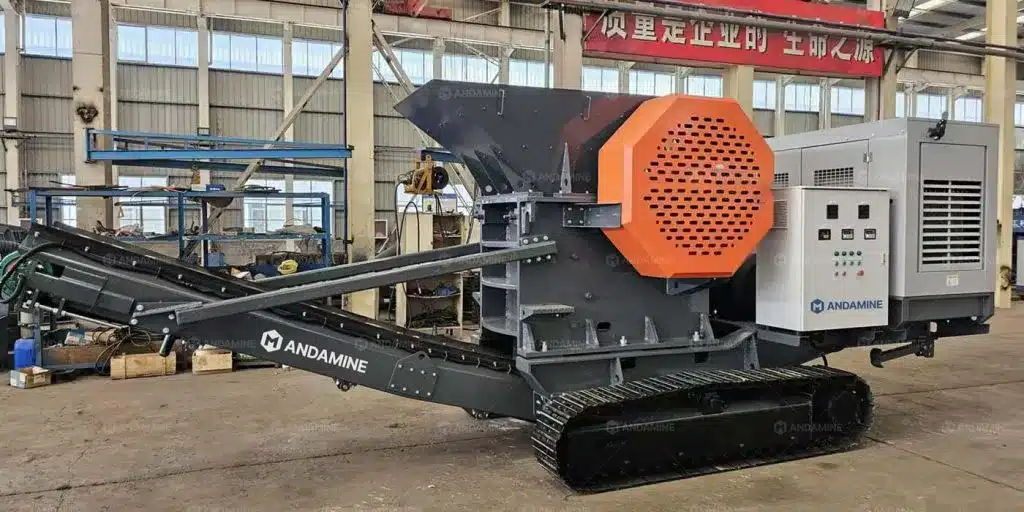
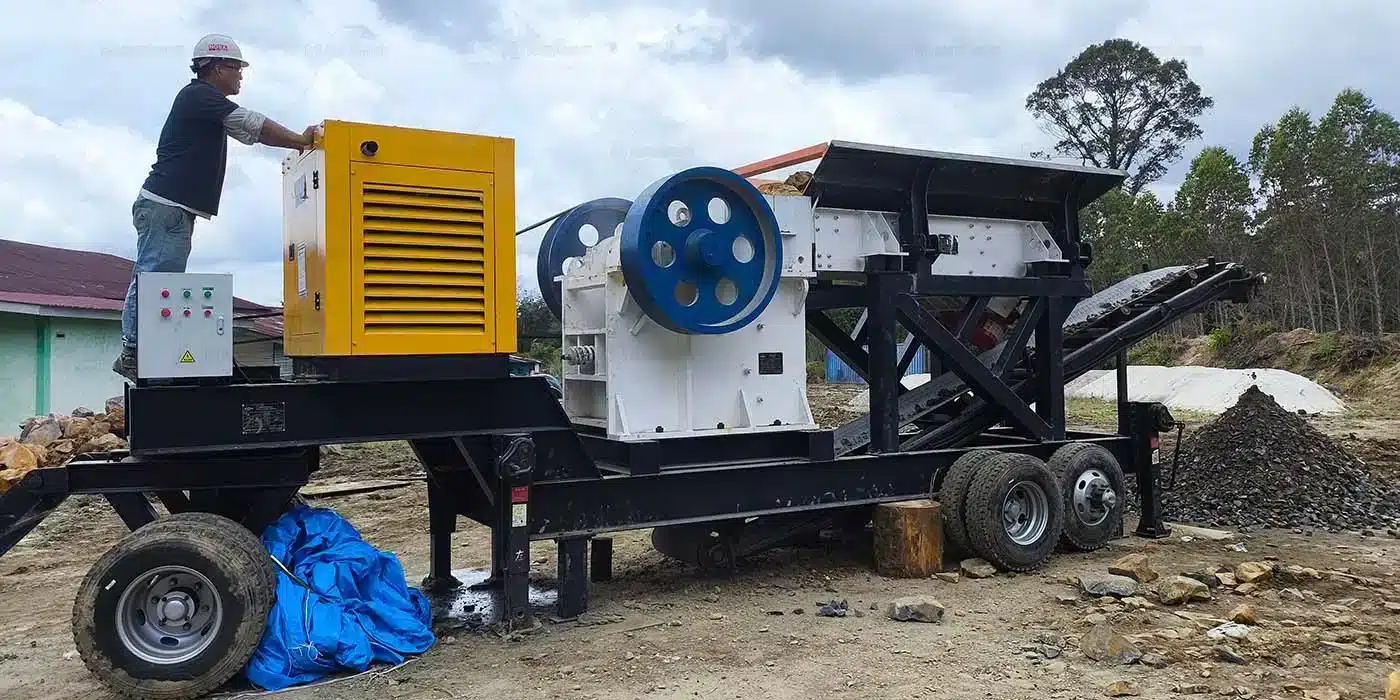
30 TPH Crawler Jaw Crusher in Kalimantan
- Model: APYE-4060
- Output Size: ≤70mm
- Feeding size: ≤320mm
- Application: Road-base material production
- Main Parts: Jaw crusher, belt conveyor, crawler chassis, motor reducer and PLC control box.
30 TPH Wheel-Mounted Mobile Jaw Crusher in Medan
- Model: APYE-4060
- Output Size: 20-100mm
- Feeding size: ≤340mm
- Application: Rural road construction
- Main Parts: Jaw crusher, vibrating feeder, belt conveyor and mobile chassis.
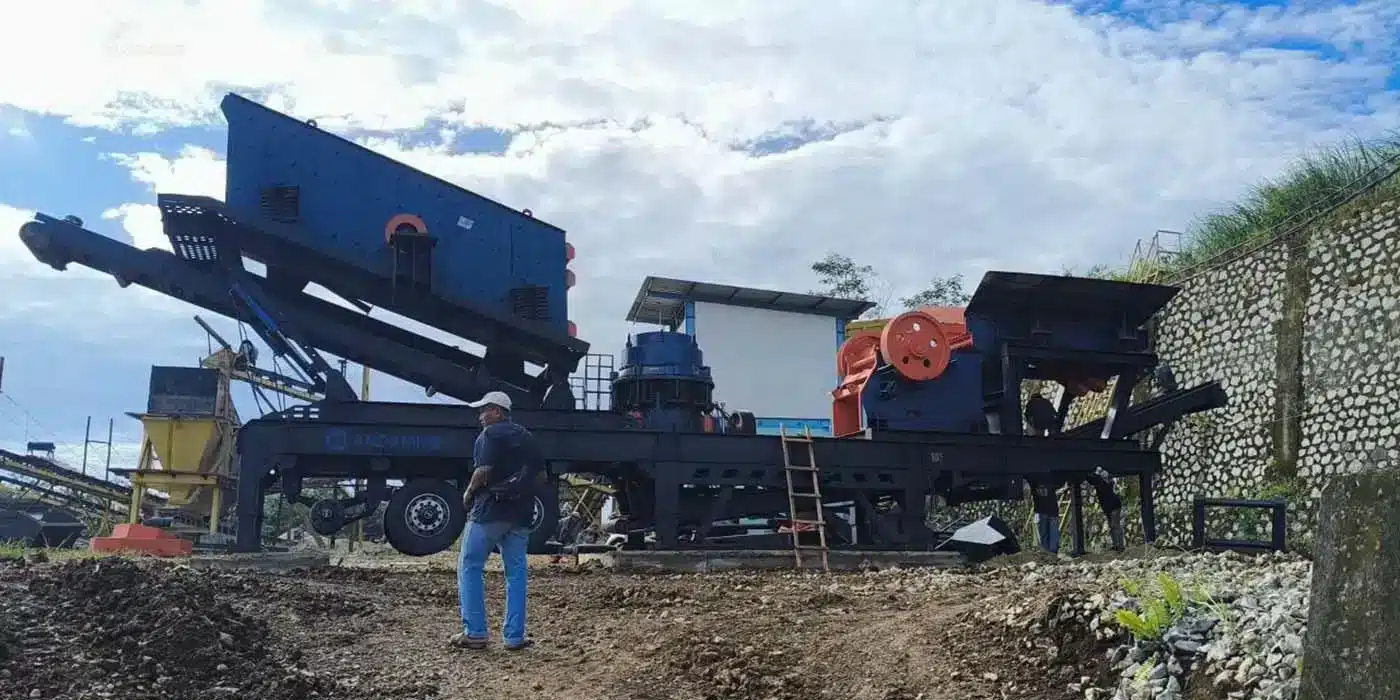
100 TPH Mobile Jaw and Cone Crushing Plant in West Java
- Model: APY4-57J110C-S3
- Output Size: 5 mm, 10 mm, 20 mm and 40 mm
- Feeding size: ≤630mm
- Application: Construction aggregate production
- Main Parts: Jaw crusher, cone crusher, vibrating feeder, screening equipment and PLC control box.
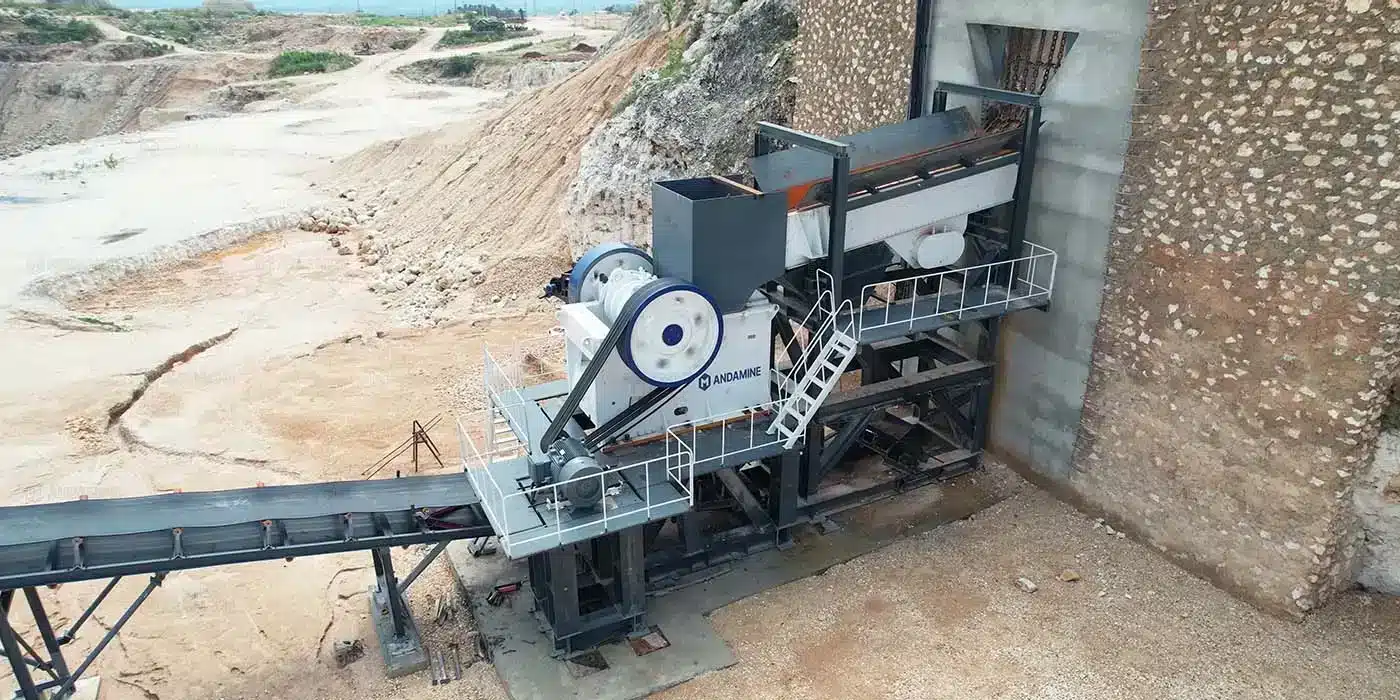
200TPH Stationary Limestone Jaw Crushing Plant in Tuban
- Model: APJ-E and APJ-X
- Output Size: 0–5 mm and 0–20 mm
- Feeding size: ≤500mm
- Application: Fine aggregate production for the paper industry
- Main Parts: Jaw crusher, feeder, vibrating screen and belt conveyor.
What Should You Consider Before Buying a Jaw Crusher?
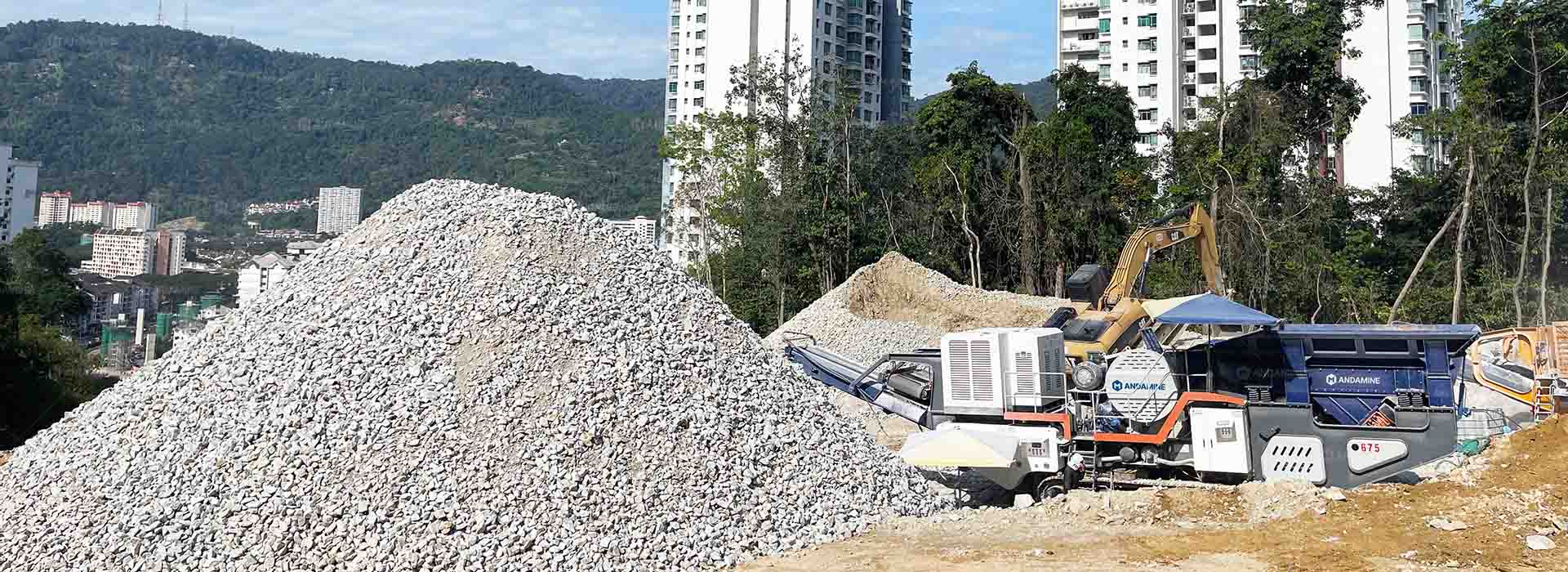
Choosing a primary jaw crusher for sale for an Indonesian quarry, mining site, or road construction project involves more than comparing machine prices. You need to match the crusher to your rock type, feed size, production target, and site conditions. The following points can help you compare jual jaw crusher models and decide whether a standalone machine or a complete crushing plant is the better fit.
1. Identify Your Material and Feed Size
Start by identifying the material you need to crush, such as andesite, basalt, or limestone, and its maximum feed size. Rock hardness and feed dimensions affect crusher selection and wear-part requirements. Check the model’s maximum feeding size to ensure it can handle your raw material.
2. Set Your Capacity and Output Requirements
Estimate your required output in tons per hour (TPH), based on your daily production target and working hours. Also specify the required jaw crusher product size for road base, concrete aggregates, or other applications. A primary crusher machine handles primary crushing; producing smaller or more uniform aggregates may require a secondary crusher and vibrating screen.
3. Match the Machine to Your Site Conditions
Consider access roads, available working space, ground conditions, and power supply. For a fixed quarry with a long-term production plan, a stationary jaw crusher setup may be suitable. For remote sites or projects that require frequent relocation, a wheel-mounted or crawler mobile jaw crusher can offer greater flexibility.
4. Choose the Right Crushing Configuration
Decide whether you need a standalone jaw crusher for primary crushing or an integrated plant with a feeder, conveyors, secondary crusher, and vibrating screen. The right configuration depends on your target aggregate sizes, required capacity, and whether the project needs a fixed production line or mobile processing equipment.
5. Compare Total Project and Operating Costs
Look beyond the initial jaw crusher price. Include transportation to your site in Indonesia, installation, fuel or electricity, wear parts, routine maintenance, and after-sales support. For island or remote projects, confirm delivery arrangements and the availability of spare parts before making your decision.
Not sure which quarry jaw crusher configuration suits your project? Share your material type, maximum feed size, required capacity, target aggregate size, and site location with ANDAMINE. These details help our team assess suitable models and equipment combinations for your project.
What Are the Applications of Jaw Crushers?
Jaw crushers in Indonesia are commonly used in mining, stone quarrying, aggregate production, road construction, construction waste recycling, and cement production. They primarily crush large rocks, suitable mineral ores, and selected construction waste into smaller pieces for secondary crushing or further processing. For Indonesian contractors, quarry operators, and mining companies, crusher jaws provide an effective first-stage crushing solution for handling large feed material and preparing it for downstream operations.


Mining
In Indonesia’s hard-rock mines, jaw crushers reduce large pieces of suitable gold, copper, and other mineral ores before further processing. This prepares the feed for downstream crushing or mineral processing, helping operators handle bulky raw materials more efficiently.

Stone Quarrying
In Indonesian quarries, jaw crushers process large pieces of andesite, basalt, granite, and other suitable rocks after blasting. This reduces oversized stones into manageable feed for secondary crushing, helping quarry operators maintain a steady flow of material through the crushing line.

Road & Infrastructure
For road and infrastructure projects across Indonesia, jaw crushers reduce large rocks into feed material for producing road base and other construction aggregates. With suitable secondary crushing and screening, contractors can prepare different stone sizes to meet project specifications and site requirements.

Aggregate Production
For Indonesian aggregate suppliers, jaw crushers handle the primary crushing of large stones used in construction material production. Combined with suitable secondary jaw crushers and vibrating screens, the plant can produce specified aggregate sizes for ready-mix concrete, road works, and other building projects.

Construction Waste Recycling
For demolition and recycling projects in Indonesia, jaw crusher equipment can process suitable concrete rubble and masonry waste after proper sorting. The crushed material can then be screened for potential reuse in suitable construction applications, helping reduce bulky waste and the need for disposal.

Cement & Building Materials
In cement and building-material plants, jaw crushers reduce suitable limestone and other compatible raw materials before further processing. This prepares material for downstream grinding or production stages, helping operators manage large feed pieces and maintain a suitable material supply.
How to Choose the Best Jaw Crusher for Your Application?
The best jaw crusher for your project in Indonesia depends on your required capacity, feed material, target jaw crusher output size, budget, and site conditions. For small quarries, expanding aggregate plants, hard-rock crushing, and projects that require equipment relocation, different configurations may be more suitable. The guide below compares common project needs and the APJ jaw crusher series to consider, helping you narrow down your options before confirming the model and production capacity.
| Project Requirement | Typical Indonesian Scenario | Recommended Solution | Why Consider It? |
|---|---|---|---|
| Limited Startup Budget | Small limestone quarry or local contractor in Sumatra | APJ-E Series | A practical option to evaluate for small-scale crushing projects where initial investment, straightforward operation, and required output capacity are key considerations. |
| Increasing Production Capacity | Expanding aggregate plant in Java supplying road projects | APJ-V Series | Consider this series when upgrading production capacity. Select the model according to feed size, target output, and the required capacity of the downstream crushing and screening stages. |
| Crushing Hard, Abrasive Rock | Andesite, granite, or basalt quarry in Kalimantan | APJ-X Series | Evaluate the model against rock hardness, abrasiveness, maximum feed size, and required output. Correct sizing and suitable wear parts are essential for demanding hard-rock applications. |
| Frequent Site Relocation | Contractors serving multiple projects across Sulawesi or other islands | Compatible mobile crushing plant with a jaw crusher | An integrated mobile setup can simplify equipment movement and reduce on-site installation work when projects change locations. Check transport access, relocation costs, and site preparation needs. |
| Reducing Production Interruptions | Aggregate suppliers serving time-sensitive infrastructure projects | APJ-V or APJ-X Series, subject to application requirements | Choose a correctly sized model with suitable wear parts, accessible maintenance points, and a compatible feed system to support reliable operation and planned maintenance. |
| Long-Term Operating Value | Large private infrastructure projects or established quarry operators | APJ-X Series, subject to technical and cost evaluation | Compare purchase price, expected throughput, wear-part consumption, energy use, and maintenance costs to evaluate total operating cost over the planned service period. |
Before confirming your jaw crusher 3D model, provide your material type, maximum feed size, required capacity (TPH), target discharge size, and operating conditions. These details help determine whether APJ-E, APJ-V, APJ-X, or a mobile crushing configuration is appropriate for your project in Indonesia.
Quick Guide to Choosing a Jaw Crusher Machine for Sale
- Limited budget: Consider the APJ-E Series for suitable small-scale crushing projects.
- Expanding production: Evaluate the APJ-V Series based on your required capacity and plant configuration.
- Hard rock crushing: Assess the APJ-X Series against rock hardness, feed size, and production requirements.
- Multiple job sites: Consider a compatible mobile crushing plant if frequent relocation is part of your operation.
Not sure which jaw crusher mining is right for your project in Indonesia? Contact ANDAMINE for a customized recommendation based on your material, required capacity, feed size, output requirements, and budget.

What Are the Jaw Crusher Parts and Their Functions?
A jaw crusher consists of several key components that work together to crush rocks and other hard materials through compression. The main jaw crusher parts include the fixed jaw plate, movable jaw plate, pitman, eccentric shaft, toggle plate, flywheel, cheek plates, and frame. Each component has a specific fungsi jaw crusher in the crushing process, from applying crushing force to supporting the machine structure and controlling the discharge size.
| Jaw Crusher Part | Function |
|---|---|
| Fixed Jaw Plate | Forms the stationary side of the crushing chamber and provides the surface against which rocks are compressed. |
| Movable Jaw Plate | Moves toward and away from the fixed jaw plate to compress and break rocks into smaller pieces. |
| Pitman | Supports the movable jaw assembly and transfers motion from the drive mechanism to produce the crushing action. |
| Eccentric Shaft | Converts rotational motion into the movement of the jaw mechanism, driving the crushing cycle. |
| Toggle Plate | Transfers force between the movable jaw assembly and the crusher frame. In many traditional designs, it also serves as a mechanical safety component. |
| Flywheel | Stores rotational energy and helps maintain smoother movement throughout the crushing cycle. |
| Cheek Plates | Protect the side walls of the crushing chamber from wear caused by contact with rocks. |
| Crusher Frame | Forms the main supporting structure, holding the jaw crusher components in position and withstanding crushing forces. |
| Discharge Opening | Forms the outlet gap at the bottom of the crushing chamber. Its setting influences the size of the discharged material. |
| Tension Rod and Spring | In designs that use this arrangement, helps return the movable jaw mechanism and maintain the required tension during operation. |
Note: The exact jaw crusher components and their arrangements may vary depending on the jaw crusher model and design.
How Does a Jaw Crusher Work?
A jaw crusher works by compressing rocks and other hard materials between a fixed jaw plate and a moving jaw plate. As the movable jaw repeatedly approaches and moves away from the fixed jaw, the material is crushed inside the V-shaped crushing chamber. The broken material gradually moves downward under gravity and exits through the discharge opening, completing the crushing cycle. This process makes jaw crushers for sale widely used for primary crushing in quarrying, mining, and aggregate production.
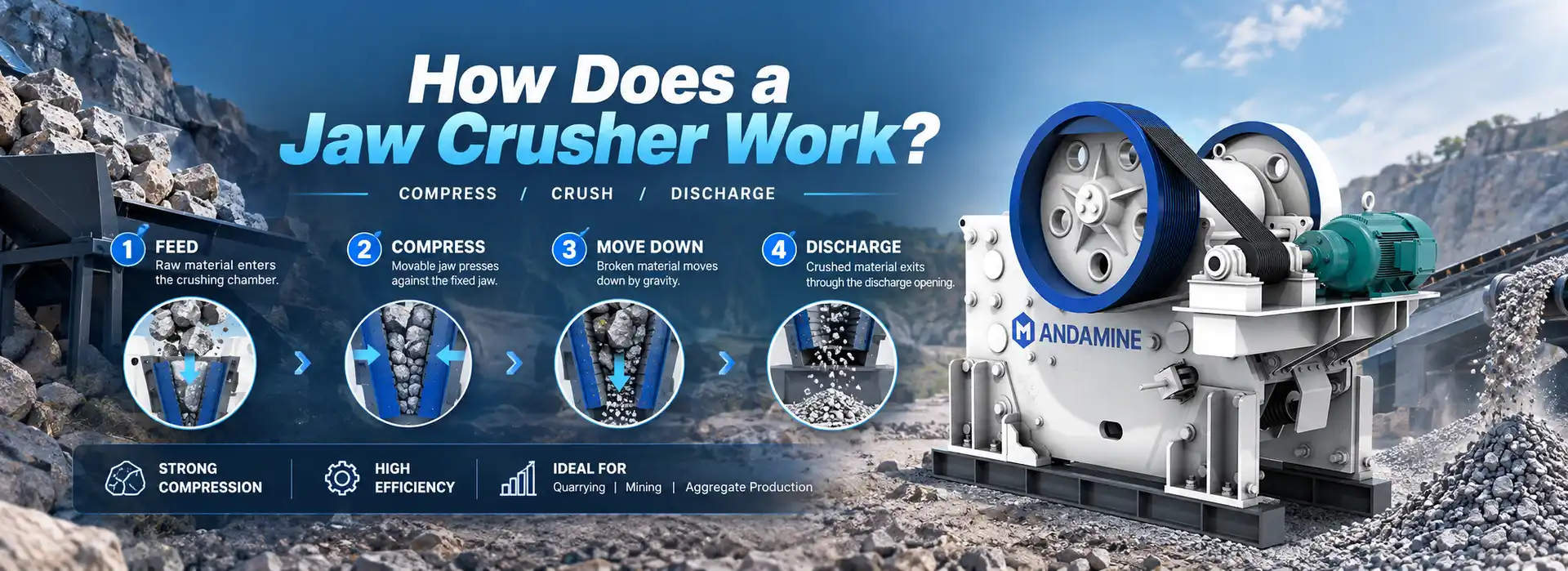

1. Feeding Material into the Crushing Chamber
Raw rock enters through the feed opening at the top of the V-shaped crushing chamber, also known as the gape. The chamber narrows toward the bottom, directing the material between the fixed and movable jaw plates. The nip angle between the plates influences how effectively the jaws grip the material during crushing.
 2. Crushing Material by Compression
As the drive mechanism moves the movable jaw toward the fixed jaw, the space between the jaw plates decreases. The resulting compressive force fractures the rock into smaller pieces. This action forms the main crushing stroke of the jaw crusher for mining.
 3. Moving Material Downward
When the movable jaw moves away from the fixed jaw, the crushing chamber opens and the broken material moves downward under gravity. Larger pieces remain in the chamber for further crushing during subsequent compression strokes, while smaller pieces move closer to the discharge opening.
 4. Discharging the Crushed Material
Material exits through the discharge opening at the bottom once it is small enough to pass through the gap between the jaw plates. The Closed Side Setting (CSS) refers to the minimum distance between the jaw plates at the bottom when they are closest together. It influences the discharge size, although the actual product size distribution also depends on the feed material, jaw plate profile, and operating conditions.
What Are the Operating Precautions for a Jaw Crusher?
Proper jaw crusher operation is essential for maintaining stable production, reducing equipment downtime, and protecting operators. Following the correct startup, feeding, lubrication, and shutdown procedures helps prevent equipment damage and operating accidents. The following precautions cover the key stages of jaw crusher operation, from pre-start inspection to handling unexpected shutdowns.
1. Pre-Start Checks
- Inspect the jaw plates for wear, damage, and loose fasteners.
- Check and adjust the discharge opening according to the required setting and the equipment manual.
- Ensure the crushing chamber is clear of residual rocks or other obstructions.
- Check connecting bolts, belt tension, and the protective guards covering pulleys and flywheels.
- Verify that the lubrication system has the correct oil level and that the electrical and signal systems are functioning properly.
2. Startup Procedure
- Start the oil pump motor and cooling system first, where applicable. After 3–4 minutes, confirm that the oil pressure and flow indicators are normal before starting the main motor.
- Start the jaw crusher under no-load conditions, as specified in the operating instructions.
- Listen for abnormal noise and monitor vibration and operating indicators. If anything unusual occurs, stop the machine and identify the cause before restarting.
- Start the feeding equipment only after the jaw crusher construction is running normally.
3. Feeding Guidelines
- Feed material evenly into the crushing chamber to avoid uneven loading or overfilling.
- Keep the feed size within the specified limit. For equipment using the 85% guideline, the maximum feed size should not exceed 85% of the feed opening width.
- Prevent metal objects and other non-crushable materials from entering the crushing chamber.
- Never use your hands to remove oversized rocks or material lodged in the feed opening. Stop the equipment and follow the approved blockage-removal procedure.
4. Monitoring During Operation
- Monitor the crusher for abnormal noise, vibration, excessive motor load, and changes in bearing temperature.
- For large jaw crushers covered by the applicable operating specification, bearing temperatures should typically remain within the specified limit of 60°C.
- If the crushing chamber becomes blocked or the crusher is overloaded, stop feeding and follow the machine-specific troubleshooting procedure.
- If bearing temperatures rise excessively, stop the machine when required and investigate the cause. Use only the cooling measures approved for the equipment.
5. Lubrication and Maintenance
- Lubricate the bearings according to the specified lubrication method. For bearing arrangements requiring grease filling, maintain the recommended grease quantity; the 50% housing-fill guideline applies only where specified for the equipment.
- Replace grease every 3–6 months where this is the prescribed maintenance interval. Actual intervals should follow the equipment specification and operating conditions.
- Use only approved cleaning agents and procedures when servicing bearings. Do not use gasoline or kerosene unless explicitly permitted by the equipment manufacturer and the applicable safety procedure.
- Ensure the toggle plate and toggle seat are properly lubricated where required by the crusher design.
- If the oil pump fails, stop the crusher and follow the approved emergency lubrication procedure. Manual lubrication should be performed only if the specific equipment instructions permit it and the machine has been made safe.
6. Operator Training and Safety
- Only trained and authorized personnel familiar with the operating procedures should operate the jaw crusher, including hydraulic jaw crusher models.
- Operators must receive appropriate safety and technical training before operating the equipment.
- Wear the required personal protective equipment (PPE) and keep clear of the feed opening, discharge area, and moving components.
- Ensure operators know how to use emergency stops and report abnormal operating conditions.
7. Shutdown Procedure
- Stop feeding first and allow the crushing chamber to clear according to the manufacturer’s shutdown procedure.
- Stop the crusher and associated conveyors in the prescribed sequence.
- After the mining jaw crusher has stopped, shut down the lubrication and cooling systems according to the equipment instructions.
- In cold conditions, drain circulating water where required by the system design to prevent freezing and potential equipment damage.
8. Handling Unexpected Shutdowns
- After an unexpected shutdown, identify the cause and ensure the equipment is safe before attempting to restart.
- If material remains trapped in the crushing chamber, isolate all relevant energy sources and follow the approved blockage-removal procedure.
- Never reach into the crushing chamber or restart the crusher against a blockage. Confirm that the chamber is clear and all safety conditions are met before restarting.
Jaw Crusher FAQs
1. How Is the Reduction Ratio of a Jaw Crusher Calculated?
Reduction ratio = Feed size ÷ Product size
For example, if the representative feed size is 600 mm and the representative product size is 100 mm, the calculated ratio is 6:1. This is an illustrative calculation, not a guaranteed operating result.
In practice, the result depends on how feed and product sizes are measured, the crusher’s discharge setting, material properties, and operating conditions. A reduction ratio alone does not establish the final product grading or production capacity. For equipment selection, confirm the required feed size, target product size, and expected throughput with the manufacturer’s technical specifications.
2. Does a Smaller Jaw Crusher Discharge Opening Always Produce Finer Material?
The closed-side setting (CSS) is the minimum distance between the fixed and moving jaw plates at the discharge end. Reducing the CSS can improve size reduction, but it may also reduce throughput, increase crushing forces and power demand, and accelerate wear under some operating conditions.
If a quarry needs a specific aggregate grading, the CSS should be selected together with the feed size, material characteristics, and downstream screening requirements. Check the manufacturer’s recommended setting range for the selected model before making adjustments.
3. What Is the Difference Between Single-Toggle and Double-Toggle Jaw Crushers?
- Single-toggle jaw crusher: Uses one toggle plate and typically has a lighter, mechanically simpler design. It is widely used in quarrying and aggregate production.
- Double-toggle jaw crusher: Uses two toggle plates and a different linkage arrangement. Its jaw motion and mechanical loading characteristics differ from those of a single-toggle design.
Neither type is universally better. Compare the manufacturer’s rated capacity, permitted feed size, discharge-setting range, power requirements, wear-part costs, and maintenance arrangements. The choice should be based on the actual crushing duty rather than the toggle mechanism alone.
4. How Do You Choose the Right Jaw Crusher Plate for Different Rocks?
- Highly abrasive rock: Wear resistance becomes a major consideration because abrasive minerals can shorten jaw plate service life.
- Different feed sizes and shapes: The tooth profile should suit the material and the crusher’s intended application.
- Uneven wear: Inspect the plate profile and wear distribution. Uneven wear can affect crushing performance and may indicate unsuitable feed conditions or operating settings.
Manganese steel is commonly used for jaw plates, but the appropriate grade and profile depend on the application. When comparing replacement plates, consider service life and replacement downtime alongside the purchase price. Follow the manufacturer’s inspection and replacement limits.
5. Why Does Wet or Clay-Rich Material Block a Jaw Crusher?
The problem depends on the material’s clay content, moisture level, particle-size distribution, and the design of the feeding system. Moisture alone does not determine whether a material can be crushed successfully.
For quarries handling wet or clay-rich rock, assess the feed condition before choosing the equipment. Depending on the material, suitable measures may include feed preparation, screening, drainage, or a revised feeder arrangement. If a blockage occurs, stop and isolate the equipment according to the manufacturer of jaw crusher’s safety procedure before clearing it. Never reach into a running crusher or attempt to remove material while hazardous stored energy remains.
6. What Causes Jaw Crusher Jaw Plates to Wear Out Quickly?
For example, highly abrasive rock can wear the plate surface quickly, while uneven feeding may cause one area of the plate to wear faster than another. Operating outside the manufacturer’s recommended settings can also affect wear and crushing performance.
To identify the cause, inspect the wear pattern rather than replacing the plates immediately without investigation. Compare the condition of both plates, review the feed material and operating settings, and check whether the wear profile matches the manufacturer’s guidance. Replacement intervals should be based on actual wear, operating hours, throughput, and the manufacturer’s limits—not a universal number of months.
7. When Should a Jaw Crusher Be Combined with a Cone Crusher?
The jaw crusher performs the primary reduction, while the cone crusher handles a subsequent crushing stage when the material and product requirements are suitable. A vibrating screen may be used to separate product sizes and, where the circuit is designed for it, return oversize material for further crushing.
This configuration is often considered for hard-rock quarrying and aggregate production. However, the jaw crusher’s discharge must be compatible with the cone crusher’s allowable feed size, and the capacity of each stage must be balanced. The correct setup depends on rock properties, required finished-product grading, production targets, and the complete plant layout.
8. What Information Determines the Right Jaw Crusher Model for a Quarry?
- Maximum feed size: Must be within the model’s permitted feed-opening and feed-material limits.
- Required capacity: State the target in tons per hour (TPH) and the expected operating conditions.
- Material characteristics: Identify the rock type, hardness, abrasiveness, and moisture or clay content.
- Required output: Specify the target discharge size and finished aggregate grading where applicable.
- Plant configuration: Clarify whether the crusher will operate independently or feed a screening and secondary-crushing circuit.
For a quarry project in Indonesia, provide these details when requesting a quotation. Ask the supplier to identify the proposed model, rated capacity under the stated conditions, recommended discharge-setting range, power requirements, and included auxiliary equipment. This makes technical comparisons more meaningful than comparing model names or headline capacity figures alone.
What Services Can You Get from Us in Indonesia?
As one of leading jaw crusher manufacturers, ANDAMINE is dedicated to providing customized crushing solutions tailored to your needs. The following content will detail our services, including customer site visits, project assessments, and spare parts supply. Let’s explore how our professional support and services can enhance your project efficiency and profitability.
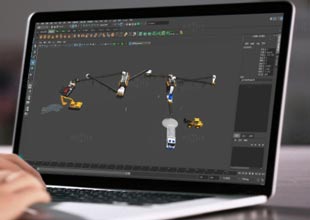
Customized Crushing Solutions
We tailor crusher configurations to your material, capacity, and output requirements. Compared with standard setups, optimized configurations can increase material output by up to 25%, depending on operating conditions.
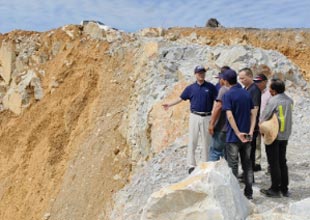
Local Project Site Visits
Visit operating mobile or stationary crushing projects in Indonesia to observe equipment performance, understand working conditions, and evaluate whether the configuration suits your material and production needs.
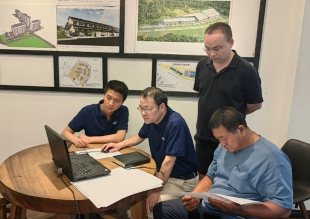
Project Assessment
We assess material properties, target capacity, and plant configuration to identify improvement opportunities. Effective optimization can reduce operating costs by 10–15%, depending on project conditions and the existing setup.
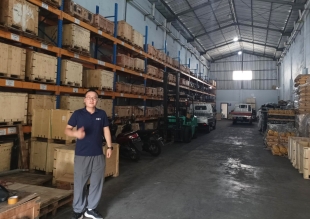
Spare Parts Supply
We support spare parts inquiries for jaw plates, liners, bearings, and other crusher components. Suitable replacement parts help customers plan maintenance, reduce repair delays, and minimize unplanned downtime.
Make Every Ton Count with the Right Jaw Crusher
Looking for reliable crushing performance and lower operating costs? Andamine jaw crushers are designed for efficient crushing, durable operation, and easier maintenance in Indonesian quarries and construction projects. Contact ANDAMINE for a customized jaw crushing solution tailored to your material, capacity, and site requirements.


