Customized Stone Crushing Plant Solution for Quarry, Mining & Construction Projects
Local Stock Available – No Wait, Quick Delivery Across Indonesia
Smart Remote Control – IOT Control System with Real-time Tracking

In Indonesia, a stone crusher plant is used to process large rocks such as andesite, basalt, granite, and limestone into graded aggregates for quarrying, mining, road and infrastructure construction, and construction waste recycling. Depending on the material, required capacity, output size, and site conditions, projects can use **mobile or stationary crushing plants** with jaw, cone, or impact crushers combined with vibrating feeders and screens.
Typical Stone Crusher Plant Parameters
- Capacity Range: 16–1,200+ TPH, depending on configuration
- Processed Materials: Andesite, basalt, granite, limestone, selected ores, and construction waste
- Output Sizes: Commonly 0–5 mm, 5–10 mm, 10–20 mm, 20–40 mm, with customized sizes available
- Plant Types: Mobile and stationary
- Crushers: Jaw crusher, Cone or impact crusher
- Typical Applications: Quarrying, mining, road construction, infrastructure projects, and C&D waste recycling
- Indonesia Adaptation: Configurations for tropical climates, remote sites, abrasive volcanic rock, and wet-season operating conditions
 30% longer wear part lifespan
 1–3 day spare parts delivery
 80% fewer rainy-season blockages
What Materials Can Stone Crushing Plants Process?
Stone crushing plants can process natural rocks, quarry materials, selected mining feed, and recyclable construction waste. Common materials include andesite, basalt, granite, limestone, concrete waste, and other rock-based feed, while the required crushing process depends on material hardness, feed size, and desired output. The following materials represent common applications for stone crushing plants across Indonesian projects
Which Mining and Quarry Materials Can a Stone Crushing Plant Process?
A stone crusher machine plant can reduce selected mining and quarry materials to suitable sizes for further processing or aggregate production. In Indonesia, common materials include gold ore, copper ore, iron ore, and bauxite, with crushing requirements varying by material hardness, feed size, and downstream process.
| Material Pictures | Material | Main Regions | Availability in Indonesia | Crushing Characteristics | Typical Output / Purpose | Main Application |
|---|---|---|---|---|---|---|
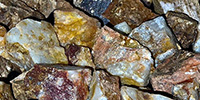 | Gold Ore | Papua, North Sumatra | Major gold-producing mining areas | Hard rock; requires controlled size reduction before grinding | Sized crusher feed for grinding and beneficiation | Gold processing |
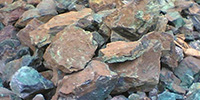 | Copper Ore | Papua, Sulawesi | Major copper mining areas | Medium-hard to hard; may contain sulfide or oxide minerals | Crushed feed for downstream processing | Copper processing |
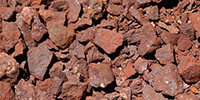 | Iron Ore | Kalimantan, Sulawesi | Mining areas with iron-bearing deposits | Dense and hard; often requires staged crushing | Sized ore for further processing | Iron and steel production |
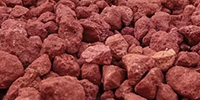 | Bauxite Ore | West Kalimantan, Riau Islands | Major bauxite-producing regions | Softer than many hard rocks but can be clay-rich and sticky | Sized feed for washing and processing | Alumina production |
Which Stones Are Commonly Crushed into Construction Aggregates?
Andesite, basalt, granite, and limestone are widely crushed into construction aggregates in Indonesia. A mesin pemecah batu can combine primary crushing, secondary crushing, and screening to produce specific aggregate sizes for roads, concrete, asphalt, and other infrastructure projects.
| Material Picture | Material | Main Regions | Availability in Indonesia | Crushing Characteristics | Typical Products | Main Applications |
|---|---|---|---|---|---|---|
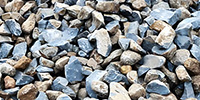 | Andesite | West Java, Central Java, Yogyakarta, Sumatra | Widely available in volcanic areas | Hard and abrasive; suitable for multi-stage crushing | 0–5 mm, 5–10 mm, 10–20 mm aggregates | Asphalt mix, concrete aggregate, road base |
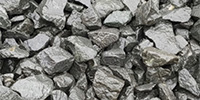 | Basalt | West Sumatra, Bali, East Nusa Tenggara | Found mainly in volcanic regions | Very hard and dense; requires durable crushing equipment | 5–10 mm, 10–20 mm, 20–40 mm aggregates | High-strength pavement, rail ballast, dams |
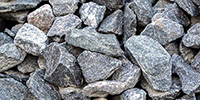 | Granite | Bangka Belitung, Lampung, South Sumatra | Major quarry material in several regions | Extremely hard and abrasive; requires high-duty crushing | 0–5 mm, 5–10 mm, 10–20 mm, 20–40 mm aggregates | Concrete, bridges, heavy-load structures |
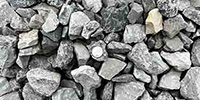 | Limestone | Sumatra, East Java, South Kalimantan | Extensive limestone resources | Soft to medium-hard; generally easier to crush | 0–5 mm, 5–10 mm, 10–20 mm, limestone powder | Aggregate, cement, lime, concrete filler |
Can Stone Crushing Plants Process Recycled Construction Materials?
Yes. Stone crushing plants can process concrete, brick, and asphalt waste into reusable aggregate when the equipment is configured for the feed material. These applications are particularly useful for demolition, road renovation, and urban construction projects where recycled materials are available close to the processing site.
| Material Picture | Material | Main Regions | Availability in Indonesia | Crushing Characteristics | Typical Products | Main Applications |
|---|---|---|---|---|---|---|
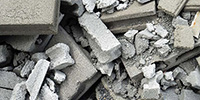 | Concrete Waste | Jakarta, Surabaya, Bandung, Medan | Generated from construction and demolition projects | Irregular feed size, variable strength, and possible embedded rebar | Recycled coarse aggregate, 0–5 mm and 5–20 mm material | Road base, embankments, recycled aggregate |
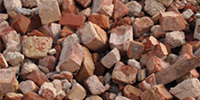 | Brick Waste | Urban demolition areas, especially Java | Increasing with urban redevelopment and demolition | Brittle, porous, and variable in size | Recycled aggregate and fill material | Subbase, landfill cover, non-structural fill |
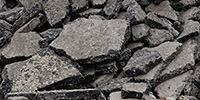 | Asphalt Waste | Road maintenance projects nationwide | Increasing with road rehabilitation and pavement replacement | Bitumen-coated and potentially sticky | Reclaimed asphalt pavement (RAP), recycled aggregate | Road rehabilitation and asphalt recycling |
Which Type of Stone Crushing Plant Do You Need for Indonesia?
Stone crushing plants mainly fall into two categories: mobile and stationary types. Mobile stone crushing plants work best for sites requiring frequent relocation, such as scattered quarries and short‑term road projects, including stand‑alone crushing units and all‑in‑one crushing‑screening units. While stationary types are designed for fixed‑site, long‑term high‑capacity production. Below you can browse the main stone crush plant models for your reference.
Mobile Crusher Plant For Stone Crushing
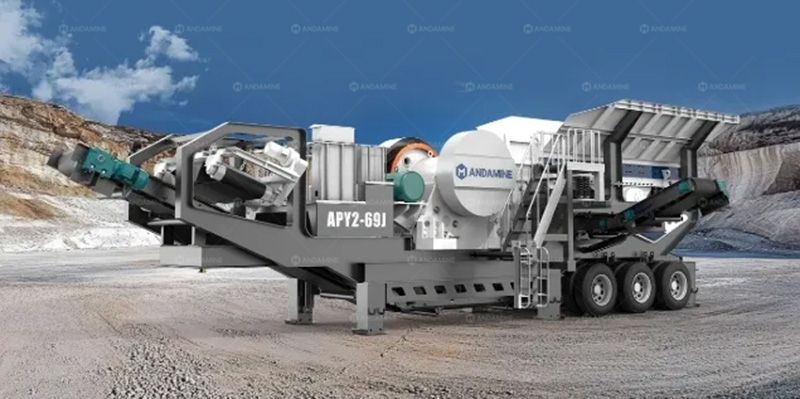
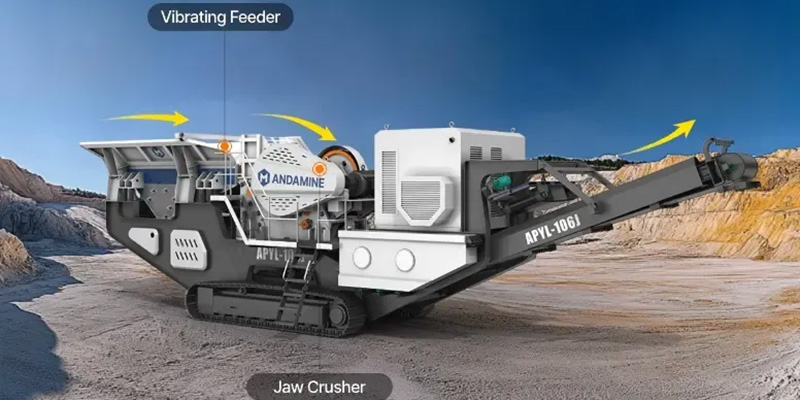
Jaw Type Stone Crusher Plant
- Capacity: 50‑300 T/H
- Max Feeding Size: ≤700 mm
- Discharge Size Range: 3‑250 mm
- Chassis Option: Tire / Crawler available
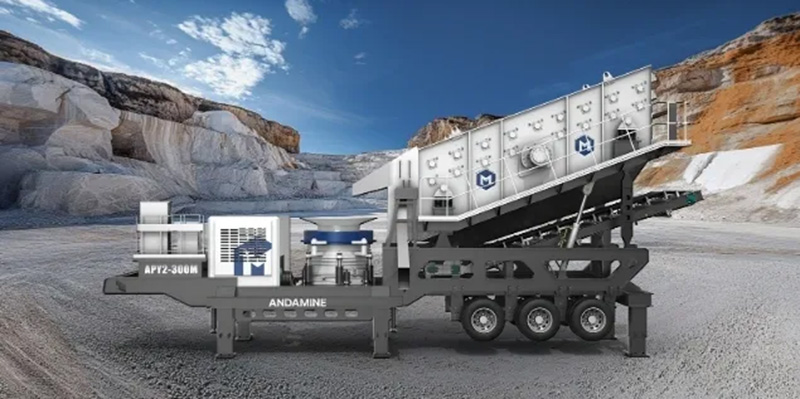
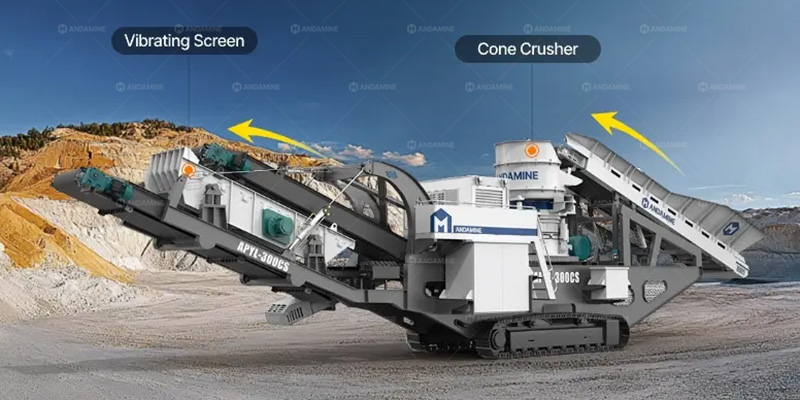
Cone Type Stone Crusher Plant
- Capacity: 50‑300 T/H
- Max Feeding Size: ≤650 mm
- Discharge Size Range: 3‑180 mm
- Chassis Option: Tire / Crawler available
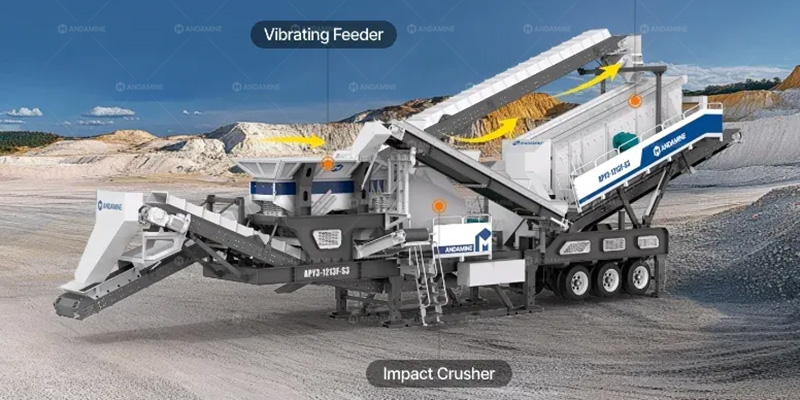
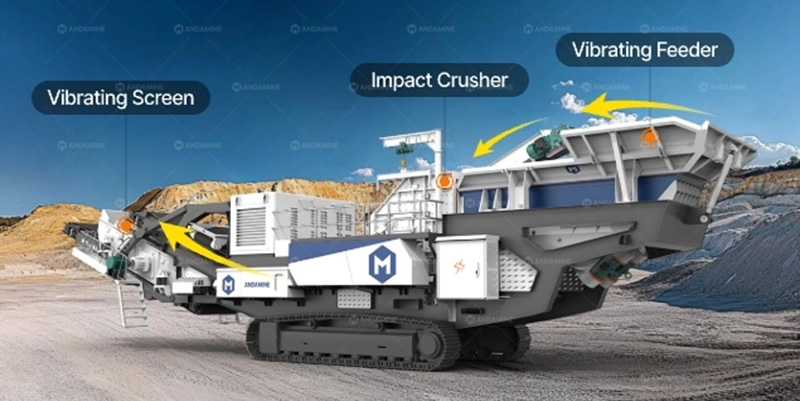
Impact Type Stone Crusher Plant
- Capacity: 50‑500 T/H
- Max Feeding Size: ≤700 mm
- Discharge Size Range: 5‑200 mm
- Chassis Option: Tire / Crawler available
Popular Mobile Stone Crushing Plant Models
These mobile stone crushing plant models are among ANDAMINE’s popular configurations for Indonesian quarry and construction projects. Covering 16–60 TPH and 55–150 TPH, they serve different production needs, from small remote sites to medium-output aggregate projects across Java, Sumatra, Kalimantan, and other Indonesian regions.

APYE4060 Tire-Mounted Small Stone Crusher
- Capacity: 16–60 TPH
- Crushing unit: AJ4060E jaw crusher
- Chassis: Wheel-mounted portable chassis
- Diesel engine: 80 kW
- Max. feed size: 340 mm
- Output size: 40–100 mm adjustable

APY4-57J110C-S3 Tire Stone Crushing Plant
- Capacity: 55–150 TPH
- Total power: 232.9 kW
- Max. feed size: 400 mm
- Configuration: Jaw + Cone 4-in-1 integrated stone crushing plant
- Chassis: 3-axle tire-mounted design
- Jaw crusher outlet size: 50–100 mm
Stationary Stone Crushing Plants For Permanent High‑Capacity Quarry Operations
These stationary crushing plants are built for fixed‑site production at large quarries across Java and Sumatra. They can deliver stable volumes of SNI‑qualified aggregate for local toll‑road, bridge and concrete batching projects, and they perform reliably under Indonesia’s hot‑humid tropical environment.
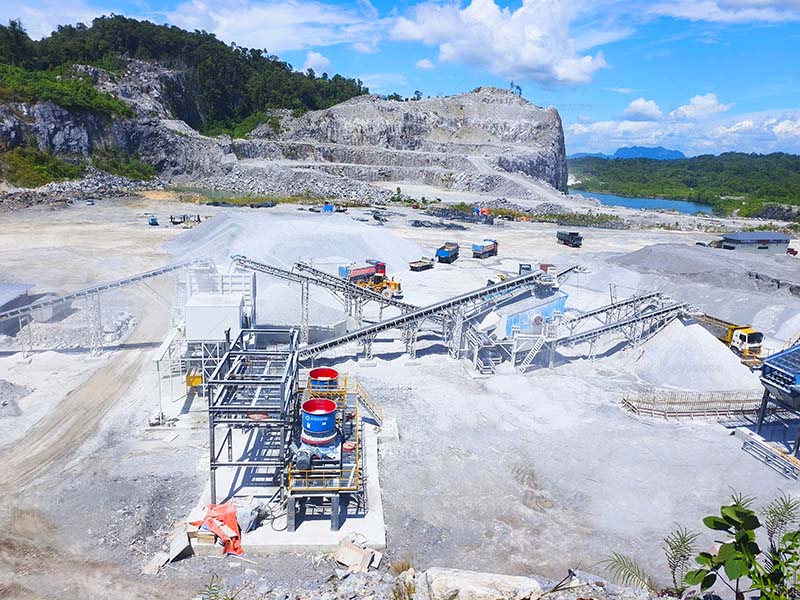
Introduction
- Capacity: 30-1200TPH
- Maximum feeding size: ≤700mm
- Adjustable discharging size: 0-5mm/5-10mm/10-20mm/20-40mm etc and customized output size
- Model Type: Jaw/Cone/Impact/Compound Crusher
- Application: Quarry, Mining Ore, Construction Project
Advantages
- High Output: for toll roads, quarries, and batch plants in Java or Sumatra.
- Built to Last: Handles hard materials like andesite with low maintenance.
- Flexible Output: From fine sand to coarse stones, meeting local project needs.
Related Products
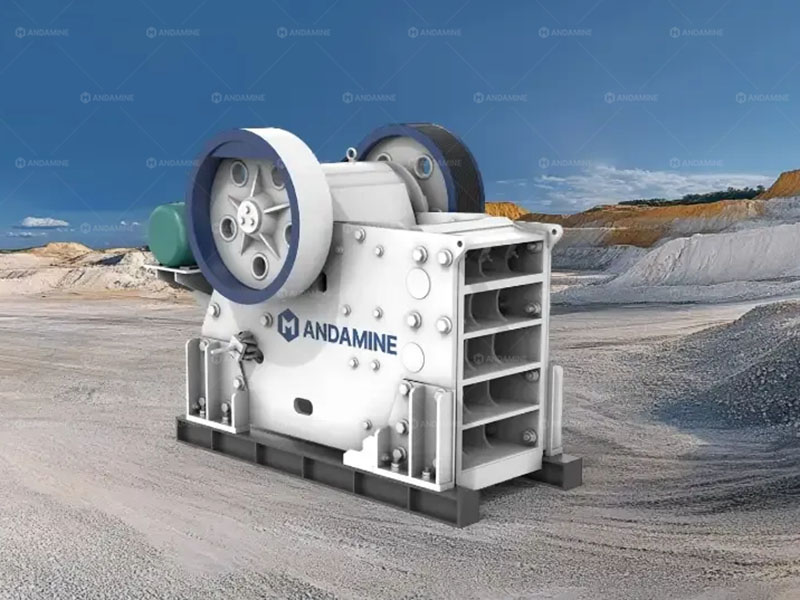
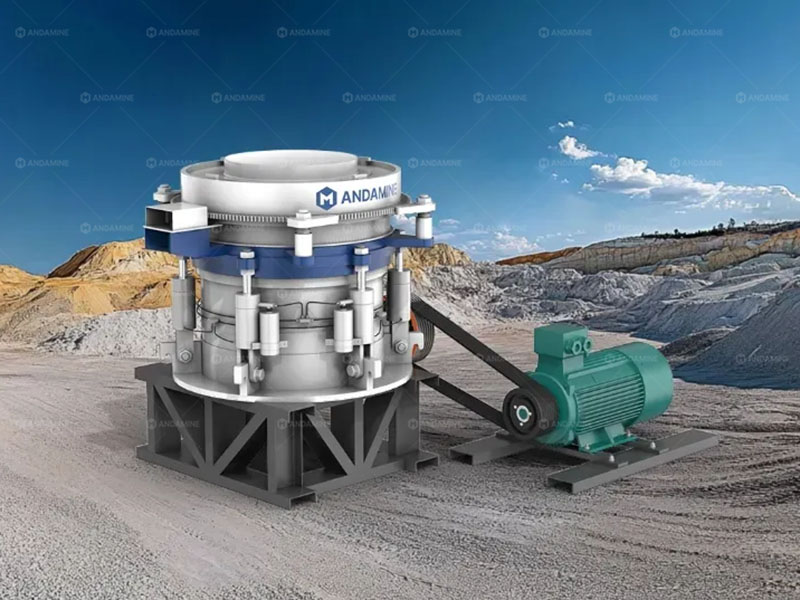
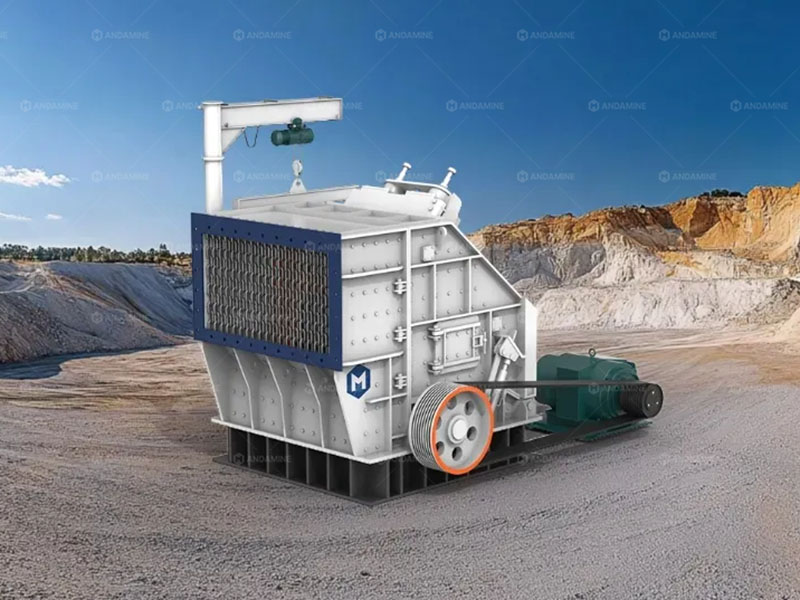
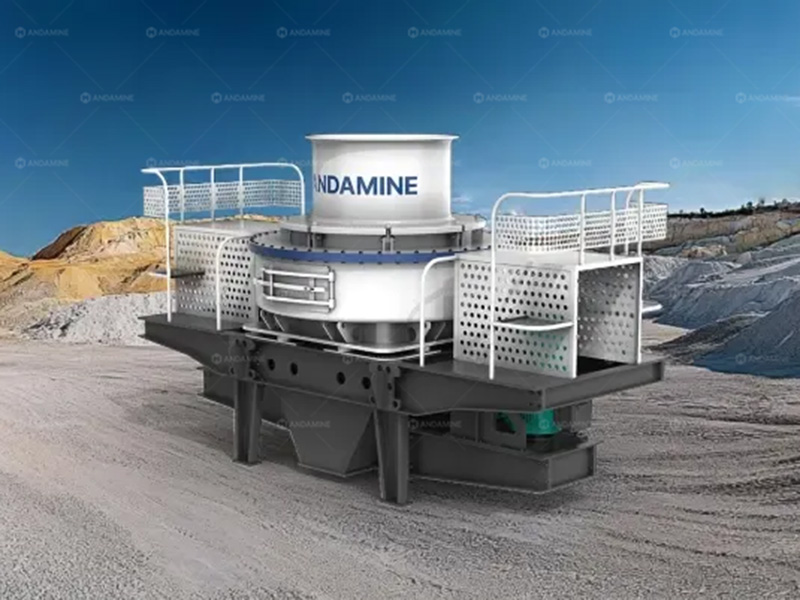
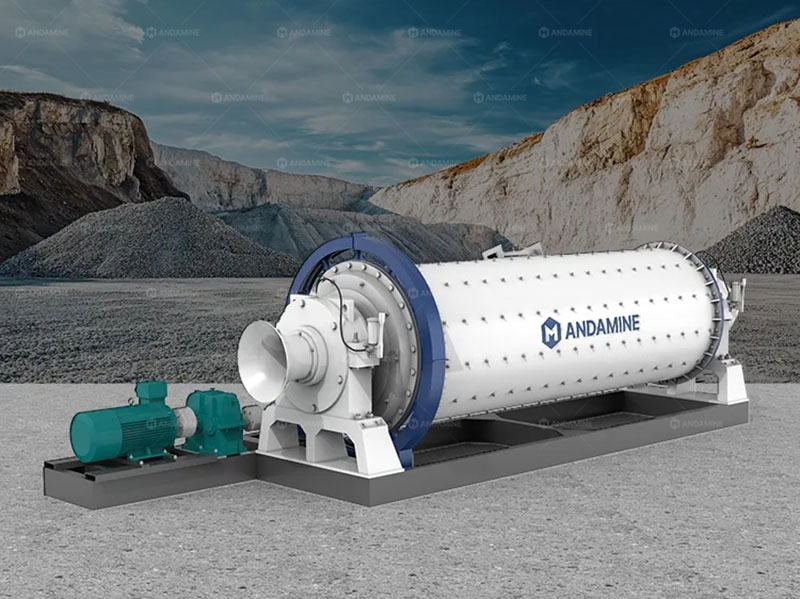
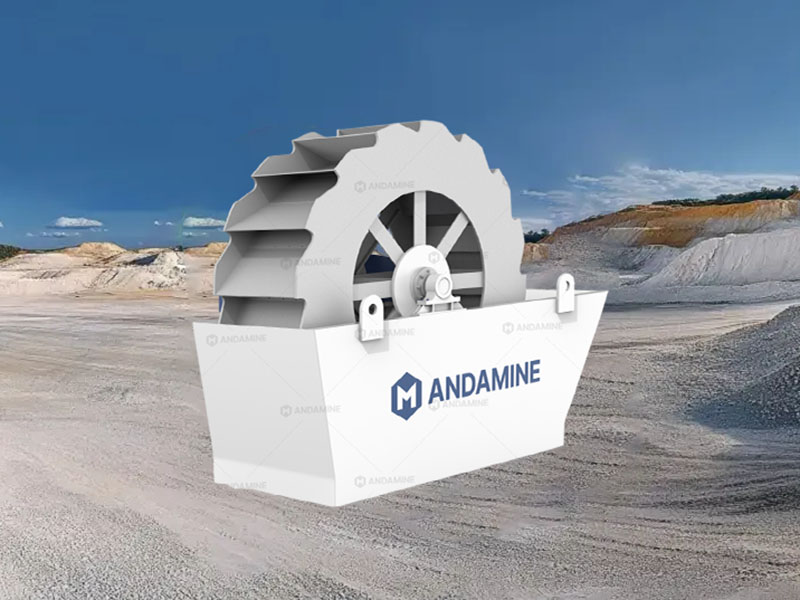
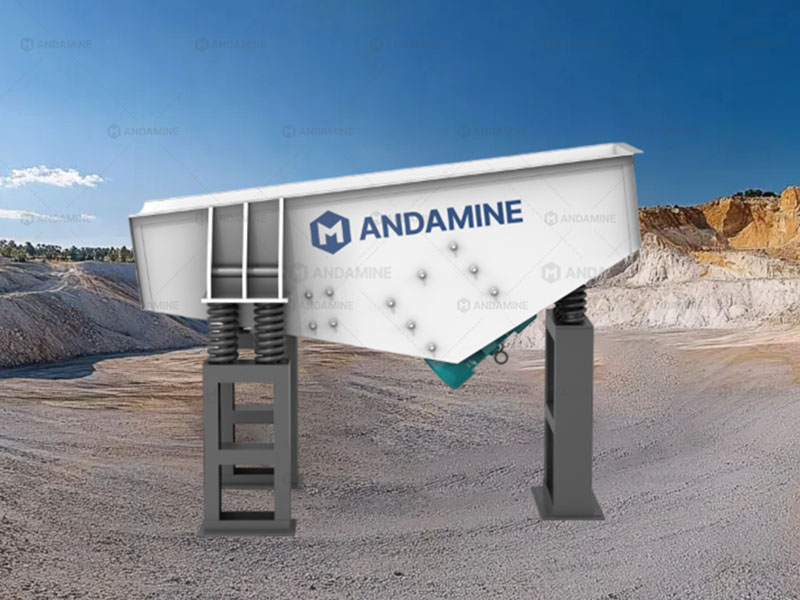
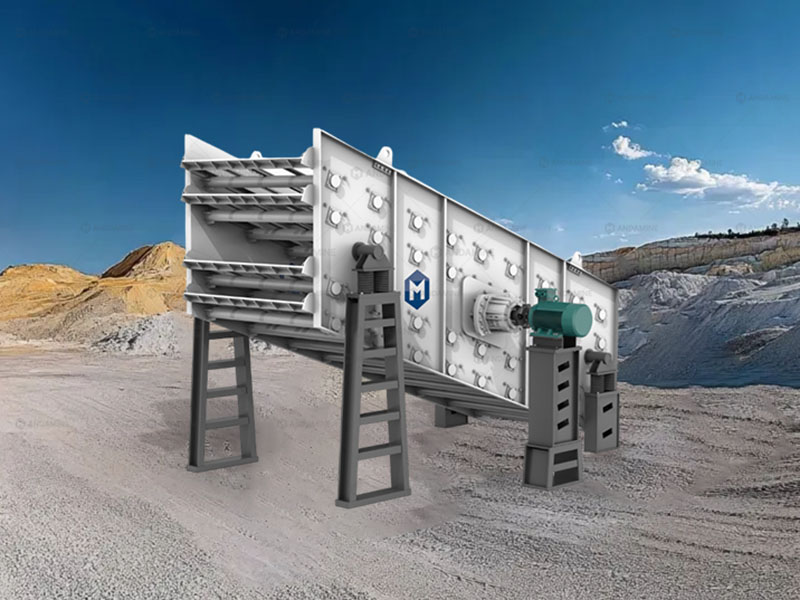
A complete stone crushing plant is assembled from multiple standalone machinery working together to turn large rock into qualified aggregate. These core crusher and auxiliary machines are widely applied for quarry and infrastructure projects across Indonesia, from coarse crushing to fine sand making, material feeding and material screening.
How Is A Stone Crushing Plant Adapted to Indonesia’s Working Condition?
Operating a stone crushing plant in Indonesia requires equipment that can handle tropical climate, abrasive volcanic rock, remote project locations, and local environmental requirements. Based on Indonesian project experience, ANDAMINE provides targeted crusher plant configurations and design improvements to enhance equipment reliability, simplify operation, and support efficient aggregate production in different working conditions.

Survive Tropical Heat & Monsoon Weather — Gain Stable Continuous Production
Tailored for Indonesia’s high‑temperature and rainy‑season harsh working environment, ANDAMINE stone crushing plant for sale brings you stable output:
- High‑temperature resistant engine and hydraulic assemblies handle ambient temperatures up to 45℃ to avoid over‑heating shutdowns.
- Waterproof anti‑rust sealed electrical cabinets resist monsoon rain and coastal humidity to reduce electrical breakdown risks.
- Reinforced dust‑proof sealing slows component corrosion and prolongs equipment service life for open‑air quarry operations.
Stand Up to Abrasive Volcanic Rock — Cut Wear‑Part Operating Costs
Andesite and basalt are widespread harsh‑abrasion raw materials across Indonesian quarry sites. ANDAMINE’s field‑validated upgrades deliver measurable cost‑saving benefits:
- High‑manganese steel and high‑chromium cast iron wear parts specially tested against local volcanic rock.
- Vulnerable parts deliver 30 % longer service life under Indonesia’s tough rock‑crushing working conditions.
- Less frequent part replacement minimizes production interruptions and lowers your total site operating expenditure.
Adapt to Remote‑site Manpower Reality — Lower Local Operation Barriers
Many Indonesian crushing projects operate in remote harsh zones with limited‑skill local operators. ANDAMINE optimizes hardware and documentation for this real‑world working condition:
- One‑touch start‑stop PLC control simplifies workflows and effectively reduces human‑operation errors.
- Complete Bahasa Indonesia operation & maintenance manuals eliminate language barriers for on‑site teams.
- Real‑time remote monitoring supports rapid fault diagnosis for hard‑to‑reach remote mine working zones.
Comply with Strict Local Environmental Rules — Avoid Compliance‑Driven Shutdowns
Indonesia’s rigid AMDAL standards form a critical working‑condition constraint for local stone crushing plant investors. ANDAMINE integrates supporting configurations for this local regulatory hardship:
- Built‑in pulse bag‑house dust removal system controls dust emissions generated during actual site crushing work.
- Optimized noise‑reduction structures suit quarry working sites located close to surrounding residential areas.
- Help your mesin pecah batu pass local environmental assessment without expensive post‑purchase retrofitting modifications.
These are not empty technical specifications. Each adjustment responds to Indonesia’s unique harsh working conditions, allowing ANDAMINE stone crushing plants to generate practical benefits for local quarry and mine operators.
Industry Benchmark Stone Crushing Plant Projects Across Indonesia
Real ANDAMINE stone crushing plant project references below serve typical Indonesian construction and mining scenarios, including quarry aggregate production, highway infrastructure development, remote mineral processing, and urban C&D waste recycling. Each local project displays complete and authentic site data, covering working location, completion time, raw material, feed size, finished aggregate size, official equipment model, actual on‑site difficulties and verified operational benefits. These proven field results fully demonstrate how ANDAMINE stone crushing plants adapt to Indonesia’s unique working conditions and solve real production pain points for local investors.
200TPH Stationary Stone Crushing Plant For Quarry & Aggregate Production
- Location: Tuban, East Java
- Raw Material: Limestone
- Input Size: ≤600mm
- Output Size: 0‑5mm, 5‑10mm, 10‑20mm, 20‑40mm
- Project Background: Large local limestone quarry, supplying nearby cement plants and ready‑mix concrete batching plants.
- Solved Pain Points: Insufficient original capacity, frequent rainy‑season material blockages, non‑compliant dust emissions.
- Equipment & Configuration: Custom stationary stone crushing line (jaw crusher + impact crusher + vibrating screen + full enclosed dust removal system)
- Project Outcomes: Capacity increased by 40%, rainy‑season blockage failures reduced by 80%, fully compliant with AMDAL environmental standards for stable commercial aggregate supply.


Infrastructure & Highway Construction
100TPH Mobile Stone Crushing Plant For Infrastructure & Highway Construction
- Location: West Java
- Raw Material: Granite
- Input Size: ≤570mm
- Output Size: 0‑25mm, 25‑40mm
- Project Background: Scattered provincial highway construction sections requiring flexible mobile aggregate production.
- Solved Pain Points: Fixed plants cannot adapt to frequent relocation; outsourced aggregate caused unstable supply and schedule delays.
- Equipment & Configuration: ANDAMINE APY4‑57110S crawler mobile combined stone crushing plant (jaw + cone integrated crushing & screening)
- Project Outcomes: Fast commissioning after relocation ensures uninterrupted on‑site aggregate supply, successfully supporting on‑schedule highway project completion.
30TPH Mini Mobile Jaw Stone Crushing Plant For Mining & Mineral Processing
- Location: Balikpapan, East Kalimantan
- Raw Material: Marble
- Input Size: ≤340mm
- Output Size: 20‑80mm
- Project Background: Remote small marble mine with poor road conditions and insufficient skilled operators.
- Solved Pain Points: Large‑size equipment inaccessible; complex machines difficult for local workers to maintain.
- Equipment & Configuration: ANDAMINE APYE4060 compact diesel‑driven crawler mobile jaw stone crushing plant
- Project Outcomes: Smooth deployment to rugged mining areas, simple structure lowers operation threshold for local teams and ensures stable daily output.

All ANDAMINE Indonesian stone crushing plant projects are configured with verified material parameters and real local working conditions, not universal standard settings, ensuring high adaptability for tropical climate, local rock features and government compliance rules.
Watch Our Stone Crusher Plant Videos in Indonesia
See our stone crusher plants running on real projects in Indonesia. These videos show the machines feeding, crushing and screening local stone, so you can get a better idea of the mesin stone crusher setup and finished aggregate production before choosing a solution.
What Permits and Compliance Are Required for Stone Crusher Plants?
Stone crusher plant projects in Indonesia require several permits and technical documents before quarry operation and aggregate production. Key requirements usually include environmental approval, mining permit support, aggregate quality standards, and machinery import documentation. Proper preparation helps reduce approval delays and supports smoother project implementation.

Environmental Permit Support for Stone Crusher Plant Operations (AMDAL)
Support includes:
- Dust suppression and emission-control equipment information.
- Noise reduction and plant layout documentation.
- Technical datasheets for environmental assessment submission.
- Configuration suggestions based on site location and environmental conditions.
Mining Permit Technical Support for Stone Crushing Projects (IUP)
Support includes:
- Crusher, feeder, and screening equipment specifications.
- Safety information and protection system documents.
- Mesin penghancur batu layout and equipment placement suggestions.
- Technical references for mining project evaluation.
Aggregate Quality Compliance for Indonesian Construction Standards (SNI)
Support includes:
- Aggregate gradation references.
- Crushing and screening process adjustment.
- Material-based configuration for andesite, basalt, limestone, and other rocks.
- Technical data support for construction projects and tenders.
Import Documentation Support for Stone Crusher Plant Equipment
Support includes:
- Equipment specification sheets
- Commercial invoices and packing lists
- Shipping-related technical documents
- Pre-shipment document checking support
These multi‑dimensional compliance resources are adopted by ANDAMINE, helping formal enterprise clients steer clear of approval‑related risks within local stone‑crushing projects.
How Is Stone Crushing Plant Delivery and Installation Managed Locally?
Delivering a stone crushing plant across Indonesia requires coordination of equipment preparation, customs clearance, island transportation, installation, and operator training. With local project experience, ANDAMINE provides a complete delivery and commissioning process to help customers reduce deployment delays and start aggregate production efficiently.

Requirement Confirmation & Custom Solution
Confirm project requirements, site conditions and budget. Standard‑config proposals and quotations are ready within 24 working hours, while complex projects require extra technical evaluation.
Production & Stock Preparation
In‑stock units from local warehouses can be dispatched within 7 working days; fully custom‑built crushing lines require 30‑45 working days of production lead‑time.
Logistics & Customs Clearance
Customs processing is completed at Jakarta, Surabaya or Batam ports. Cross‑island sea freight connects with inland haulage, with site arrival subject to regional island traffic conditions.
On‑site Installation & Commissioning
Field engineers offer on‑site guidance for stationary stone crusher plant foundation layout, equipment assembly and both no‑load and full‑load machine test‑running.
Local‑language Operator Training
Practical on‑site guidance is delivered in Indonesian, enabling local on‑site staff to master basic daily operation and routine inspection within around 2 working days.
Project Handover
A dedicated after‑sales contact will be assigned immediately after the stone crusher dijual finishes stable commissioning for continuous aggregate production.
This end‑to‑end service flow is practiced by ANDAMINE, helping local project clients mitigate typical risks of cross‑island transportation and complex field deployment across Indonesia.
How Is Stone Crusher Plant Maintenance Supported in Indonesia?
Stone crusher plants in Indonesia require reliable maintenance and after-sales support to maintain continuous production under different island conditions, tropical climates, and demanding quarry environments. ANDAMINE provides technical assistance, spare-parts support, and preventive maintenance guidance to help customers reduce downtime and maintain stable aggregate production.
Multi-Level After-Sales Support for Stone Crusher Plant Operation
Fast technical support helps customers solve daily operation issues and reduce unexpected production interruptions.
- Online Technical Support: 24-hour Indonesian-language consultation via WhatsApp for operation questions, basic troubleshooting, and maintenance guidance.
- Remote Fault Diagnosis: PLC-supported remote checking helps identify common equipment issues and provides faster technical solutions.
- On-Site Engineer Support: Field technical service can be arranged within 48–72 working hours for projects on major islands, depending on location, transportation, and site conditions.


Local Stone Crusher Spare Parts Availability Across Indonesia
Reliable spare-parts supply is essential for quarry, mining, and aggregate projects, especially in remote areas where equipment downtime can affect production schedules.
- Regional Spare Parts Stock: Core wear-resistant crusher components are available through warehouses in Jakarta, Surabaya, and Batam to support common replacement needs.
- Faster Parts Delivery: Stocked spare parts can reach many main-island project sites within 1–3 working days, reducing delays caused by overseas shipping.
- Wear-Part Selection Guidance: Technical recommendations are provided based on material characteristics, rock hardness, and actual operating conditions.
Preventive Maintenance Support for Long-Term Crushing Performance
Regular inspection and proper maintenance help quarry stone crusher plants maintain stable output and extend equipment service life in Indonesia’s tropical environment.
- Periodic Inspection Support: Maintenance plans can be arranged for regular equipment checks and performance evaluation.
- Indonesia-Focused Maintenance Guidance: Operation manuals and maintenance suggestions consider high humidity, rainfall, and local working conditions.
- Equipment Condition Follow-Up: Continuous technical communication helps identify potential issues early and reduce unexpected breakdown risks.

Such complete lifecycle‑oriented support system is practiced by ANDAMINE, solving local clients’ major concerns over slow spare‑part supply and insufficient after‑sales service across Indonesian scattered islands.
What ROI and Payback Can a Stone Crusher Plant Achieve in Indonesia?
Stone crusher plant returns in Indonesia vary with aggregate prices, effective operating hours, production costs, rock hardness, and hauling distance. As a preliminary reference, crushing projects may target a 12–36 month payback period, while net profit per ton can vary widely by project conditions. The figures below use practical market references and a sample Java quarry calculation rather than a guaranteed investment return.

Disclaimer: All prices, costs, profits, and payback periods are for market reference only. Actual results vary with rock type, production days, hauling distance, operating costs, permits, and local selling prices. These figures do not constitute an investment guarantee.
 Indonesia Aggregate Prices and Key Profit Drivers
Aggregate demand from infrastructure, residential construction, and regional development supports crushing opportunities across Indonesia. Selling prices and project margins vary by aggregate type, location, transportation distance, and product quality.
- Crushed aggregate: USD 14–22 / ton
- Manufactured sand: USD 16–24 / ton
- Remote-island markets: Prices can increase where local aggregate supply is limited.
- Main cost drivers: Rock hardness, effective operating hours, wear parts, electricity, labor, and transportation.
 150 TPH Stone Crushing Plant Profitability Example in Java
A 150 TPH andesite stone crushing plant provides a practical example of how production volume, selling price, and operating costs affect project profitability.
- Rated capacity: 150 tons/hour
- Effective operation: 9 hours/day
- Finished-product yield: 85%
- Daily finished output: 150 × 9 × 0.85 = 1,147.5 tons/day
- Aggregate selling price: USD 18 / ton
- Processing cost: USD 2.4 / ton
- Outbound transportation: USD 4.5 / ton
Cost and profit calculation:
- Total cost: 2.4 + 4.5 = USD 6.9 / ton
- Gross profit: 18 − 6.9 = USD 11.1 / ton
- Daily gross profit: 1,147.5 × 11.1 ≈ USD 12,737/day
- Site management and maintenance reserve: USD 1,200/day
- Estimated daily net profit: ≈ USD 11,537/day
- Estimated annual net profit at 280 days: ≈ USD 3.23 million/year
Important: This example assumes sufficient orders, high equipment utilization, and full sales of finished aggregate. Longer hauling distances, lower operating hours, harder rock, or unsold products can materially reduce actual returns.
 Reference Payback Period by Stone Crushing Plant Capacity
Payback varies significantly by plant scale, utilization, market access, and total project investment. The following ranges are reference benchmarks assuming complete permits, stable orders, 260–280 effective production days per year, and strong finished-product sales.
- 30–80 TPH: USD 350,000–650,000 initial investment; reference payback of 12–18 months. Suitable for smaller quarries and regional aggregate supply.
- 100–200 TPH: USD 900,000–1,600,000 initial investment; reference payback of 18–24 months. Suitable for contractors, private quarry operators, and medium-scale aggregate supply.
- 250–400 TPH: USD 2,200,000–3,800,000 initial investment; reference payback of 24–36 months. Typically requires stable long-term supply contracts and high equipment utilization.
 How Can Indonesian Crushing Projects Improve Profitability?
- Reduce hauling distance: Locate the crusher pemecah batu close to the quarry face where practical. Every additional 10 km of haulage can increase transportation costs by approximately USD 1.5–2 per ton.
- Match the mesin crusher batu to the rock: Use suitable wear-resistant components for hard andesite or basalt, while avoiding unnecessary wear-part costs for softer limestone.
- Target higher-value aggregate: Producing aggregates that meet applicable SNI project requirements can open higher-value infrastructure and construction orders.
- Reduce unplanned downtime: Local spare-parts availability and preventive maintenance help protect production hours, particularly during Indonesia’s rainy season.
These figures are intended for preliminary project evaluation rather than guaranteed returns. ANDAMINE can provide a project-specific estimate based on your rock type, island location, target capacity, operating hours, and aggregate selling price.
Stone Crushing Plant FAQs in Indonesia
How Long Do Stone Crusher Wear Parts Last in Indonesia?
- Andesite: High-abrasion rock can require more frequent liner inspection and replacement.
- Basalt: Abrasive basalt may shorten cone mantle service intervals compared with softer limestone.
- High-Manganese Components: Suitable high-manganese wear parts can potentially extend service life by around 12–18% under comparable high-abrasion conditions.
Wear-part service life depends mainly on rock abrasiveness, feed size, moisture, crushing ratio, and operating hours. For typical andesite and basalt applications in Indonesia, manganese jaw plates may provide around 3,000–4,200 working hours, while cone crusher mantles for abrasive basalt may average 2,500–3,200 hours.
How Does a Complete Stone Crusher Plant Work?
A stone crusher plant works by moving raw rock through feeding → primary crushing → secondary crushing → screening → finished aggregate discharge. Oversized material can return to the crusher for further processing, while optional sand-making, washing, and dust-control systems can be added according to project requirements.
- Feeding: Raw stone is stored in the hopper and delivered evenly by a vibrating feeder to prevent overloading and material blockage.
- Primary Crushing: A jaw crusher reduces large rocks into smaller pieces and prepares them for the next crushing stage.
- Secondary Crushing: A cone or impact crusher further reduces the material to the required aggregate size and improves product shape.
- Screening: A vibrating screen separates crushed material by size. Oversized particles return to the crusher through a closed circuit for further crushing.
- Finished Aggregate: Qualified products such as 0–5 mm, 5–10 mm, 10–20 mm, and 20–40 mm can be separated and conveyed to individual stockpiles according to project requirements.
- Optional Processing: A sand-making machine and sand washer can be added for manufactured sand, while dust-control and noise-reduction systems can be configured for stricter environmental requirements.
Mobile vs. stationary: A mobile stone crushing plant integrates some or all of these stages on a movable chassis, while a stationary stone crusher machine uses fixed equipment for long-term quarry production.
How Much Does a Stone Crusher Plant Cost in Indonesia?
For Indonesian projects, a complete stone crusher plant typically costs around USD 500,000–3 million. The final harga stone crusher plant depends on capacity, crusher type, plant configuration, raw material, and site conditions. Transport, installation, and other supporting equipment may also affect the total project cost.
How to Start a Stone Crusher Plant Business in Indonesia
Starting a legal and profitable stone crushing plant in Indonesia involves the following standardized steps:
- Local Market Research: Analyze aggregate demand for widely‑used local materials including andesite, granite and limestone across major industrial islands such as Java, Sumatra and Kalimantan, where large‑scale toll‑road and housing projects keep driving aggregate consumption.
- Complete Business Planning: Prepare a full‑scale budget covering land lease, equipment procurement, labor and operating expenses, and calculate expected ROI considering Indonesia’s high inter‑island material transportation costs.
- Site Selection: Prioritize locations near raw stone quarries and accessible public roads. Remote quarry sites in Kalimantan and Sumatra suffer expensive hauling fees, so proximity to raw sources greatly cuts overall operating costs.
- Apply for Legal Permits: Secure mandatory mining operation and environmental approvals via Indonesia’s OSS single‑window system and local Dinas ESDM offices. Non‑compliance will lead to production shutdowns and heavy fines under local mining and environmental regulations.
- Select Suitable Crushing Equipment: Pick mobile stone crushing plants for scattered, short‑term quarry sites and remote island construction works. Choose stationary stone crushing machines for permanent large‑volume quarries on Java and Sumatra to produce consistent SNI‑qualified aggregate for infrastructure projects.
- Build Operation & Sales Channels: Train local operators for tropical humid‑wet‑season working conditions, and develop stable partnerships with local contractors, concrete batching plants and government‑led infrastructure tender projects to secure steady orders.
Can a Stone Crushing Plant Be Installed on Soft Soil in Indonesia?
- Stationary Plants: Require engineered foundations designed for equipment weight, vibration, and local ground conditions.
- Mobile Plants: Can be deployed on compacted and stabilized ground where site conditions allow.
- Soft Coastal Areas: Ground improvement or stabilization may still be required to prevent settlement and equipment instability during continuous production.
Mobile and stationary stone crushing plants have different foundation requirements. Stationary stone crusher machines normally require reinforced concrete foundations, while track-mounted mobile stone crushers can operate on prepared ground without a permanent concrete slab.
What Is the Difference Between FOB and CIF for Stone Crushing Plant Delivery to Indonesia?
- FOB: The buyer generally arranges ocean freight, insurance, import clearance, port charges, and inland transportation.
- CIF: Ocean freight and insurance to the named port, such as Tanjung Priok or Surabaya, are included under the agreed Incoterm.
- Quarry Delivery: Customs clearance, port handling, unloading, and transportation from the port to the quarry may remain additional costs.
FOB normally covers the equipment up to loading at the agreed export port, while CIF includes ocean freight and insurance to the named Indonesian destination port. Neither quotation should be compared without checking which local charges are included.
Can a VSI Sand Making Machine Be Added to an Existing Stone Crushing Plant?
- Power Capacity: Check the available electrical capacity before adding the VSI unit.
- Material Flow: Existing feeders, conveyors, and screens must handle the additional material circulation.
- Product Adjustment: A VSI can increase the proportion of manufactured sand and improve particle shaping.
- Layout: The existing circuit may require conveyor, screen, and discharge-point modifications to prevent material accumulation or recirculation.
Yes. A VSI sand-making machine can be added to an existing crushing circuit when the machine stone crusher has sufficient power, feeding capacity, conveyor capacity, and screening space.
How Long Does Stone Crushing Plant Operator Training Take in Indonesia?
- Basic Training: Start-up, shutdown, feeding, production monitoring, and daily inspection.
- Maintenance Training: Lubrication, wear-part inspection, cleaning, and routine adjustment.
- Advanced Training: Fault diagnosis, liner replacement, blockage handling, and crushing-circuit optimization.
- Before Production: Operators should understand emergency shutdown and blockage procedures before full-load production begins.
Basic stone crushing plant operation and daily inspection training normally takes around 3–5 working days with supplier guidance. More advanced troubleshooting, liner replacement, and full-circuit adjustment usually require 7–10 days.
What Are the Main Challenges of Moving Stone Crushing Equipment Between Indonesian Islands?
- Port Capacity: Confirm crane capacity and unloading conditions before shipment.
- Road Restrictions: Check bridge capacity, road width, turning radius, and low-bed trailer weight limits.
- Remote Islands: Projects in areas such as Maluku and Nusa Tenggara require additional transportation planning.
- Pre-Shipment Check: Confirm port, road, and site access conditions before finalizing equipment packing and delivery arrangements.
Inter-island transportation of stone crushing equipment mainly involves vessel capacity, port handling, road access, and oversized-load restrictions. Large components may need to be split-packed or transported separately before reaching remote quarry sites.
How Often Should a Stone Crushing Plant Be Lubricated in Indonesia?
- Crusher Bearings: Under the specified operating conditions, some applications may require greasing approximately every 120 working hours.
- Hydraulic Oil: A typical reference interval can be around 2,000 working hours or twice per year, subject to the equipment manufacturer’s requirements.
- Daily Checks: Inspect oil levels, grease condition, leaks, abnormal temperature, and contamination before operation.
- Rainy Season: Pay additional attention to water contamination and sealing when equipment operates in high-rainfall areas.
Lubrication intervals should follow the crusher manufacturer’s specifications and actual operating conditions. In Indonesia’s hot, humid, and dusty quarry environments, more frequent inspection is important because contaminated or insufficient lubricant can accelerate bearing and component wear.
What Should Be Checked Daily on a Stone Crushing Plant?
- Feeding & Conveyors: Check belt alignment, tension, material blockage, and abnormal wear.
- Crusher: Check unusual vibration, noise, temperature, liner condition, and discharge size.
- Lubrication: Confirm oil and grease levels and inspect for leaks or contamination.
- Electrical System: Check control panels, cables, sensors, and emergency-stop functions, especially after heavy rain.
- Safety Devices: Inspect guards, emergency stops, warning systems, and access areas before starting production.
A daily inspection should focus on the feeding system, crusher, conveyor, lubrication system, electrical controls, and safety devices. A short pre-start inspection can identify problems before they cause production downtime.
How Can You Reduce Stone Crushing Plant Downtime in Indonesia?
- Keep Critical Spares: Stock commonly replaced jaw plates, cone liners, belts, bearings, and other key wear parts.
- Use Local Spare Parts: Regional inventory in Jakarta, Surabaya, and Batam can shorten replacement lead times.
- Train Operators: Basic troubleshooting and emergency shutdown skills help teams respond faster to common faults.
- Follow Preventive Maintenance: Regular inspections help detect wear and lubrication problems before they cause major production losses.
The most effective way to reduce downtime is to combine preventive maintenance, local spare-parts availability, operator training, and regular equipment inspection. This is particularly important for remote Indonesian quarry sites where replacement logistics can take longer.
Plan the Right Stone Crushing Plant for Your Indonesia Project
Every project has different requirements for rock type, production capacity, finished aggregate size, and site conditions. Share your project location and production needs with ANDAMINE, and our team can help develop a suitable stone crushing plant configuration for your Indonesia project, including the crushing process, equipment selection, and site layout.


