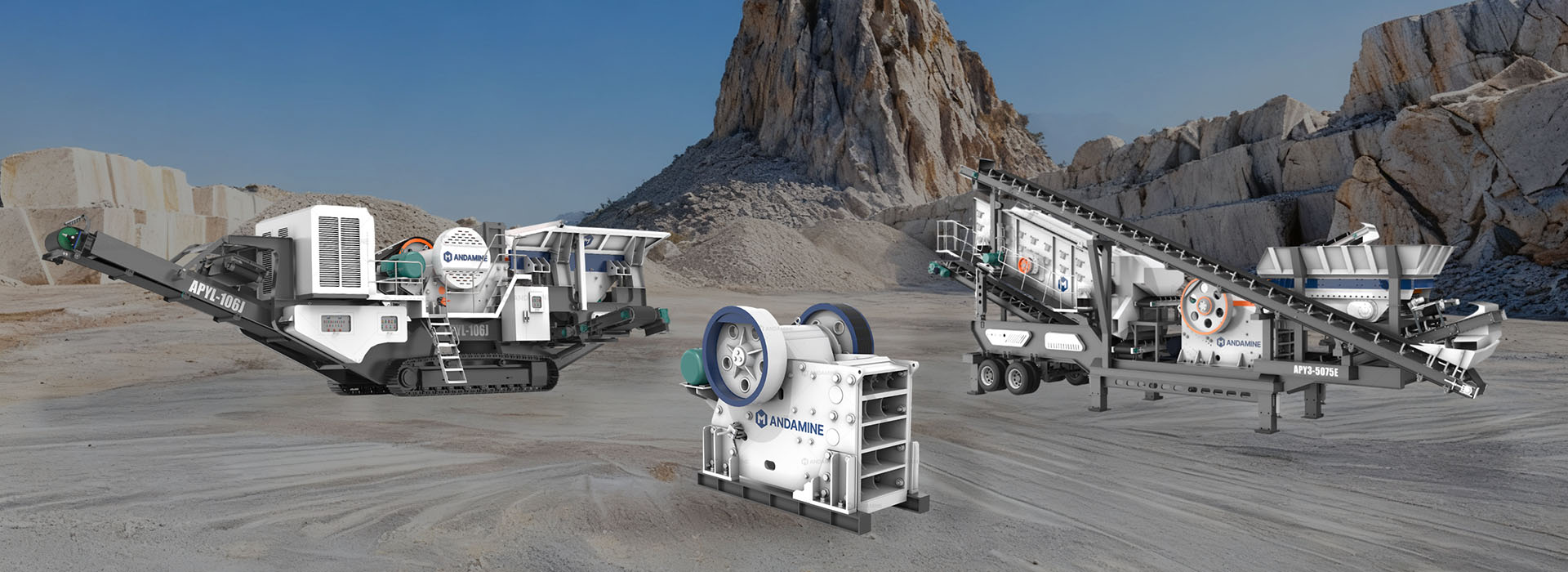
A jaw crusher is a primary crushing machine used to break hard rocks such as andesite, granite, limestone, cobblestone, and marble into smaller aggregates for mining, quarrying, and infrastructure projects. In Indonesia, jaw crushers are widely applied across Java, Sumatra, and Kalimantan to support road construction, industrial development, and mining operations. The following sections explain jaw crusher types, working principles, model selection, and pricing factors to help you choose the right crushing solution.
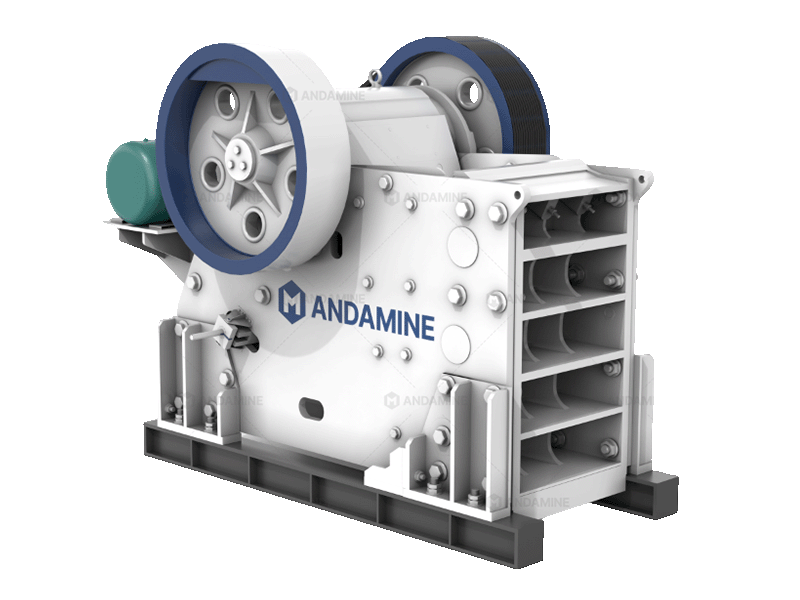
- Types: APJ-E, APJ-V, APV-X Series
- Price Range: $6,000-$235,800
- Feeding Size: ≤1000mm
- Finished Product: 15-300mm
- Crushing materials: Andesite, quartz, granite, basalt, limestone, river stone, sandstone, shale, iron ore, copper ore, gold ore etc.
What Are the Different Types of Jaw Crushers?
Jaw crushers come in three main types, each designed for specific crushing needs and material sizes: ordinary (APJ-E), European (APJ-V), and fine crush (APJ-X). In Indonesia, these types are widely applied in quarries, mining sites, and infrastructure projects to handle hard rocks and varying production requirements. Understanding the differences between each type helps operators select the most suitable jaw crusher 3d model for efficient and stable crushing.
APJ-E Series – High Crushing Ratio | Consistent Product Size | Secure and Reliable Lubrication System
The APJ-E Series, Andamine’s ordinary jaw crushers for sale, is designed for standard crushing of medium-hard materials. Built for simplicity and reliability, it delivers consistent performance across quarries, mining sites, and infrastructure projects in Indonesia. Here are the key benefits that make the APJ-E Series the go-to choice for many Indonesian projects:
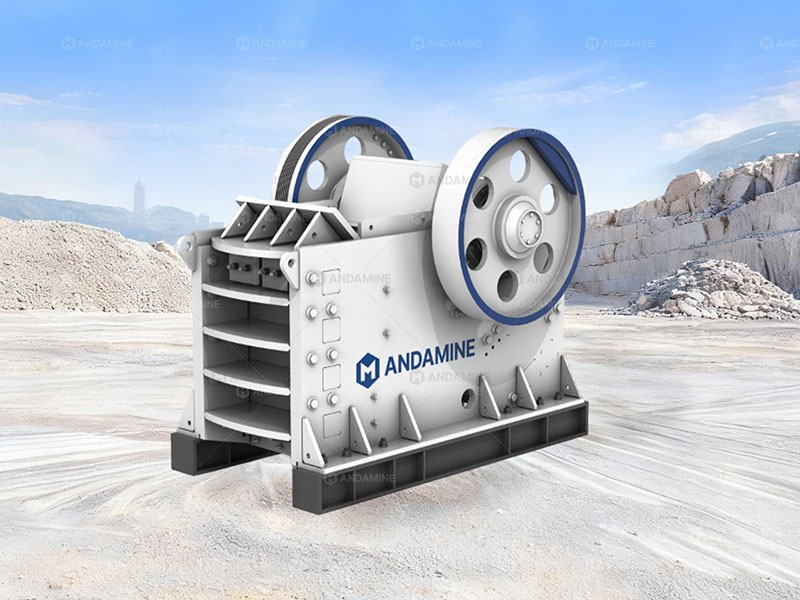
Product Characteristic
- Capacity: 20-800t/h, Customizable
- Max Feeding Size: 130mm-1000mm; According to Model
- Motor Power: 5.5-220 kw; According to Model
- Large output size: usually 100-350mm
Key Features of APJ-E Jaw Crusher
- Low Investment: Suitable for small quarries under IDR 150–250M/project.
- Simple Operation: Minimal training, reduces labor errors by ~15%.
- Material Flexibility: Works with granite, mixed aggregates ≥95% success.
- Fast Setup: Operational within 1–2 days, perfect for short-term projects.
European Type – APJ-V Series – Wedge Hydraulic Adjustment for Easy and Reliable Discharge Port Adjustment
APJ-V Series jaw crusher combines European design with robust engineering for high efficiency and reliable performance. In Indonesia, it is widely used in large quarries, mining sites, and infrastructure projects to process hard rocks like granite, andesite, and limestone. Here’s why the APJ-V Series stands out for Indonesian clients seeking top-tier crushing solutions:
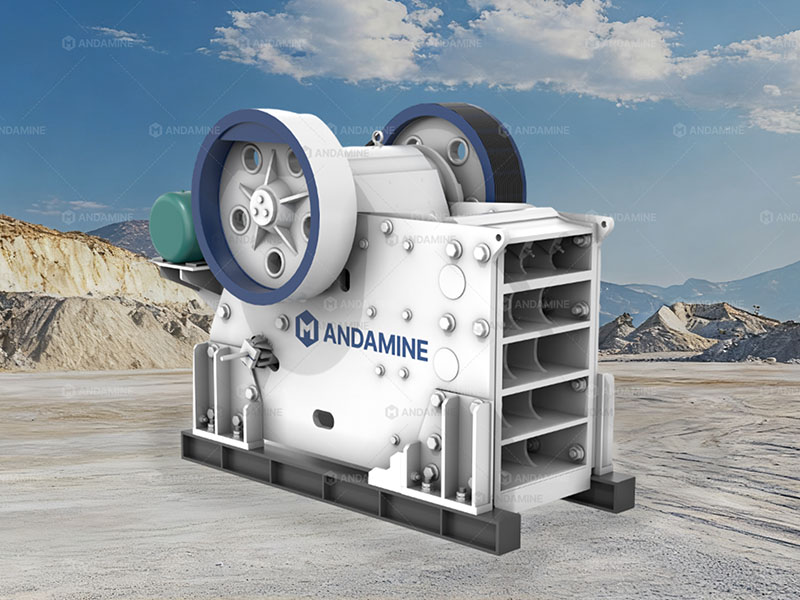
Big Jaw Crusher Characteristic
- Capacity: 65-800t/h, Customizable
- Max Feeding Size: 420mm-1000mm; According to Model
- Motor Power: 75-250 kw; According to Model
- V-shaped crushing chamber: for bigger materials, high-speed crushing.
Key Features of APJ-V Jaw Crusher
- High Throughput: Cuts crushing cycles by 15–20% for large-scale projects.
- Robust Design: Continuous load ≥10,000 hours/year with minimal repairs.
- Precise Output: Uniform particle size (±5%) for roads and highways.
- Maintenance Friendly: Quick access reduces downtime by 10–15%.
Fine Crush Type – APJ-X Series – Simple structure | Reliable operation | Low operating costs | Low noise | Minimal dust
The APJ-X Series jaw crushing machine is designed for fine crushing, producing uniform, smaller particles for specialized construction and infrastructure projects in Indonesia. With high efficiency and reliable performance, it meets precise aggregate requirements while naturally leading you to explore the features of each model below.
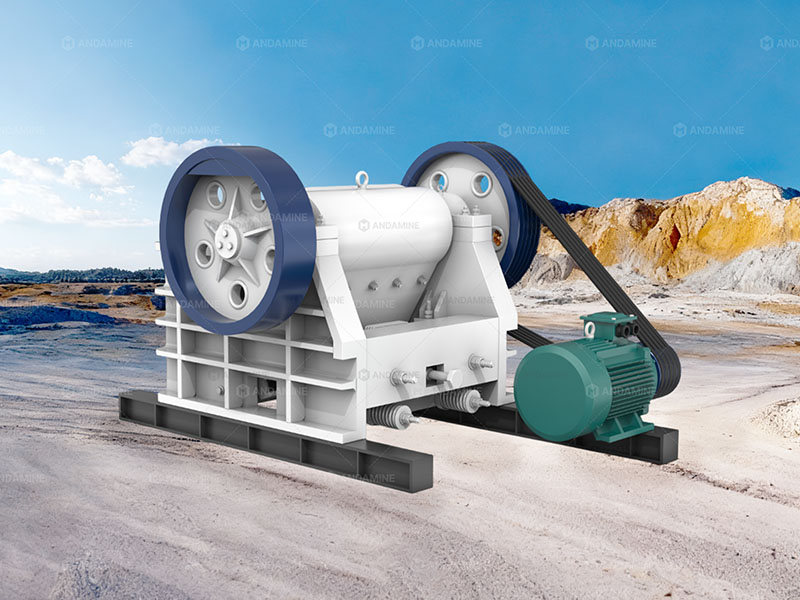
Product Characteristic
- Capacity: 8-95t/h, Customizable
- Max Feeding Size: 120mm-250mm; According to Model
- Motor Power: 15-75 kw; According to Model
Key Features of APJ-X Fine Jaw Crusher
- Fine Crushing: Produces small, uniform particles (±5%) for industrial use.
- Material Handling: Efficiently crushes hard rocks like andesite ≥95% success.
- Quality Assurance: Reduces rework by 10%, meets precise industrial standards.
- Operational Reliability: Long-lasting under intensive use (≥9,000 h/year).
Understanding the different jaw crusher types is only the first step. For projects across Indonesia — from small quarry operations to large-scale infrastructure works — the real decision depends on technical specifications such as jaw crusher feed size, discharge range, and machine dimensions. Let’s take a closer look at specifications to find the right one.
Which Jaw Crusher Specifications Are Right for Your Project in Indonesia?
Choosing the right mesin jaw crusher specifications directly affects your project cost, output quality, and operational stability. In Indonesia, material hardness, feed size, and project scale vary widely — from small local quarries to large infrastructure works. Below, you can compare the key spesifikasi jaw crushers of our APJ-E, APJ-V, and APJ-X series to find the model that best matches your project requirements.
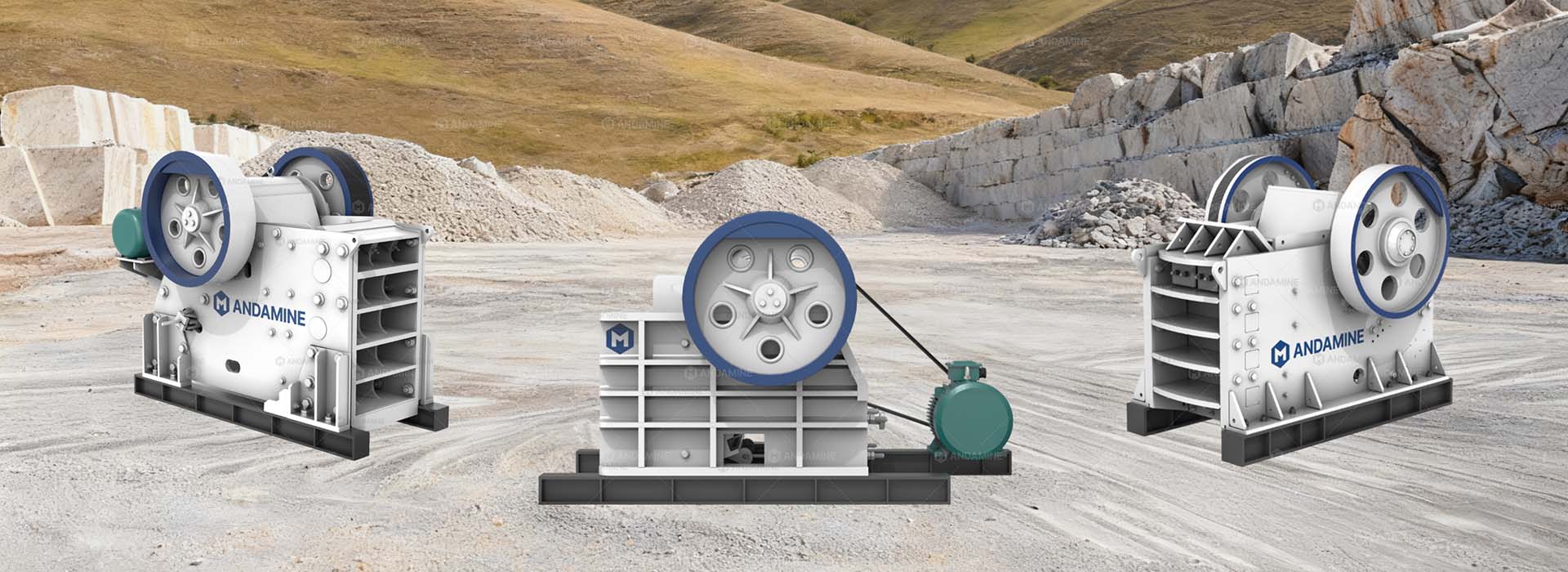
APJ-E Series Specification
| Model | Inlet Size(mm) | Max Feeding Size(mm) | Outlet Size(mm) | Capacity(t/h) | Power(kw) | Overallsize(L×W×H(mm) | Weight(t) |
|---|---|---|---|---|---|---|---|
| APJ-2540E | 250×400 | 210 | 20-80 | 5-20 | 15 | 1450×1315×1296 | 2.8 |
| APJ-4060E | 400×600 | 340 | 40-100 | 16-60 | 30 | 1565×1732×1588 | 6.7 |
| APJ-5075E | 500×750 | 425 | 50-100 | 40-110 | 55 | 1890×1916×1870 | 11.7 |
| APJ-6090E | 600×900 | 500 | 65-180 | 80-180 | 55-75 | 2305×1840×2298 | 16 |
| APJ-7510E | 750×1060 | 630 | 80-180 | 110-320 | 90-110 | 2450×2472×2840 | 28 |
| APJ-8010E | 800×1060 | 680 | 100-200 | 140-340 | 90-110 | 2610×2556×2800 | 30 |
| APJ-8710E | 870×1060 | 720 | 170-270 | 180-360 | 90-110 | 3335×3182×3025 | 31.5 |
| APJ-9012E | 900×1200 | 750 | 95-225 | 220-450 | 110-132 | 3435×3182×3025 | 49 |
| APJ-1012E | 1000×1200 | 850 | 125-280 | 280-550 | 110-132 | 3435×3182×3025 | 52 |
| APJ-1215E | 1200×1500 | 1000 | 150-300 | 400-800 | 160-220 | 4200×3732×3843 | 101 |
APJ-V Series Specification
| Model | Inlet Size(mm) | Max Feeding Size(mm) | Outlet Size(mm) | Capacity(t/h) | Power(kw) | Overallsize(L×W×H)(mm) | Weight(t) |
|---|---|---|---|---|---|---|---|
| APJ-80V | 510×800 | 420 | 40-175 | 65-220 | 75 | 2500×1750×1950 | 7.5 |
| APJ-96V | 580×980 | 460 | 60-175 | 120-325 | 90 | 2880×1755×1460 | 11.4 |
| APJ-100V | 760×1000 | 640 | 70-200 | 150-350 | 90 | 3100×1980×2490 | 20 |
| APJ-106V | 700×1060 | 600 | 70-200 | 150-400 | 110 | 3450×1900×2490 | 13.5 |
| APJ-110V | 850×1100 | 720 | 70-200 | 190-450 | 160 | 3750×2280×2880 | 25 |
| APJ-125V | 950×1250 | 800 | 100-250 | 290-500 | 160 | 4870×2850×3570 | 36.7 |
| APJ-140V | 1070×1400 | 900 | 125-250 | 350-550 | 200 | 5100×3050×3790 | 45.3 |
| APJ-160V | 1200×1600 | 1000 | 150-275 | 500-800 | 250 | 5500×3250×3990 | 68.6 |
APJ-X Series Specification
| Model | Feed opening (mm) | Max feeding size(mm) | Output size(mm) | Capacity(t/h) | Power(kw) | Overal dimension(mm) | Weight(t) |
|---|---|---|---|---|---|---|---|
| APJ-1575X | 150×750 | 120 | 18-48 | 8-25 | 15 | 1380×1658×1025 | 3.5 |
| APJ-2575X | 250×750 | 210 | 25-60 | 13-35 | 30 | 1545×1667×1330 | 5 |
| APJ-2510X | 250×1000 | 210 | 25-60 | 16-52 | 30-37 | 1530×1992×1380 | 6.5 |
| APJ-2512X | 250×1200 | 210 | 25-60 | 20-61 | 37-45 | 1900×2192×1430 | 8.8 |
| APJ-3013X | 300×1300 | 250 | 20-90 | 25-95 | 55-75 | 1750×2320×1724 | 12.6 |
| *Note: Technical parameters are subject to change without prior notice. | |||||||
Not sure which jaw crusher specifications suit your Indonesian project best? Whether you’re dealing with small quarries, island roads, or remote mining sites, understanding the right specs is the first step to choosing the perfect mobile crushing solution. Let’s explore how these mobile crusher plants can optimize efficiency, flexibility, and cost for your project.
Jaw Crusher Solutions for Mobile Crushing in Indonesia
Looking for the best jaw crusher solution for mobile crushing in Indonesia? Whether for island quarries, remote mining sites, or local infrastructure projects, Andamine’s single, 2-in-1, 3-in-1, and 4-in-1 mobile crusher plants provide reliable crushing, flexible particle sizes, and cost-efficient operation. Learn how each type of these crusher plants can optimize your project performance and adapt to challenging local conditions.
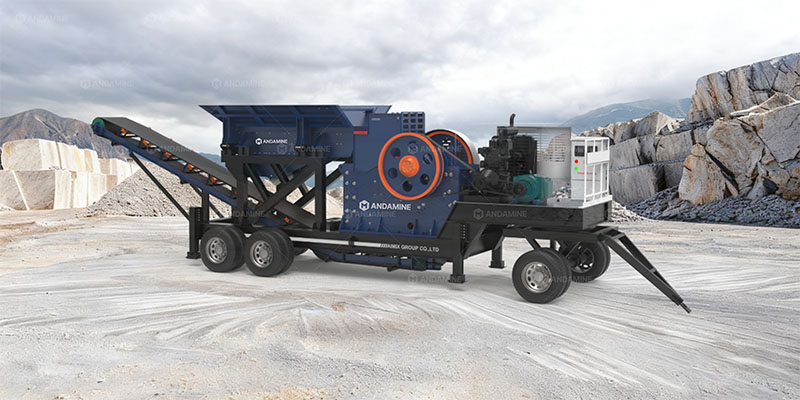
Wheel-type Small Mobile Jaw Crusher
Advantages: Affordable solution | Diesel-powered for remote locations | Compatible with various stones | Easy transport and setup
Get A Quote
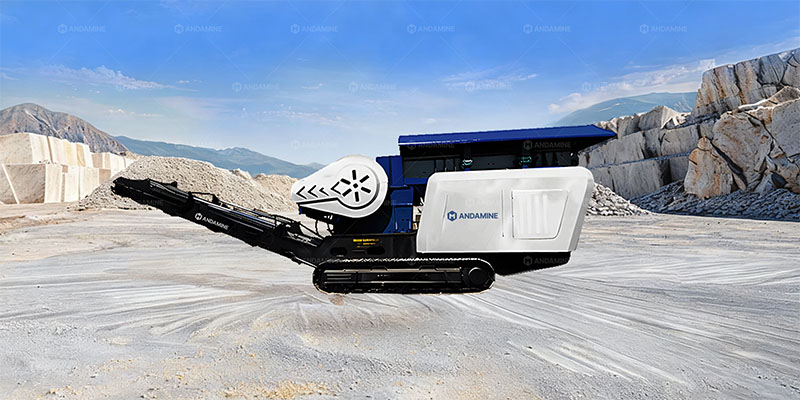
Crawler Small Jaw Crusher
Advantages: Fuel-efficient mobility | Track chassis for tough terrain | Compatible with various materials | Ideal for remote areas
Get A Quote

Jaw Crusher in 2-in-1 Mobile Crusher Plant
Advantages: 20% faster project completion; 30% lower relocation time between sites; 15% reduced fuel consumption; 10–15% less downtime;
Get A Quote

2-in-1 Crawler Jaw Crusher Mobile
Advantages: 30% lower cross-site transport costs; No foundation needed, saves 40% civil work; Reliable operation in rainy, muddy quarry conditions;
Get A Quote

3-in-1 Mobile Jaw Crusher
Advantages: All-in-one boosts efficiency 20%; Compact for island transport, saves 30% relocation; Quick setup 1–2 days; IoT monitoring cuts maintenance 10–15%.
Get A Quote

4-in-1 Mobile Crusher Plant
Advantages: Modular swaps ≤45 min; Skid & tri-axle support improves stability +15% uptime; IoT monitoring cuts maintenance 15%; Integrated process reduces operational cost ~30%.
Get A Quote
Now that you’ve seen how different mobile jaw crusher solutions can boost productivity and adapt to Indonesian sites, the next question is: how much will the right jaw crusher cost for your project? Understanding the harga jaw crusher helps you plan investment, select the right model, and maximize ROI.
What is the Jaw Crusher Price in Indonesia?
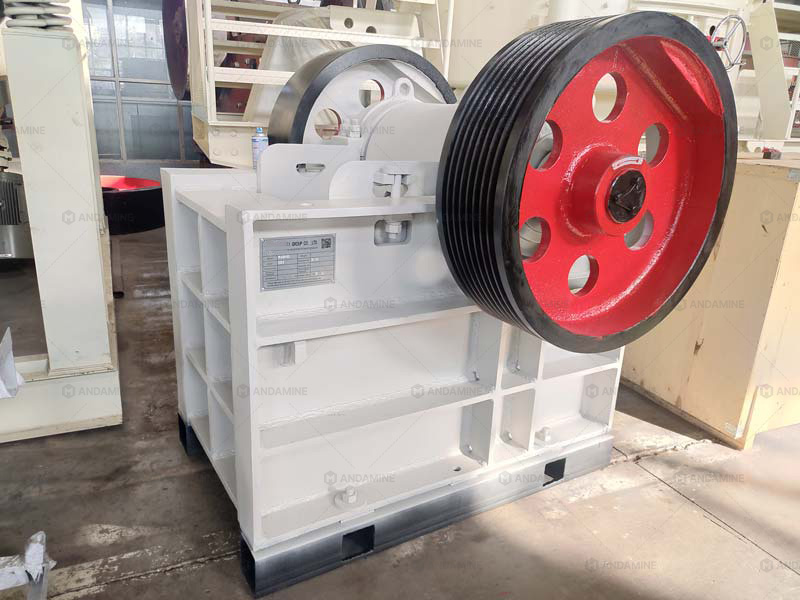
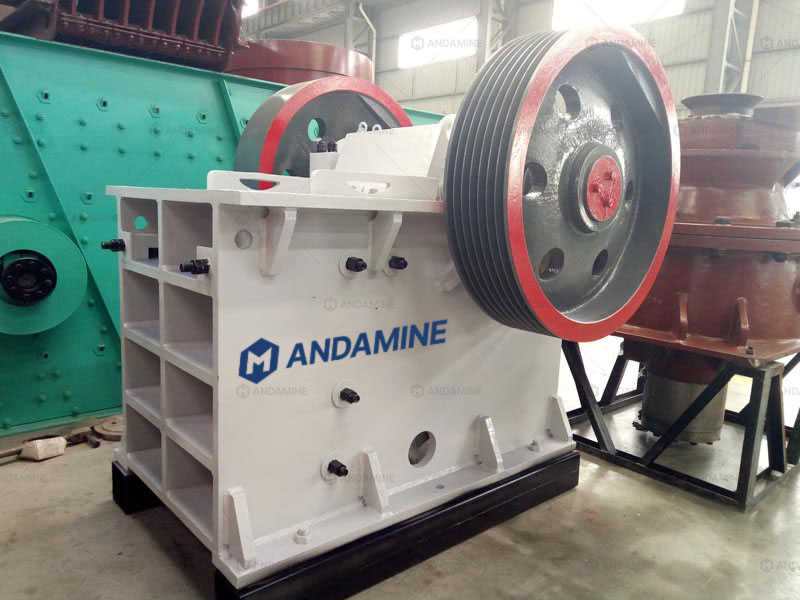
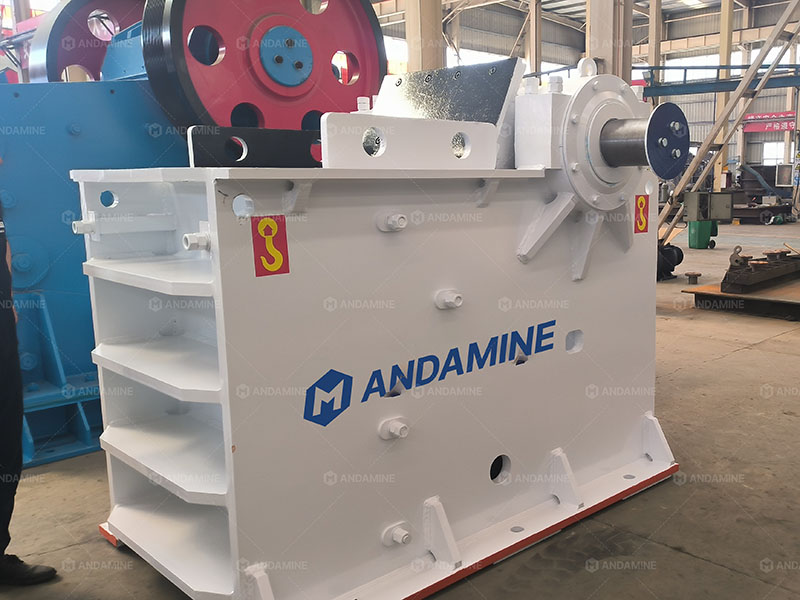
How much is jaw crusher? Jaw crusher prices in Indonesia typically range from $6,000 to $235,800, depending on model, capacity, and features. Small units suit compact quarries and short-term projects, while high-end types are ideal for large-scale mining or infrastructure. Additional factors such as IoT monitoring, modular design, and transport to remote islands may affect pricing. Contact us to get a customized quote tailored to your project needs and optimize your ROI.
What Are the Factors Affecting Jaw Crusher Price
Why Jaw Crusher Price Differs for Indonesian Projects
Now that you know mesin jaw crusher prices in Indonesia, see how these machines perform in real projects—from remote quarries to busy urban roads—helping local teams improve jaw crusher efficiency, quality, and project outcomes.
From Quarries to Urban Roads: Jaw Crushers in Action in Indonesia
Curious how our jaw crushers perform in real Indonesian projects? From remote island quarries to large-scale infrastructure sites, our solutions have helped clients achieve stable crushing, flexible particle sizes, and reduced operational costs. Explore these projects to see the results and understand which jaw crusher setup could be perfect for your own site.
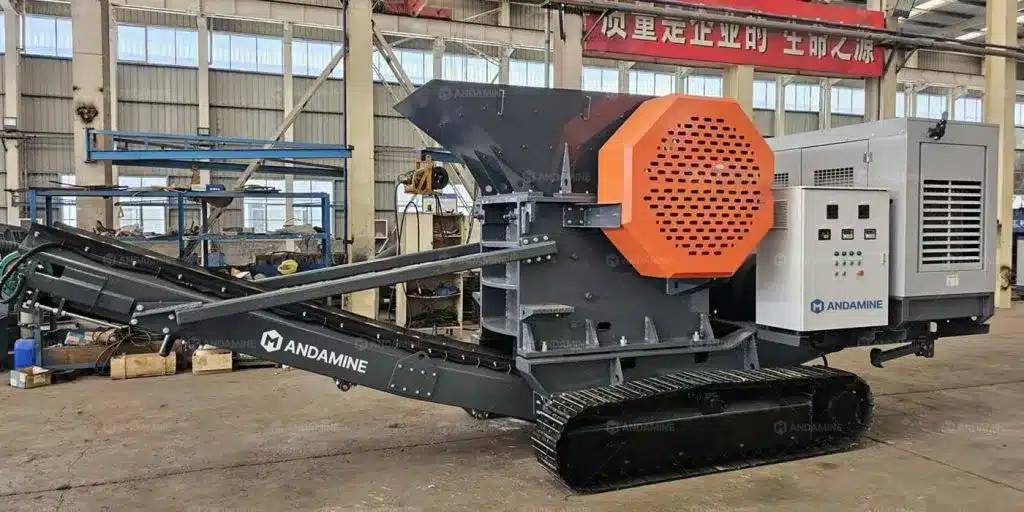
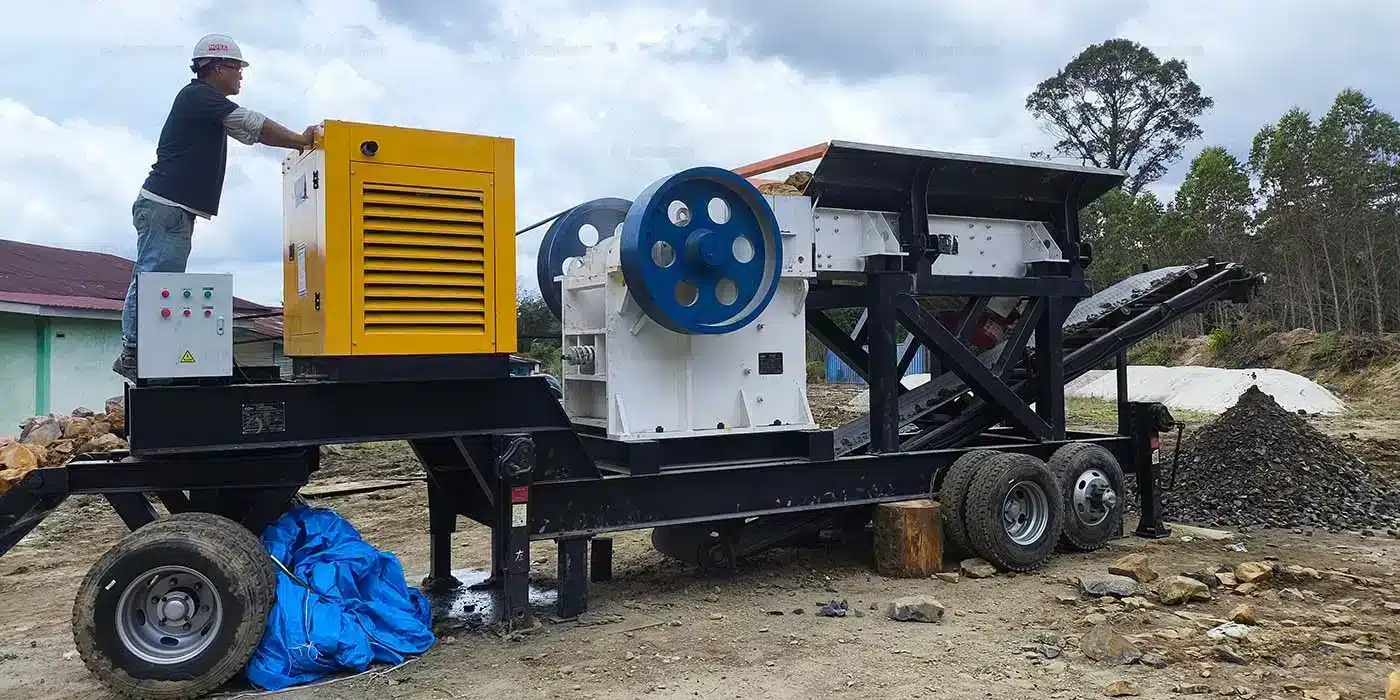
30TPH Crawler Jaw Crusher in Kalimantan
- Model: APE-4060
- Output Size: ≤70mm
- Feeding size: ≤320mm
- Application: Producing Road base material
- Main Parts: Jaw Crusher, Belt Conveyor, Track + Motor Reducer, PLC Control Box, etc.
- Customer Feedback: “We’ve been using the 30TPH crawler jaw crusher for a month now. It’s really reliable, handles the stones here without trouble, and our crew picked it up quickly.”
30TPH Wheel Mobile Jaw Crusher in Medan
- Model: APE-4060
- Output Size: 20-100mm
- Feeding size: ≤340mm
- Application: Rural Road Building
- Main Parts: Belt Conveyor, Jaw Crusher, Mobile Chassis + Vibrating Feeder.
- Customer Feedback: “The 30TPH wheel mobile jaw crusher in Medan gives us consistent stone size for our rural roads. The material quality is excellent, and it really helps improve the road base strength.”
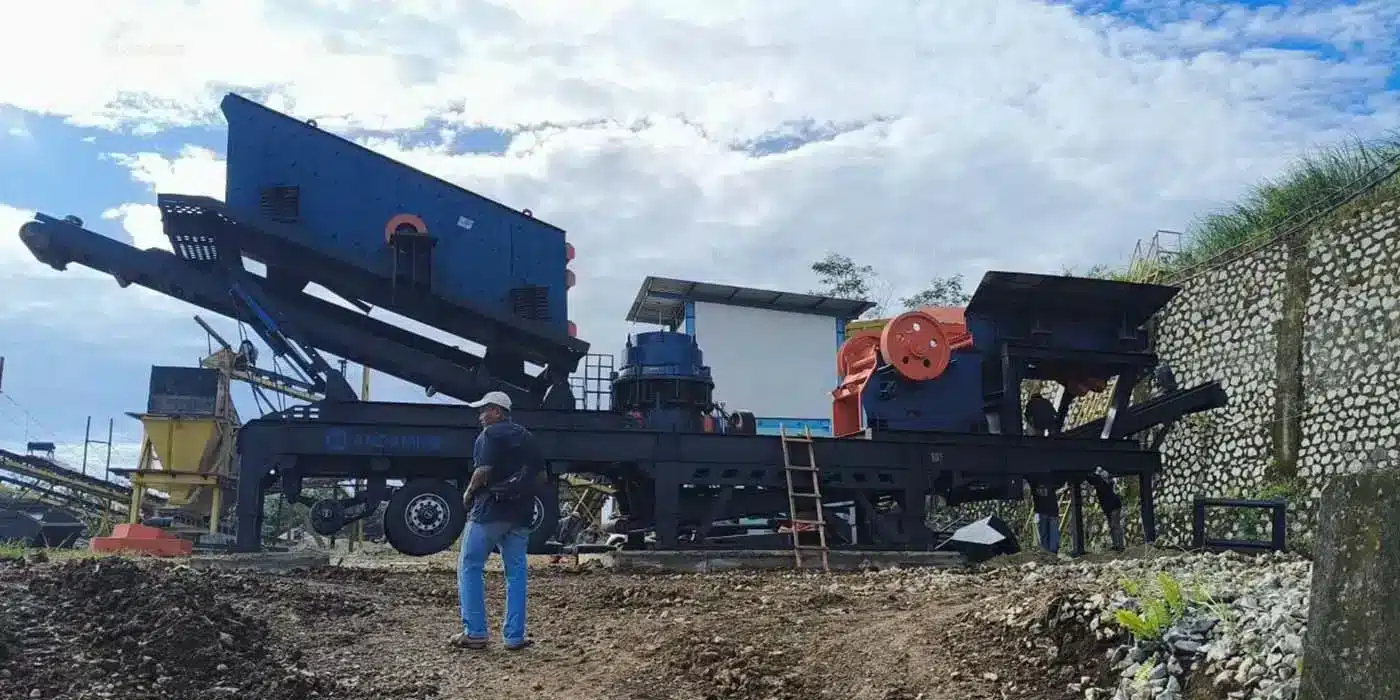
100TPH Mobile Crusher Plant in West Java
- Model: APY4-57J110C-S3
- Output Size: 5-10-20-40mm
- Feeding size: ≤630mm
- Application: Produce Construction Aggregates
- Main Parts: Cone Crusher and Screener, Jaw Crusher, Vibrating Feeder, PLC Control Box, etc.
- Customer Feedback: “I use the 100TPH mobile jaw and cone crusher in West Java every day. It gives me consistent material, saves costs, and the smart control system is really easy to handle.”
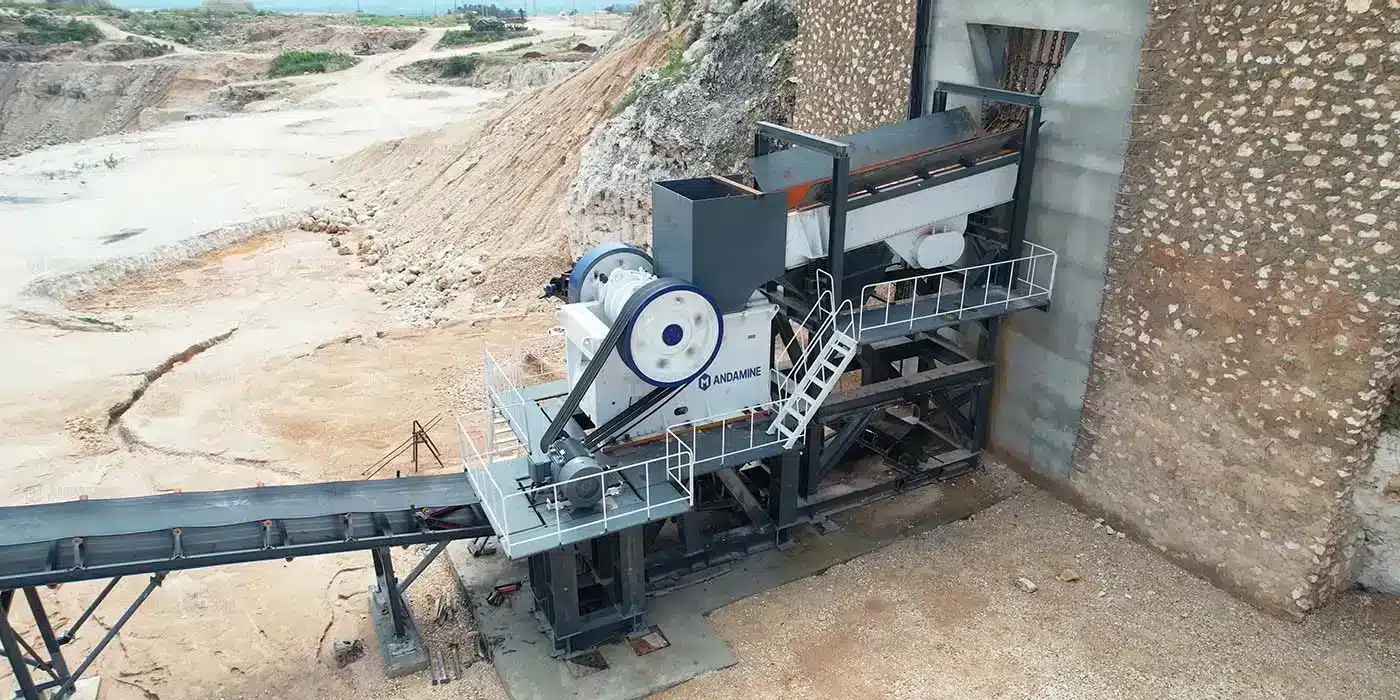
200TPH Stationary Limestone Jaw Crushing Plant in Tuban
- Model: APJ-E. APJ-X
- Output Size: 0-5-20mm
- Feeding size: ≤500mm
- Application: Produce Fine Aggregates in Paper Industry
- Main Parts: Jaw Crusher Machine + Feeder + Vibrating Screen + Conveyor Belt.
- Customer Feedback: The 200TPH limestone jaw crushing plant in Tuban delivers consistent aggregates for our paper production and is very easy to monitor daily.”
Seeing jaw crusher machines in action across Indonesia shows their real impact on projects. Next, learn the key points to consider before buying one, so you can choose the right machine for your quarry, construction, or mining needs.
Key Points to Consider Before Buying a Jaw Crusher in Indonesia
Before choosing a jaw crusher from jaw crusher manufacturers in Indonesia, it’s important to consider several factors to ensure you pick the right aw crusher Indonesia for your project. Andamine, as one of outstanding jaw crusher suppliers, provides some practical advice to help you make the best decision.
Determine the Stone Size You Need
First, figure out the granularity of the material you want. Different jaw crusher models have different inlet, feeding, and outlet sizes. Knowing your target stone size helps you select the right model that meets your production needs.
Consider Your Daily Production Capacity
Your required daily output affects which jaw crusher machine model or configuration you need. For example, if you plan to produce sand for local construction, a jaw-type mobile crushing plant may be more suitable to achieve the desired particle size efficiently.
Match the Crusher to Your Project Type
Different projects require different machines. Whether you are starting a quarry, a mining operation, or a construction waste processing facility, each will need specific jaw crusher models. Sharing your project plan helps Andamine design a customized crushing solution for your needs.
Decide on the Configuration
Jaw crusher machines can be used in many industries. Depending on your project, you may need a single jaw crusher or a complete jaw crusher plant with vibrating screens, secondary crushers, and storage silos. Choosing the right configuration ensures efficiency and cost-effectiveness.
Clarify Your Final Budget
Knowing your budget helps us recommend the most suitable model at the best price. Whether you’re looking for a single jaw crusher or a mobile jaw crusher plant, Andamine can provide options that fit your budget and production goals.
Choosing the right machine is only the first step. To truly maximize your investment in Indonesia, it’s important to understand where a jaw crusher delivers the most impact. Let’s take a closer look at its key applications across different industries.
What are the Applications of Jaw Crushers?
What industries use jaw crushers? The jaw crusher application field is usually in the mining industry, chemical industry, cement, construction, refractory materials, ceramics, and other industrial sectors for primary crushing and fine crushing of various ores and rocks. Here are the primary jaw crusher applications and industries that utilize jaw crushers:


Mining
In Indonesian mines, jaw crushers help break large rocks and ores into manageable sizes, making it easier to transport and process raw materials efficiently.

Construction
Jaw crushers are used to crush concrete, bricks, and demolition waste in construction projects, supporting recycling and reducing material costs for local builders.

Quarrying
In quarries across Indonesia, crusher jaws process stones and minerals to produce sand and gravel, essential for roads, bridges, and other infrastructure projects.

Recycling
Jaw crushers are key in recycling operations, crushing concrete, asphalt, and other debris to reduce waste and promote sustainable construction practices.

Aggregate Production
They play a critical role in producing aggregates for road paving, railway ballast, and other civil works, helping Indonesian meet infrastructure demand efficiently.

Chemical Industry
In chemical plants, jaw crushers prepare raw materials for further processing, supporting industries that require consistent particle size and reliable material handling.
Seeing jaw crushers in action across Indonesian projects shows their true value. Now it’s time to find out which model fits your needs and delivers the best results for your site.
How to Choose the Best Jaw Crusher for Your Application in Indonesia?
Not sure whether to prioritize price, capacity, or durability for your Indonesian project? Many buyers focus only on jaw crusher specifications, but in reality, the right choice depends on your project scale, future expansion plan, and local operating conditions. To make your decision easier, we’ve summarized the common situations Indonesian contractors face — and the most suitable APJ solution for each one below.
| Indonesian Project Pain Point | Typical Local Scenario | Recommended Series | Why This Model Fits |
|---|---|---|---|
| 💰 Limited startup budget | Small limestone quarry in Sumatra or local rural contractor | APJ-E Series | Lower investment cost, simple structure, stable for soft–medium stone; ideal for 50–160 T/H projects |
| 📈 Need to increase production without huge cost jump | Expanding aggregate plant in Java supplying road projects | APJ-V Series | Higher efficiency and stronger frame; supports 100–300 T/H with better output consistency |
| 🪨 Hard rock crushing problem | Granite or basalt in Kalimantan mining areas | APJ-X Series | Strong crushing force and heavy-duty design; handles high hardness materials with stable performance |
| 🚚 Frequent relocation between islands | Contractors working across Sulawesi or island projects | Mobile version (APJ + mobile crushing plant) | Reduces transport & installation time; faster site setup compared to stationary lines |
| ⏳ Downtime affecting profit | Large infrastructure supply contracts with strict deadlines | APJ-V or APJ-X | More stable operation and higher durability, reducing unexpected shutdown risks |
| 📊 Want long-term ROI, not just low price | Government or large private infrastructure investors | APJ-X Series | Higher productivity and longer service life, improving long-term return on investment |
🔎 Simple Decision Logic for Indonesian Buyers
- Small budget + soft stone → APJ-E Jaw Crusher.
- Growing capacity + stable supply → APJ-V Jaw Crusher.
- Hard rock + high output demand → APJ-X Jaw Crusher.
- Island mobility required → Add mobile configuration.
Not sure which jual jaw crusher suits your project? We offer free customized solutions to perfectly match your material, capacity, and budget.
📩 Contact us now for a professional recommendation.

Choosing the right jaw crusher is just the first step in maximizing your project’s efficiency in Indonesia. To understand how this fits into the bigger picture, let’s explore the global jaw crushers market in 2026—trends, growth opportunities, and insights that can help you make smarter investment decisions.
Global Jaw Crushers Market Insights and Outlook in 2026
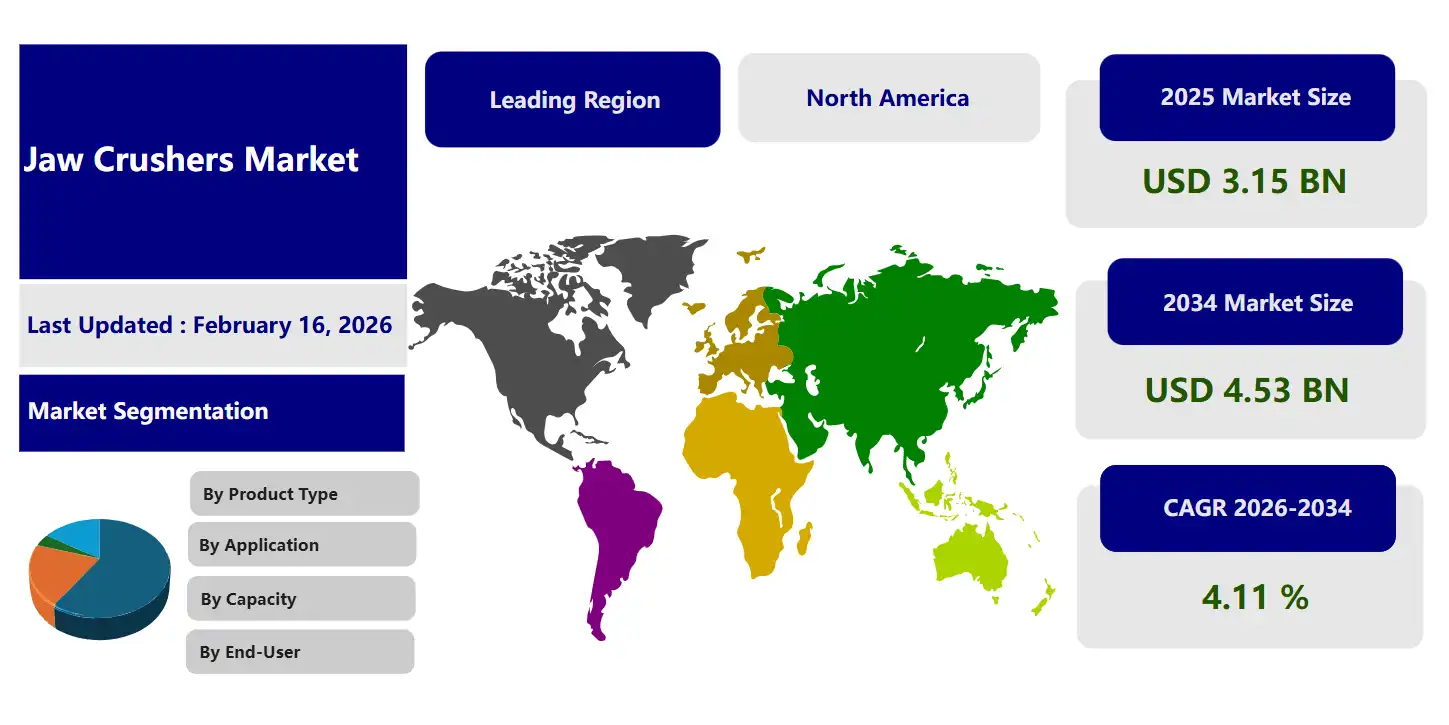
How fast is the jaw crusher market growing—and what’s driving that growth? With the global market valued at USD 3.15 billion in 2025 and projected to reach USD 4.53 billion by 2034 (CAGR 4.11%), jaw crusher demand continues to rise across mining, construction, and recycling industries. As infrastructure expansion accelerates in regions like Indonesia, jaw crushers remain a critical solution for efficient primary crushing. In the sections below, we break down the key drivers, opportunities, trends, and regional insights shaping this market.
Key Market Drivers
Rising Construction Activities
Global urbanization is accelerating, with the UN projecting 68% of the population will live in cities by 2050. Expanding infrastructure—roads, bridges, and buildings—continues to increase demand for aggregates, directly supporting jaw crusher growth.
Expansion of Mining Operations
Growing demand for minerals and metals is driving mining investment. Jual jaw crushers are essential for primary crushing of hard rocks and ores, and with mining output projected to grow around 3% annually, equipment demand remains stable.
Technological Advancements
Automation, wear-resistant materials, and energy-efficient designs are improving productivity while reducing operating costs. IoT-based monitoring further enhances performance control and maintenance efficiency.
Focus on Recycling & Sustainability
Higher recycling rates of construction and demolition waste are creating new opportunities. Jaw crushers support sustainable processing by efficiently crushing recycled concrete and asphalt materials.(Source: View Market Search)
Market Opportunities
Emerging Markets
Rapid industrialization in Asia-Pacific, Latin America, and Africa creates demand for medium- and large-scale jaw crushers.
Renewable Energy Projects
Solar and wind infrastructure construction requires efficient aggregate production, benefiting jaw crusher adoption.
Government Infrastructure Funding
Initiatives for local roads, bridges, and mining in developing countries boost jaw crusher equipment demand.
Current Trends
Market Segmentation
| Category | Largest Segment | Fastest-Growing Segment | Notes |
|---|---|---|---|
| Product Type | Single Toggle Jaw Crusher | Double Toggle Jaw Crusher | Single toggle is simple and versatile; double toggle provides higher throughput for hard materials |
| Application | Mining | Recycling | Mining dominates due to high demand; recycling grows with sustainability focus |
| Capacity | 100–300 TPH | Above 300 TPH | Medium-scale crushers are widely used; high-capacity crushers see rising demand in large projects |
| End-User | Mining | Aggregate | Mining is essential for raw materials; aggregate production grows with construction boom |
Understanding the global market trends is important, but knowing the key components of a jaw crusher is what lets you optimize performance on your site in Indonesia. Let’s break down the parts and their functions to see how each contributes to efficient crushing.
What Are the Jaw Crusher Parts And Their Functions?
Want to know what is a jaw crusher made of? What are the parts of a jaw crusher? To ensure it works efficiently, it’s important to understand the main parts of the jaw crusher and their functions. This knowledge helps in maintaining the machine and improving its performance. In this guide, we will go over the key jaw crusher components and explain fungsi jaw crusher.
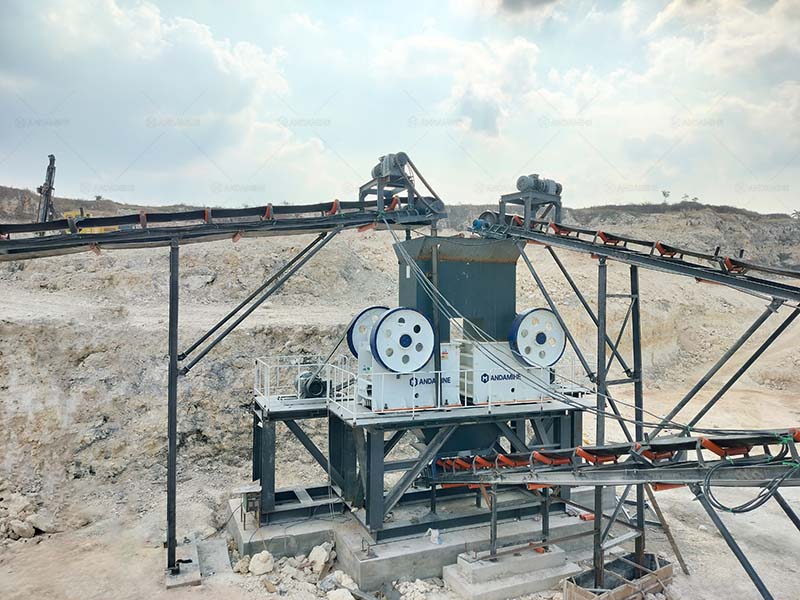
- Fixed Jaw Plate: The stationary part of the crusher that crushes the material against the moving jaw plate.
- Movable Jaw Plate: The moving part that crushes the material by pressing it against the fixed jaw plate.
- Pitman: The part that transfers motion to the movable jaw plate, powered by the eccentric shaft.
- Eccentric Shaft: The main shaft that drives the pitman and gives the crushing action.
- Toggle Plate: Acts as a safety mechanism, allowing the jaw to move and preventing damage if uncrushable material enters the crusher.
- Flywheel: Stores energy and provides balance, aiding in the smooth operation of the jaw crusher mining.
- Cheek Plates: Located on the sides of the crushing chamber, these plates protect the crusher frame and provide additional crushing surface.
- Frame: The main structure that supports all the components and withstands the stresses of crushing.
- Discharge Opening: The adjustable gap at the bottom of the crushing chamber that determines the size of the crushed material.
- Tension Rod and Spring: Maintain the position of the toggle plate and provide a cushioning effect.
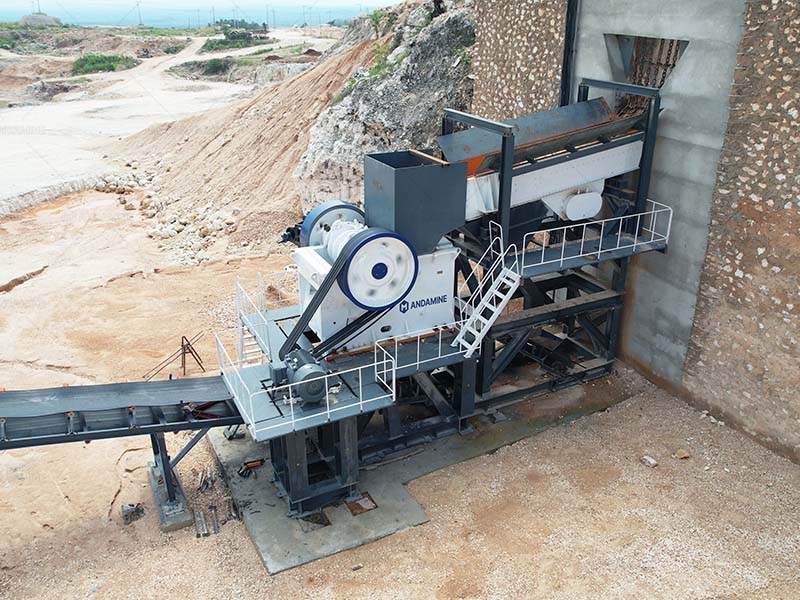
Knowing each jaw crusher part and its function is essential—but understanding the components is only the first step. Proper installation ensures they work together efficiently, safely, and last longer on your Indonesian project site.
How to Install A Jaw Crusher?
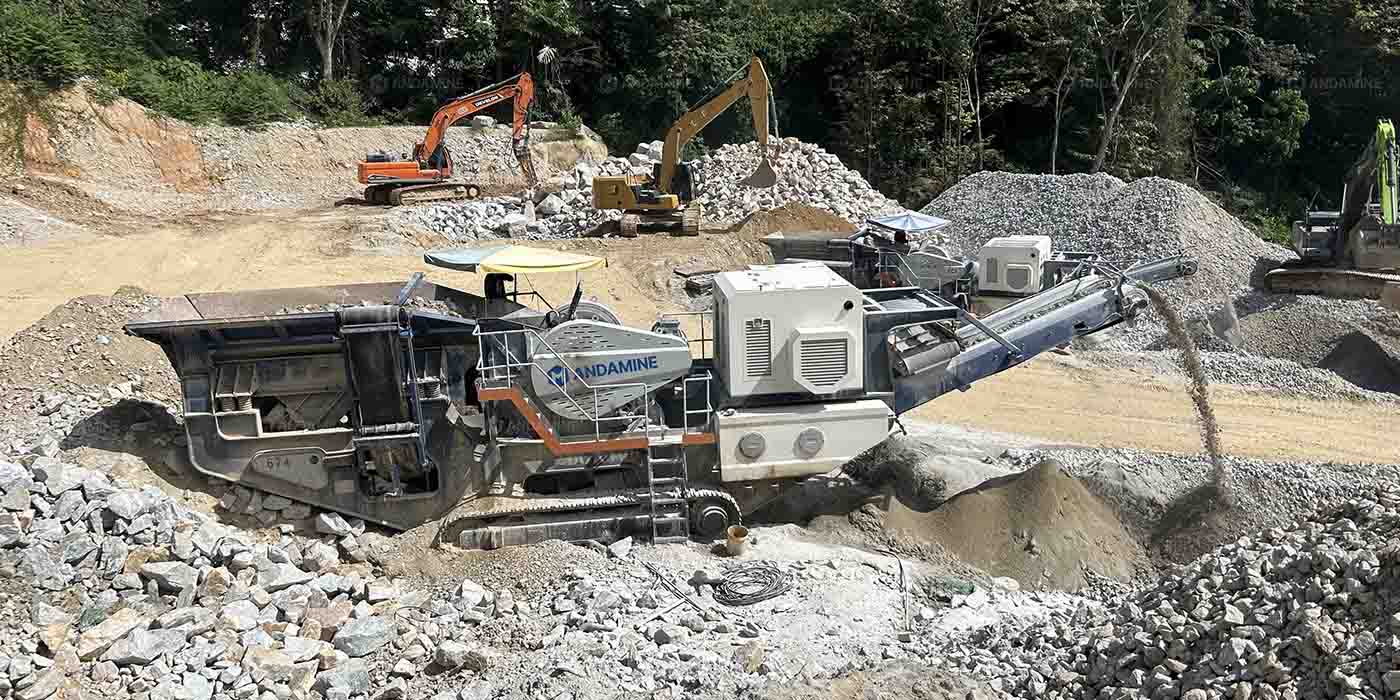
Installing a jaw crusher is essential for ensuring its efficient operation and longevity. This guide provides clear, step-by-step instructions to help you install your jaw crusher correctly, from foundation preparation to final adjustments. Follow these steps to ensure a smooth and successful jaw crusher assembly and have a fluent jaw crusher construction.
Prepare the Foundation
Clean the foundation area, removing oil, dust, or debris.
Ensure surface is flat and level for stable installation.
Install the Frame
Place vibration-absorbing pads (rubber or hardwood) between the frame and foundation.
Level the frame horizontally and vertically (≤0.2mm) to prevent uneven wear.
Fit the Bearings and Eccentric Shaft
Pre-fit bearings, check coaxiality and level.
Lubricate all contact surfaces to reduce friction and extend life.
Ensure ≥80% contact between eccentric shaft and frame; clearance ≤0.07mm.
Assemble the Moving Jaw
Attach jaw shaft, movable plate, toggle plate, and pads on the ground first.
Lift the assembly into the frame with a crane or hoist.
Confirm alignment and sliding bearing fit (coaxiality ≤0.06mm, inclination ≤0.2mm).
Install Toggle Plate and Fix Components
Secure toggle plate using recommended chain or hoist method.
Weld or bolt embedded iron and main frame firmly.
Motor and Drive Setup
Align motor pulley and main machine groove wheel on the same plane.
Install motor on rails; adjust V-belt tension properly.
Tighten base screws to prevent motor movement.
Final Checks & Commissioning
Adjust V-belt tension, lubricate bearings, check flywheels.
Verify pull rod spring, tighten all bolts.
Set correct discharge opening size before starting production.
Once your jaw crusher is properly installed, the next step is understanding how it actually works to crush rocks efficiently and boost productivity on your Indonesian project site.
How Does A Jaw Crusher Work?
How do jaw crushers work? A jaw crusher operates on the jaw crusher principle of using compressive force for breaking down materials. It consists of a fixed jaw and a movable jaw, which are positioned in a V-shaped configuration. Here is a step-by-step explanation of jaw crusher working principle. Let’s see the jaw crusher animation and jaw crusher machine diagram together!
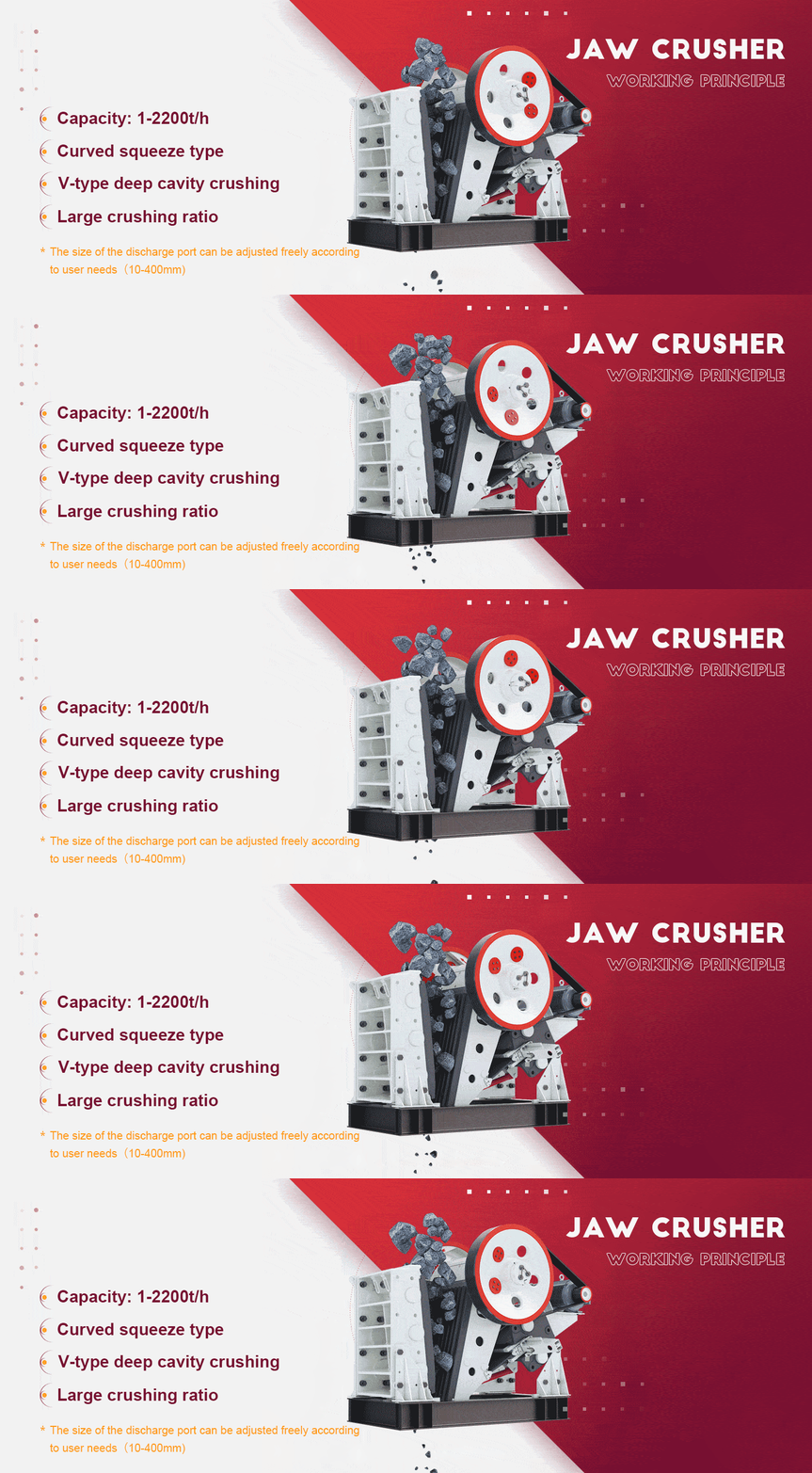
Feeding
Material to be crushed is fed into the top of the jaw crusher through a hopper. The material is then directed into the crushing chamber.
Crushing Mechanism
The movable jaw exerts force on the material by pushing it against the fixed jaw. This is achieved through an eccentric mechanism, which causes the movable jaw to move in a back-and-forth motion.
Compression
As the movable jaw moves closer to the fixed jaw, it compresses the material, causing it to fracture and break into smaller pieces. The area between the two jaws narrows, which further compresses the material.
Release
After the material is crushed to the desired size, it is discharged from the bottom of the crusher. The size of the output material can be adjusted by changing the position of the toggle plate or adjusting the jaw plates.
Continuous Operation
The process repeats continuously as new material is fed into the crusher and the movable jaw keeps compressing it against the fixed jaw.
Now that you know how a jaw crusher works, it’s essential to follow proper operation precautions to keep your equipment running smoothly and safely on Indonesian sites.
What is the Jaw Crusher Operation Precautions
Proper operation is crucial for ensuring the continuous and normal operation of a jaw crusher. Incorrect operation or negligence can lead to equipment damage and personal injury. Here are the key points to remember:
Pre-Start Checks
Inspect the wear condition of the crushing teeth.
Adjust the discharge opening size.
Ensure there are no large rocks in the crushing chamber.
Check the tightness of connecting bolts, belt tension, and the condition of the protective covers on pulleys and flywheels.
Verify oil levels in the lubrication system and ensure the functionality of electrical and signal systems.
Startup Procedure
Start the oil pump motor and cooling system first. After 3-4 minutes, once oil pressure and flow indicators are normal, start the main motor.
If abnormal sounds are heard, stop the machine, identify and fix the issue before restarting.
Always start the jaw crusher without load. Once it operates normally, start the feeding equipment.
Operational Guidelines
Feed materials evenly to avoid overloading one side or overfilling.
Ensure feed material size does not exceed 85% of the feed opening width.
Prevent non-crushable objects from entering the crusher.
Use proper tools to remove any large rocks stuck in the feed opening; never use hands.
During Operation
If the crusher is overloaded or the crushing chamber is blocked, stop feeding and allow the crusher to clear itself.
Regularly inspect the machine’s components and bearing temperatures, which should typically not exceed 60°C for large jaw crushers.
Take immediate action if bearing temperatures rise excessively, such as using forced ventilation or water cooling.
Lubrication
Lubricate bearings with grease, filling about 50% of the bearing housing.
Replace grease every 3-6 months and clean bearings with gasoline or kerosene.
Ensure proper lubrication of the toggle plate and its seat.
If the oil pump fails, manually lubricate to prevent bearing damage.
Training and Safety
Only trained personnel familiar with the operating procedures should operate the hydraulic jaw crusher.
Operators must undergo safety and technical training.
Shutdown Procedure
Follow the production process order for shutdown.
Stop feeding first, then wait for the crusher to clear before shutting down the crusher and conveyor.
After the granite crusher stops, shut down the lubrication and cooling systems. Drain circulating water in winter to prevent freezing.
Handling Sudden Stops
Clear any accumulated material in the crushing chamber before restarting after an unexpected shutdown.
Jaw Crusher FAQs
What is Jaw Crusher?
As material enters the top of the crushing chamber, the moving jaw pushes it against the fixed jaw. The repeated squeezing action fractures the material until it becomes small enough to pass through the adjustable discharge opening.
Jaw crushers are widely used in mining, quarrying, and construction projects and are suitable for crushing materials with compressive strength up to 300 MPa.
How to Use a Jaw Crusher to Crush Rocks?
- Check Before Starting – Ensure the stone jaw crusher machine is properly installed, stable, and lubricated. Inspect bolts, belts, and safety guards.
- Start Without Load – Run the machine empty for a few minutes to confirm smooth operation and no abnormal noise.
- Feed Rocks Evenly – Add rocks gradually into the feed opening. Do not exceed the recommended feed size or overload the chamber.
- Monitor Operation – Maintain a steady feed rate and observe vibration, temperature, and sound during crushing.
- Adjust Jaw Crusher Output Size – Collect crushed material from the discharge area and adjust the outlet opening if a different size is required.
Where Can I Buy a Jaw Crusher?
-
You can buy a quarry jaw crusher from:
- Industrial Equipment Suppliers – Manufacturer of jaw crushers like Andamine provide new jaw crushers with local support in Indonesia.
- Online Marketplaces – Platforms such as Alibaba, eBay, and Amazon offer various models for different projects.
- Local Dealers – Check construction and mining equipment dealers in your city or province for in-person purchase and service.
What is the Ratio of a Jaw Crusher?
What are Jaw Crusher and Cone Crusher?
- Jaw Crushers: Jaw cone crusher that can use two jaws, one static and one dynamic, to crush materials for primary crushing.
- Cone Crushers: Jaw and cone crusher that uses a rotating cone within a cone-shaped chamber to crush materials for both primary and secondary crushing stages.
How to Adjust a Jaw Crusher?
- Shut Down the Machine: Turn off the crusher and lock it out before making adjustments.
- Adjust the Settings: Use the adjustment mechanism (hydraulic toggle, shim, or mechanical screw) to modify the closed-side setting (CSS) according to your desired output size.
- Test and Validate: Restart the limestone crusher machine and check the discharged material to ensure it meets your size requirements. Adjust further if needed.
Why Do You Need Replacement Parts for a Jaw Crusher?
What is a Movable Jaw in a Jaw Crusher?
What is the Difference Between Single Toggle and Double Toggle Jaw Crusher?
- Single Toggle: The movable jaw is pivoted at the top, creating a simpler motion. It is lighter, easier to maintain, and suitable for small to medium crushing tasks.
- Double Toggle: The movable jaw is pivoted at both top and bottom, producing a more complex motion. It can handle larger, harder materials and is more robust for heavy-duty applications.
Why Does a Jaw Crusher Wear More Manganese Steel than a Gyratory Crusher?
How to Choose a Jaw Crusher Plate?
- Material: Use high-quality manganese steel or other durable materials suitable for your crushing application.
- Profile: Select the plate profile that matches your feed material type and size for optimal crushing efficiency.
- Hardness: Ensure the plate hardness is appropriate for the material being processed to reduce wear and extend service life.
What Makes a Jaw Crusher Movable?
How to Adjust Toggle Plate of Jaw Crusher?
- Stop the Crusher – Turn off the machine and ensure it is fully powered down.
- Loosen the Adjustment Mechanism – Release bolts, screws, or hydraulic locks holding the toggle plate.
- Adjust the Toggle Plate – Move it to the desired position to change the crusher’s stroke or discharge setting, then secure it tightly.
- Verify the Adjustment – Restart the crusher and check the output size and operation to ensure the setting is correct.
How Does a Jaw Crusher Affect Performance?
Does Moisture Factor Affect Primary Crushing Capacity in Jaw Crushers?
What Should Be Included in the Initial Investment Costs of Jaw Crushers?
How Long Does a Jaw Crusher Last?
Do Jaw Crushers Need Maintenance?
Why Should You Learn Jaw Crusher Maintenance Skills?
-
Learning jaw crusher maintenance helps you prevent downtime, extend the machine’s lifespan, and ensure safe operation. Proper skills allow timely inspection of wear parts, lubrication, and adjustments, keeping the crusher efficient and reliable.
How to Correctly Check and Maintain a Jaw Crusher?
- Daily Checks: Inspect wear parts, check oil levels, and look for any unusual noises.
- Weekly Maintenance: Check the condition of belts, bearings, and jaw plates.
- Monthly Maintenance: Inspect the hydraulic system and replace filters.
- Annual Maintenance: Perform a more comprehensive check, including a full inspection of all components and replacing any worn-out parts.
How Often Should Jaw Crusher Parts Be Replaced?
Can I Use a Jaw Crusher for Any Type of Rock?
What Safety Precautions Should Be Taken When Using a Jaw Crusher?
How Do I Know if My Jaw Crusher Is Working Efficiently?
Why is a Jaw Crusher Used as a Primary Crusher?
What Are the Advantages and Disadvantages of Jaw Crusher
- When evaluating a jaw crusher, it’s important to consider kelebihan dan kekurangan jaw crusher.
- Advantages: Efficiently reduces large rocks, suitable for various materials, and easy to maintain.
- Disadvantages: Limited jaw crusher capacity and high wear and tear on components.
What Services Can You Get from Us in Indonesia?
As a leading jaw crusher manufacturer, Andamine is dedicated to providing customized crushing solutions tailored to your needs. The following content will detail our services, including customer site visits, project assessments, and spare parts supply. Let’s explore how our professional support and services can enhance your project efficiency and profitability.
Customized Crushing Solutions
Tailored configurations for your project, improving material output by up to 25% compared to standard setups.
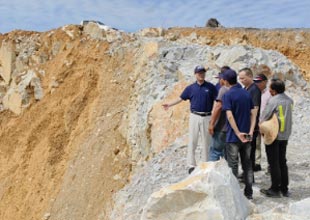
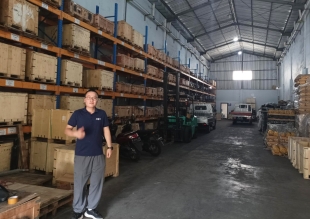
Site Visits for Clients
Visit local sites to see mobile and stationary jaw crushers in operation, helping clients make informed decisions.
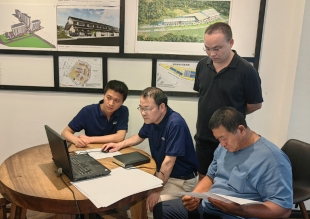
Thorough Project Assessments
Detailed evaluations and optimization plans can increase productivity and reduce operational costs by 10–15%.
Spare Parts Supply
Fast access to jaw plates, liners, bearings, and other critical parts, minimizing downtime and ensuring continuous operation.
Make Every Ton Count: Jaw Crushers Built for Indonesia
Want to increase output, reduce downtime, and cut costs on your project? Our jaw crushers combine durability, efficiency, and easy maintenance to match any Indonesian quarry or construction site. Contact us now to get a customized jaw crushing solution tailored for your project and see results fast!

